
Standing out in the packed Leeds creative and tech sectors can sometimes feel impossible, especially for smaller businesses competing with national names. Success often depends on more than just clever design or smart technology. Niche branding lets you cut through the noise by focusing on a specific market segment, building stronger customer loyalty and sharper brand recognition. This focused strategy helps you build deep, meaningful connections with your ideal clients and positions your business as an expert within your chosen field.
Table of Contents
- What Is Niche Branding And Why It Matters
- Types Of Niche Brands In Creative And Tech
- Building Market Differentiation Through Niche Branding
- Customer Engagement And Loyalty Strategies
- Risks, Mistakes And Legal Concerns In Branding
- Comparing Niche Versus Broad Branding Approaches
Key Takeaways
| Point | Details |
|---|---|
| Niche Branding Advantage | Focusing on a specific market segment enables SMEs to achieve stronger customer loyalty and enhanced brand recognition. |
| Market Differentiation | Developing a unique value proposition and understanding customer pain points are essential for effective differentiation from broader competitors. |
| Customer Engagement Strategies | Building personalised relationships and consistent brand messaging can transform casual customers into passionate advocates for niche brands. |
| Legal Awareness | SMEs must navigate legal risks carefully, ensuring they conduct thorough intellectual property checks and comply with marketing regulations to protect their brand. |
What Is Niche Branding and Why It Matters
Niche branding represents a strategic approach for Leeds small and medium enterprises (SMEs) to differentiate themselves in competitive markets. Unlike broad marketing strategies, niche branding focuses on serving a specific, well-defined segment of consumers with unique needs and preferences. Targeted market segmentation allows businesses to develop deep, meaningful connections with their ideal customers.
The core principle of niche branding involves understanding and intimately serving a limited market segment. This approach offers several compelling advantages for SMEs:
- Stronger customer loyalty
- Lower marketing penetration costs
- Enhanced brand recognition within specific consumer groups
- Ability to charge premium prices for specialised services
- More efficient resource allocation
By concentrating on a narrow market slice, businesses can develop highly tailored products and services that resonate powerfully with their target audience. This strategy enables SMEs to compete effectively against larger, more generalised brands by becoming the go-to expert in their specific domain.
Niche brands typically enjoy higher customer loyalty and more focused market positioning compared to broad-market competitors.
Successful niche branding requires deep market research, understanding customer pain points, and crafting a unique value proposition that speaks directly to a specific group’s needs. Building a focused brand identity helps businesses stand out in crowded marketplaces and create meaningful connections with their ideal customers.
Pro tip: Conduct thorough market research to identify underserved niches where your unique skills and expertise can provide exceptional value.
Types of Niche Brands in Creative and Tech
The creative and tech sectors in Leeds offer rich opportunities for niche brand development, with innovative businesses carving out distinctive market positions. Specialised market segments enable entrepreneurs to target specific customer needs with precision and expertise.
In the tech landscape, niche brands typically emerge in several compelling categories:
- Digital product specialists targeting specific professional workflows
- Gaming accessory designers creating products for unique player experiences
- Sustainable technology developers focusing on environmentally conscious solutions
- Bespoke software consultancies serving niche industry requirements
- Customised digital content creation tools for specific creative professionals
Creative niche brands often distinguish themselves through unique attributes such as:
- Exceptional craftsmanship
- Ethical production methods
- Strong community engagement
- Authentic storytelling
- Personalised customer experiences
Successful niche brands in creative and tech sectors understand that deep audience connection matters more than broad market appeal.
The most effective niche brands in these sectors excel by developing highly targeted technological solutions that address specific customer pain points. By concentrating on narrow market segments, these businesses can offer superior value and build dedicated customer communities.

Here is a summary of how different types of niche brands excel in the Leeds creative and tech sectors:
| Niche Brand Type | Core Strength | Example Benefit |
|---|---|---|
| Digital product specialists | Workflow customisation | Boosts professional efficiency |
| Gaming accessory designers | User experience innovation | Unique gameplay enhancement |
| Sustainable technology developers | Eco-conscious development | Reduces environmental impact |
| Bespoke software consultancies | Industry-specific expertise | Solves niche business challenges |
| Custom digital content tools | Creator-centred features | Streamlines creative processes |
Pro tip: Conduct granular market research to identify precise customer needs within your chosen creative or tech niche.
Building Market Differentiation Through Niche Branding
Market differentiation represents a critical strategy for Leeds SMEs seeking to stand out in increasingly competitive landscapes. Strategic brand positioning enables businesses to transcend price-based competition and create meaningful connections with their target audience.
Effective market differentiation through niche branding involves several key strategic approaches:
- Developing a unique value proposition
- Identifying specific customer pain points
- Creating tailored messaging and experiences
- Demonstrating deep understanding of target market needs
- Showcasing specialised expertise within a narrow market segment
Successful differentiation goes beyond superficial marketing tactics. It requires businesses to deeply understand their target audience’s motivations, challenges, and aspirations. By crafting targeted brand experiences, companies can build powerful emotional connections that traditional broad-market strategies cannot achieve.
Differentiation is not about being different for the sake of being different, but about providing genuine value that resonates with your specific audience.
The most effective niche brands invest significant time in research, understanding that true differentiation comes from solving unique problems and speaking directly to customers’ specific needs. By focusing on precision rather than breadth, SMEs can create compelling market positions that attract and retain loyal customers.
Pro tip: Conduct in-depth customer interviews and research to uncover the nuanced needs your niche brand can uniquely address.
Customer Engagement and Loyalty Strategies
Customer engagement represents the cornerstone of successful niche branding for Leeds SMEs, demanding a sophisticated approach that goes beyond traditional marketing techniques. Building authentic customer relationships requires strategic thinking and genuine commitment to understanding customer needs.
Effective loyalty strategies encompass multiple critical dimensions:
- Personalised communication tailored to specific customer segments
- Transparent and consistent brand messaging
- Rewards programs that provide genuine value
- Community-building initiatives
- Demonstrating alignment with customer values
Niche brands can distinguish themselves through targeted engagement approaches that create deeper emotional connections. These strategies might include:
- Micro-influencer partnerships
- Community-driven events
- Authentic storytelling
- Direct customer feedback mechanisms
- Personalised customer experiences
True customer loyalty emerges from consistent value delivery and genuine understanding of customer aspirations.
Successful engagement requires businesses to move beyond transactional interactions, instead creating meaningful dialogues that position the brand as a trusted partner. By investing time in understanding customer motivations and consistently delivering exceptional experiences, niche brands can transform casual customers into passionate advocates.
Pro tip: Develop a structured customer feedback system that enables continuous learning and demonstrates your commitment to meeting evolving customer needs.
Risks, Mistakes and Legal Concerns in Branding
Branding for Leeds SMEs involves navigating a complex legal landscape that demands careful strategic planning and proactive risk management. Marketing compliance challenges require businesses to understand the potential legal pitfalls that can significantly impact their brand’s reputation and operational sustainability.
Key legal risks in branding include:
- Intellectual property infringement
- Misleading marketing claims
- Data privacy violations
- Trademark registration gaps
- Inconsistent regulatory compliance
- Unsubstantiated advertising statements
Businesses must be particularly vigilant about avoiding common branding mistakes that can lead to costly legal disputes. These potential errors often manifest through:
- Using generic legal templates
- Neglecting comprehensive trademark searches
- Failing to register intellectual property
- Inconsistent brand messaging
- Overlooking regulatory standards
Legal protection is not an expense, but an essential investment in your brand’s long-term sustainability and credibility.
Successful risk mitigation requires a proactive approach, involving regular legal audits, consultation with intellectual property experts, and maintaining meticulous documentation of brand assets. Understanding the nuanced legal landscape helps SMEs build robust brand protection strategies that safeguard their market position.
Below is a quick reference guide to typical legal pitfalls and prevention methods in SME branding:
| Legal Risk Area | Common Mistake | Best Preventive Action |
|---|---|---|
| Intellectual property rights | Inadequate trademark checks | Conduct thorough IP searches |
| Data privacy laws | Using outdated data policies | Regularly update privacy compliance |
| Marketing compliance | Making unsubstantiated claims | Substantiate all promotional content |
| Brand consistency | Messaging across channels varies | Centralise brand guidelines |
Pro tip: Consult an intellectual property lawyer annually to review your branding strategy and ensure comprehensive legal compliance.
Comparing Niche Versus Broad Branding Approaches
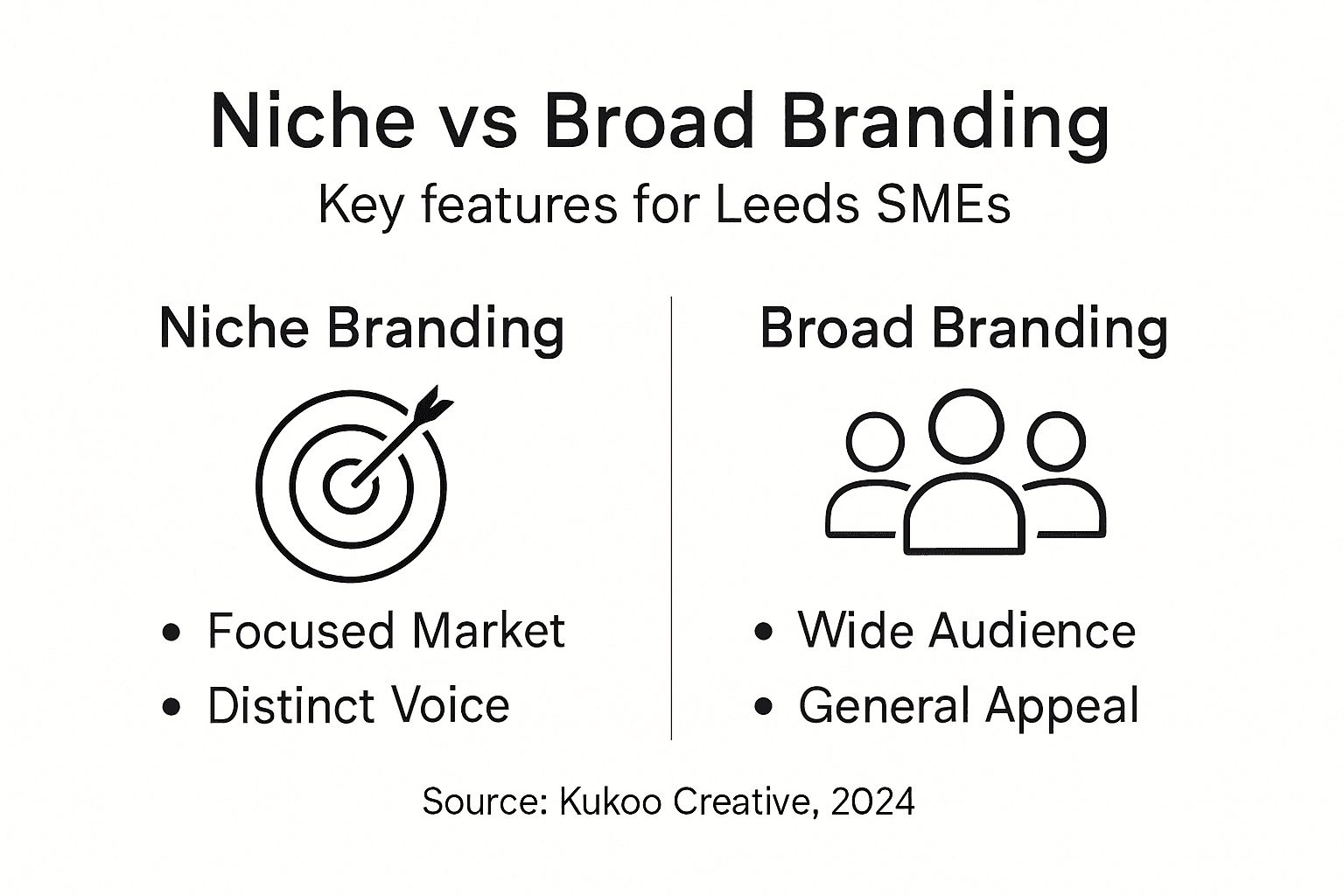
The strategic choice between niche and broad branding represents a critical decision for Leeds SMEs seeking competitive differentiation. Branding strategy selection fundamentally impacts a company’s market positioning, customer engagement, and long-term growth potential.
Key differences between niche and broad branding approaches include:
-
Market Focus
- Niche: Highly targeted, specialised audience
- Broad: Wide, generalised market coverage
-
Customer Relationship
- Niche: Deep, personalised connections
- Broad: Surface-level, transactional interactions
-
Competitive Positioning
- Niche: Unique expertise and specialisation
- Broad: Generalised market presence
-
Resource Allocation
- Niche: Concentrated marketing efforts
- Broad: Dispersed marketing investments
-
Pricing Strategy
- Niche: Premium pricing potential
- Broad: Price-competitive landscape
Successful branding is not about reaching everyone, but about meaningfully connecting with the right audience.
Niche branding offers distinct advantages for smaller businesses, allowing them to become recognised experts within specific market segments. By contrast, broad branding requires substantial resources to maintain visibility and relevance across diverse customer groups.
Pro tip: Conduct thorough market research to identify whether a niche or broad approach best aligns with your business’s unique strengths and target audience.
Elevate Your Leeds SME with Strategic Niche Branding
Facing the challenge of standing out in a crowded market can be overwhelming for Leeds SMEs. This article highlights the importance of niche branding as a way to build strong customer loyalty, deliver specialised value, and create market differentiation. If you want to transform your business into the go-to expert in your sector, crafting a unique value proposition with focused messaging is essential.
At Kukoo Creative, we understand these pain points and are dedicated to helping you develop impactful designs—from logos to websites—that speak directly to your ideal audience. Our expertise will support you in building authentic brand connections that resonate emotionally and set you apart from broad-market competitors.
Are you ready to harness the power of niche branding to boost your brand recognition and customer engagement right now?
Partner with us to create tailored brand experiences that reflect your specialised expertise. Discover how effective design can become your strongest competitive advantage by visiting Kukoo Creative and start your journey towards a standout brand today.
Frequently Asked Questions
What is niche branding and how does it benefit SMEs?
Niche branding focuses on targeting a specific segment of consumers with unique needs, allowing SMEs to develop strong customer loyalty, enhance brand recognition, and charge premium prices for tailored products or services.
How can SMEs effectively implement niche branding strategies?
SMEs can implement niche branding by conducting thorough market research, understanding customer pain points, crafting a unique value proposition, and building a focused brand identity that resonates with a specified audience.
What are the risks associated with niche branding for SMEs?
Risks include intellectual property infringement, misleading marketing claims, and data privacy violations. It’s crucial for SMEs to conduct legal audits and maintain compliance to avoid costly disputes.
How does niche branding differ from broad branding approaches?
Niche branding targets a highly specialised audience and fosters deep customer relationships, while broad branding covers a wide market with more surface-level interactions, often requiring greater resource allocation and leading to price competition.