
Every Leeds shop owner knows how quickly a brand can blend into the background without the right visual spark. Standing out on the high street or online is more challenging than ever, especially when customer choices seem endless. Strong brand assets—like a distinctive logo or unified design style—offer more than a fresh look. They build trust and foster recognition, helping your retail business attract loyal customers while staying ahead of competitors.
Table of Contents
- Brand Assets Explained For Retail Businesses
- Types Of Retail Brand Assets To Consider
- Current Trends Shaping Brand Identity
- Key Benefits Of Updating Brand Assets
- Common Pitfalls Of Outdated Branding
- Strategic Steps For Refreshing Your Assets
Key Takeaways
| Point | Details |
|---|---|
| Importance of Brand Assets | Brand assets are vital for establishing a unique retail identity and facilitating customer emotional connections. |
| Strategic Brand Updates | Regularly updating brand assets is crucial to remain relevant and competitive in the evolving retail landscape. |
| Consumer-Centric Approach | Retailers must prioritise consumer values and preferences to strengthen brand loyalty and engagement. |
| Holistic Refresh Process | A comprehensive approach to refreshing brand assets ensures alignment with business goals and maintains brand authenticity. |
Brand Assets Explained for Retail Businesses
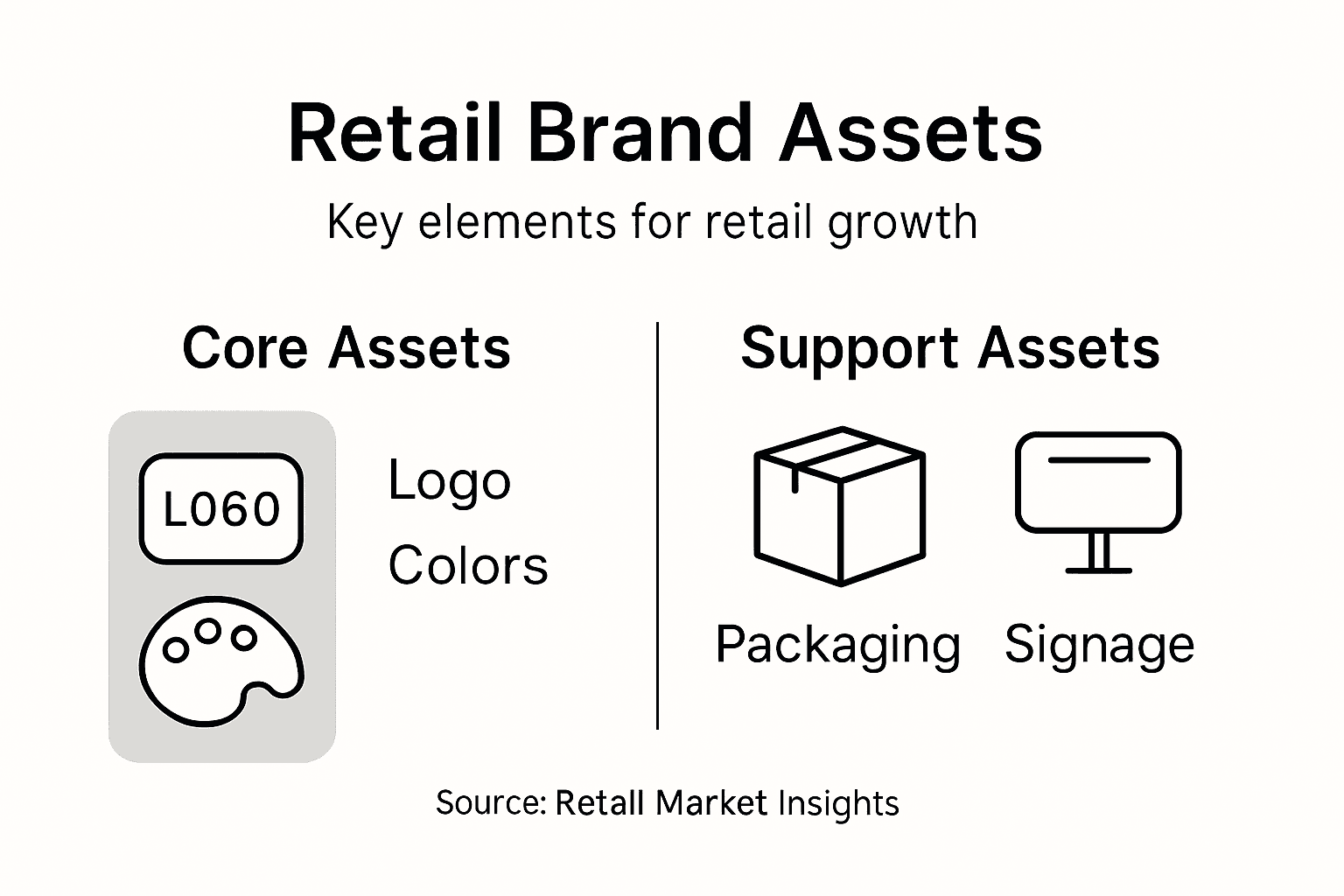
Retail businesses operate in a competitive landscape where distinctive visual and experiential elements can make or break brand recognition. Brand assets represent the unique collection of design, visual, and sensory elements that communicate a retail brand’s identity and differentiate it from competitors.
Understanding brand assets requires recognising their multifaceted nature. Distinctive brand assets encompass several critical components that work together to create a cohesive brand experience:
- Logo designs that instantly identify your business
- Consistent colour palettes that evoke specific emotions
- Typography that reflects your brand’s personality
- Unique visual styles across marketing materials
- Distinctive store design and layout elements
- Packaging and product presentation strategies
Retail brands differ from product brands in how they leverage these assets. Retail brand assets rely more heavily on multisensory experiences that create emotional connections with customers. This means your brand assets must do more than just look good—they need to tell a compelling story about your business.
Successful brand asset management requires strategic thinking. Retailers must carefully select and consistently apply assets that communicate their unique value proposition. This isn’t about having numerous assets, but selecting the right ones that resonate with your target audience and reflect your brand’s core identity.
Pro tip: Conduct an annual brand asset audit to ensure your visual elements remain fresh, relevant, and aligned with your current business goals and customer expectations.
Types of Retail Brand Assets to Consider
Retail brand assets are the visual and experiential elements that communicate a business’s unique identity and create memorable customer interactions. Brand assets encompass multiple strategic components that work together to build brand recognition and emotional connection.
The primary types of retail brand assets include:
-
Visual Identity Assets
- Company logo and logotype
- Colour palette
- Typography and font selection
- Graphic design elements
-
Sensory Brand Assets
- Store interior design
- Product packaging
- Music and ambient sound
- Signature scents or fragrances
-
Communication Assets
- Taglines and slogans
- Brand voice and messaging style
- Marketing materials
- Social media visual language
Successful retailers understand that brand asset management requires strategic focus on creating distinctive, memorable elements. These assets should not just look attractive but communicate the core brand narrative and values in a way that resonates with target customers.
Every brand asset should serve a strategic purpose: creating instant recognition, evoking specific emotions, and differentiating the business from competitors. Consistency across all these assets builds trust and helps customers form strong, positive associations with your brand.
Pro tip: Periodically review your brand assets to ensure they remain contemporary, authentic, and aligned with your evolving business strategy and customer expectations.
Current Trends Shaping Brand Identity
Digital transformation is fundamentally reshaping retail brand identities, creating unprecedented opportunities for businesses to connect with customers in more personalised and meaningful ways. The traditional boundaries between online and offline experiences are rapidly dissolving, compelling retailers to adopt more integrated and dynamic branding strategies.
Key emerging trends in brand identity include:
-
Technological Integration
- AI-powered personalisation
- Augmented reality shopping experiences
- Seamless omnichannel brand interactions
- Interactive digital touchpoints
-
Sustainability and Values
- Transparent environmental commitments
- Ethical sourcing and production
- Circular economy business models
- Social responsibility messaging
-
Customer Experience Focus
- Hyper-personalised marketing
- Adaptive brand communication
- Data-driven customer insights
- Emotional brand storytelling
UK retail trends demonstrate that successful brands are now differentiated not just by their products, but by their ability to align with evolving consumer values and expectations. Modern consumers seek authentic connections that go beyond transactional relationships.
Retailers must continuously adapt their brand identity to remain relevant, leveraging technology while maintaining a genuine, human-centric approach. This requires ongoing investment in understanding customer preferences, technological capabilities, and societal shifts.
Here is a summary of how digital trends are reshaping retail brand identity:
| Trend Area | Key Example | Main Impact on Retail Brands |
|---|---|---|
| Technological Integration | AI-driven personalisation | Enhances individual customer experience |
| Sustainability & Values | Circular economy models | Builds trust with eco-conscious buyers |
| Customer Experience Focus | Emotional brand storytelling | Deepens emotional brand connection |
Pro tip: Conduct quarterly brand identity audits to ensure your messaging, visual assets, and customer experience remain contemporary and resonant with your target audience.
Key Benefits of Updating Brand Assets
Brand asset updates strengthen market positioning by enabling businesses to remain relevant, compelling, and responsive to changing consumer expectations. In today’s rapidly evolving retail landscape, static brand identities quickly become obsolete, making strategic refreshment critical for sustained success.
Key benefits of updating brand assets include:
-
Competitive Differentiation
- Stand out in saturated markets
- Communicate evolving brand values
- Reflect contemporary design aesthetics
- Demonstrate business innovation
-
Customer Perception Improvement
- Enhance brand credibility
- Signal professional growth
- Build stronger emotional connections
- Reinforce brand trustworthiness
-
Strategic Business Advantages
- Attract new customer segments
- Increase market visibility
- Support expanded product ranges
- Align with emerging consumer trends
Retail market research demonstrates that businesses consistently investing in brand asset refinement experience significant competitive advantages. Modern consumers are increasingly discerning, valuing brands that demonstrate adaptability and authenticity.
Successful brand asset updates require a holistic approach, balancing creative design with strategic business objectives. This means understanding your target audience, monitoring market trends, and creating assets that genuinely reflect your brand’s unique value proposition.
Pro tip: Develop a brand asset refresh strategy that includes regular market research, customer feedback collection, and periodic design audits to ensure ongoing relevance and impact.
Common Pitfalls of Outdated Branding
Outdated branding presents significant risks for retail businesses, potentially undermining years of carefully built brand equity. When visual identities become stale and disconnected from current market expectations, businesses risk losing customer engagement and market relevance.
Key pitfalls of neglecting brand asset updates include:
-
Customer Perception Challenges
- Appear out of touch with market trends
- Signal potential business stagnation
- Reduce brand credibility
- Diminish perceived innovation
-
Competitive Disadvantages
- Lose ground to more dynamic competitors
- Struggle to attract younger customer segments
- Fail to communicate evolving brand values
- Miss opportunities for brand storytelling
-
Performance Impact
- Reduced customer loyalty
- Decreased marketing effectiveness
- Lower brand recognition
- Potential revenue decline
Brand assets losing distinctiveness can dramatically erode consumer memory and emotional connection. Modern consumers are visually sophisticated and quickly disengage from brands that seem dated or disconnected from contemporary design standards.

Successful retailers understand that brand assets are living entities requiring continuous refinement. Regular assessment and strategic updates demonstrate business vitality, commitment to excellence, and responsiveness to changing market dynamics.
This table highlights contrasts between refreshed and outdated brand assets:
| Aspect | Refreshed Brand Assets | Outdated Brand Assets |
|---|---|---|
| Visual Appeal | Contemporary and innovative | Dated and unmemorable |
| Customer Perception | Viewed as dynamic and credible | Seen as stagnant or uncaring |
| Market Position | Clear differentiation | Lost ground to competitors |
| Emotional Connection | Strong, positive association | Weakened loyalty and remembrance |
Pro tip: Create a periodic brand asset review process, scheduling comprehensive evaluations every 18-24 months to ensure your visual identity remains fresh, relevant, and compelling.
Strategic Steps for Refreshing Your Assets
Brand asset refresh requires strategic planning that goes beyond superficial design changes. Successful retailers understand that updating brand assets is a comprehensive process involving careful analysis, creative vision, and strategic alignment with business objectives.
The strategic refresh process involves several critical steps:
-
Comprehensive Brand Audit
- Evaluate current brand asset performance
- Identify strengths and weaknesses
- Analyse customer perception
- Benchmark against competitors
-
Market Research and Insights
- Understand emerging consumer trends
- Gather stakeholder feedback
- Explore demographic shifts
- Analyse visual communication effectiveness
-
Creative Development
- Develop updated design concepts
- Ensure brand consistency
- Create flexible asset templates
- Design for multi-channel application
Structured brand asset approaches demand collaborative engagement between creative teams and management. This ensures that refreshed assets not only look appealing but strategically communicate the brand’s evolving narrative and value proposition.
Implementing brand asset updates requires a balanced approach that respects existing brand equity while introducing innovative elements. The goal is not radical transformation, but incremental, meaningful evolution that keeps the brand feeling contemporary and authentic.
Pro tip: Create a cross-functional brand refresh team including design, marketing, and senior management to ensure comprehensive and aligned asset updates.
Elevate Your Retail Brand with Impactful Asset Updates
Updating your brand assets is no longer optional for retail businesses aiming to thrive in a competitive market. As highlighted in the article “Why Update Brand Assets for Retail Success” refreshing your logo designs, colour palettes and overall visual identity can dramatically enhance customer perception and secure your place against dynamic competitors. Don’t let outdated branding signal stagnation or risk losing your emotional connection with customers.
At KUKOO Creative we specialise in partnering with retailers to create memorable brand assets that tell your unique story and resonate deeply with your audience. From compelling logo designs to cohesive packaging concepts we ensure every element strategically supports your business growth. Explore how our impactful designs can help you connect with the people who matter most by visiting our website.
Take the challenge to stand out today and safeguard your brand equity by starting a conversation with us.
Create Lasting Brand Recognition with KUKOO Creative
Discover Our Design Solutions
Partner with Expert Brand Creators
Frequently Asked Questions
Why is it important to update brand assets?
Updating brand assets is crucial for maintaining relevance in a competitive retail landscape. Fresh and contemporary brand elements help strengthen market positioning, improve customer perception, and enhance emotional connections with consumers.
What are key benefits of refreshing brand assets?
Refreshing brand assets can lead to competitive differentiation, improved customer perception, and strategic advantages. It allows businesses to stand out in saturated markets and signal innovation, which is key for attracting new customer segments.
How often should retailers conduct a brand asset audit?
Retailers should conduct a brand asset audit at least annually to ensure that their visual elements remain fresh and aligned with current business goals and customer expectations. Regular reviews help keep the brand relevant and engaging.
What steps are involved in refreshing brand assets?
Refreshing brand assets involves several steps, including conducting a comprehensive brand audit, gathering market insights, and developing updated design concepts. Collaboration between creative teams and management ensures that the refreshed assets effectively communicate the brand’s evolving narrative.