
Standing out in the crowded Leeds retail market can feel like a never-ending challenge. For small business owners, finding reliable ways to build trust and recognition online is more important than ever. Understanding the powerful connection between brand equity and SEO reveals new opportunities to shape how potential customers see your business and keep your brand top-of-mind. This guide offers practical strategies to help your retail or e-commerce brand grow stronger using proven SEO techniques.
Table of Contents
- Defining SEO’s Influence On Branding
- Understanding Local And Retail SEO Strategies
- Key SEO Features For Building Brand Authority
- Integrating SEO With Brand Identity And Messaging
- Risks, Costs And Common SEO Pitfalls
- Comparing SEO To Paid And Social Channels
Key Takeaways
| Point | Details |
|---|---|
| SEO Enhances Brand Visibility | Implementing effective SEO strategies increases a brand’s online presence and strengthens consumer trust. |
| Local SEO is Crucial for Small Businesses | Focusing on location-specific strategies can significantly improve customer attraction in a competitive market. |
| Integrated Content Strategy is Key | Aligning SEO efforts with overarching brand messaging ensures consistent audience engagement and visibility. |
| Avoid Common SEO Pitfalls | Implement best practices to evade penalties and maintain a strong, credible online reputation. |
Defining SEO’s Influence on Branding
SEO plays a transformative role in building brand equity, fundamentally reshaping how businesses connect with potential customers through digital channels. At its core, SEO enables brands to establish digital visibility by creating authoritative, relevant content that resonates with target audiences and search algorithms. Brand recognition strategies demonstrate that consistent online presence directly correlates with consumer perception and trust.
Through strategic content development, businesses can leverage SEO to communicate their unique value proposition and establish credibility. Search engines reward websites that provide comprehensive, high-quality information by improving their ranking, which means brands investing in meaningful content gain significant competitive advantages. Search engine optimization allows companies to shape narrative and visibility simultaneously, transforming how potential customers discover and interact with their brand.
The mechanics of SEO influence branding through multiple interconnected channels. Brands achieve this by developing targeted keyword strategies, creating informative content, optimising website structures, and building authoritative digital footprints. These approaches ensure that when potential customers search for relevant services or products, your brand appears prominently, reinforcing recognition and establishing industry leadership.
Pro tip: Conduct regular keyword research specific to your local Leeds market to understand precisely what terms potential customers are using when searching for businesses like yours.
Understanding Local and Retail SEO Strategies
Local SEO represents a critical digital marketing approach specifically tailored for small businesses targeting geographically concentrated customer bases. Retail marketing strategies emphasise creating targeted digital experiences that connect businesses directly with local consumers through strategic online visibility.

Small retail owners in Leeds must understand that local SEO goes beyond traditional search optimisation. It involves creating location-specific content, managing online business listings, generating localised reviews, and ensuring consistent digital information across multiple platforms. Local search competition requires businesses to develop nuanced digital strategies that highlight their unique community presence and accessibility.
Successful local SEO strategies incorporate several key elements: precise Google My Business management, location-based keyword targeting, mobile-responsive website design, and generating authentic local content that demonstrates community engagement. By implementing these techniques, retail businesses can significantly improve their digital discoverability and attract customers seeking nearby services and products.
Pro tip: Create location-specific landing pages that highlight your Leeds business address, local contact information, and neighbourhood-specific services to boost your local search rankings.
Key SEO Features for Building Brand Authority
Building brand authority through SEO requires a sophisticated approach that extends far beyond simple keyword placement. Strategic content creation involves developing a comprehensive digital strategy that aligns your online presence with your brand’s core values and business objectives.
Visual consistency plays a crucial role in establishing brand credibility online. Branding guidelines emphasise the importance of maintaining uniform visual elements across digital platforms, ensuring that every online touchpoint reinforces your brand’s unique identity. This includes consistent use of logos, colour schemes, typography, and messaging that create a cohesive and recognisable brand experience.
Effective SEO for brand authority demands a multifaceted approach that integrates technical optimisation, content strategy, and digital reputation management. Small businesses must focus on creating high-quality, relevant content that demonstrates expertise, generates authentic user engagement, and provides genuine value to their target audience. This means developing in-depth articles, maintaining an active and meaningful social media presence, and consistently delivering content that answers potential customers’ most pressing questions.
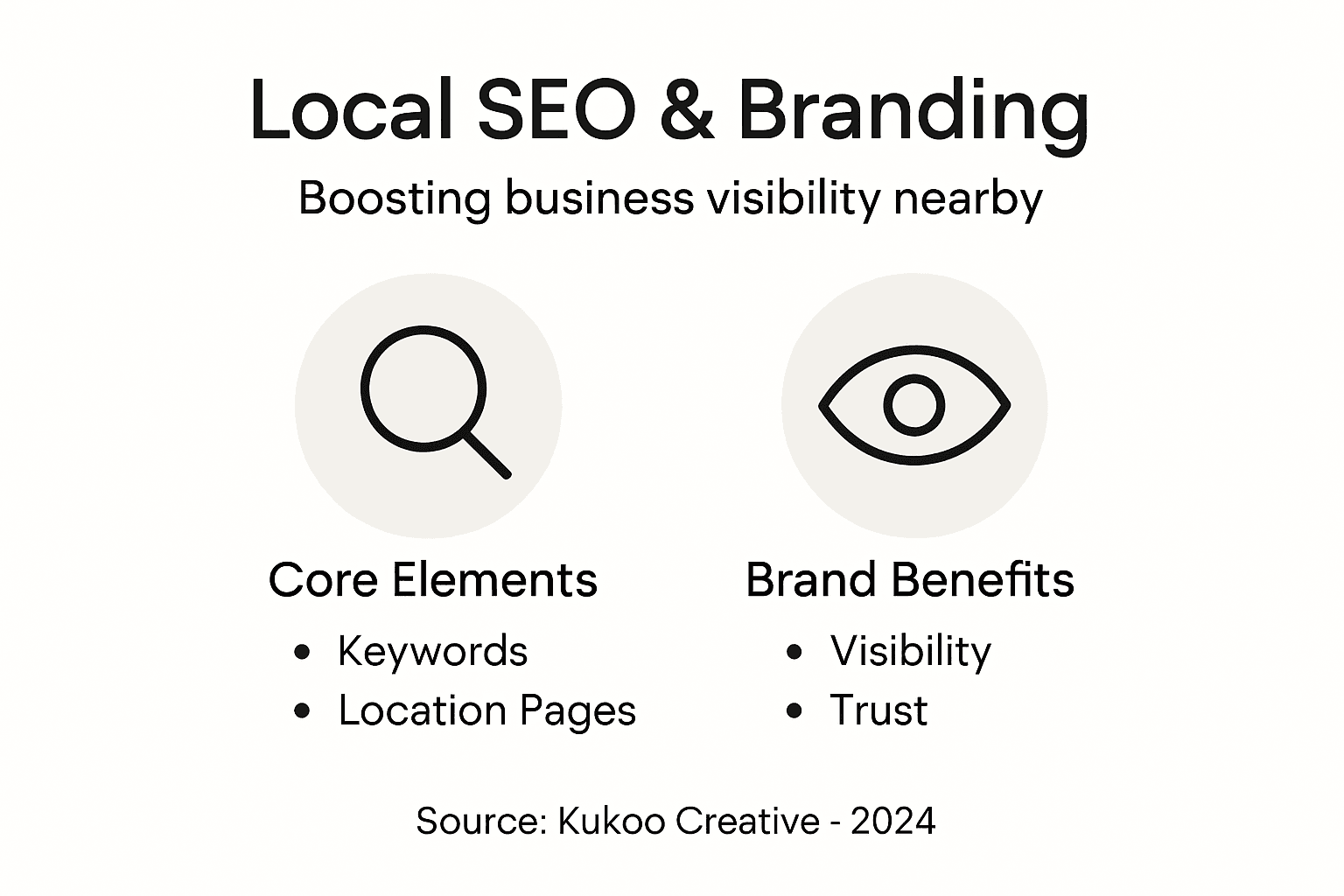
Pro tip: Conduct a comprehensive audit of your online brand presence every quarter, systematically reviewing your website’s SEO performance, content relevance, and visual consistency to ensure ongoing brand authority.
Integrating SEO With Brand Identity and Messaging
Successful digital branding requires a holistic approach that seamlessly intertwines SEO strategies with core brand messaging. Brand positioning strategies demonstrate that consistent communication across all digital platforms is crucial for establishing a compelling and recognisable brand identity that resonates with target audiences.
Designing an integrated SEO and brand strategy involves creating a unified narrative that speaks directly to your audience’s needs while simultaneously optimising for search engine visibility. Digital service design emphasises the importance of maintaining a coherent visual and verbal language that reflects your brand’s unique personality while ensuring technical searchability and accessibility.
The key to effective integration lies in developing a comprehensive content framework that aligns keyword strategies with your brand’s core messaging. This means crafting content that not only ranks well in search results but also authentically communicates your brand’s values, expertise, and unique value proposition. Small businesses in Leeds must focus on creating meaningful, targeted content that speaks directly to local customers while maintaining a consistent brand voice across all digital channels.
Pro tip: Develop a detailed brand messaging guide that outlines your unique tone, key communication themes, and core values to ensure consistency across all SEO and content marketing efforts.
Risks, Costs and Common SEO Pitfalls
Navigating the complex landscape of SEO requires a nuanced understanding of potential legal and reputational risks. Data protection risks highlight the critical importance of maintaining strict compliance with UK data protection regulations when implementing marketing and SEO strategies.
Small businesses must be acutely aware of the potential financial and brand consequences associated with poor SEO practices. These risks include potential legal penalties, search engine penalties, and significant damage to brand reputation. Online content management demands a proactive approach to identifying and mitigating risks such as inappropriate content, misleading information, or accidental breaches of digital marketing standards.
Common SEO pitfalls often stem from short-sighted strategies that prioritise quick rankings over long-term brand credibility. These include keyword stuffing, purchasing low-quality backlinks, creating duplicate content, and neglecting mobile optimisation. For Leeds-based businesses, understanding these risks means developing a sophisticated approach that balances technical SEO requirements with authentic, valuable content creation that genuinely serves potential customers.
Below is a comparative table on common SEO pitfalls and their impact on small businesses:
| SEO Pitfall | Typical Cause | Potential Impact | Prevention Tip |
|---|---|---|---|
| Keyword Stuffing | Over-optimisation | Penalties, poor UX | Use keywords naturally |
| Low-quality Backlinks | Cheap link purchases | Search ranking penalties | Build genuine partnerships |
| Duplicate Content | Reusing pages/posts | Crawling and ranking issues | Create original content |
| Neglecting Mobile | Ignoring mobile users | Reduced mobile visibility | Optimise site for mobile devices |
Pro tip: Invest in regular SEO audits and compliance checks to identify potential risks before they become costly problems for your business.
Comparing SEO to Paid and Social Channels
Understanding the strategic landscape of digital marketing requires a nuanced approach to media channel selection. Each marketing channel offers unique advantages: SEO provides sustainable, long-term organic visibility, paid channels deliver immediate reach, and social media platforms enable direct audience engagement and brand storytelling.
Paid advertising channels like search and display ads offer precise targeting and quick results, allowing businesses to rapidly increase visibility. However, these strategies require continuous financial investment and typically generate transient traffic. In contrast, SEO builds organic authority through consistent, high-quality content creation, developing a more sustainable digital presence that compounds value over time and establishes genuine brand credibility.
Here’s a summary of how major digital marketing channels differ in their approach and benefits:
| Channel | Key Advantage | Audience Engagement | Longevity of Results |
|---|---|---|---|
| SEO | Builds organic visibility | Indirect, through search | Long-term, cumulative |
| Paid Advertising | Immediate reach and targeting | Direct, campaign-driven | Short-lived, while funding |
| Social Media | Community and brand storytelling | Direct, highly interactive | Ongoing, dependent on activity |
Social media channels introduce a dynamic interaction dimension, enabling brands to build community, showcase personality, and generate digital marketing ecosystems that extend beyond traditional advertising. While each channel serves different strategic purposes, the most effective marketing approaches integrate SEO, paid advertising, and social media into a cohesive, mutually reinforcing strategy that maximises brand recognition and audience connection.
Pro tip: Develop an integrated digital marketing strategy that allocates resources across SEO, paid channels, and social media based on your specific business goals and target audience behaviour.
Elevate Your Brand Recognition Locally with Expert SEO and Design
Building a strong brand presence in Leeds requires more than just high search rankings. As the article highlights, the challenge lies in integrating effective SEO strategies with consistent, impactful brand messaging that resonates within your local community. Whether you are struggling with local search competition or trying to maintain visual consistency, these pain points demand expert solutions that connect your unique value proposition directly to your target audience.
At Kukoo Creative, we understand that successful branding combines both strategic SEO and compelling design. With over a decade of experience partnering with business owners, we specialise in creating tailored logos, websites, and digital content that not only improve your search visibility but also build authentic connections and trust in your local market. Our approach ensures your brand stands out through:
- Localised keyword optimisation that matches how customers in Leeds search for your services
- Visually consistent designs that reinforce your identity across all digital platforms
- User-focused website development that enhances both discoverability and engagement
Discover our design solutions that transform your online presence into a community recognisable brand.

Take control of your digital branding strategy today. Visit Kukoo Creative to start crafting a powerful SEO-driven brand that drives local recognition and lasting growth. Do not let competitors outshine you in search results when you can partner with specialists who deliver measurable results and emotional impact.
Frequently Asked Questions
How does SEO contribute to brand recognition?
SEO enhances brand recognition by improving online visibility through strategic content development that resonates with both search algorithms and target audiences.
What are the key components of a successful local SEO strategy?
A successful local SEO strategy includes managing Google My Business, creating location-specific content, generating local reviews, and maintaining consistent online information across platforms.
Why is consistent branding important for SEO?
Consistent branding reinforces brand identity and credibility online, which helps to establish authority and improve search engine rankings by creating a cohesive user experience.
What are common SEO pitfalls businesses should avoid?
Common SEO pitfalls include keyword stuffing, using low-quality backlinks, creating duplicate content, and neglecting mobile optimisation, all of which can harm search rankings and brand reputation.