
Most british retail businesses underestimate the impact of branding, yet consistent branding can increase revenue by up to 23 percent. For Leeds shop owners, understanding branding is about more than a catchy logo. It is about shaping every interaction customers have with your business and setting yourself apart from the competition. This guide will give you practical insights to help your shop stand out and build lasting trust with your customers.
Table of Contents
- Branding Defined: Foundation For Retail Sales
- Types Of Branding Strategies For Retail Growth
- Building Trust And Recognition Through Branding
- How Branding Drives Sales And Customer Loyalty
- Avoiding Common Branding Pitfalls In Retail
Key Takeaways
| Point | Details |
|---|---|
| Importance of Branding | Retail branding encompasses more than just a logo; it’s about creating a unique brand experience that resonates with customers. |
| Effective Strategies | Retailers should implement strategies like corporate branding and digital engagement to enhance customer loyalty and trust. |
| Avoiding Pitfalls | Inconsistent messaging and disconnected experiences can undermine customer trust; retailers must ensure a cohesive brand presence. |
| Building Emotional Connections | Creating emotional connections with customers through storytelling and personalised experiences is key to driving sales and loyalty. |
Branding Defined: Foundation for Retail Sales
Branding in retail is far more than a simple logo or visual identity. It represents a comprehensive strategic approach that defines how customers perceive and interact with a business. Retail branding creates a multi-sensory experience encompassing service quality, product assortment, pricing strategies, and customer engagement.
At its core, retail branding involves crafting a distinctive brand image that differentiates a business from competitors. Unlike product branding, retail branding integrates tangible and intangible elements to build emotional connections. Corporate branding strategies focus on creating consistent communication, visual identity, and memorable customer experiences that foster loyalty and drive sales.
Successful retail branding requires understanding your target audience deeply. This means developing a brand personality that resonates with customers’ values, aspirations, and lifestyle. Small retailers must focus on communicating their unique value proposition through every interaction – from shop design and staff training to marketing materials and online presence.
Pro tip: Invest time in developing a clear brand guideline document that details your visual identity, tone of voice, and core values to ensure consistent brand representation across all customer touchpoints.
Types of Branding Strategies for Retail Growth
Retail businesses have multiple strategic approaches to build brand recognition and drive growth. Private label branding strategies represent a powerful method for retailers to differentiate themselves and increase profit margins. By developing unique in-house brands, retailers can create exclusive product lines that build customer loyalty and provide higher-margin alternatives to manufacturer brands.
The primary branding strategies for retail growth include several key approaches. Corporate branding focuses on creating a comprehensive brand identity that encompasses the entire retail experience. This involves developing a consistent visual language, communication style, and service philosophy that resonates with target customers. Innovative branding approaches now emphasise digital engagement, sustainability, and personalised customer experiences as critical differentiators in competitive markets.

Small retailers can implement diverse branding strategies tailored to their specific market segment. These might include positioning strategies such as price leadership, quality differentiation, or niche market specialisation. Some retailers focus on creating unique shopping experiences, while others emphasise product range, customer service, or technological innovation. The key is to develop a clear, distinctive brand personality that sets the business apart from competitors and creates meaningful connections with customers.
Here is a summary of primary retail branding strategies and their unique advantages:
| Branding Strategy | Key Focus Area | Example Impact |
|---|---|---|
| Corporate Branding | Company-wide identity | Builds overall trust |
| Private Label Branding | Exclusive product lines | Increases profit margins |
| Digital Engagement | Personalised online experiences | Boosts customer interaction |
| Sustainability Branding | Ethical practices and sourcing | Attracts conscious consumers |
| Niche Specialisation | Targeted market segments | Builds strong loyalty |
Pro tip: Conduct a comprehensive brand audit annually to ensure your branding strategy remains aligned with evolving customer expectations and market trends.
Building Trust and Recognition Through Branding
Building brand trust is a strategic process that goes far beyond simple marketing tactics. Trust emerges through consistent delivery of promises across multiple customer touchpoints, including service quality, product reliability, pricing transparency, and overall brand experience. Successful retailers understand that trust is built incrementally, with each interaction contributing to a cumulative perception of brand credibility.
Customer recognition develops through deliberate and strategic brand communication. Visual identity plays a crucial role, with consistent colour schemes, logos, and design elements helping customers instantly identify a brand. This visual consistency must be complemented by a coherent messaging strategy that reinforces the brand’s core values, personality, and unique selling propositions. Small retailers can differentiate themselves by creating authentic, memorable brand experiences that resonate emotionally with their target audience.
Digital platforms have transformed how businesses build trust and recognition. Online reputation management, transparent customer reviews, responsive communication, and demonstrating genuine commitment to customer satisfaction are now essential components of modern branding strategies. Retailers must focus on creating genuine connections, showing vulnerability, admitting mistakes, and consistently delivering value that exceeds customer expectations.
Pro tip: Create a brand story document that captures your business’s unique journey, values, and mission to help employees and customers connect more deeply with your brand.
How Branding Drives Sales and Customer Loyalty
Strong retail brands create powerful mechanisms for driving sales and building customer loyalty through strategic brand positioning. By developing a distinctive brand identity that resonates with target customers, retailers can transform transactional relationships into emotional connections that encourage repeat purchases and long-term engagement. This process involves creating a comprehensive brand narrative that goes beyond product features to communicate core values, unique experiences, and meaningful promises.
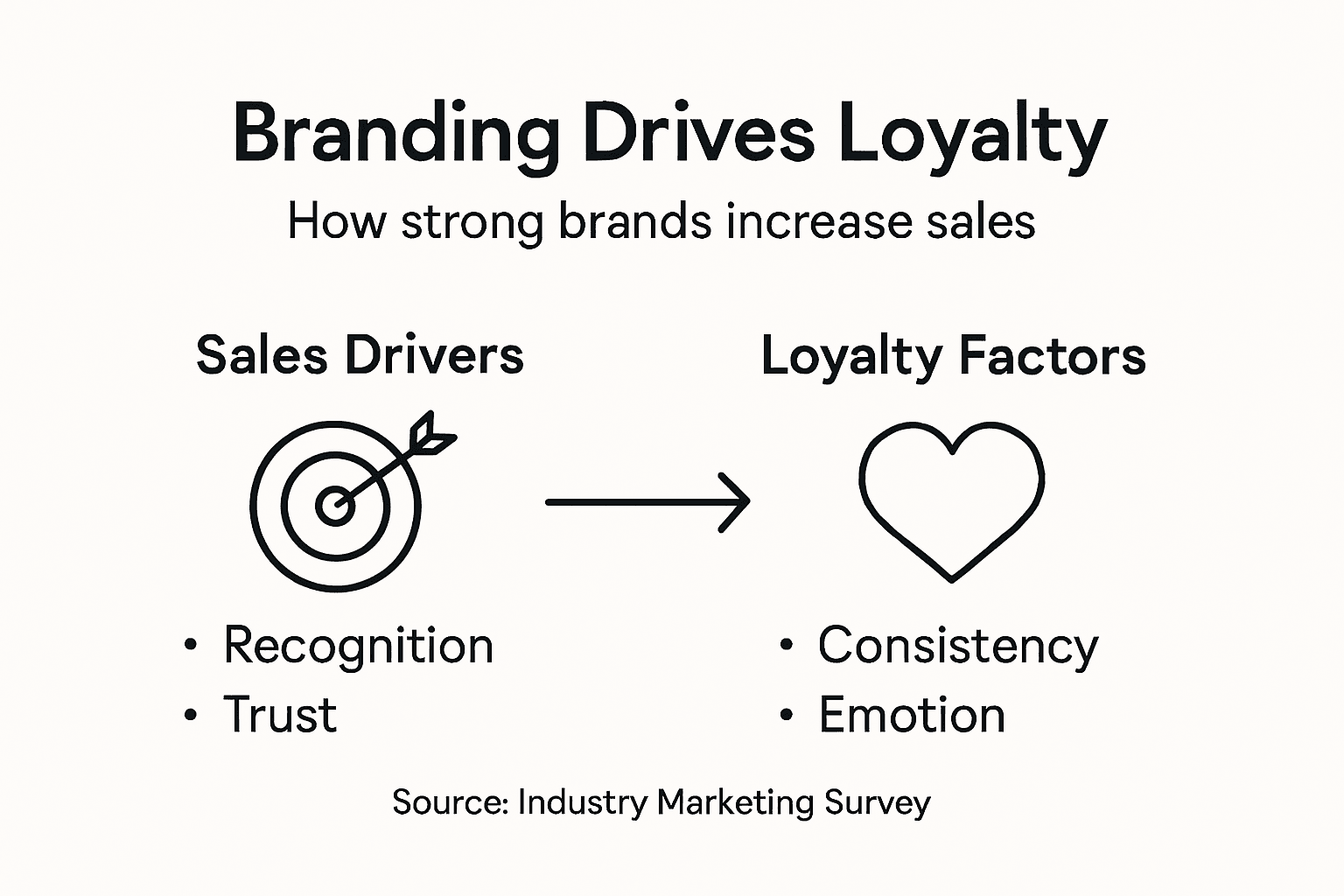
Customer loyalty emerges from consistent brand performance and emotional alignment. Brand equity represents the cumulative value of customer perceptions, trust, and positive associations with a business. Successful retailers understand that loyalty is not simply about offering competitive prices, but about creating memorable experiences that make customers feel understood, valued, and emotionally connected to the brand. This might involve personalised service, responsive communication, transparent business practices, and demonstrating genuine commitment to customer satisfaction.
The psychological mechanisms driving brand loyalty are complex and multifaceted. Customers are more likely to remain loyal to brands that provide predictable quality, demonstrate reliability, and consistently meet or exceed expectations. Small retailers can leverage branding strategies that highlight their unique strengths, such as local connections, personalised service, or specialised expertise. By communicating these distinctive attributes clearly and authentically, businesses can differentiate themselves in competitive markets and build a loyal customer base that acts as a sustainable growth engine.
Pro tip: Develop a customer feedback loop that systematically captures, analyses, and responds to customer insights to continuously refine your brand experience and loyalty strategies.
Avoiding Common Branding Pitfalls in Retail
Retail branding strategies often falter due to fundamental misunderstandings about brand communication and customer experience. Many small retailers inadvertently create brand confusion by inconsistently presenting their business identity across different platforms. This inconsistency can erode customer trust and diminish the perceived professionalism of the business, ultimately undermining sales potential.
Brand messaging requires careful, deliberate approach. Common pitfalls include attempting to appeal to everyone, which results in a diluted brand identity that resonates with no one. Successful retailers understand the importance of defining a clear, specific target audience and crafting a brand narrative that speaks directly to their customers’ needs, aspirations, and values. This means developing a consistent tone of voice, visual language, and communication strategy that remains authentic and focused.
Digital and physical brand touchpoints demand meticulous alignment. Small retailers frequently make the mistake of treating online and offline brand experiences as separate entities, creating disjointed customer journeys. A cohesive brand strategy requires seamless integration across all channels – from social media and website design to in-store interactions and packaging. Every interaction should reinforce the core brand promise and deliver a unified, recognisable experience that builds customer confidence and loyalty.
The following table highlights common branding pitfalls in retail and effective solutions:
| Pitfall | Potential Impact | Suggested Solution |
|---|---|---|
| Inconsistent brand messaging | Loss of customer trust | Create and use brand guidelines |
| Diluted audience targeting | Weak brand recognition | Define a specific target audience |
| Disconnected online/offline experience | Confusing customer journey | Integrate all brand touchpoints |
Pro tip: Conduct a quarterly brand audit to review all communication channels, ensuring your brand presentation remains consistent, authentic, and aligned with your core business values.
Unlock the Power of Branding to Boost Your Retail Sales and Loyalty
The article highlights how consistent brand messaging and emotional connections are critical challenges for retailers aiming to drive growth and customer loyalty. If you struggle with creating a distinctive brand personality or aligning your online and offline presence, you are not alone. Many businesses find it difficult to build trust and recognition without a cohesive visual identity and clear communication strategy. This is where expert design and branding support can make all the difference.
At KUKOO Creative, we have spent over a decade partnering with business owners to craft impactful logos, websites, and brand elements that resonate with target audiences. Our approach ensures your brand story is told authentically and consistently across all touchpoints. Whether you want to strengthen your corporate branding or develop private label branding that increases profit margins, our tailored solutions help you build meaningful connections that convert into loyalty and long-term sales growth.
Ready to transform your brand and drive real business results?
Discover how strategic design can elevate your retail brand today by visiting KUKOO Creative. Explore our expert services and start creating the consistent, trustworthy brand experience your customers deserve at KUKOO Creative. Make your brand the foundation of loyalty and growth now.
Frequently Asked Questions
What is the importance of branding in retail sales?
Branding in retail is crucial as it shapes how customers perceive a business and fosters emotional connections that lead to increased loyalty and sales.
How can small retailers effectively implement branding strategies?
Small retailers can implement branding strategies by defining their unique value proposition, creating a consistent brand identity, and ensuring all customer interactions align with their core values.
What are common pitfalls in retail branding to avoid?
Common pitfalls include inconsistent brand messaging, diluted audience targeting, and disconnected online and offline experiences, all of which can erode customer trust and loyalty.
How does branding influence customer loyalty?
Branding influences customer loyalty by creating memorable experiences and emotional connections that encourage repeat purchases, making customers feel valued and understood.
Recommended
- 7 Essential Types of Branding for Small Retail Owners
- Role of Branding Agencies – Building Business Identity
- Why Branding Matters: Complete Guide For UK Business Owners – Kukoo Creative
- Complete Guide to the Role of Branding in Recruitment
- 7 Key Benefits of Custom Labels for Business Growth – www.printcafeusa.com