
UK creative industries contribute over £125 billion annually, making storytelling a vital strategic tool for business success. For small to medium-sized businesses, storytelling in design transforms ordinary brand interactions into powerful emotional connections that drive customer engagement and loyalty. This article reveals how UK SMEs can harness storytelling to create memorable brand narratives that resonate deeply with audiences and differentiate your business in competitive markets.
Table of Contents
- Understanding Storytelling In Design
- Mechanisms Of Storytelling Impact In Design
- Impact Of Storytelling On Customer Engagement And Loyalty
- Common Misconceptions About Storytelling In Design
- Applying Storytelling In Your Business Design Projects
- Enhance Your Brand Storytelling With Expert Design Services
- Frequently Asked Questions About Storytelling In Design
Key takeaways
| Point | Details |
|---|---|
| Emotional connection | Storytelling in design builds emotional bonds through visual and physical narratives that organise spatial, cultural, and environmental relationships. |
| Customer engagement | Visual storytelling generates significantly higher engagement rates compared to non-narrative approaches, directly increasing loyalty and brand recall. |
| Strategic framework | A five-stage storytelling design framework guides SMEs from audience insight through feedback iteration for measurable results. |
| Misconceptions cleared | Storytelling differs fundamentally from advertising or decoration, serving as strategic communication that benefits businesses of all sizes. |
| Practical application | UK SMEs can integrate storytelling through structured steps combining audience research, narrative development, and visual language without large budgets. |
Understanding storytelling in design
Storytelling in design creates physical and visual narratives that emotionally engage users by organising spatial, socio-economic, and environmental relationships. Unlike simple aesthetics, this approach weaves meaning into every design element, transforming logos, websites, and brand materials into coherent narratives that audiences remember and relate to.
Think of your brand design as a conversation, not a monologue. Every colour choice, typography selection, and layout decision contributes to a larger story about who you are and why customers should care. When architectural firms design spaces, they consider how people move through and experience environments. Brand designers apply the same principle to visual identity.
This narrative approach reshapes how UK SMEs approach branding. Consider these storytelling design applications:
- Brand logos that encode founding stories or core values through symbolic imagery
- Website layouts that guide visitors through customer journey narratives
- Packaging designs that communicate product origin stories and craftsmanship
- Social media content that builds ongoing narrative arcs around brand purpose
For small businesses competing against larger competitors, storytelling provides a powerful differentiator. You might lack the budget for massive advertising campaigns, but authentic brand storytelling creates emotional resonance that paid promotion cannot replicate. Understanding the role of storytelling in design helps you craft visual identities that communicate values, build trust, and forge lasting customer relationships.
Successful storytelling design requires understanding your audience deeply. What challenges do they face? What aspirations drive their decisions? When you answer these questions, your design choices become intentional narrative elements rather than arbitrary aesthetic decisions. This strategic approach to branding transforms visual materials into powerful business assets.
Mechanisms of storytelling impact in design
Storytelling enhances empathy and user focus, improving clarity and alignment in digital product design. By centering narratives around user needs and emotions, designers create solutions that genuinely solve problems rather than simply looking attractive.

This empathy-driven approach revolutionises how teams communicate internally and with customers. Visual narratives and storyboards translate abstract concepts into concrete scenarios everyone understands. When your designer presents a storyboard showing how customers discover, evaluate, and purchase your product, stakeholders immediately grasp the user experience in ways that technical specifications never achieve.
Persona-driven stories streamline problem-solving throughout design processes. Instead of debating subjective preferences, teams can ask whether design choices serve the narrative and support user goals. This objective framework reduces endless revision cycles and keeps projects focused on delivering value.
Key storytelling mechanisms that improve design outcomes include:
- Scenario mapping that visualises customer journeys from awareness through advocacy
- Emotional arc planning that ensures designs evoke intended feelings at each touchpoint
- Narrative consistency checks that maintain coherent messaging across all brand materials
- User testing framed as story validation to identify where narratives break down
The power of storytelling in UX design extends beyond digital products to every customer interaction point. When applied to logo design, storytelling transforms symbols from arbitrary marks into meaningful representations of brand identity. Applied to websites, it converts navigation from technical structure into guided narrative experiences.
Pro Tip: Create simple storyboards before finalising any major design work. Sketch customer scenarios showing how people discover and interact with your brand across touchpoints. This investment catches narrative disconnects early, preventing costly revisions later and ensuring your design communicates cohesively.
Integrating design thinking approaches with storytelling creates powerful synergies. Design thinking’s emphasis on empathy and iteration naturally supports narrative development, while storytelling provides the emotional framework that makes design thinking outcomes resonate with audiences.
Impact of storytelling on customer engagement and loyalty
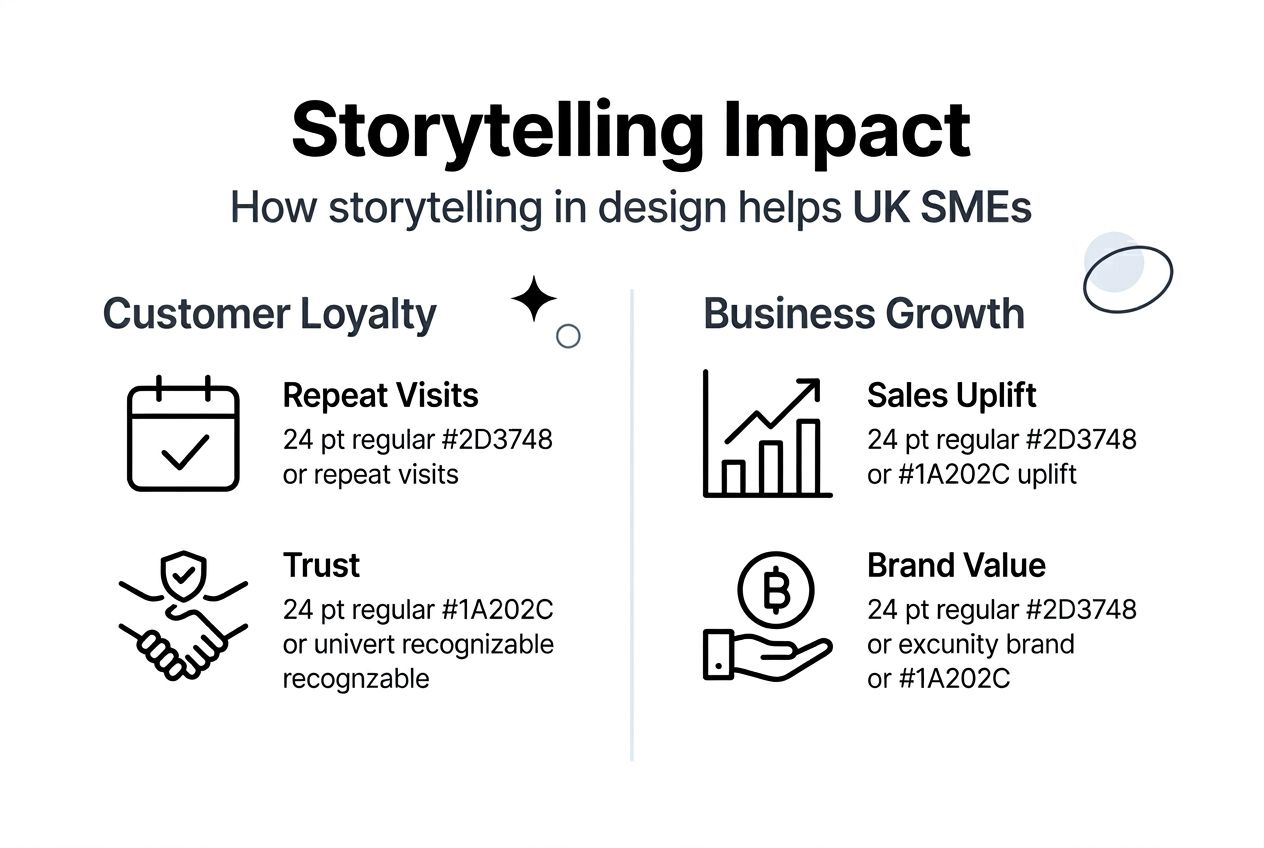
Narrative-driven brands foster belonging and trust that transactional relationships never achieve. When customers connect with your brand story, they become invested participants rather than passive consumers. This emotional investment translates directly into measurable business outcomes.
Visual storytelling on social media generates significantly higher customer engagement compared to posts without visuals. The data proves what intuition suggests: humans process visual narratives faster and remember them longer than text-only content. For UK SMEs competing for attention in crowded markets, this engagement advantage becomes crucial.
Consider how emotional memories created by stories enhance loyalty over time. Customers might forget product specifications or price points, but they remember how brands made them feel. When your design tells authentic stories that align with customer values, you create positive associations that persist through market fluctuations and competitive pressure.
Visual content is processed 60,000 times faster than text, and posts with compelling visual storytelling receive dramatically higher engagement rates across all social platforms.
This engagement translates into concrete business benefits:
- Increased conversion rates as narrative-driven designs guide prospects through decision journeys
- Higher customer lifetime value when emotional connections foster repeat purchases
- Stronger word-of-mouth referrals as customers share compelling brand stories
- Improved brand recall that keeps your business top-of-mind during purchase decisions
For small businesses, these loyalty benefits compound over time. While large corporations spend millions maintaining brand awareness, SMEs with strong storytelling design create communities of advocates who promote brands organically. The benefits of brand storytelling extend far beyond immediate sales, building sustainable competitive advantages.
The lasting business impact for SMEs investing in storytelling includes reduced customer acquisition costs, increased pricing power through differentiation, and resilience during economic downturns. When customers feel emotionally connected to your brand narrative, they remain loyal even when cheaper alternatives emerge.
Common misconceptions about storytelling in design
Many UK SME owners misunderstand storytelling as merely decorative rather than strategic. This confusion prevents businesses from leveraging narrative design’s full potential. Clearing these misconceptions empowers you to approach storytelling with appropriate expectations and investment.
Myth 1: Storytelling is just making things look pretty. Reality: Storytelling is a strategic communication method distinct from decoration. Pretty designs might catch attention briefly, but strategic storytelling sustains engagement by conveying meaning, values, and purpose through every design element.
Myth 2: It’s the same as advertising or sales pitches. Reality: Advertising tells you what to buy. Storytelling shows you who a brand is and why it matters. Authentic narrative building invites customers into ongoing relationships rather than pushing one-time transactions. This distinction fundamentally changes how audiences receive and respond to messages.
Myth 3: Only large brands with big budgets benefit from storytelling. Reality: SMEs actually gain more from storytelling because it levels the playing field. Authentic narratives about your founding story, values, and community impact resonate more powerfully than generic corporate messaging. Your smaller scale becomes an advantage when storytelling emphasises personal connection.
| Aspect | Storytelling Design | Traditional Marketing | Pure Aesthetics |
|---|---|---|---|
| Primary goal | Build emotional connection through narrative | Drive immediate sales | Create visual appeal |
| Time horizon | Long-term relationship building | Short-term conversion focus | Project completion |
| Measurement | Engagement, loyalty, brand recall | ROI, conversion rate | Subjective preference |
| Customer role | Active participant in ongoing story | Target for persuasion | Passive viewer |
| Sustainability | Compounds value over time | Requires continuous spending | Static impact |
Understanding these differences helps you communicate storytelling’s value to stakeholders who might dismiss it as unnecessary expense. When presenting storytelling initiatives internally, frame them as strategic branding investments that reduce long-term marketing costs by building loyal communities.
Pro Tip: When pitching storytelling design internally, avoid vague terms like “emotional connection.” Instead, present specific metrics showing how narrative-driven brands achieve higher customer lifetime value and lower acquisition costs. Connect storytelling directly to business outcomes your stakeholders already track.
The strategic nature of storytelling means it requires intentional planning and execution, not just creative flair. Successful implementation combines audience insight, narrative structure, and visual execution into cohesive brand experiences.
Applying storytelling in your business design projects
Integrated storytelling frameworks improve communication skills and brand narrative effectiveness through structured approaches. UK SMEs can follow a proven five-stage framework to embed storytelling into design projects systematically.
The storytelling design framework comprises these essential stages:
-
Audience insight: Research your target customers deeply through interviews, surveys, and behavioural data analysis. Identify their challenges, aspirations, and values to inform narrative direction.
-
Narrative development: Craft your core brand story answering why you exist, what you believe, and how you serve customers differently. Ensure this narrative is authentic and differentiating.
-
Visual language: Translate narrative elements into design choices including colour psychology, typography personality, imagery style, and compositional patterns that reinforce your story.
-
Interaction design: Plan how customers experience your narrative across touchpoints, ensuring consistent storytelling from first awareness through post-purchase advocacy.
-
Feedback and iteration: Test narrative effectiveness with real users, gathering data on comprehension, emotional response, and behavioural outcomes, then refine based on findings.
When implementing this framework, avoid these common pitfalls:
- Starting with aesthetics before defining narrative direction, which produces pretty but meaningless design
- Copying competitor stories rather than developing authentic narratives rooted in your actual values and experiences
- Inconsistent storytelling across channels that confuses audiences and dilutes brand identity
- Neglecting measurement, which prevents learning and improvement over time
Tracking storytelling effectiveness requires appropriate metrics. This data table summarises key success indicators:
| Metric Category | Specific Measures | Target Improvement |
|---|---|---|
| Engagement | Time on site, social shares, content interactions | 40-60% increase |
| Loyalty | Repeat purchase rate, customer lifetime value | 25-35% increase |
| Brand recall | Unaided awareness, brand attribute association | 30-50% increase |
| Conversion | Lead-to-customer rate, average order value | 20-30% increase |
Applying brand storytelling principles to your design projects starts with clarifying your narrative foundation. What story does your brand tell? How do visual elements communicate that story? When you answer these questions before designing, every creative decision becomes intentional and strategic.
Your visual branding workflow should integrate storytelling from initial briefing through final delivery. This ensures narrative consistency across all brand touchpoints. Even something as focused as logo design benefits from storytelling grounding, transforming symbols into meaningful brand representations.
Pro Tip: Measure storytelling impact by tracking customer feedback themes before and after implementing narrative design. Look for increased mentions of emotional connection, brand understanding, and value alignment. These qualitative signals often predict quantitative performance improvements before they appear in conversion data.
Enhance your brand storytelling with expert design services
For over a decade, we’ve partnered with UK business owners to create impactful designs that build brand recognition and forge genuine customer connections. Our expertise lies in integrating authentic storytelling into every design element, from logos to complete visual identities that resonate with your audience.
Kukoo Creative’s storytelling-focused design services deliver:
- Customised narrative strategies developed from deep audience research and your unique brand values
- Cohesive visual branding that tells your story consistently across all customer touchpoints
- Improved customer connection through design choices grounded in proven storytelling frameworks
- Measurable engagement increases as narrative-driven designs transform passive viewers into active participants
Whether you’re launching a new venture or refreshing an established brand, our logo design process starts with understanding your story before sketching a single concept. This narrative foundation ensures your visual identity communicates meaning, not just aesthetics.
Our structured visual branding workflow guides you from initial strategy through final implementation, maintaining narrative consistency throughout. We understand that UK SMEs need design partners who combine creative excellence with business insight, delivering brand storytelling that drives real results.
Ready to transform your brand through strategic storytelling design? Explore our portfolio to see how we’ve helped businesses like yours create memorable visual narratives, then book a consultation to discuss your storytelling goals.
Frequently asked questions about storytelling in design
What is the difference between storytelling in design and traditional marketing?
Storytelling in design builds ongoing narrative relationships that invite customers into brand experiences, whilst traditional marketing pushes persuasive messages aimed at immediate conversions. Storytelling focuses on authentic connection and long-term loyalty, whereas marketing prioritises short-term sales objectives through promotional tactics.
How can small businesses start integrating storytelling without a big budget?
Begin by clarifying your authentic brand narrative through customer interviews and internal reflection about your founding purpose and values. Document this story in a simple brief, then ensure every design decision from social media posts to packaging reinforces these narrative elements. Consistency matters more than production budget when building memorable brand stories.
Which visual elements are most important for storytelling in brand design?
Colour psychology and typography personality carry the strongest narrative weight because they evoke immediate emotional responses. Imagery style that shows real people and authentic situations strengthens storytelling more than generic stock photos. Compositional patterns that guide viewer attention through intentional visual hierarchies ensure your narrative unfolds logically across designs.
How do you measure the success of storytelling in design?
Track engagement metrics including time on site, social shares, and content interaction rates alongside loyalty indicators like repeat purchase frequency and customer lifetime value. Monitor brand recall through periodic surveys asking customers what they remember and associate with your brand. Rising emotional connection themes in customer feedback signal effective storytelling before quantitative metrics shift.
Can storytelling help if my business is in a very competitive market?
Storytelling becomes more valuable in competitive markets because authentic narratives differentiate you when products and prices converge. Customers choose brands they connect with emotionally when functional differences disappear. Your unique founding story, values, and community relationships cannot be replicated by competitors, creating sustainable competitive advantages that transcend feature comparisons.