
Finding the right words to express your creative business’s true story in Leeds can feel like a challenge. Capturing a brand’s purpose means looking beyond profit and focusing on a deeper mission that resonates with your clients. By combining genuine values and personal insights, you create a message that stands out. Authentic storytelling forms the emotional bridge that connects you to your ideal audience and helps your brand grow with trust and recognition.
Table of Contents
- Step 1: Define Your Brand’s Purpose And Values
- Step 2: Identify Your Audience’s Needs And Aspirations
- Step 3: Gather Key Moments And Personal Insights
- Step 4: Structure Your Brand Narrative For Clarity
- Step 5: Test Your Story’s Impact And Refine
Quick Summary
| Key Point | Explanation |
|---|---|
| 1. Define your brand’s purpose | Establish a mission that resonates beyond profit, articulating what problems you solve and the values that drive you. |
| 2. Understand your audience’s needs | Conduct thorough audience research to grasp deeper motivations, pain points, and aspirations that will inform your brand storytelling. |
| 3. Share personal insights | Gather meaningful experiences that have shape your journey, adding depth and authenticity to your narrative that connects with clients. |
| 4. Structure your brand narrative | Organise your story around clear elements such as purpose, method, and outcomes to create a coherent communication strategy. |
| 5. Test and refine your story | Use feedback mechanisms like surveys and interviews to validate and enhance your brand narrative, ensuring its relevance and emotional impact. |
Step 1: Define your brand’s purpose and values
Defining your brand’s purpose and values represents the foundational cornerstone of creating a compelling brand story for creative businesses. This critical step transforms your enterprise from a simple service provider into a meaningful, mission-driven organisation that resonates deeply with your target audience.
To uncover your brand’s authentic purpose, start by reflecting on why your business truly exists beyond financial gain. Brand purpose research highlights demonstrates that successful organisations understand their deeper motivations. Consider these key aspects:
- What specific problem does your creative business solve?
- What unique value do you bring to your clients?
- What motivates you beyond monetary success?
- How do your personal values align with your business goals?
Your brand purpose should articulate a genuine commitment that transcends mere profit. It must connect emotionally with your ideal clients while reflecting your authentic professional identity. Authenticity requires integrating these values consistently across all business interactions.
Translate your purpose into clear, actionable values that guide your business decisions. These values become the narrative thread weaving through your brand story, creating a cohesive and compelling message that attracts and retains clients who share your vision.
Professional tip: Conduct a structured workshop with your team to collaboratively explore and articulate your brand’s deeper purpose, ensuring everyone feels genuinely connected to the shared mission.
Step 2: Identify your audience’s needs and aspirations
Identifying your target audience’s precise needs and aspirations is crucial for crafting a brand story that genuinely resonates with potential clients. This step transforms your creative business from simply offering services to becoming a meaningful solution for your ideal customers.
Audience research methodologies provide strategic insights into understanding the people who will connect most deeply with your brand. Effective audience identification involves several key approaches:
- Analyse demographic data (age, location, profession)
- Explore psychographic characteristics (values, interests, challenges)
- Review client interaction histories
- Conduct targeted surveys or interviews
- Examine social media engagement patterns
Understanding your audience requires moving beyond surface-level demographics to comprehend their underlying motivations and pain points. Comprehensive audience research helps you develop empathy, allowing you to craft messaging that speaks directly to their specific experiences and aspirations.

Digital audience insights reveal that successful brands don’t just sell products—they provide solutions that align with their audience’s deeper goals. This means translating your audience’s challenges into compelling narratives that demonstrate how your creative business uniquely addresses their needs.
Professional tip: Create detailed audience personas that capture not just statistical data, but the emotional landscape of your ideal clients, enabling more authentic and targeted brand storytelling.
Step 3: Gather key moments and personal insights
Gathering meaningful personal moments and insights transforms your brand story from a generic narrative into a compelling, authentic journey that connects deeply with your audience. This crucial step involves excavating the unique experiences that define your creative business’s true character.
Personal storytelling techniques reveal that powerful brand narratives emerge from genuine, emotionally resonant moments. Begin by reflecting on your professional journey with these strategic approaches:
- Identify pivotal turning points in your business development
- Recall challenges that shaped your professional philosophy
- Document unexpected successes and learning experiences
- Explore moments of professional vulnerability
- Highlight interactions that fundamentally changed your perspective
Dig deeper than surface-level achievements. Authentic storytelling requires vulnerability and a willingness to share the genuine experiences that have genuinely shaped your creative path. These personal insights provide the emotional texture that distinguishes your brand from competitors.
Brand narrative research demonstrates that consumers connect most powerfully with stories that reveal true human experiences. Your key moments should illustrate not just what you do, but why you do it, creating an emotional bridge between your personal journey and your potential clients’ aspirations.
Professional tip: Create a dedicated storytelling journal where you regularly capture professional experiences, reflections, and moments of genuine insight, ensuring you never lose those transformative narratives.
Step 4: Structure your brand narrative for clarity
Crafting a structured brand narrative transforms your story from a random collection of experiences into a powerful, coherent communication strategy that captivates your audience. This step is about creating a clear, compelling framework that guides your storytelling with precision and purpose.
Brand narrative frameworks suggest organising your story around three critical dimensions: purpose, method, and outcomes. Consider structuring your narrative with these core elements:
- Why: Your fundamental reason for existing
- How: The unique approach that defines your work
- What: The tangible results and impact you create
- Who: The specific audience you serve
- When: Key moments in your professional evolution
Consistent language and strategic emphasis are crucial. Narrative coherence builds recognition and helps potential clients understand your distinctive value proposition. Each element should flow naturally, creating a seamless story that feels authentic and intentional.
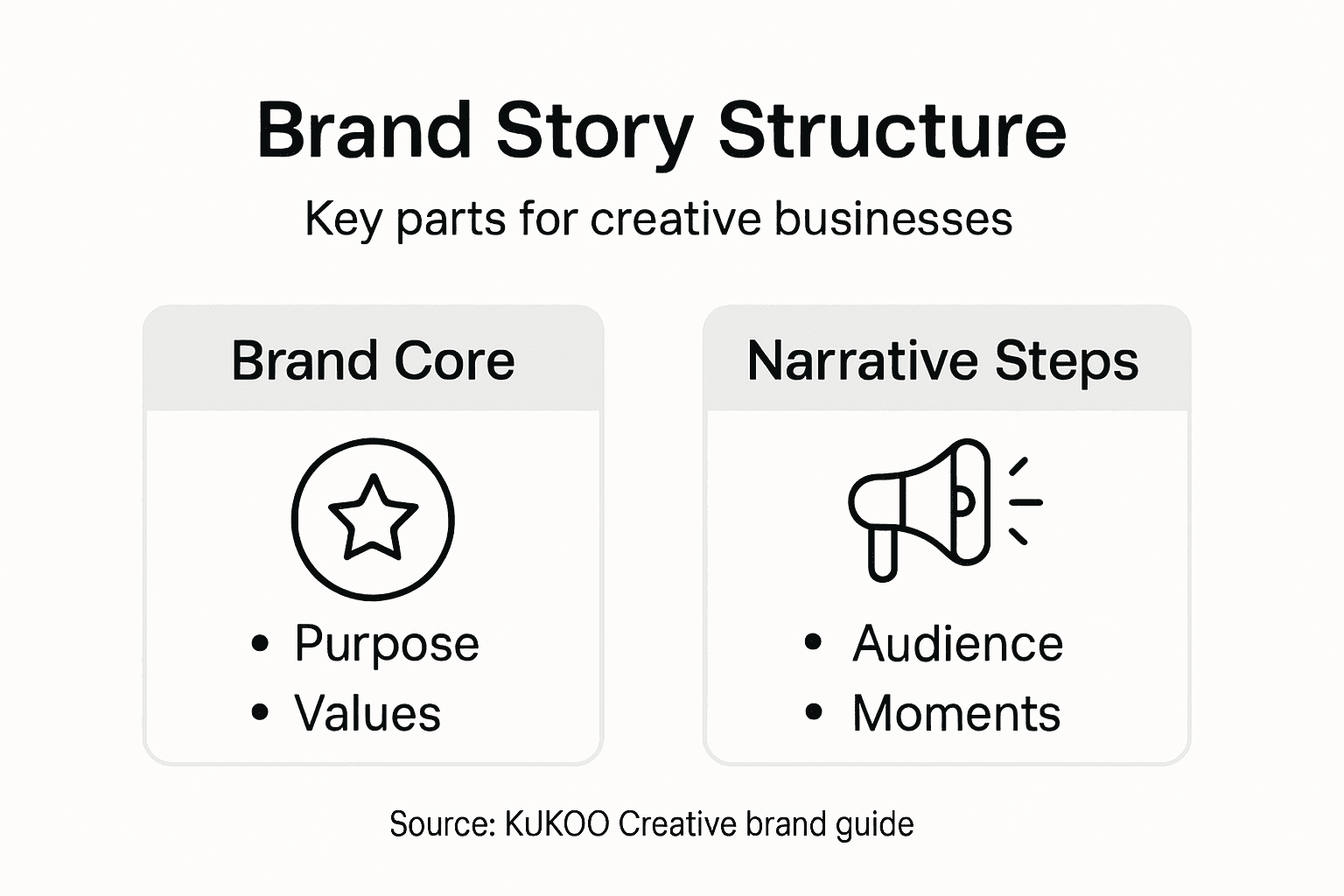
Storytelling strategies highlight the importance of emotional connection. Your narrative structure should not just inform, but also evoke feelings that resonate with your target audience. Think of your brand story as a journey, with each section revealing another layer of your professional identity and commitment.
Professional tip: Create a narrative outline that maps your story’s key emotional and informational touchpoints, ensuring consistency and impact across all your communication channels.
Here’s a summary of how storytelling elements shape a compelling brand narrative:
| Element | Role in Brand Story | Audience Impact |
|---|---|---|
| Purpose | Drives core mission | Inspires emotional connection |
| Values | Guides daily decisions | Builds trust and loyalty |
| Key Moments | Illustrates unique journey | Creates relatability and empathy |
| Structure | Organises message effectively | Enhances clarity and recall |
| Testing | Validates and refines story | Ensures continued relevance |
Step 5: Test your story’s impact and refine
Validating and refining your brand story is a critical process that transforms your narrative from a theoretical concept into a powerful, resonant communication strategy. This step ensures your carefully crafted story genuinely connects with your intended audience and drives meaningful engagement.
Brand story validation techniques provide structured approaches to measuring narrative effectiveness. Consider implementing these strategic testing methods:
- Conduct targeted audience surveys
- Gather qualitative feedback from ideal clients
- Analyse engagement metrics across communication channels
- Review emotional response and connection levels
- Track behavioural changes prompted by your narrative
Iterative storytelling demands continuous improvement. Your brand narrative is not a static document but a living communication tool that evolves with your business and audience insights. Each round of testing provides valuable information to refine your messaging and strengthen its impact.
Storytelling impact measurement emphasises the importance of collecting diverse evidence. Look beyond surface-level metrics to understand how your story influences audience perceptions, builds trust, and potentially transforms their relationship with your brand.
Compare common methods for validating brand narratives:
| Validation Method | Level of Insight Provided | Best For |
|---|---|---|
| Audience Surveys | Quantitative engagement analysis | Broad feedback collection |
| Client Interviews | Deep qualitative understanding | Emotional response evaluation |
| Engagement Metrics | Behavioural tracking | Digital channel optimisation |
| Feedback Sessions | Ongoing narrative improvement | Long-term story refinement |
Professional tip: Create a dedicated feedback mechanism, such as a quarterly narrative review session, where you systematically collect and analyse audience responses to ensure your brand story remains authentic and compelling.
Transform Your Brand Story into a Powerful Visual Identity
Crafting an authentic brand story that resonates deeply with your audience is only the first step. The real challenge lies in translating your purpose, values, and unique journey into visual designs that capture attention and build lasting connections. At KUKOO Creative, we understand how crucial it is to create impactful logos and websites that reflect your carefully structured brand narrative and engage the people who matter most to your business.
Ready to elevate your creative business with designs tailored to your story? Visit us at KUKOO Creative where we have over a decade of experience partnering with business owners to deliver personalised branding solutions. Don’t let your story remain just words. Turn it into a compelling brand presence today and connect with your ideal clients in a meaningful way. Start your journey now by exploring how we can bring your brand narrative to life.
Frequently Asked Questions
How can I define my brand’s purpose and values?
To define your brand’s purpose and values, reflect on why your creative business exists beyond making money. Start by asking yourself what problems you solve for clients and what unique value you bring; aim to articulate these insights clearly.
What steps should I take to identify my target audience’s needs?
Identify your target audience’s needs by conducting demographic analysis, exploring psychographic characteristics, and reviewing past client interactions. Create detailed audience personas that include their motivations and challenges to ensure your brand story resonates.
How do I gather personal insights to enhance my brand story?
Gather personal insights by reflecting on significant moments in your business journey, such as challenges faced and pivotal successes. Document these experiences in a storytelling journal, focusing on how they shape your brand’s identity.
What structure should I use for my brand narrative?
Use a clear structure for your brand narrative by organising it around key elements: purpose, method, outcomes, audience, and evolution. This framework will help ensure your story is coherent and compelling, making it easier for potential clients to connect with your message.
How can I test my brand story’s impact effectively?
To test your brand story’s impact, conduct audience surveys and gather qualitative feedback from clients to see how they resonate with your narrative. Track engagement metrics and emotional responses, aiming to refine your story every quarter based on this feedback.