
Most british businesses underestimate the power of a well-crafted logo, yet research shows that brands with a strong visual identity are up to 50 percent more likely to attract loyal customers. In a crowded marketplace, a distinctive logo does more than just set you apart. It tells your brand story at a glance, shapes first impressions, and builds trust with your audience. Discover practical strategies for turning your logo into a lasting signature of success.
Table of Contents
- Step 1: Define Your Brand Identity And Values
- Step 2: Research Your Industry And Analyse Competitors
- Step 3: Sketch Initial Concepts And Experiment Creatively
- Step 4: Select Colours, Fonts, And Design Elements
- Step 5: Refine Your Favourite Concept Digitally
- Step 6: Review Your Logo For Versatility And Clarity
Quick Summary
| Key Point | Explanation |
|---|---|
| 1. Define your brand identity clearly | Understanding your core values will inform a logo that authentically reflects your business personality and unique position in the market. |
| 2. Conduct thorough competitor analysis | Research competitors’ branding to identify visual trends and market gaps that can guide your logo design and differentiation strategy. |
| 3. Experiment with a variety of sketches | Generate multiple initial sketches to explore creative possibilities that capture your brand’s essence, fostering innovative logo concepts. |
| 4. Choose complementary colours and fonts | Select colours and typography that align with your brand’s message, ensuring consistency across all branding materials for better recognition. |
| 5. Test logo clarity and versatility | Evaluate your logo’s performance across different platforms and sizes to ensure it remains effective and recognisable in various contexts. |
Step 1: Define your brand identity and values
Defining your brand identity is the foundational strategy that will transform your business logo from a mere graphic into a powerful communication tool. Your logo represents the visual essence of your company’s personality, values, and unique positioning in the marketplace.
To begin crafting a meaningful brand identity, you’ll want to conduct an introspective examination of your business core. Start by asking yourself critical questions: What fundamental beliefs drive your organisation? What promises do you make to your customers? What sets you apart from competitors? Understanding your brand’s core values helps create a logo that genuinely reflects your business spirit.
Consider creating a brief brand positioning statement that captures your essence in a single, powerful sentence. This statement will serve as your north star when designing your logo visualisation. Include elements like your target audience, your unique value proposition, and the emotional response you want to evoke. Remember that a great logo does more than look appealing it tells a story about who you are as a business and what you stand for in just a few strategic design elements.
Step 2: Research your industry and analyse competitors
Researching your industry and understanding your competitors is a critical step in developing a logo that stands out and communicates your unique market position. This strategic investigation will provide invaluable insights that inform your visual branding decisions.
Conducting comprehensive competitor research involves more than just a quick online search. You will want to systematically map out the competitive landscape by identifying key players in your sector, examining their visual branding, and understanding how they communicate their value proposition through design. Look closely at their logos examining colour schemes, typography, imagery, and overall aesthetic to understand current design trends and potential opportunities for differentiation.
As you analyse competitors, create a detailed comparison matrix that captures their visual branding elements, marketing approaches, and unique selling points. This methodical approach will help you identify gaps in the market and design a logo that not only looks professional but strategically positions your business. Pay special attention to how established brands in your industry use visual elements to communicate their core values and brand personality. By understanding these nuances, you can craft a logo that resonates with your target audience while setting your business apart from the competition.
Step 3: Sketch initial concepts and experiment creatively
Transforming your brand identity into visual form begins with the creative process of sketching initial logo concepts. This stage is about exploring possibilities and unleashing your imagination to capture the essence of your business in a simple yet powerful graphic representation.
Start by gathering basic drawing materials like quality paper, pencils, and a sketchbook. Your goal is to generate multiple rough drafts that explore different visual interpretations of your brand. Understanding how brand identity elements like visual design work together will help you create a more cohesive approach. Experiment with various geometric shapes, typography styles, and symbolic representations that might reflect your business personality. Don’t worry about perfection during this phase draw quickly, generate numerous concepts, and focus on capturing the core spirit of your brand.

Consider creating at least 20 to 30 initial sketches, allowing yourself complete creative freedom. Some designs will be wildly different while others might be slight variations on a theme. Review these sketches objectively, looking for unexpected connections or unique elements that genuinely communicate your brand’s character. Remember that great logos often emerge from extensive exploration and a willingness to push beyond your first ideas. The most compelling designs frequently arise from unexpected combinations and creative experimentation.
Step 4: Select colours, fonts, and design elements
Selecting the right colours, fonts, and design elements is a critical step in creating a logo that truly represents your business personality and resonates with your target audience. These visual components will serve as the foundational language of your brand’s visual communication.
Visual branding elements like colours and typography play a crucial role in communicating your brand’s essence. Start by choosing a colour palette that reflects your business values and evokes the right emotional response. Consider the psychological impact of different colours blue might suggest professionalism and trust, while green could indicate growth and sustainability. When selecting fonts, aim for readability and personality choose typefaces that are distinctive yet clear and work well at different scales.
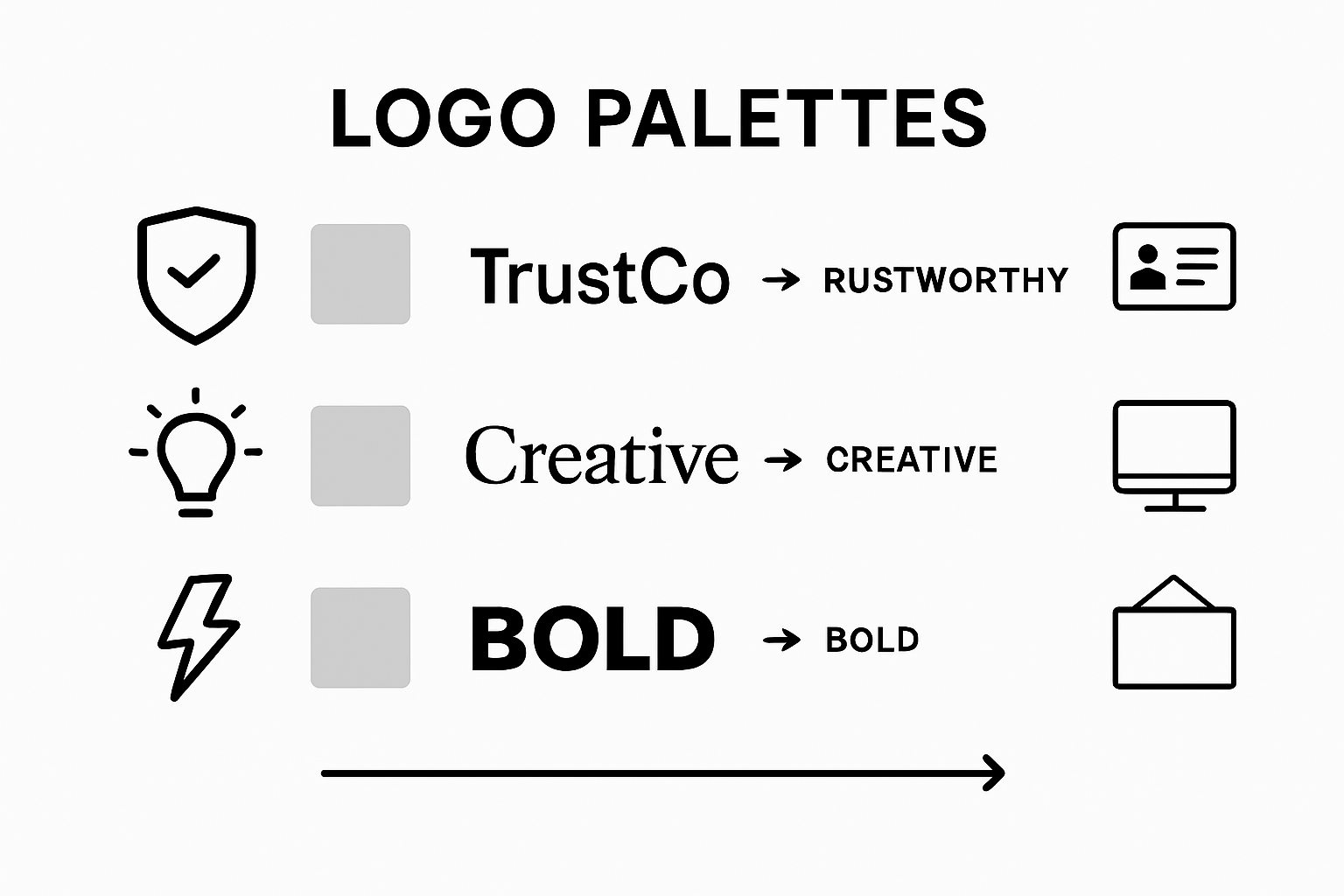
Remember that consistency is key in design. Your chosen colours and fonts should work harmoniously across different applications from your logo to business cards, website, and marketing materials. Experiment with different combinations, but always prioritise how these elements communicate your brand’s unique story. A thoughtful approach to design elements can transform a simple logo into a powerful brand identifier that speaks directly to your ideal customers.
Step 5: Refine your favourite concept digitally
Transitioning your hand-drawn logo sketch into a digital format marks a crucial phase in transforming your creative vision into a professional brand asset. This digital refinement will elevate your initial concept from a rough idea to a polished professional design.
Begin by selecting appropriate graphic design software such as Adobe Illustrator or Affinity Designer. Understanding how brand identity elements translate across digital platforms will help you maintain design integrity. Carefully trace your most promising hand sketch using vector tools, which allow infinite scaling without losing quality. Pay close attention to precision create clean lines, ensure symmetry, and experiment with different iterations of your chosen concept. Focus on converting your initial sketch into crisp, scalable vector graphics that will look sharp across various applications from business cards to billboard signage.
As you refine your digital logo, test its versatility by viewing it at multiple sizes and against different backgrounds. A truly effective logo must remain recognisable and impactful whether displayed as a tiny social media icon or a large storefront sign. Consider creating multiple colour variations and versions to demonstrate the design’s flexibility while maintaining its core visual identity. Your goal is a logo that not only looks professional but communicates your brand’s unique personality at a single glance.
Step 6: Review your logo for versatility and clarity
The final stage of logo design involves a critical evaluation process that determines whether your visual identity will truly resonate with your target audience and perform effectively across multiple platforms. Your logo must communicate your brand essence clearly and consistently in any context.
Brand identity elements like visual design require meticulous scrutiny to ensure maximum impact. Test your logo by printing it at various sizes from tiny business card dimensions to large billboard scales. Examine how the design looks in full colour, black and white, and single colour variations. Assess its legibility and recognition factor when scaled down to small icons or viewed from a distance. Critically analyse whether the logo maintains its core visual integrity and communicates your brand message effectively in different scenarios.
Seek feedback from a diverse group of professionals and potential customers. Their fresh perspectives can reveal subtle design nuances you might have overlooked. A truly exceptional logo transcends mere aesthetic appeal it becomes a memorable visual shorthand for your entire brand narrative. Be prepared to make refined adjustments that enhance clarity and ensure your logo communicates your business personality with precision and elegance.
Elevate Your Brand with a Logo That Truly Speaks to Your Audience
Designing a logo that captures your business personality and stands out in a competitive UK market is no easy task. The challenges of defining your brand identity, researching competitors, and refining your design to perfection can become overwhelming. Your goal is clear a logo that tells your unique story, resonates emotionally, and looks flawless across every platform. This is where expert guidance transforms your vision into reality.
Unlock the power of professional design to craft a logo that embodies your core values and sets you apart. At Kukoo Creative, we understand how crucial your logo is for brand recognition and connecting with the right audience. With over a decade of experience, we help UK business owners like you transform ideas into impactful visual identities through expert brand strategy, creative exploration, and meticulous digital refinement.
Discover how our tailored solutions can help you define your brand clearly, create compelling visuals, and ensure your logo performs perfectly everywhere. Ready to make a lasting impression and elevate your business success?
Explore our complete design services and bring your brand identity to life today.
Create Your Logo with Kukoo Creative
Understanding Your Brand Identity
Start Your Branding Journey Now
Frequently Asked Questions
How can I define my brand identity for logo design?
To define your brand identity, start by examining your core values and what sets you apart from competitors. Ask yourself what promises you make to your customers, and consider writing a brief brand positioning statement that encapsulates your essence.
What steps should I take to research competitors in my industry for logo design?
Conduct thorough competitor research by identifying key players in your sector and analysing their visual branding elements. Create a comparison matrix to capture their logos, colour schemes, and unique selling points, which will help you identify opportunities for differentiation.
How many initial logo sketches should I create during the design process?
Aim to create at least 20 to 30 initial sketches as part of your logo design process. This allows for extensive exploration of ideas, helping you identify unique elements that genuinely represent your brand’s character.
What factors should I consider when selecting colours and fonts for my logo?
Focus on how colours and fonts reflect your brand’s personality and evoke the desired emotional response. Choose a colour palette and typography that work well together and ensure consistency across different applications.
How can I evaluate the effectiveness of my logo design?
To evaluate your logo’s effectiveness, test it by printing at various sizes and in different colour variations. Gather feedback from a diverse group of people to gain insights and make any necessary adjustments to enhance clarity and recognition.