
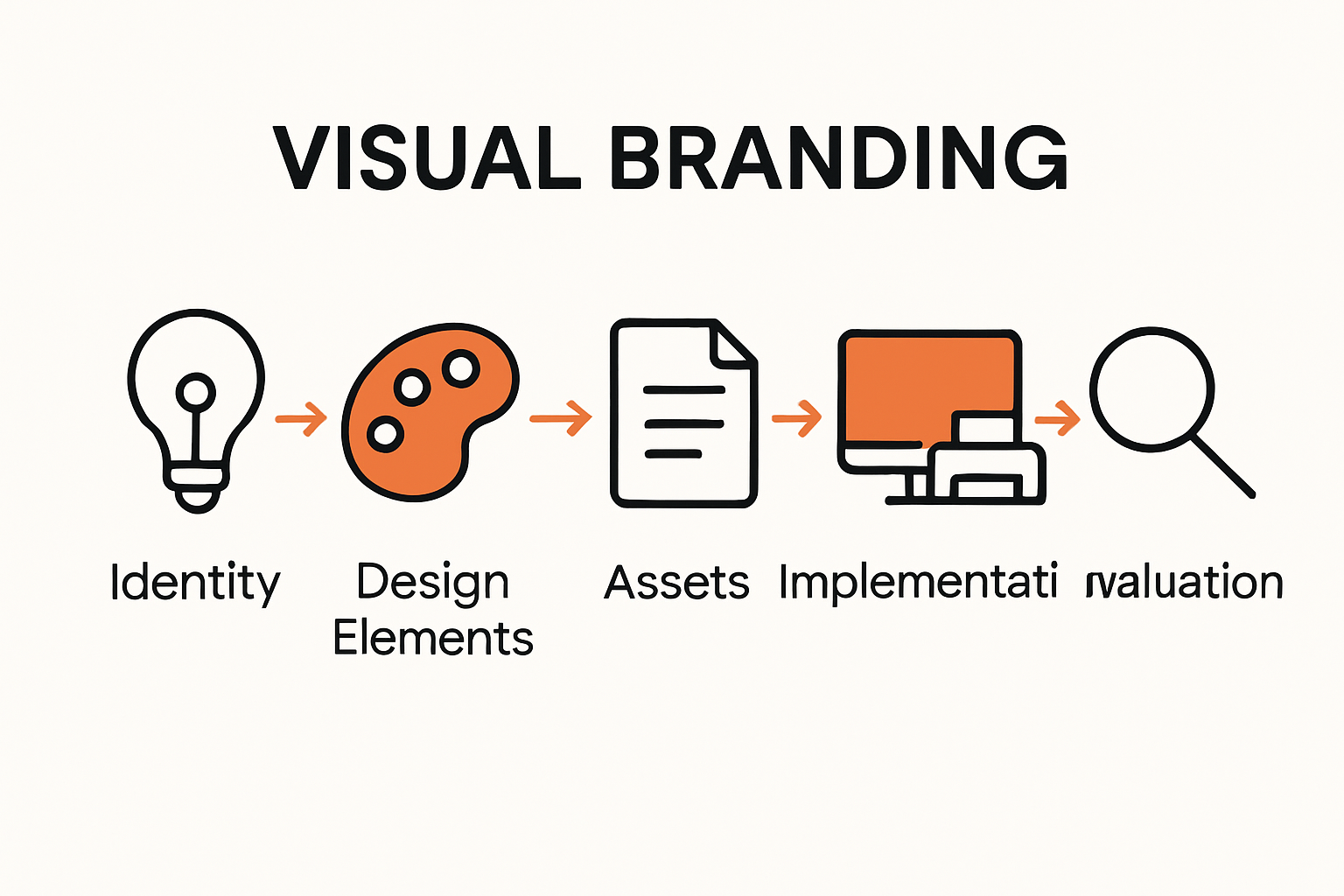
Successful british brands often credit their strength to clear identity and consistent visuals. With over 60 percent of businesses reporting measurable growth after a focused branding strategy, it is clear that a distinct look and message matter now more than ever. Defining authentic brand foundations, choosing the right colours and typography, and building cohesive design assets empowers your business to stand out and stay memorable in a crowded market.
Table of Contents
- Stage 1: Define Your Brand Identity Foundations
- Stage 2: Select Colours, Typography, And Visual Elements
- Stage 3: Create Cohesive Design Assets For All Platforms
- Stage 4: Implement Branding Across Digital And Print Touchpoints
- Stage 5: Evaluate Branding Effectiveness And Refine Materials
Quick Summary
| Key Message | Explanation |
|---|---|
| 1. Define your brand identity | Understand your core mission and values to create a compelling narrative that sets your brand apart in the marketplace. |
| 2. Select cohesive visual elements | Choose colours, typography, and design components that reflect your brand personality and ensure strong visual consistency across platforms. |
| 3. Create adaptable design assets | Develop versatile and high-quality design materials that remain recognisable and functional across various media, maintaining brand integrity. |
| 4. Implement consistent branding | Ensure all customer touchpoints embody your brand identity through unified templates and adherence to established visual guidelines. |
| 5. Regularly evaluate your brand | Collect feedback and perform audits to assess your branding impact, enabling strategic refinements and ongoing relevance in the market. |
Stage 1: Define your brand identity foundations
Establishing your brand’s foundational identity is about creating a clear, compelling narrative that distinguishes your business in the competitive UK marketplace. Successful branding requires understanding who you are, what you stand for, and how you want customers to perceive your organisation.
To begin defining your brand identity, start by exploring your core mission and values. The University of Warwick’s brand building approach suggests conducting interactive exercises that help uncover your organisation’s fundamental purpose. Consider questions like: What problem does your business solve? What unique perspective or solution do you offer? What are the core principles that guide your work?
Next, translate these insights into a clear brand personality. The University of London’s brand management insights recommend aligning your business behaviour with your brand’s stated values. This means your visual identity, communication style, and customer interactions should consistently reflect your core mission. For instance, if innovation is a key value, your brand materials should look modern and forward thinking. If reliability matters most, your design should communicate trustworthiness and stability.
A practical tip: Create a simple brand positioning statement that captures your essence in one or two sentences. This becomes your north star for future branding decisions and helps ensure consistency across all marketing materials.
With your foundational brand identity defined, you are now ready to move into visual design and creating your specific brand guidelines.
Stage 2: Select colours, typography, and visual elements
Selecting the right visual elements is crucial for creating a memorable and cohesive brand identity that communicates your business personality effectively. Your colour palette, typography, and design elements will serve as the visual language that speaks directly to your target audience.
University College London’s design system provides valuable insights into creating a unified visual approach that ensures accessibility and brand recognition. When choosing your colour palette, select 2-3 primary colours that reflect your brand’s core values. Consider the psychological impact of colours: blues suggest professionalism, greens imply growth, and reds communicate energy and passion.
For typography, choose fonts that balance readability with personality. Select one primary font for headings and another complementary font for body text. Ensure the fonts are legible across different digital and print platforms. When developing your visual elements, aim for consistency create a style guide that outlines how your visual brand assets should be used.
A practical tip: Test your colour and typography choices across different devices and backgrounds to ensure they maintain clarity and impact. Your visual identity should work seamlessly whether viewed on a mobile screen, business card, or large poster.
With your visual elements selected, you are now prepared to develop a comprehensive brand guideline that will inform all future design decisions.
Stage 3: Create cohesive design assets for all platforms
Developing a comprehensive set of design assets that work seamlessly across different platforms is crucial for maintaining a strong and recognisable brand identity. Your visual elements must communicate consistency whether viewed on a mobile phone, website, social media profile, or printed marketing material.

The University of Westminster’s digital branding course emphasises the importance of creating adaptable design assets that retain their core visual characteristics across various digital environments. Start by designing a versatile logo that scales effectively from tiny social media icons to large billboard displays. Ensure your logo looks clear and impactful in both colour and monochrome versions.
Prepare multiple file formats of your design assets to guarantee compatibility. This includes high resolution PNG files for digital platforms, vector files for scalable graphics, and print ready PDF versions for physical marketing materials. Consider creating variations of your logo optimised for different backgrounds and sizes ensure your brand remains legible and professional across all contexts.
A practical tip: Develop a comprehensive brand asset library that includes guidelines for correct usage, colour variations, minimum size requirements, and clear space around your logo. This will help maintain visual consistency when different team members or external partners use your brand materials.
With your design assets created, you are now prepared to implement a responsive website design that brings your visual identity to life across digital platforms.
Stage 4: Implement branding across digital and print touchpoints
Implementing your brand consistently across multiple platforms requires strategic planning and meticulous attention to detail. Your goal is to create a unified brand experience that feels familiar and professional whether customers encounter your business online or in print.
The University of Cambridge’s social media branding guidelines highlight the critical importance of maintaining authentic brand representation across digital channels. Begin by creating template documents for key communication materials such as email signatures, presentation decks, business cards, and social media profile headers. Ensure these templates incorporate your established colour palette, typography, and logo specifications.
The Open University’s brand policy emphasises the need for consistent identity across all communication touchpoints. This means developing a systematic approach to applying your visual brand elements. For digital platforms, create high resolution assets optimised for different screen sizes and resolutions. For print materials, develop colour matched versions of your logo and design elements that translate effectively to different printing techniques and paper stocks.
A practical tip: Create a comprehensive brand asset folder that includes variations of your logo optimised for different backgrounds, recommended colour codes, and clear usage guidelines. This will help ensure consistency when team members or external partners use your brand materials.
With your branding implemented across platforms, you are now ready to create a comprehensive guide to custom branding that will serve as a reference for your entire organisation.
Stage 5: Evaluate branding effectiveness and refine materials
Evaluating your brand’s performance is crucial for ensuring your visual identity continues to resonate with your target audience and support your business objectives. This process involves systematic review and strategic refinement of your brand materials to maintain relevance and impact.
The Higher Education Policy Institute’s insights on personal branding emphasise the importance of maintaining authenticity through continuous brand assessment. Begin by collecting feedback from customers, employees, and stakeholders about how they perceive your current visual identity. Use surveys, interviews, and analytics tools to gather qualitative and quantitative data about your brand’s performance across different platforms.
The University of Manchester’s brand framework provides valuable guidance for systematic brand evaluation. Conduct a comprehensive audit of your existing brand materials by examining their consistency, clarity, and alignment with your core business values. Look for areas where your visual communication might be diluted or misaligned. Pay special attention to how your brand translates across different media channels digital platforms, printed materials, social media profiles, and physical signage.
A practical tip: Schedule regular brand review sessions every six to twelve months. This proactive approach allows you to stay ahead of market changes and continuously refine your visual identity.
With your branding evaluation complete, you are now prepared to explore essential tips for successful rebranding that will help you maintain audience engagement throughout any strategic changes.
Elevate Your Brand with Expert Visual Identity Support
Creating a consistent and powerful visual brand identity is essential for standing out in the UK business landscape. This article highlights common challenges such as selecting the right colours, developing adaptable design assets, and ensuring brand consistency across all platforms. You know how important it is to maintain authenticity while evolving your brand, but executing every stage of the visual branding workflow can feel overwhelming.
That is where we come in. With over a decade of experience partnering with business owners, we help you build impactful designs that reflect your core mission and values. From crafting memorable logos to delivering responsive website design, everything we create is tailored to connect you with the people who matter most. We understand the urgency of implementing cohesive branding that resonates immediately and grows your business presence.
Ready to transform your visual branding effortlessly and confidently Start your journey today by exploring how our full suite of branding services can bring your identity to life. Visit our website to discover expert guidance and creative solutions designed for your success. Take control of your brand story now and build the recognition your business deserves with Kukoo Creative.
Frequently Asked Questions
What are the essential steps in a visual branding workflow?
Establishing a visual branding workflow includes defining your brand identity, selecting colours and typography, creating cohesive design assets, implementing branding across platforms, and evaluating brand effectiveness. Follow these steps to ensure your branding is clear and consistent, aiming to complete the process within 2-3 months.
How do I choose the right colour palette for my brand?
To select an effective colour palette, identify 2-3 primary colours that embody your brand’s core values and consider their psychological impacts. Test your colour choices in various contexts, ensuring they maintain clarity and attractiveness across multiple platforms within a week.
What should be included in my brand guidelines?
Your brand guidelines should contain specifications for your logo usage, colour palette, typography, and design elements. Create a document that outlines these details within one month so that all team members can consistently apply your branding correctly.
How can I evaluate the effectiveness of my brand materials?
Evaluate your brand materials by gathering feedback from customers and conducting a comprehensive audit of your current visual identity. Schedule a brand review every six months to identify areas for improvement and ensure your branding stays relevant and resonant.
What formats should I prepare for my design assets?
Prepare various file formats for your design assets, including high-resolution PNGs for digital use, vector files for scalable graphics, and print-ready PDFs. Create a library of these assets within two weeks to maintain consistency across all platforms and materials.
How do I implement my brand consistently across all communication platforms?
Implement your brand consistently by creating templates for key communication materials that align with your established brand identity. Ensure these templates are in place within one month to provide a unified and professional appearance in all customer interactions.
Recommended
- Why Branding Matters: Complete Guide For UK Business Owners – Kukoo Creative
- Brand Mark Explained: Essential Guide for UK Businesses – Kukoo Creative
- How to Update Business Logo for Maximum Impact – Kukoo Creative
- 7 Logo Design Best Practices Every UK Business Owner Needs – Kukoo Creative
- Impact Du Contenu Vidéo Sur Le Branding : Guide Complet