
TL;DR:
- Effective website copy turns visitors into customers by communicating clearly and building trust.
- Preparation involving audience research, brand messaging, and goal setting boosts copy effectiveness.
- Regular review and testing of website copy improve engagement and conversion over time.
Your website might look fantastic. Clean design, great colours, smooth navigation. But if visitors land on your pages and leave without getting in touch, the problem is almost certainly your copy. Words are what turn a curious visitor into a paying customer. Yet for many UK small businesses, website copy is an afterthought, written quickly and rarely revisited. This guide changes that. We’ll walk you through a practical, step-by-step approach to writing website copy that genuinely connects with your audience, reflects your brand, and drives real enquiries and sales.
Table of Contents
- Laying the groundwork: What you need before writing
- Structuring your site: Where good copy matters most
- Crafting compelling messages: Copywriting techniques that work
- Optimising, testing, and refining your website copy
- Our perspective: The overlooked role of website copy in business growth
- How Kukoo Creative can elevate your brand and website copy
- Frequently asked questions
Key Takeaways
| Point | Details |
|---|---|
| Preparation is key | Understanding your customers and gathering assets makes writing strong copy much easier. |
| Focus your efforts | Prioritise home, about, services, and FAQs—these pages drive most conversions. |
| Test and improve | Great website copy evolves; iterate based on feedback and results. |
| Mobile matters | Write for mobile-first visitors to boost engagement and conversions. |
Laying the groundwork: What you need before writing
Now that you understand the value of effective copy, let’s look at what you need to get started. Jumping straight into writing without preparation is one of the most common mistakes small business owners make. You end up with copy that sounds generic, misses the point, or speaks to nobody in particular.
The first thing to get clear on is your audience. Who are they? What do they worry about? What outcome are they hoping for when they visit your site? The more specifically you can answer these questions, the more your copy will feel like it was written just for them. Pair this with a sharp, honest understanding of your core brand message, what you do, who you do it for, and why you’re the right choice.
Next, gather your assets. These are the raw materials your copy will be built from:
- Your unique selling points (USPs): What genuinely sets you apart from competitors?
- Service or product descriptions: Clear, accurate, and benefit-focused.
- Customer testimonials: Real words from real clients carry enormous weight.
- Existing content: Previous website pages, brochures, or social posts can be a useful starting point.
- Common customer questions: These are gold. They tell you exactly what your visitors need to know before they’ll trust you.
Setting clear goals for each page is equally important. Are you trying to generate enquiries? Build brand trust? Encourage sign-ups? Every page should have one primary goal, and your copy should serve that goal directly. Good website design tips will always reinforce this principle.
| Preparation area | What to do |
|---|---|
| Audience research | Define your ideal customer and their pain points |
| Brand message | Clarify your USP and tone of voice |
| Asset gathering | Collect testimonials, services list, and existing content |
| Goal setting | Assign one clear goal to each page |
| Competitor review | Note what others in your sector say and where you differ |
As you streamline your business workflow for website creation, this preparation stage will save you significant time and produce far stronger results. Writing copy without it is like painting a room before you’ve filled the cracks.
Pro Tip: Spend 30 minutes collecting the actual questions your customers ask you by phone, email, or in person. These questions are the backbone of copy that feels natural and builds immediate trust.
Structuring your site: Where good copy matters most
Having your assets ready, it’s time to decide where to focus your copywriting energy for maximum impact. Not every page carries equal weight when it comes to conversions. Some pages do the heavy lifting, and those are the ones to prioritise.
Your Home page is your first impression. It needs to communicate what you do, who you serve, and why you’re credible, all within a few seconds. Your About page builds the human connection that turns interest into trust. Your Services pages need to speak directly to the problem each service solves, not just list features. Your FAQs page is one of the most underrated pages on any small business website. And your Contact page should remove every possible barrier to getting in touch.

| Page | Primary copy goal |
|---|---|
| Home | Immediate clarity on what you offer and who it’s for |
| About | Build trust and personal connection |
| Services | Show benefits and solve specific problems |
| FAQs | Remove objections and answer hesitations |
| Contact | Make it effortless to reach you |
Effective brand storytelling is especially powerful on your About and Home pages, where you’re establishing an emotional connection. Your Services pages, meanwhile, need precision and clarity above all else.
Here are the must-have copy elements for each key page:
- Home: Strong headline, clear sub-headline, a brief overview of services, and a prominent call-to-action.
- About: Your story, your values, your team, and why clients choose you.
- Services: A benefit-led introduction, a breakdown of what’s included, and a call-to-action on every page.
- FAQs: Answers to the top objections that stop visitors from converting. As noted in 11 rules for writing website copy, FAQs remove objections and are a powerful conversion tool.
- Contact: A warm, encouraging opening line, your contact details, and a simple form.
If you’re planning a refresh, reviewing website redesign conversion tips will help you see where copy and design need to work in tandem.
Crafting compelling messages: Copywriting techniques that work
With clarity on where to place engaging copy, here’s how to actually write persuasive messages for these crucial website sections. Good copywriting isn’t about being clever. It’s about being clear, relevant, and confident.
Start with your headlines. A strong headline does one thing: it tells the reader they’re in the right place. Lead with the benefit, not the feature. “Reliable plumbing services in Leeds” is fine. “Leeds plumbers who arrive on time, every time” is far more compelling.
Use the inverted pyramid structure. This means putting your most important information first, then supporting detail, then background context. Busy visitors scan before they read. If your key message is buried in paragraph three, most people will never see it. The inverted pyramid for skimmers is a proven approach, especially given that mobile conversion rates sit at 1.8% compared to 3.1% on desktop, making every word count even more on smaller screens.
Here’s a step-by-step process for writing copy for a key page:
- Define the goal: What do you want the visitor to do after reading this page?
- Write your headline: Lead with the benefit or the problem you solve.
- Draft your opening paragraph: Use the inverted pyramid. Most important point first.
- Add supporting detail: Features, process, what to expect.
- Include social proof: A testimonial or trust signal relevant to this page.
- Write your call-to-action: Clear, specific, and action-oriented. “Book a free consultation” beats “Contact us.”
Always write in the active voice. “We design websites that win clients” is stronger than “Websites are designed by us.” Keep sentences short. Cut anything that doesn’t serve the reader. Good mobile-first design strategies and tight copy work together to keep visitors engaged on every device.
“The best website copy doesn’t sound like copy at all. It sounds like a helpful conversation with someone who understands your problem.”
Pro Tip: Share a draft of your copy with two or three real customers and ask them one question: “Is there anything here that’s unclear or doesn’t answer what you’d want to know?” Their answers will improve your copy more than any tool.
For professional web design that supports your copy goals, the visual and verbal need to be planned together from the start.
Optimising, testing, and refining your website copy
Writing your first draft is only the beginning; now it’s time to fine-tune and verify what truly works for your audience. Many small businesses treat their website copy as a one-time job. Write it, publish it, forget it. That approach leaves a lot of opportunity on the table.
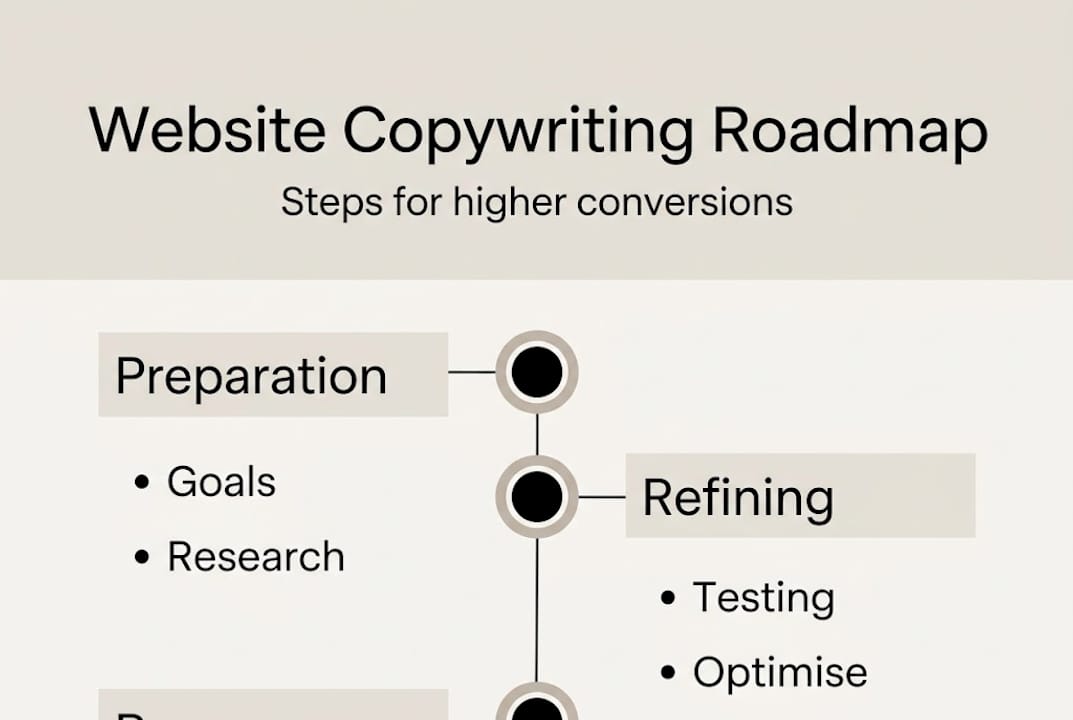
Regular review keeps your copy accurate and relevant. Services change. Prices shift. Customer language evolves. Copy that felt fresh two years ago can start to feel stale or even misleading. A simple quarterly check takes less than an hour and can make a real difference to how your site performs.
Collecting feedback doesn’t need to be complicated. Here are the easiest ways to find out what’s working:
- Google Analytics: Which pages have high bounce rates? Where are visitors dropping off?
- Heatmaps: Tools like Hotjar show you where people click and how far they scroll.
- Customer conversations: Ask new clients how they found you and what made them get in touch.
- A/B testing: Test two versions of a headline or call-to-action to see which performs better.
- Testimonial review: New testimonials often reveal the language your customers use. Mirror that language in your copy.
As highlighted in 11 rules for writing website copy, testing and iterating your copy, particularly FAQs and key landing pages, is one of the most reliable ways to improve conversion over time.
Statistic callout: Even small copy changes, like rewriting a headline or clarifying a call-to-action, can meaningfully shift your conversion rate. Businesses that regularly test and refine their copy consistently outperform those that don’t.
For businesses in specific regions, understanding responsive design for small businesses is also part of ensuring your optimised copy reaches visitors in the best possible format.
Our perspective: The overlooked role of website copy in business growth
Here’s something we see repeatedly. A small business invests in a beautifully designed website, professional photography, and a strong logo. Then they write the copy themselves in an afternoon and never look at it again. The design does its job. The copy lets everything down.
Words and visuals are most powerful when they’re planned together. Copy isn’t a box to tick after the design is done. It’s the foundation the design should be built around. When you approach it this way, everything becomes more coherent and more persuasive.
Most guides focus on the writing process and then stop. What they miss is the ongoing value of treating your copy as a living part of your business. Your customers change. Your services evolve. Your copy should keep pace. The businesses we see growing with confidence are the ones that revisit their messaging regularly, informed by real customer interactions.
Don’t treat your website copy as done. Treat it as a conversation that keeps getting better. For a deeper look at how design and messaging work together, our professional design insight covers exactly that.
How Kukoo Creative can elevate your brand and website copy
If you want expert support to transform your business messaging and brand, here’s how we can help. At Kukoo Creative, we’ve spent over a decade helping UK small businesses build websites and brand identities that genuinely work. We understand that great copy and great design aren’t separate things. They’re two sides of the same coin.
Whether you need a full website build, a brand identity refresh, or support shaping your messaging, we’re here to make it happen. See our portfolio to explore the work we’ve done for businesses like yours. If you’re ready to build brand recognition for your small business and turn your website into a genuine growth tool, we’d love to hear from you. Get started with Kukoo Creative today.
Frequently asked questions
What is the most important rule in website copywriting?
Clarity and relevance are vital. Your copy should immediately tell visitors what you offer and why they should care, using the inverted pyramid for clarity to ensure the most important message always comes first.
How often should I update my website copy?
Review your website copy at least once every six months, or whenever you launch new products, services, or gather fresh customer feedback that reveals new language or objections to address.
Does mobile-first copywriting really matter for small businesses?
Absolutely. With mobile conversion rates sitting lower than desktop, writing tight, scannable copy for mobile users is essential to maximising engagement and enquiries.
What should FAQs cover on my small business website?
Effective FAQs address the most common objections or concerns preventing visitors from becoming clients. As shown in 11 rules for website copy, well-crafted FAQs directly increase conversion by removing hesitation before it becomes a barrier.