
Over 90 percent of consumers form an opinion about a business within seconds of seeing its logo. For british companies, a professional logo is not just a design choice—it shapes first impressions and establishes trust in the crowded local market. This article reveals the myths about professional logos and explains why they play a vital role in building brand recognition and long-term business success in the United Kingdom.
Table of Contents
- Professional Logo Defined And Common Myths
- Types Of Logos And Brand Identity Roles
- Key Qualities Of Effective Logo Design
- Business Advantages Of A Professional Logo
- Common Branding Mistakes To Avoid
- Return On Investment For UK Businesses
Key Takeaways
| Point | Details |
|---|---|
| Importance of Professional Logos | A professional logo is essential for effective brand communication, boosting recognition and credibility in competitive markets. |
| Common Branding Myths | Misconceptions about logos can lead to branding mistakes; a professional logo is strategic, not merely decorative. |
| Key Qualities of Effective Logos | Successful logos prioritise simplicity, scalability, and emotional resonance while aligning with brand values. |
| Return on Investment | Investing in a professional logo can significantly enhance brand recognition and market positioning, resulting in long-term economic benefits. |
Professional Logo Defined and Common Myths
A professional logo represents the visual identity and core essence of a business, serving as a powerful communication tool that goes far beyond mere graphic design. Logos fundamentally act as graphic marks designed to enable immediate recognition and public identification for organisations, businesses, and brands.
Contrary to popular misconceptions, a professional logo is not simply a pretty picture, but a strategic visual asset with multiple critical functions. Effective logos communicate brand personality, establish visual credibility, and create memorable first impressions that distinguish businesses in competitive markets. UK business owners often mistakenly believe logos are optional or just decorative elements, when in reality they form a fundamental component of brand strategy.
Common myths about professional logos include:
- Logos are expensive and only for large corporations
- Any graphic designer can create an effective logo
- Logos should literally represent what a business does
- A logo’s design doesn’t significantly impact business perception
In truth, a well-crafted professional logo plays a crucial role in business branding, serving as a visual shorthand that communicates professionalism, trustworthiness, and brand values within seconds of viewer engagement. Small businesses and startups can particularly benefit from investing in a thoughtfully designed logo that punches above its weight in market positioning.
The most powerful logos achieve remarkable simplicity while conveying complex brand narratives. They transcend mere visual aesthetics, functioning as strategic communication tools that connect emotionally with target audiences and create lasting brand recognition.
Types of Logos and Brand Identity Roles
Logos represent far more than simple visual decorations, serving as critical strategic assets that communicate a brand’s fundamental identity. Business logos encompass several distinctive design approaches that help organisations establish unique visual identities in competitive markets.
Fundamentally, logo types can be categorised into key design strategies: wordmarks, lettermarks, pictorial marks, abstract marks, mascot logos, and combination marks. Each type offers distinct advantages for communicating brand personality and creating memorable visual representations. Wordmarks leverage typography to spell out a company’s name, while lettermarks condense brand identities into sophisticated acronyms or initials.
The strategic role of logos in brand identity extends beyond mere visual recognition. These graphic elements function as powerful communication tools that:
- Establish immediate brand recognition
- Convey organisational values and personality
- Create emotional connections with target audiences
- Differentiate businesses from competitors
- Provide visual consistency across marketing materials
Brand identity frameworks demonstrate how logos serve as foundational elements in comprehensive visual storytelling. UK businesses can leverage carefully designed logos to communicate professionalism, trustworthiness, and unique market positioning within seconds of visual engagement.
The most effective logos achieve a delicate balance between simplicity and meaningful representation, transforming graphic design into a strategic business communication tool that resonates deeply with target audiences and creates lasting impressions.
Key Qualities of Effective Logo Design
Creating an impactful logo requires a delicate balance of strategic design principles that transform simple graphics into powerful brand communication tools. Effective logo design challenges common misconceptions about visual complexity by emphasising clarity, simplicity, and meaningful representation.
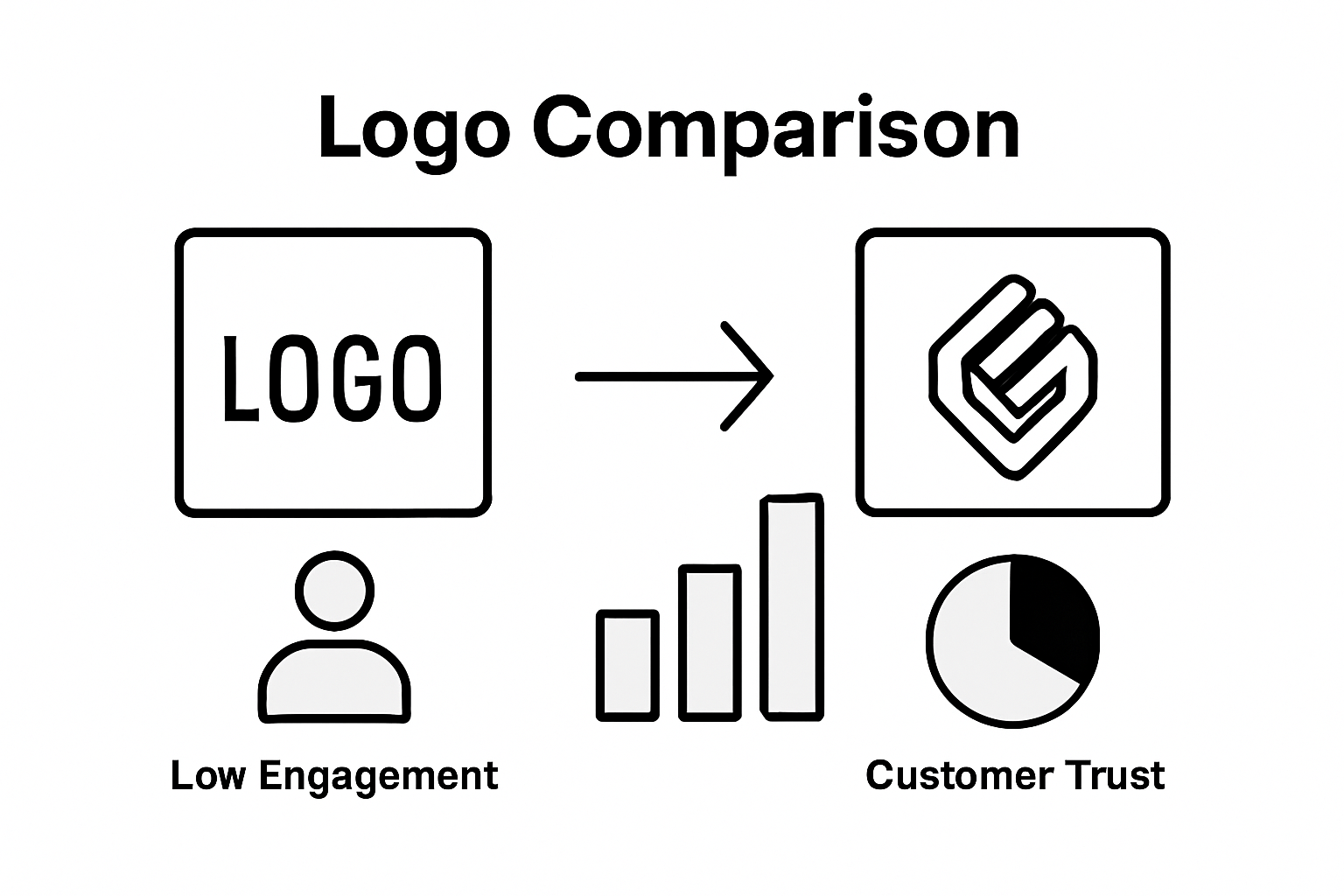
The most successful logos share several fundamental qualities that elevate them from mere visual decorations to strategic brand assets. Simplicity stands as the cornerstone of exceptional logo design, ensuring immediate recognition and versatility across different media platforms. A well-crafted logo must remain legible and distinctive whether displayed on a tiny business card or a massive billboard, maintaining its core visual integrity at any scale.
Key qualities of an exceptional logo include:
- Remarkable simplicity
- Instant recognisability
- Scalability across multiple platforms
- Emotional resonance with target audiences
- Timeless design that transcends temporary trends
- Alignment with brand personality and values
Professional logo design practices demonstrate that truly outstanding logos communicate complex brand narratives through minimalist visual language. UK businesses can leverage these design principles to create logos that not only catch the eye but also forge deep, memorable connections with potential customers.
Ultimately, an effective logo functions as a visual shorthand for a brand’s entire identity, distilling complex organisational characteristics into a single, powerful graphic element that speaks volumes without uttering a single word.
Business Advantages of a Professional Logo
Professional logos represent far more than aesthetic design elements; they are strategic business assets that directly influence market perception and organisational success. Professional logos embody functional, expressive, and central values that enhance customer recognition and build critical trust foundations for businesses.
The tangible business advantages of a professionally designed logo extend across multiple strategic dimensions. Companies investing in high-quality logo design can experience significant competitive advantages, including enhanced brand recall, improved professional credibility, and more effective marketing communication. A meticulously crafted logo communicates organisational values, professionalism, and unique market positioning within milliseconds of visual engagement.
Specific business advantages include:
- Instant brand recognition
- Enhanced professional credibility
- Improved customer perception
- Consistent visual brand messaging
- Increased marketing effectiveness
- Competitive differentiation
- Higher perceived business value
UK businesses can leverage professional logo design to transform their visual identity from generic representations to powerful communication tools. These logos serve as silent ambassadors, conveying sophisticated narratives about organisational character, expertise, and commitment without uttering a single word.
Ultimately, a professional logo represents a strategic investment in brand communication, bridging the critical gap between visual aesthetics and meaningful business storytelling. It transforms a simple graphic into a powerful mechanism for building lasting connections with potential customers and stakeholders.

Common Branding Mistakes to Avoid
Navigating the complex landscape of brand design requires careful strategic consideration and awareness of potential pitfalls that can undermine a business’s visual identity. Logo design myths often lead companies towards counterproductive branding approaches that diminish their professional image and market effectiveness.
Businesses frequently fall into predictable traps when developing their visual brand representation. Overcomplexity stands as a primary culprit, with many organisations mistakenly believing that intricate designs communicate sophistication. In reality, complex logos create visual confusion, reduce memorability, and compromise versatility across different media platforms and digital environments.
Common branding mistakes to be wary of include:
- Designing logos that are too complicated
- Copying competitor visual styles
- Neglecting brand consistency
- Using trendy design elements that quickly become dated
- Failing to consider scalability
- Ignoring target audience preferences
- Selecting colour schemes without strategic reasoning
Professional branding strategies emphasise the importance of simplicity, clarity, and meaningful design that communicates core business values. UK businesses must approach logo design as a strategic communication tool, not merely a decorative element.
Successful branding demands a nuanced understanding that visual identity extends beyond aesthetic appeal, serving as a critical mechanism for building trust, conveying professionalism, and establishing immediate recognition in competitive marketplaces.
Return on Investment for UK Businesses
Investing in a professional logo represents a strategic financial decision with measurable long-term business benefits. Well-designed logos can significantly enhance brand identity, translating visual recognition into tangible economic advantages that extend far beyond initial design costs.
Brand perception plays a critical role in determining return on investment, with professionally designed logos serving as powerful economic instruments. Small and medium UK businesses can experience substantial financial returns through strategic visual branding, including increased customer trust, enhanced market positioning, and improved conversion rates. Professional logos act as silent ambassadors, communicating business credibility and professionalism without requiring extensive marketing expenditure.
Key financial benefits of professional logo investment include:
- Increased customer recognition
- Enhanced brand recall
- Improved market differentiation
- Higher perceived business value
- Potential for premium pricing strategies
- Reduced marketing communication costs
- Accelerated customer acquisition
UK businesses can leverage strategic branding to transform visual identity into a competitive economic advantage. Empirical evidence suggests that companies with cohesive, professional visual branding can experience up to 23% higher revenue generation compared to competitors with inconsistent or amateur design approaches.
Ultimately, a professional logo represents an investment in organisational reputation, functioning as a sophisticated marketing tool that continuously generates value by building trust, attracting potential customers, and establishing a memorable brand presence in competitive marketplaces.
Elevate Your Brand with a Professional Logo That Speaks Volumes
The article highlights that many UK businesses struggle with misconceptions about logos, often overlooking their vital role in establishing trust, recognisability, and lasting emotional connections with customers. If you aim to avoid common branding mistakes like overcomplexity or inconsistent visual identity, our expertise is here to guide you. A professional logo is not just a graphic but a strategic asset that conveys your brand personality and sets you apart from competitors.
At KUKOO Creative, we have partnered with business owners just like you for over a decade to create impactful designs from logos to websites that build powerful brand recognition and engage the people who matter most. We understand the importance of simplicity, scalability, and emotional resonance in logo design and deliver visuals that align perfectly with your brand values.
Explore how our design solutions can transform your visual identity and provide your business with the competitive advantage it deserves. Discover more about how to build a strong brand identity and invest wisely in your logo by visiting our pages on How to Design a Logo for UK Businesses and Advantages of Custom Logos for UK Business Owners.
Ready to make a lasting impression that builds trust and drives growth? Take the next step today by partnering with us at KUKOO Creative to create a professional logo that truly reflects your business’s unique story.
Frequently Asked Questions
What are the benefits of having a professional logo for my business?
A professional logo enhances brand recognition, conveys trustworthiness, and differentiates your business from competitors. It serves as a foundational element of your brand identity and can significantly influence customer perception.
How does a logo impact a business’s marketing effectiveness?
A well-designed logo creates a strong first impression and helps establish visual consistency across marketing materials, making your branding more memorable and effective in communicating your business values.
Can any graphic designer create an effective logo?
Not necessarily. While many graphic designers have the skills to create a logo, effective logo design requires a deep understanding of branding principles and the ability to communicate a brand’s personality and values through visual elements.
What common mistakes should I avoid when designing a logo?
Businesses should avoid overcomplexity, copying competitor styles, and neglecting brand consistency. Additionally, it’s important to consider scalability and target audience preferences when designing a logo.