Most consumers form an opinion about a brand in just a few seconds, making first impressions matter more than ever. Branding shapes not only how people recognize your business but also how they connect with it on a deeper level. With so much competition, understanding the real purpose and power behind effective branding can help you build trust, stand out, and turn casual customers into loyal fans.
Table of Contents
- Defining Branding And Its Core Purpose
- Types Of Branding And Key Differences
- Branding’s Impact On Business Success
- Building Effective Brand Recognition Strategies
- Common Branding Mistakes To Avoid
Key Takeaways
| Point | Details |
|---|---|
| Branding is Essential | Effective branding creates a distinct identity that resonates with customers, impacting their perception and emotional connection to the brand. |
| Varied Branding Strategies | Brands can choose from various techniques, such as brand extension or co-branding, to communicate value propositions and appeal to target audiences effectively. |
| Brand Recognition Development | A multi-dimensional strategy, involving consistent visual identity and authentic engagement, is critical for building effective brand recognition and loyalty. |
| Avoid Common Pitfalls | Consistency in messaging and alignment of corporate and product branding are crucial to avoid detrimental branding errors that can affect market positioning. |
Defining Branding And Its Core Purpose
Branding is far more than just a logo or visual design. According to Oxford Academic, a brand represents “a set of ideas and feelings about a product or entity, shaped by its actions and recognized through a distinctive style”. This nuanced definition reveals branding as a complex psychological and emotional experience.
At its core, branding is about creating a unique identity that distinguishes your business from competitors. It’s not simply what you say about yourself, but how customers perceive and feel about your organisation. The brand core – as explored by VLex – involves carefully balancing consistent identity with the flexibility to adapt and evolve.
Successful branding communicates your business’s fundamental values, personality, and promise. This means going beyond superficial aesthetics to craft a comprehensive narrative that resonates with your target audience. Effective branding achieves several critical objectives:
- Creates instant recognition
- Builds emotional connection
- Establishes credibility and trust
- Differentiates from competitors
- Supports premium pricing strategies
Understanding branding as a strategic tool allows business owners to transform their enterprise from a mere service provider into a memorable, meaningful brand that customers actively choose and recommend.
Types Of Branding And Key Differences
Branding isn’t a one-size-fits-all strategy. Different approaches serve unique business objectives and target audience needs. As businesses evolve, they leverage various branding techniques to communicate their value proposition effectively and differentiate themselves in competitive markets.
One sophisticated branding approach is brand extension, where companies expand their existing brand identity into new product categories. According to Wikipedia, this strategy allows firms to “leverage brand equity to increase awareness and profitability” by applying their established reputation to new market segments. A classic example might be a sportswear company launching a range of fitness technology or accessories.
Another strategic branding technique is co-branding, which involves strategic partnerships between multiple brands. Wikipedia describes this as “a marketing strategy involving the strategic alliance of multiple brand names jointly used on a single product or service to combine brand strengths and increase consumer appeal”. This approach enables businesses to tap into complementary audiences and create unique value propositions.
Key types of branding include:
- Corporate Branding: Representing the entire organisation’s identity
- Product Branding: Focusing on specific product lines or offerings
- Personal Branding: Building individual professional reputation
- Service Branding: Emphasising intangible service quality
- Geographical Branding: Highlighting regional or location-based unique characteristics
Understanding these branding types allows business owners to craft more targeted, resonant brand strategies that genuinely connect with their intended audience and stand out in crowded marketplaces.

Branding’s Impact On Business Success
Branding is not just a marketing expense – it’s a critical strategic investment that directly influences a business’s bottom line and long-term sustainability. Successful branding transforms companies from commodity providers into distinctive, memorable entities that customers actively seek out and recommend.
The financial implications of strong branding are profound. When businesses develop a compelling brand identity, they create significant competitive advantages that extend far beyond visual aesthetics. A well-crafted brand can command premium pricing, attract higher-quality customers, and generate greater customer loyalty.
This translates into tangible economic benefits: reduced customer acquisition costs, increased market share, and more resilient revenue streams.
Customer perception plays a pivotal role in branding’s impact. Brand reputation determines whether potential clients trust your organisation, view you as an industry leader, or simply see you as another generic option. Strong branding communicates professionalism, reliability, and unique value proposition – critical factors that influence purchasing decisions and long-term business relationships.
Key business success metrics influenced by effective branding include:
- Increased customer recognition
- Higher perceived value of products/services
- Enhanced customer trust and credibility
- Improved competitive differentiation
- More effective marketing and communication
- Greater employee pride and recruitment potential
Ultimately, branding is about creating an emotional connection that transcends transactional relationships. Explore our strategies for better business success to understand how strategic branding can transform your business from ordinary to extraordinary.
Building Effective Brand Recognition Strategies
Building a recognisable brand requires strategic planning and consistent execution. According to research from Francis Press, successful brand recognition hinges on carefully crafted design elements that encompass structure, semantics, and content which stimulate consumer participation and engagement.
Brand co-creation has emerged as a powerful approach to developing distinctive brand identities. As highlighted by Bournemouth University Research, brand management now focuses on structured practices that actively involve consumers in shaping brand perception. This collaborative approach transforms passive audiences into active brand advocates, creating deeper emotional connections.
Effective brand recognition strategies require a multi-dimensional approach that goes beyond traditional marketing techniques. Businesses must develop a comprehensive framework that consistently communicates their unique value proposition across multiple touchpoints. This means aligning visual identity, messaging, customer experience, and organisational culture to create a cohesive and memorable brand presence.
Key strategies for building brand recognition include:
- Developing a consistent visual identity
- Creating compelling brand storytelling
- Leveraging multiple communication channels
- Engaging directly with target audiences
- Maintaining authenticity and transparency
- Continuously adapting to market changes
Explore our guide to creative branding strategies to discover innovative approaches that can help your business stand out in a competitive marketplace.
Common Branding Mistakes To Avoid
Navigating the complex landscape of branding requires strategic awareness and careful planning. Research from Francis Press highlights a critical branding pitfall: the misalignment between corporate reputation and product branding, which can significantly undermine a company’s market positioning.
One of the most prevalent brand strategy errors involves inconsistent messaging across different platforms. According to Springer Link, co-branding efforts can create competitive interference and potentially dilute brand identity if not carefully managed. This means businesses must maintain a cohesive narrative that resonates consistently across all customer touchpoints.
Business owners often underestimate the long-term implications of short-sighted branding decisions. Creating a strong brand requires more than superficial design elements – it demands a holistic approach that integrates visual identity, communication strategy, and organisational culture. The most successful brands understand that every interaction shapes customer perception and builds lasting relationships.
Common branding mistakes that can derail your business include:
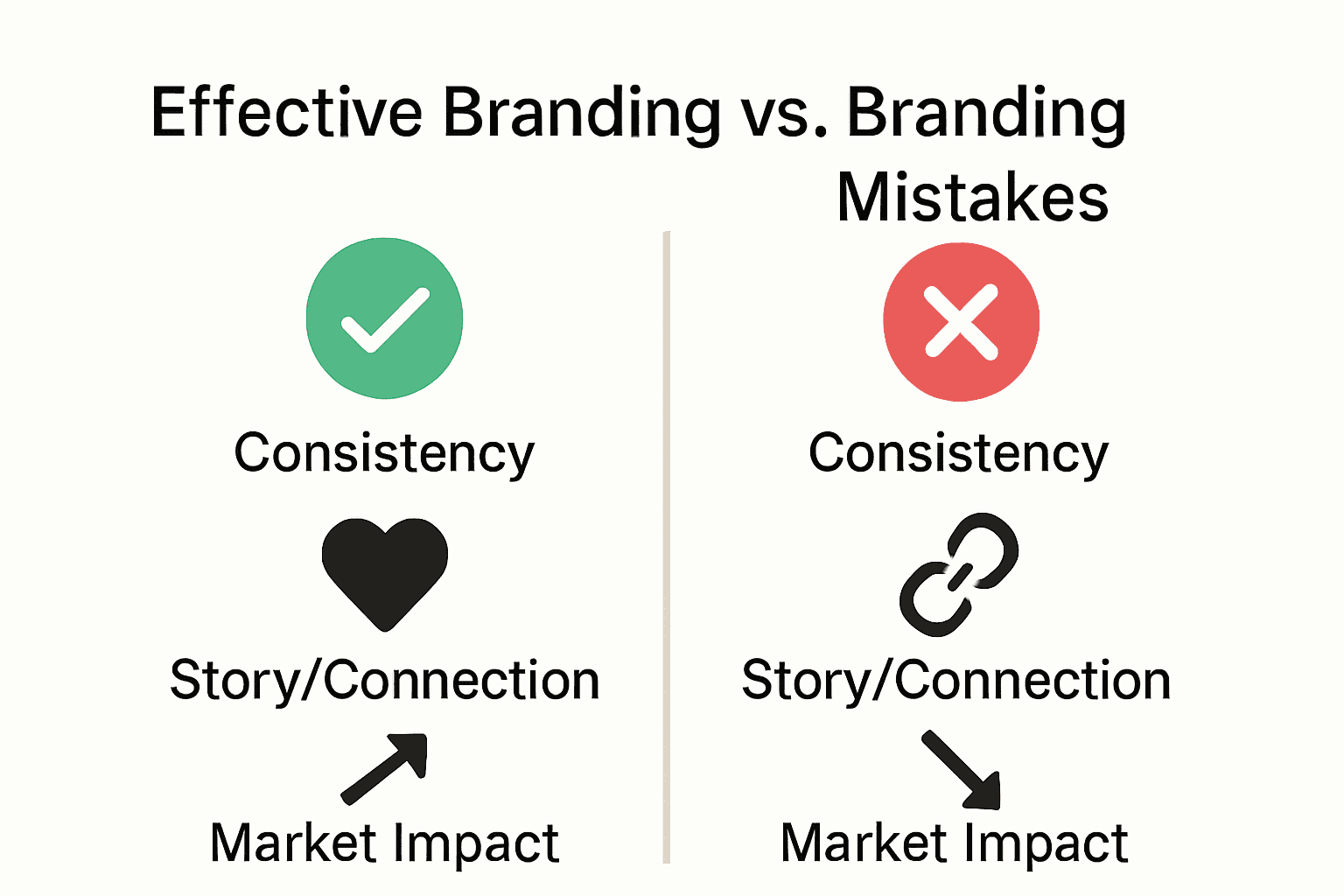
- Inconsistent visual and messaging design
- Neglecting target audience research
- Copying competitors instead of being authentic
- Undervaluing brand storytelling
- Failing to adapt to market changes
- Overlooking internal brand alignment
Learn how to avoid cheap logo design mistakes that could compromise your brand’s professional image and credibility.
Transform Your Brand Into a Lasting Impression Today
Building a memorable brand that truly connects with your audience requires more than just a logo or a catchy slogan. The article highlights crucial challenges such as inconsistent messaging, lack of authentic storytelling, and maintaining emotional connections. These hurdles can leave your business blending into the crowd instead of standing out. Key pain points include creating a cohesive identity and fostering trust through strategic branding that resonates with your customers.
Take the next step with us at Kukoo Creative, where we have partnered with UK business owners for over a decade to craft impactful designs that build significant brand recognition and establish emotional bonds with the right people. Our approach aligns with vital concepts like consistent visual identity and brand storytelling discussed in the article.
Ready to move beyond generic branding and deliver your unique promise to the market? Explore how our branding strategies and logo design expertise can elevate your business instantly. Don’t wait to create the emotional connections that turn customers into loyal advocates. Visit our website now to start your transformation.
Frequently Asked Questions
What is the core purpose of branding?
Branding’s core purpose is to create a unique identity that distinguishes your business from competitors, shaping how customers perceive and feel about your organization.
What are the different types of branding?
Key types of branding include corporate branding, product branding, personal branding, service branding, and geographical branding, each serving distinct business objectives.
How does branding impact business success?
Branding transforms companies from commodity providers into memorable entities, influencing customer perception, loyalty, and enabling premium pricing, directly impacting financial performance.
What are common branding mistakes to avoid?
Common branding mistakes include inconsistent messaging, neglecting target audience research, copying competitors, undervaluing brand storytelling, and failing to adapt to market changes.