
Most businesses underestimate what brand identity truly means. While logos and colours are easy to spot, they make up just one piece of a much larger puzzle. In fact, research highlights that brand identity spans everything from values to customer perception and behaviour. For companies aiming to stand out in a crowded market, understanding these layers is vital. This guide will clear up common misconceptions and show the true building blocks of a memorable, powerful brand.
Table of Contents
- Defining Brand Identity And Key Misconceptions
- Core Elements Of Effective Brand Identity
- Brand Identity Types And Real-World Examples
- Building And Maintaining Strong Brand Identity
- Risks, Costs, And Common Brand Mistakes
Key Takeaways
| Point | Details |
|---|---|
| Brand Identity is Multifaceted | Brand identity includes visual, verbal, emotional, and behavioral aspects that represent a company’s personality beyond just logos and colors. |
| Consistency is Crucial | Maintaining consistent messaging and visual elements across all platforms is essential for fostering brand recognition and trust. |
| Authenticity Matters | A brand must authentically represent its core values and mission to connect meaningfully with its audience. |
| Adaptability is Key | Brands should be adaptable, evolving to meet market changes while staying true to their foundational identity. |
Defining Brand Identity and Key Misconceptions
When you think about brand identity, you might picture just a logo or colour scheme. But it’s far more nuanced. According to en.wikipedia.org, a brand is “a name, term, design, symbol, or any other feature that distinguishes one seller’s goods or services from others”. It’s your business’s unique fingerprint in the marketplace.
Many UK business owners mistakenly reduce brand identity to visual elements. However, brand identity encompasses a comprehensive expression of your company’s core personality. As research from core.ac.uk suggests, businesses should view their brand across multiple dimensions – as a product, an organisation, a person, and a symbol.
Let’s break down what brand identity truly involves:
- Visual Identity: Logos, colour palettes, typography
- Verbal Identity: Tone of voice, messaging, communication style
- Emotional Identity: Values, personality, customer perception
- Behavioural Identity: How the company acts, responds, and interacts
The most powerful brand identities go beyond surface-level aesthetics. They tell a story. They connect emotionally. They represent something larger than just products or services. Your brand identity is essentially your business’s personality – distinctive, memorable, and consistently expressed across every touchpoint.
Core Elements of Effective Brand Identity
Building a powerful brand identity requires strategic thinking and deliberate design. According to adroll.com, creating a strong brand involves understanding your target audience, developing a distinctive logo, and maintaining a consistent colour scheme. These aren’t just aesthetic choices – they’re fundamental communication tools.
Research from francis-press.com highlights that brand design’s structural, semantic, and content elements have intricate relationships with consumer engagement. Your brand’s design isn’t just about looking good – it’s about creating meaningful connections that trigger emotional and behavioural responses.
The core elements of an effective brand identity include:
- Visual Consistency: Uniform colour palette, typography, and graphic styles
- Strategic Messaging: Clear, compelling communication that reflects brand values
- Emotional Resonance: Developing a personality that connects with your audience
- Authenticity: Genuine representation of your brand’s core mission and beliefs
Successful brand identity goes beyond surface-level design. It’s about crafting a comprehensive narrative that speaks directly to your audience’s aspirations and needs. Every visual element, every communication, should work harmoniously to tell your brand’s unique story.

Brand Identity Types and Real-World Examples
Brands aren’t one-size-fits-all. They come in various types, each with unique characteristics and strategic approaches. According to en.wikipedia.org, some brands transcend mere functionality, becoming powerful symbols that allow consumers to express their identity or signal social status. Think luxury fashion brands that are more than just clothing – they’re statements.
Visual communication plays a crucial role in brand identity. As en.wikipedia.org explains, a visual brand language involves intentionally using design elements like shape, colour, materials, and typography to communicate a company’s values. BMW’s iconic ‘split grill’ design is a perfect example of how a consistent visual element can become synonymous with brand identity.
Here are the primary brand identity types:
- Functional Identity Brands: Focus on practical benefits and performance
- Symbolic Identity Brands: Emphasize emotional connection and status
- Experiential Identity Brands: Create immersive customer experiences
- Purpose-Driven Identity Brands: Align strongly with social or environmental missions
Successful brand identity isn’t about looking good – it’s about telling a compelling story. Whether you’re a small local business or a global corporation, your brand identity should authentically represent your core values, resonate with your target audience, and differentiate you in a crowded marketplace.
Building and Maintaining Strong Brand Identity
Creating a robust brand identity is an intentional, strategic process that requires deep understanding and consistent execution. According to research from bura.brunel.ac.uk, a successful brand has two critical components: the core identity and the extended identity. The core identity represents the timeless essence of your brand – its fundamental values and beliefs – while the extended identity provides direction and texture.
Different sectors approach brand identity uniquely. Research from link.springer.com highlighted key components that contribute to strong brand identity, such as ambience, location, diversity, visual imagery, and perceived value. These elements aren’t just cosmetic – they’re fundamental to how your audience perceives and connects with your brand.
Key strategies for building and maintaining a strong brand identity include:
- Consistency: Uniform messaging across all platforms
- Authenticity: Genuine representation of your brand’s core values
- Adaptability: Ability to evolve while maintaining core identity
- Emotional Connection: Creating meaningful relationships with your audience
Successful brand identity is a living, breathing entity. It’s not a static logo or colour palette, but a dynamic representation of your business’s personality, values, and promise to your customers. Nurture it, stay true to its essence, and it will become your most powerful business asset.
Risks, Costs, and Common Brand Mistakes
Brand development isn’t without its pitfalls. According to research from arxiv.org, something as seemingly minor as logo placement can significantly impact brand perception. Poor visual branding can lead to reduced brand visibility and recognition, potentially causing substantial damage to your sales and overall brand equity.
The consequences of misaligned branding extend far beyond visual design. As en.wikipedia.org suggests, when external branding efforts don’t authentically reflect internal values, it can create profound misunderstandings that erode trust and credibility. This principle applies equally to small businesses and large corporations.
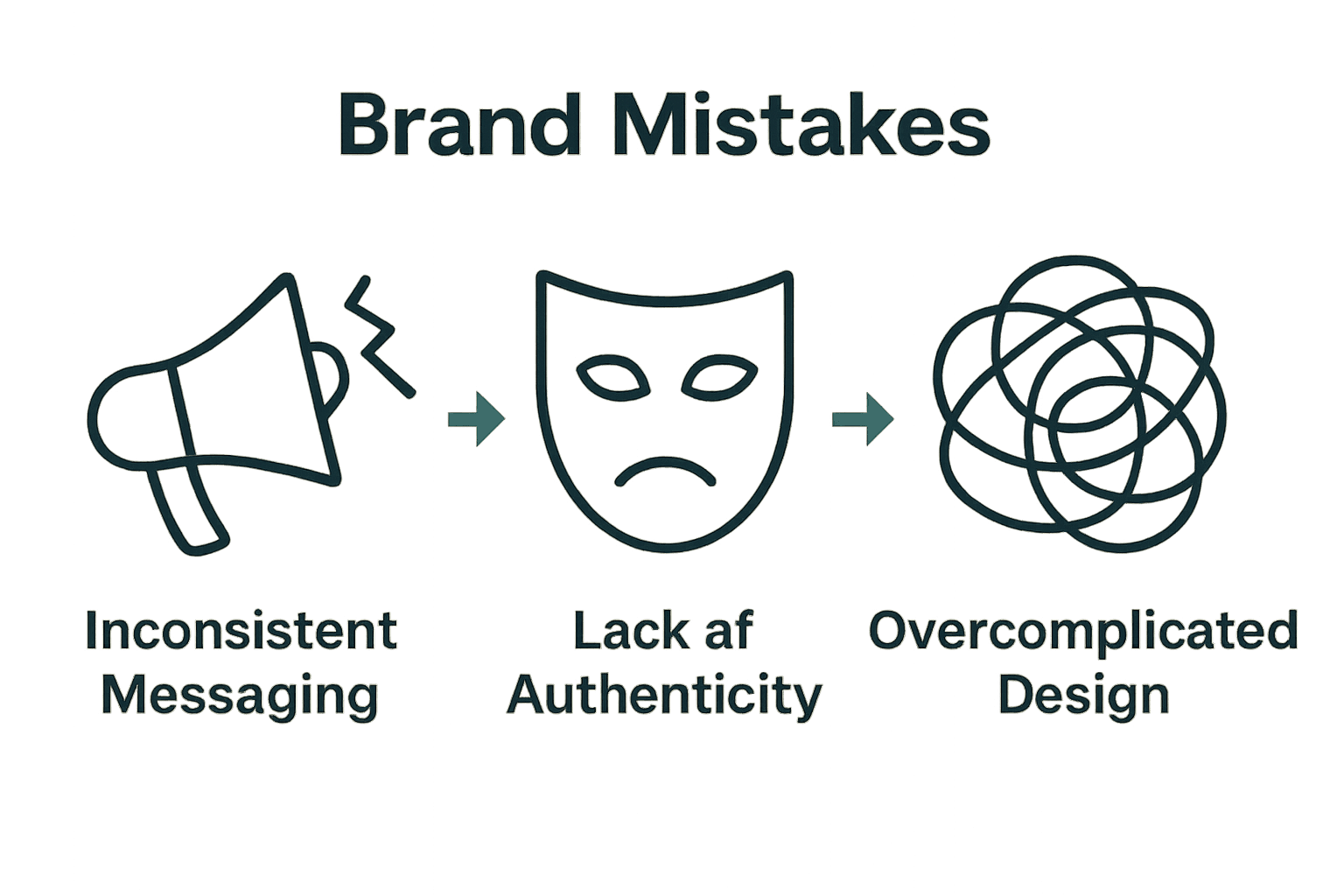
Common brand mistakes that can cost your business include:
- Inconsistent Messaging: Sending mixed signals across different platforms
- Lack of Authenticity: Creating a brand persona that doesn’t reflect genuine values
- Overcomplicating Design: Losing clarity in complex visual identities
- Neglecting Target Audience: Failing to understand and connect with your core customers
Building a robust brand isn’t about perfection – it’s about genuine, consistent communication. Every misstep is an opportunity to learn, refine, and strengthen your brand’s connection with your audience. The most successful brands aren’t those that never make mistakes, but those that quickly adapt and stay true to their core identity.
Strengthen Your Brand Identity with Expert Design Support
Building a strong brand identity requires more than just a logo or colour palette. You need consistency, authenticity, and a design that captures the emotional connection your business shares with customers. Many UK businesses struggle to translate their core values into visual and verbal identity that truly resonates. Do not let inconsistent messaging or overcomplicated design weaken your brand presence.
Let us help you create a compelling brand identity that tells your story and connects you directly with the people who matter most. For over a decade, we have partnered with businesses like yours to craft impactful designs—from logos to websites—that build recognition and trust. Explore how our proven approach can bring clarity and emotional resonance to your branding by visiting our main site and discovering the full range of solutions we offer at Kukoo Creative. The time to strengthen your brand is now to stay memorable and relevant in today’s competitive market.
Frequently Asked Questions
What is brand identity?
Brand identity refers to the comprehensive expression of your company’s unique personality, including visual, verbal, emotional, and behavioral elements that distinguish your business from competitors.
Why is consistency important in brand identity?
Consistency is crucial because it ensures that your messaging and visual elements resonate with your audience and reinforce your brand’s values across all platforms, building trust and recognition.
How can I maintain authenticity in my brand identity?
To maintain authenticity, ensure that your brand persona genuinely reflects your core values and mission. Consistent communication and alignment between your external branding and internal practices are key.
What are common mistakes to avoid when developing brand identity?
Common mistakes include inconsistent messaging, lack of authenticity, overly complicated designs, and neglecting to understand and connect with your target audience.