
Most british businesses underestimate how much a clear brand strategy can separate them from the competition. In crowded markets, a well-defined identity is what turns simple recognition into lasting loyalty. With over 80 percent of consumers saying they need to trust a brand before making a purchase, building a compelling british brand means more than just designing a logo. This guide breaks down each step from strategy to activation, helping you create a brand presence that truly stands out.
Table of Contents
- Step 1: Define Your Brand Strategy
- Step 2: Design Your Brand Identity
- Step 3: Develop Your Launch Assets
- Step 4: Plan Your Launch Campaign
- Step 5: Verify Your Brand Readiness
- Step 6: Activate Your Brand Across Channels
Quick Summary
| Main Insight | Explanation |
|---|---|
| 1. Define Your Brand Strategy Clearly | Articulate your brand’s purpose, mission, and values to create a strong foundation for decision-making and messaging. |
| 2. Create a Compelling Brand Identity | Develop a cohesive visual and verbal identity through consistent logos, colours, and typography, ensuring recognisability across platforms. |
| 3. Develop Cohesive Launch Assets | Produce marketing materials that reflect your brand identity and maintain a uniform narrative across all chosen communication channels. |
| 4. Plan a Strategic Launch Campaign | Set clear objectives, develop a detailed content strategy, and allocate budget wisely to maximise audience engagement and impact. |
| 5. Verify Brand Readiness Before Launch | Conduct a thorough review of all brand elements to ensure consistency and professionalism, validating your brand’s first impression. |
Step 1: Define your brand strategy
Defining your brand strategy is the foundational blueprint that will guide all your business communications and visual identity. This critical step transforms your business from a generic entity into a distinctive, memorable brand that resonates with your target audience.
To build a robust brand strategy, you’ll want to unpack several key components. Begin by clearly articulating your brand’s core purpose beyond making money. Understanding the essential elements of brand strategy involves diving deep into your organisation’s unique mission, vision, and values. What problem do you solve? Who do you serve? What makes your approach different from competitors?
Start by conducting a thorough self-assessment. Document your brand’s personality traits as if it were a person. Are you professional and authoritative, or warm and approachable? Sketch out your target customer personas in detail, understanding their motivations, challenges, and aspirations. This clarity will help you craft messaging that speaks directly to their needs. Research your market landscape, analyse competitor positioning, and identify the white space where your brand can genuinely differentiate itself.
Additionally, map out your brand’s visual and verbal identity. This includes selecting a colour palette, typography, and communication style that authentically represent your brand’s essence. These elements should consistently reflect the personality and values you’ve defined.
Pro tip: Create a concise brand strategy document that serves as your north star. Treat this as a living document you can revisit and refine as your business evolves, ensuring your brand remains relevant and compelling.
Step 2: Design your brand identity
Designing your brand identity transforms your strategic vision into a visual and verbal language that communicates your business’s unique personality. This crucial stage moves beyond abstract concepts into tangible elements that will represent your brand across all platforms.
Creating a comprehensive brand identity requires a methodical approach that blends creativity with strategic thinking. Start by developing a mood board that captures your brand’s essence. Collect visual references colour palettes, typography, imagery styles that resonate with your brand’s personality. Consider how these elements will translate across different mediums from digital platforms to printed materials.
Your visual identity toolkit should include several key components. Develop a primary logo that can be easily recognised and scaled across various applications. Select a colour palette that reflects your brand’s emotional tone creating a consistent visual language. Choose typography that communicates your brand’s character whether that’s professional and authoritative or friendly and approachable. Craft graphic elements like icons, patterns, or illustrations that can be used consistently across your marketing materials.

Ensure your visual elements work harmoniously together. Test your brand identity across different contexts digital adverts, social media profiles, business cards to confirm it remains coherent and impactful. Document your design choices in a comprehensive brand guidelines document that provides clear instructions on how to use your visual assets.
Pro tip: Invest time in creating versatile design elements that can adapt to future growth while maintaining your core brand essence.
Here is a concise comparison of brand strategy and brand identity:
| Aspect | Brand Strategy | Brand Identity |
|---|---|---|
| Focus | Long-term positioning and purpose | Visual and verbal brand expression |
| Key Outputs | Mission, vision, values, positioning | Logo, colours, typography, graphics |
| Drives | Messaging and differentiation | Recognition and emotional connection |
| Main Business Impact | Guides decisions and messaging | Influences customer perception |
Step 3: Develop your launch assets
Developing your launch assets is the critical stage where your brand strategy and identity transform into tangible marketing materials that will introduce your business to the world. This step is about creating a cohesive set of communications that tell your brand’s unique story and capture your audience’s attention.
Crafting compelling brand marketing collateral requires strategic thinking and creative execution. Begin by identifying the key marketing channels where your target audience is most active. This might include your website, social media platforms, email marketing, printed materials, and potential advertising spaces. For each channel, develop assets that maintain a consistent visual and messaging approach.
Your launch asset toolkit should include several core elements. Design a responsive website that reflects your brand identity and clearly communicates your value proposition. Create a suite of professional digital assets including social media graphics, email templates, and digital presentation decks. Develop print materials such as business cards, brochures, and promotional flyers that align with your visual brand guidelines. Consider creating short video content or animations that can quickly communicate your brand’s personality and core message.
Ensure all your launch assets work together seamlessly. Review each piece critically to confirm they communicate a unified brand narrative. Pay attention to details like colour consistency, typography, imagery style, and tone of voice. Prepare a comprehensive asset library that your team can easily access and use across different marketing initiatives.
Pro tip: Create a master asset folder with high resolution and web optimised versions of all your brand materials, ensuring your team can quickly deploy professional communications.
Step 4: Plan your launch campaign
Planning your launch campaign is the strategic roadmap that transforms your carefully crafted brand identity into a compelling narrative that captures your target audience’s attention. This critical stage requires meticulous coordination of your marketing channels, messaging, and timing to create maximum impact.
Begin by establishing clear objectives for your launch campaign. Determine specific goals such as generating initial customer interest, driving website traffic, or securing first sales. Create a comprehensive timeline that outlines key milestones leading up to and immediately following your brand’s public debut. Segment your campaign across multiple channels including digital platforms, social media, email marketing, and potential offline touchpoints.
Develop a detailed content strategy that builds anticipation before your official launch. Consider creating a series of teaser communications that hint at your brand’s unique value proposition. Schedule a mix of content types including sneak peek videos, behind the scenes glimpses, countdown posts, and exclusive preview offers. Identify the most effective platforms where your target audience is most active and concentrate your efforts there. Ensure your messaging remains consistent across all channels while adapting the format to suit each platform’s specific characteristics.
Allocate your marketing budget strategically across different campaign elements. Prioritise channels that offer the most direct engagement with your potential customers. Monitor campaign performance using analytics tools and be prepared to make real time adjustments. Create contingency plans that allow flexibility in your approach should certain strategies underperform.
Pro tip: Build a small test audience of potential customers who can provide early feedback and help generate initial word of mouth buzz before your full campaign launch.
Step 5: Verify your brand readiness
Verifying your brand readiness is the critical quality control stage where you ensure every element of your brand is polished, professional, and prepared for public launch. This meticulous review process validates that your brand communications are consistent, compelling, and capable of making the strong first impression you desire.
Comprehensive brand identity guidelines serve as your roadmap for this verification process. Conduct a thorough audit of all your brand assets to confirm they align perfectly with your established visual and messaging standards. Review your logo usage across different backgrounds and sizes, checking that it remains clear and recognisable. Examine your colour palette to guarantee consistent application across digital and print materials. Verify that your typography maintains readability and reflects your brand personality in every context.
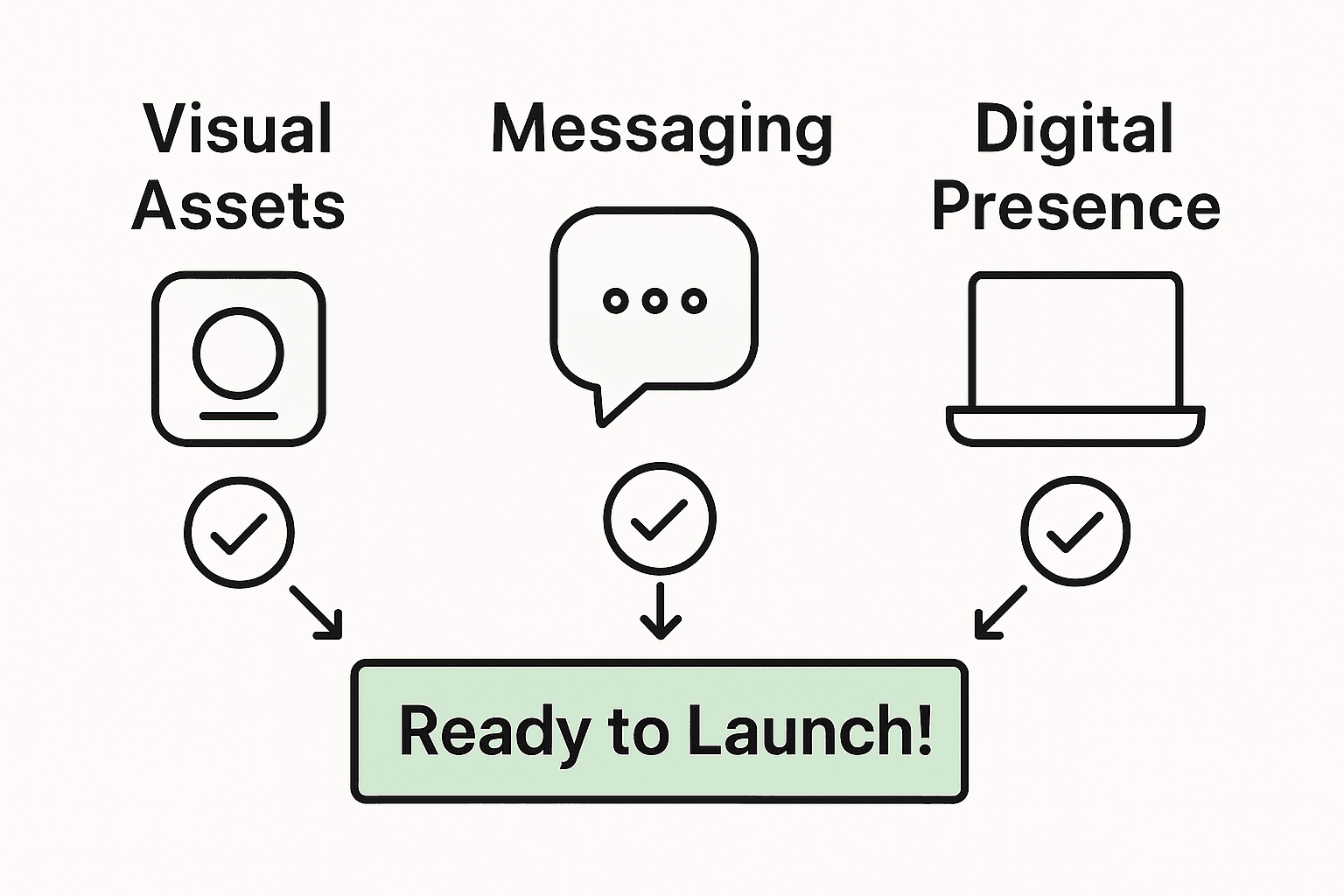
Expand your review beyond visual elements to assess the strategic coherence of your brand. Test your brand messaging across various communication channels to ensure a unified voice and tone. Run through potential customer interaction scenarios to confirm your brand personality comes through consistently. Gather feedback from a small group of trusted colleagues or potential customers who can provide objective insights about your brand’s perceived clarity and appeal.
Create a comprehensive brand compliance checklist that covers every aspect of your brand identity. This should include visual guidelines, messaging frameworks, communication protocols, and technical specifications for different media platforms. Document any variations or exceptions to your standard guidelines, ensuring flexibility without compromising your core brand essence.
This table summarises crucial checks before a brand launch:
| Readiness Check Area | What to Review | Why It Matters |
|---|---|---|
| Visual Consistency | Logo, colours, typography | Ensures recognisability everywhere |
| Messaging Alignment | Tone and content across platforms | Maintains a unified brand voice |
| Technical Compatibility | Asset formats for all channels | Guarantees high quality delivery |
| Audience Resonance | Feedback from real users | Validates clarity and appeal |
Pro tip: Conduct a blind review where team members unfamiliar with the brand development process evaluate your brand materials to identify any potential inconsistencies or areas for refinement.
Step 6: Activate your brand across channels
Activating your brand across multiple channels is the strategic implementation of your carefully developed brand identity, transforming your vision into a tangible presence that connects with your target audience. This critical phase requires a coordinated approach that ensures your brand speaks consistently and powerfully across every potential customer touchpoint.
Developing an impactful brand identity design demands meticulous attention to how your visual and messaging elements translate across different platforms. Begin by mapping out all potential communication channels including your website, social media profiles, email marketing, physical marketing materials, and any industry specific platforms relevant to your business. Create a comprehensive activation strategy that maintains visual consistency while adapting to the unique characteristics of each channel.
Prepare channel specific assets that adhere to your core brand guidelines while optimising for each platform’s technical and audience requirements. For digital channels, ensure your logo and visual elements are correctly sized and formatted for different devices and screen resolutions. Design email templates, social media graphics, and digital advertisements that reflect your brand personality while remaining platform appropriate. For physical channels, develop printed materials like business cards, brochures, and signage that carry the same visual language and emotional tone established in your digital presence.
Implement a phased rollout that allows you to monitor and refine your brand activation. Start with your primary channels and gradually expand to secondary platforms. Track audience engagement and feedback carefully, being prepared to make nuanced adjustments that enhance your brand’s reception. Establish a consistent posting and communication schedule that keeps your brand visible and maintains momentum after the initial launch.
Pro tip: Create a centralised digital asset library that allows your entire team to access up to date brand materials ensuring consistency across all communications.
Elevate Your Brand Launch with Expert Design Support
Launching a brand in the United Kingdom comes with unique challenges such as defining a clear brand strategy, creating a cohesive brand identity, and activating your presence consistently across channels. If you find yourself overwhelmed by the need to balance visual consistency, messaging alignment and technical compatibility, you are not alone. Many businesses struggle with ensuring their launch assets truly resonate with their audience while standing out in a competitive market.
At KUKOO Creative, we understand the critical importance of every step highlighted in the “How to Launch a Brand: Step-by-Step Guide for UK Businesses” article. With over a decade of experience partnering with business owners across the UK, we specialise in crafting impactful designs—from memorable logos to responsive websites—that not only build brand recognition but also connect you powerfully with the people who matter most. Whether you need help refining your brand strategy or activating your brand across multiple platforms, our tailored solutions ensure your identity is ready to make that strong first impression.
Start turning your brand vision into reality today. Discover how our expert design services can support your successful launch by visiting KUKOO Creative and learn more about our bespoke solutions designed for businesses aiming to thrive. For a deeper understanding of how cohesive brand identity drives impact, check our guide on Developing an Impactful Brand Identity Design. Also explore how to build a seamless online presence at KUKOO Creative.
Ready to launch a brand that truly connects? Take the decisive step now with KUKOO Creative.
Frequently Asked Questions
What is the first step to launching a brand in the UK?
Defining your brand strategy is the first crucial step. It involves articulating your core purpose, mission, vision, and values to establish a strong foundation for your brand.
How do I create a visual identity for my brand?
Design your brand identity by developing a mood board that captures your brand’s essence and key visual elements. Include your logo, colour palette, typography, and graphics to ensure a cohesive look across all platforms.
What materials do I need for a successful brand launch?
You should create a comprehensive set of launch assets, including a responsive website, social media graphics, email templates, and printed materials like business cards and brochures. Ensure all assets adhere to your brand guidelines for consistency.
How can I plan an effective launch campaign?
Start by establishing clear objectives for your launch campaign and creating a timeline with key milestones. Develop a content strategy that builds anticipation before your official launch, using a mix of teasers and sneak peeks tailored to your target audience.
How do I verify my brand readiness before launching?
Conduct a thorough audit of all your brand assets to ensure visual and messaging consistency. Review elements such as logo, colours, and messaging across different platforms to make sure everything aligns with your defined brand identity.
What steps should I take to activate my brand across channels?
Map out all potential communication channels where your audience is active. Prepare channel-specific assets and implement a phased rollout to monitor engagement, making adjustments as needed to enhance your brand’s reception.