
Over 80 percent of british businesses recognise that branding is more than just a logo or colour scheme. In today’s crowded markets, a strong brand shapes first impressions and influences every customer choice. Whether you are launching a startup or seeking to refresh an established name, understanding the principles of business branding helps you build a memorable identity that earns trust and sets your company apart from competitors.
Table of Contents
- What Is Business Branding? Core Principles
- Types Of Branding And Brand Strategies
- Key Elements Of An Effective Brand Identity
- Steps To Build A Strong Business Brand
- Legal And Practical Considerations For UK Brands
- Avoiding Common Branding Mistakes And Pitfalls
Key Takeaways
| Point | Details |
|---|---|
| Understanding Branding | Branding is more than just logos; it defines a business’s unique identity, values, and purpose in the marketplace. |
| Brand Strategy Development | Effective branding strategies require a deep understanding of the target audience and consistent messaging aligned with organisational values. |
| Legal Considerations | Brands must navigate legal frameworks such as trademark registration to protect their identity and creative assets. |
| Avoiding Pitfalls | Common branding mistakes include inconsistent messaging and failing to adapt to market changes, which can weaken brand perception. |
What Is Business Branding? Core Principles
Business branding transcends simply creating a logo or choosing corporate colours. At its core, branding represents the strategic process of defining and communicating your business’s unique identity, purpose, and value proposition to your target audience. Comprehensive brand guidelines help organisations establish a distinctive market presence that resonates deeply with potential customers.
The fundamental principles of business branding encompass several critical elements. Brand Purpose emerges as the foundational cornerstone, defining why your organisation exists beyond generating profit. This involves articulating your core mission, values, and the meaningful impact you aim to create. Brand positioning strategies enable businesses to differentiate themselves in competitive markets by understanding their unique strengths and communicating them effectively.
Successful branding integrates multiple interconnected components. These include brand identity (visual representation), brand personality (human-like characteristics), and brand image (external perception). Businesses must meticulously craft these elements to create a cohesive narrative that connects emotionally with their target audience. By developing a consistent brand experience across all touchpoints – from marketing materials to customer interactions – organisations can build trust, recognition, and long-term customer loyalty.
Key branding principles require strategic alignment between internal values and external communication. This means ensuring that your brand’s visual design, messaging, and organisational behaviour all reflect a unified, authentic story. Whether you’re a small local enterprise or a growing regional business, your brand represents your most powerful communication tool – transforming abstract concepts into tangible, memorable experiences that distinguish you in the marketplace.
Types Of Branding And Brand Strategies
Branding strategies represent sophisticated approaches businesses use to establish and communicate their unique market identity. Different types of branding emerge depending on an organisation’s specific goals, target audience, and competitive landscape. Small business branding strategies enable entrepreneurs to craft distinctive identities that differentiate them from larger competitors.
The primary branding approaches include Personal Branding, where individuals build their professional reputation; Corporate Branding, focusing on overall organisational identity; Product Branding, centred on specific product lines; and Service Branding, emphasising unique service delivery characteristics. Each strategy requires nuanced techniques to effectively communicate core values and unique selling propositions.
Within these broad categories, businesses can deploy multiple strategic variations. Geographical Branding targets region-specific markets, while Cultural Branding connects with specific demographic groups through shared values and experiences. Custom branding techniques allow organisations to develop multifaceted approaches that adapt to evolving market dynamics and consumer expectations.
Successful branding strategies demand comprehensive understanding of your target audience, consistent messaging, and authentic representation of organisational values. Whether developing a comprehensive corporate identity or crafting a niche market approach, businesses must strategically align their visual design, communication style, and operational practices to create a compelling and memorable brand experience that resonates with potential customers.
Key Elements Of An Effective Brand Identity
An effective brand identity represents the comprehensive visual, emotional, and strategic framework that distinguishes a business in the marketplace. Brand identity strategies enable organisations to create a cohesive and recognisable presence that resonates with target audiences. This multifaceted approach encompasses visual elements, communication style, and core organisational values that collectively communicate a unique narrative.
The core components of a powerful brand identity include Visual Identity, which involves logos, colour palettes, typography, and design systems; Verbal Identity, encompassing tone of voice, messaging style, and linguistic characteristics; and Behavioural Identity, reflecting the organisation’s values, customer interactions, and cultural principles. Professional brand identity development requires meticulous attention to how these elements interconnect and reinforce each other.

Brand positioning emerges as a critical element in establishing a compelling identity. This involves defining your unique market proposition, understanding your target audience’s expectations, and crafting a narrative that differentiates your organisation from competitors. Successful brands develop a consistent experience across all touchpoints – from digital platforms to physical interactions – that builds trust, recognition, and emotional connection.
Ultimately, an effective brand identity is not static but a dynamic system that evolves with market changes and organisational growth. By maintaining strategic consistency while remaining adaptable, businesses can create a resilient brand presence that communicates authenticity, builds customer loyalty, and drives long-term competitive advantage in an increasingly complex marketplace.
Steps To Build A Strong Business Brand
Building a robust business brand requires a strategic and comprehensive approach that goes beyond superficial design elements. Visual branding techniques provide the foundational framework for organisations seeking to develop a distinctive market presence. The initial step involves conducting a thorough assessment of your current market position, understanding your unique value proposition, and identifying the core values that differentiate your business.
The strategic process of brand development encompasses several critical stages. Brand Positioning requires businesses to define their unique market narrative, articulating what sets them apart from competitors. Market Research plays a pivotal role in understanding target audience expectations, preferences, and emotional triggers. Brand mark development helps organisations create a visual representation that encapsulates their core identity and communicates their fundamental purpose.
Organisations must develop a comprehensive Brand Strategy that includes creating consistent messaging, designing visual identity elements, and establishing guidelines for communication across all platforms. This involves crafting a distinctive visual language, including colour palettes, typography, logo design, and graphic standards that maintain coherence across digital and physical touchpoints. The goal is to create a memorable and authentic brand experience that resonates emotionally with your target audience.
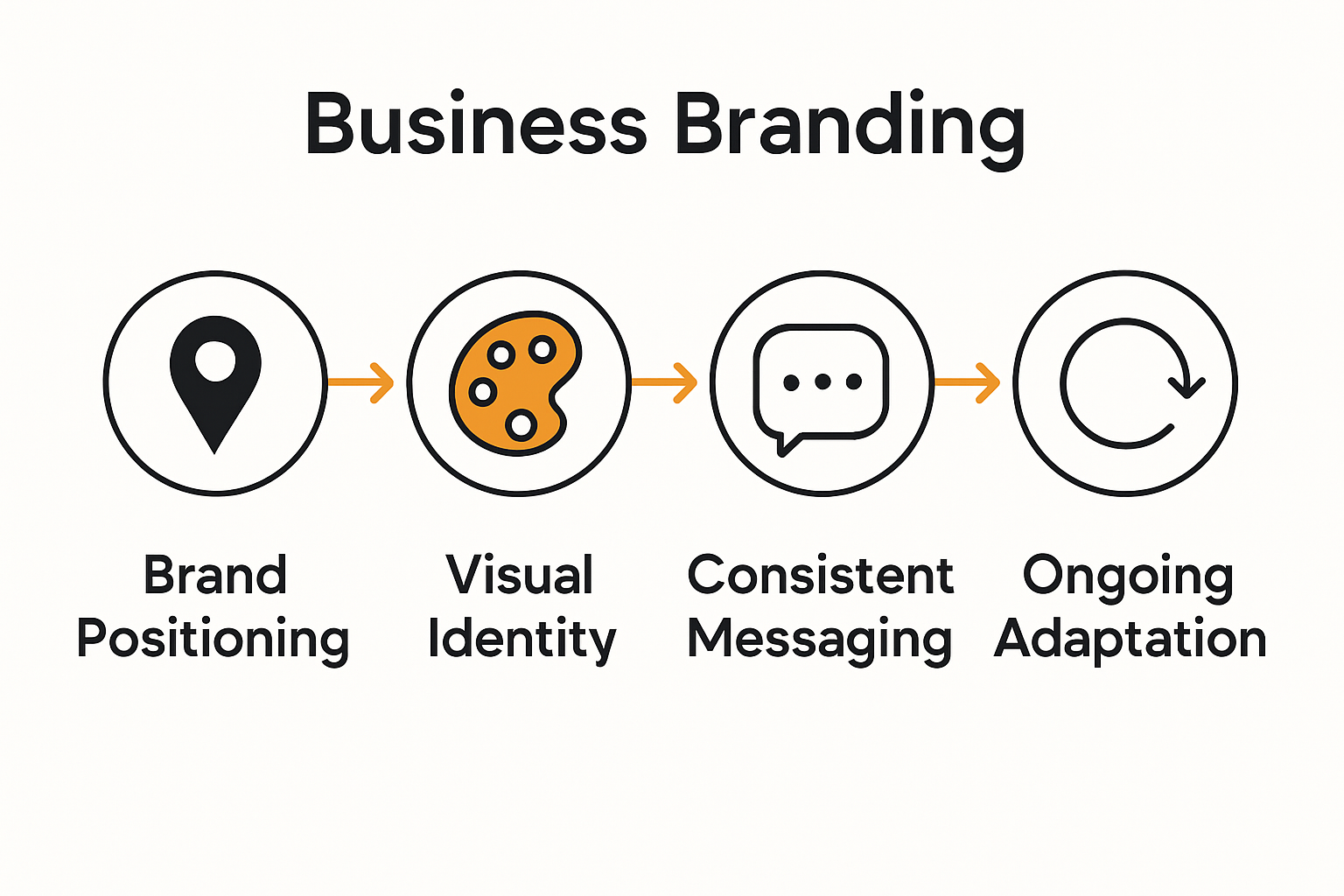
Successful brand building is an iterative process that demands continuous refinement and adaptation. By maintaining strategic consistency while remaining flexible, businesses can create a resilient brand identity that communicates authenticity, builds customer trust, and drives long-term competitive advantage in an increasingly complex marketplace. Regular brand audits and feedback mechanisms ensure that your brand remains relevant, compelling, and aligned with evolving market dynamics.
Legal And Practical Considerations For UK Brands
Branding for UK businesses requires careful navigation of legal frameworks and intellectual property regulations that protect organisational identity and creative assets. Logo design considerations play a critical role in establishing legal protection for your brand’s visual representation, ensuring unique and defensible intellectual property rights.
Businesses must prioritise several key legal considerations when developing their brand strategy. Trademark Registration represents a fundamental protection mechanism, allowing organisations to legally safeguard their brand name, logo, and distinctive visual elements. Intellectual Property Rights encompass complex legal territories, including copyright protection for creative materials, design rights, and potential restrictions on using specific visual or linguistic elements that might infringe on existing brand identities.
Practical brand development requires comprehensive understanding of regulatory compliance beyond intellectual property. This includes adherence to advertising standards, data protection regulations, and consumer protection laws that govern how businesses communicate and represent themselves in the marketplace. Business logo update strategies must also consider potential legal implications of rebranding, ensuring seamless transitions that maintain legal continuity and protect established brand equity.
Successful brand management in the UK demands a proactive approach to legal compliance and strategic brand protection. Businesses should invest in professional legal consultation, conduct thorough trademark searches, and develop robust brand guidelines that anticipate potential legal challenges. By understanding the intricate relationship between creative expression and legal frameworks, organisations can build resilient, legally sound brand identities that effectively communicate their unique value proposition while mitigating potential regulatory risks.
Avoiding Common Branding Mistakes And Pitfalls
Building a successful brand requires strategic awareness of potential missteps that can undermine your organisation’s market positioning. Logo branding insights highlight how seemingly minor design choices can significantly impact brand perception and effectiveness. The most critical mistakes often stem from inconsistent messaging, poorly defined brand identity, and a lack of strategic alignment between visual representation and core organisational values.
Businesses frequently encounter several Fundamental Branding Errors that can derail their market presence. These include developing a generic visual identity that fails to distinguish the brand, inconsistent communication across different platforms, and misalignment between brand promise and actual customer experience. Brand Dilution occurs when organisations attempt to appeal to everyone, resulting in a weak, unfocused brand message that fails to resonate with any specific audience.
Strategic branding lessons reveal that successful brands maintain a delicate balance between consistency and adaptability. Common pitfalls include rigidly adhering to outdated brand guidelines, neglecting market feedback, and failing to evolve with changing consumer expectations. Organisations must develop a flexible brand strategy that remains true to core values while remaining responsive to emerging market dynamics.
Ultimately, avoiding branding mistakes requires a holistic approach that integrates strategic planning, continuous market research, and a deep understanding of your target audience. Regular brand audits, customer feedback mechanisms, and a willingness to make incremental refinements can help businesses navigate the complex landscape of brand development. By approaching branding as a dynamic, evolving process rather than a static set of design rules, organisations can create resilient brand identities that maintain relevance and emotional connection in an increasingly competitive marketplace.
Strengthen Your Brand Identity with Expert Design Solutions
Building a strong business brand involves more than just visual appeal. As the article highlights, consistent messaging, authentic brand positioning and a cohesive brand identity that reflects your core values are vital. These challenges can be overwhelming when trying to balance strategic alignment with creative execution. Our experience working with business owners ensures your unique brand story is communicated powerfully through every design element.
Discover how our expert brand identity development and visual branding techniques can transform your market presence today. Partner with us at Kukoo Creative to create impactful logos, websites and cohesive brand experiences that truly connect with your audience. Act now to build trust and loyalty that lasts in your competitive marketplace.
Frequently Asked Questions
What is the purpose of business branding?
Business branding serves to define and communicate a company’s unique identity, purpose, and value proposition, ultimately resonating with the target audience and establishing a strong market presence.
What are the core elements of an effective brand identity?
The core elements of an effective brand identity include visual identity (logos, colours, typography), verbal identity (tone of voice, messaging), and behavioural identity (organisational values and interactions with customers).
How do branding strategies differ between personal, corporate, product, and service branding?
Personal branding focuses on individual reputation, corporate branding centres on the organisation’s identity, product branding highlights specific products, and service branding emphasises unique service characteristics. Each strategy addresses distinct audience needs and market dynamics.
What common mistakes should businesses avoid in branding?
Common branding mistakes include inconsistent messaging, poorly defined brand identity, developing a generic visual identity, and failing to adapt based on market feedback. These can lead to brand dilution and weakened market positioning.
Recommended
- Why Branding Matters: Complete Guide For UK Business Owners – Kukoo Creative
- Complete Guide to Custom Branding for Business Owners – Kukoo Creative
- The Essential Guide to the Role of Logo in Branding – Kukoo Creative
- 7 Essential Small Business Branding Tips for UK Owners
- Impact Du Contenu Vidéo Sur Le Branding : Guide Complet