
More than 75 percent of British job seekers say an employer’s brand directly affects their decision to apply. In today’s crowded market, simply posting vacancies no longer wins the best talent. The way British organisations present their values, work culture, and reputation has become a decisive factor in attracting and keeping top candidates. This guide reveals how strong recruitment branding can set companies apart and shape hiring success in meaningful ways.
Table of Contents
- Role of Branding in Recruitment Explained
- Types of Branding Relevant to Hiring
- How Employer Branding Impacts Candidates
- Building a Strong Recruitment Brand Identity
- Common Branding Mistakes in Recruitment
Key Takeaways
| Point | Details |
|---|---|
| Importance of Employer Branding | A strong employer brand is crucial for attracting top talent and differentiating an organisation in a competitive job market. |
| Types of Recruitment Branding | Organisations should utilise various branding strategies, such as corporate, recruitment marketing, and cultural branding, to appeal to specific talent pools. |
| Impact on Candidate Perception | Effective employer branding shapes candidates’ expectations and experiences, making them feel more aligned with the organisation’s values and culture. |
| Common Pitfalls | Avoiding common mistakes, such as inauthentic messaging and inconsistent branding, is essential for maintaining an attractive recruitment narrative. |
Role of Branding in Recruitment Explained
Recruitment branding has transformed from a peripheral strategy to a critical business imperative in today’s competitive talent marketplace. By developing a compelling employer brand, organisations can differentiate themselves and attract top-tier professionals who align with their core values and organisational culture.
Research from the University of Kent reveals that employer branding significantly influences talent management outcomes within organisations. Specifically, a well-crafted employer brand helps businesses communicate their unique workplace identity, creating a powerful narrative that resonates with potential candidates. This narrative goes beyond traditional job descriptions, offering insights into company culture, professional development opportunities, and the broader impact employees can make.
The strategic importance of recruitment branding becomes evident when examining its multifaceted impact. Companies with strong employer branding strategies can achieve several key objectives:
- Attract high-calibre talent who share the organisation’s vision
- Reduce recruitment costs by naturally drawing suitable candidates
- Enhance employee retention through clear and authentic messaging
- Create a competitive advantage in talent acquisition
Additional research from the University of Manchester underscores how effective employer branding directly correlates with enhanced employee performance. By establishing a transparent and engaging brand identity, organisations can not only recruit exceptional talent but also motivate existing employees, creating a cohesive and dynamic workplace ecosystem.
Types of Branding Relevant to Hiring
Branding in recruitment is not a monolithic concept but a nuanced strategy encompassing multiple approaches tailored to specific organisational needs. Understanding these distinct branding types enables businesses to develop targeted talent acquisition strategies that resonate with potential candidates.
Research from Brunel University highlights that employer branding encompasses critical elements like organisational culture, compensation, and work-life balance, which collectively shape an organisation’s attractiveness to potential employees. These multifaceted branding approaches can be categorised into several key types:
- Corporate Employer Branding
- Focuses on overall organisational reputation
- Communicates company values and mission
- Appeals to candidates seeking stable, purpose-driven careers
- Recruitment Marketing Branding
- Targets specific talent pools
- Uses targeted messaging and channels
- Highlights unique employment value propositions
- Cultural Branding
- Emphasises workplace environment and team dynamics
- Showcases internal employee experiences
- Attracts candidates seeking collaborative, innovative spaces
Additional research from the University of Huddersfield explores how strategic HR practices play a crucial role in developing effective employer branding strategies. By understanding and leveraging these different branding approaches, organisations can create comprehensive recruitment narratives that not only attract top talent but also align with broader business branding objectives.
The key is to recognise that each branding type serves a unique purpose, offering organisations flexible tools to craft compelling narratives that speak directly to desired talent segments. Successful recruitment branding requires a strategic, holistic approach that authentically represents the organisation’s core identity and professional opportunities.
How Employer Branding Impacts Candidates
Employer branding represents a sophisticated psychological contract between organisations and potential candidates, significantly influencing how talented professionals perceive and engage with job opportunities. The impact extends far beyond traditional recruitment messaging, shaping candidates’ expectations, emotional responses, and ultimate career decisions.

Research from the University of Kent demonstrates that employer branding processes profoundly influence talent attraction and retention strategies, revealing how candidates interpret organisational narratives. Candidates do not merely evaluate job descriptions, but holistically assess an organisation’s cultural ecosystem, including its values, work environment, professional development opportunities, and broader societal impact.
The candidate experience through employer branding can be categorised into several critical psychological touchpoints:
- Initial Perception: First impressions formed through external communication
- Emotional Resonance: Connection with organisational values and mission
- Professional Alignment: Matching personal career aspirations with organisational opportunities
- Cultural Compatibility: Assessment of workplace environment and team dynamics
Additional research from the University of Manchester explores how perceived fulfillment of employer brand promises directly correlates with candidate engagement and potential performance. This underscores the profound psychological contract established during the recruitment process, where brand storytelling becomes a critical recruitment tool.
Ultimately, successful employer branding transforms recruitment from a transactional interaction into a meaningful dialogue, where candidates see themselves not just as potential employees, but as integral contributors to an organisation’s broader vision and success.
Building a Strong Recruitment Brand Identity
Creating a powerful recruitment brand identity requires a strategic, holistic approach that goes beyond superficial marketing tactics. It demands a deep understanding of organisational culture, values, and the unique narrative that distinguishes an employer in a competitive talent marketplace.
Research from the University of Jobs highlights how crafting a compelling employer brand involves meticulously reflecting institutional culture and values. This process is not simply about attracting candidates, but about creating an authentic employer value proposition that resonates with potential talent’s aspirations and professional goals.
Key elements of building a robust recruitment brand identity include:
- Authenticity: Ensuring external messaging genuinely reflects internal workplace culture
- Consistency: Maintaining uniform brand messaging across all recruitment channels
- Differentiation: Highlighting unique organisational attributes that set the employer apart
- Emotional Connection: Creating narratives that inspire and engage potential candidates
Additional research from Brunel University suggests a multidimensional approach, emphasising that successful employer branding encompasses development opportunities, workplace equality, and organisational justice. This comprehensive perspective transforms recruitment from a transactional process to a strategic dialogue, where brand identity becomes a powerful recruitment tool.
Ultimately, a strong recruitment brand identity is not manufactured but cultivated. It emerges from a genuine commitment to creating a workplace environment that attracts, nurtures, and retains exceptional talent through meaningful engagement and shared organisational vision.
Common Branding Mistakes in Recruitment
Recruitment branding is a delicate strategic process where even minor missteps can significantly undermine an organisation’s talent acquisition efforts. Understanding and avoiding common pitfalls is crucial for creating a compelling employer narrative that attracts and retains top-tier professionals.
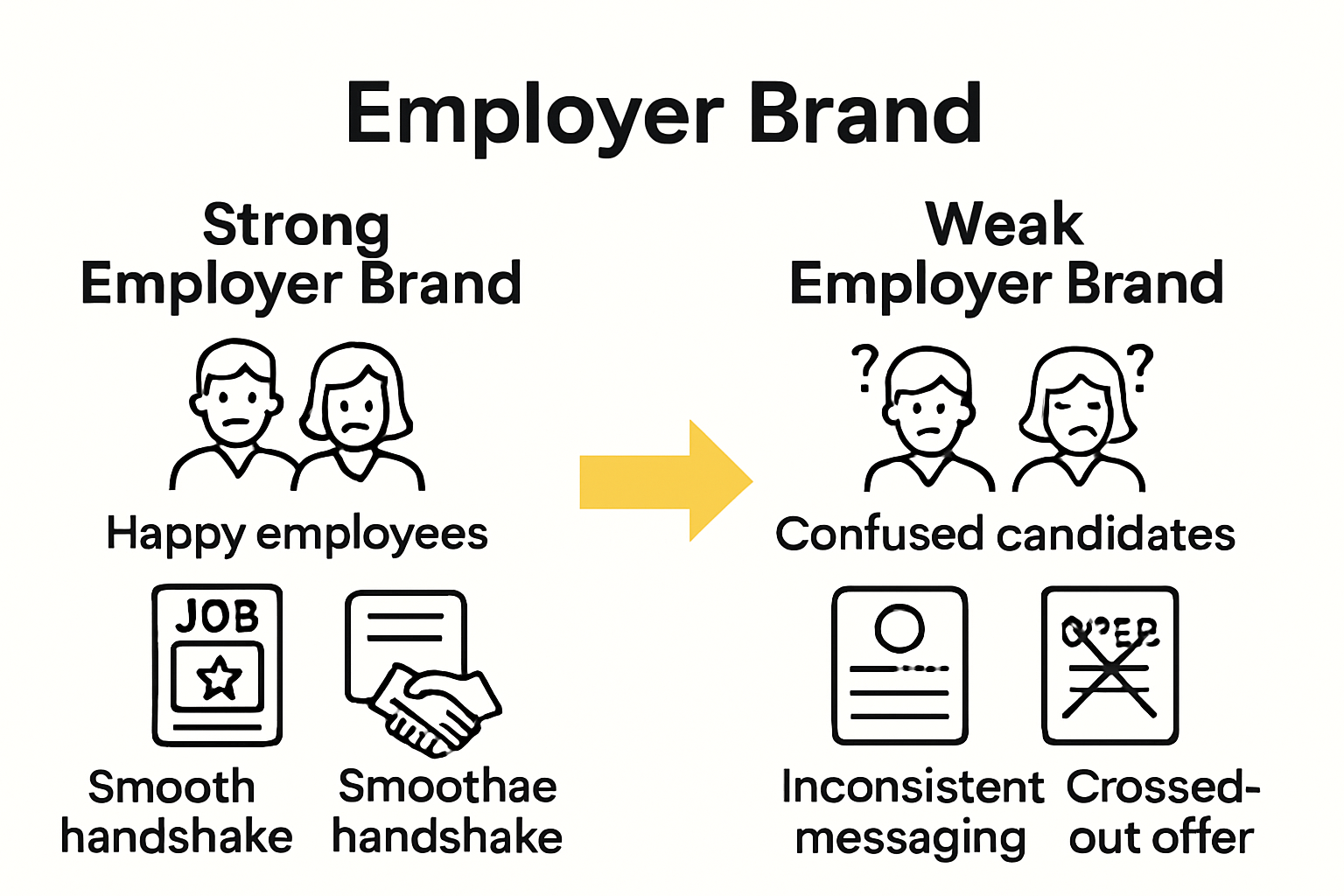
Research from the University of Huddersfield reveals that simply adopting established HR practices does not guarantee attracting suitable candidates. Many organisations fall into predictable traps that diminish their recruitment brand’s effectiveness.
Critical branding mistakes organisations frequently encounter include:
- Inauthentic Messaging: Creating recruitment communications that do not genuinely reflect workplace reality
- Inconsistent Branding: Presenting disparate employer brand messages across different platforms
- Neglecting Cultural Alignment: Failing to connect recruitment narratives with actual organisational values
- Overlooking Candidate Experience: Treating recruitment as a one-way communication process
Additional research from the University of Kent emphasises the critical importance of aligning employer branding with organisational culture and values, noting that misalignment can severely hinder talent attraction and retention. This underscores the need for a holistic approach to developing consistent brand guidelines.
Successful recruitment branding demands continuous refinement, genuine introspection, and a commitment to creating an authentic, transparent dialogue with potential talent. By recognising and addressing these common mistakes, organisations can transform their recruitment strategy from a transactional process to a meaningful engagement platform.
Strengthen Your Recruitment Branding with Expert Design Solutions
The article highlights the challenge organisations face in building an authentic and consistent employer brand that resonates deeply with candidates and reflects true organisational culture. Key goals include attracting the right talent, communicating a clear employer value proposition, and creating emotional connections that inspire lasting engagement. Without strong and cohesive branding, recruitment efforts can feel disjointed and miss the emotional impact necessary to captivate top candidates.
At Kukoo Creative, we understand that branding in recruitment is not just a message but a lived experience. For over a decade, we have partnered with business owners to craft impactful designs that bring your employer brand to life — from unique logos to compelling websites that amplify your recruitment narrative. Our design solutions help you establish authenticity, consistency, and differentiation in your recruitment branding. Explore how we transform your brand identity into a powerful recruitment tool that attracts and retains exceptional talent.
Ready to build a recruitment brand that truly connects with professionals seeking meaningful careers Understand the power of strategic branding today by visiting Kukoo Creative and discover how our bespoke design services can elevate your recruitment strategy. Do not wait let us help you create a compelling employer brand that speaks directly to your ideal candidates and drives successful talent acquisition now.
Frequently Asked Questions
What is branding in recruitment?
Branding in recruitment refers to the strategies and practices organisations use to create an appealing and authentic employer brand that attracts potential candidates. It encompasses various approaches that highlight the workplace culture, values, and unique offerings of the organisation to differentiate it in the talent marketplace.
How does employer branding influence candidate engagement?
Employer branding plays a crucial role in shaping candidates’ perceptions and emotional responses to job opportunities. A strong employer brand creates a positive initial impression, builds emotional resonance with organisational values, and aligns personal career aspirations with available opportunities, ultimately enhancing candidate engagement and interest in the organisation.
What are the common mistakes organisations make in recruitment branding?
Common mistakes in recruitment branding include inauthentic messaging that does not reflect workplace realities, inconsistent branding across different platforms, neglecting cultural alignment in recruitment narratives, and overlooking the candidate experience by treating recruitment as a one-way process.
Why is authenticity important in employer branding?
Authenticity in employer branding is vital as it ensures that external messaging genuinely reflects the internal workplace culture. Authentic branding builds trust with potential candidates, enhances the organisation’s reputation, and fosters a meaningful connection, making it more likely to attract talent that aligns with the company’s values.
Recommended
- Business Branding Explained: Key Elements and Benefits
- Why Branding Matters: Complete Guide For UK Business Owners – Kukoo Creative
- The Essential Guide to the Role of Logo in Branding – Kukoo Creative
- 5 Cool Lessons We Can Learn from AirBnB’s Branding – Kukoo Creative
- Impact Du Contenu Vidéo Sur Le Branding : Guide Complet