
Standing out in a busy Leeds retail market often feels like a challenge when larger competitors dominate local attention. For small and mid-sized businesses, defining a unique brand and understanding customer needs is vital to thrive. By building clear values, targeted messaging, and consistent experiences, you can create meaningful connections and lasting recognition among your audience. This guide breaks down a step-by-step branding process designed for British retailers, helping you lay a strong foundation for measurable growth and stronger customer engagement.
Table of Contents
- Step 1: Define Your Brand’s Values And Objectives
- Step 2: Research Your Target Audience And Competition
- Step 3: Develop Your Visual Identity And Messaging
- Step 4: Implement Your Brand Across All Touchpoints
- Step 5: Evaluate Brand Performance And Refine Strategy
Summary
| Key Takeaway | Explanation |
|---|---|
| 1. Define your brand’s values clearly | Establish core principles that guide decisions beyond just profit. |
| 2. Understand your target audience | Create customer personas to tailor your strategy effectively. |
| 3. Develop a strong visual identity | Design key elements to reflect your brand’s personality consistently. |
| 4. Ensure brand consistency throughout | Implement your brand across all touchpoints for trust and recognition. |
| 5. Evaluate and adapt your strategy | Regularly assess brand performance and refine your approach accordingly. |
Step 1: Define your brand’s values and objectives
Defining your brand’s core values and objectives is the strategic foundation that will guide all future business decisions and communications. This critical step transforms abstract concepts into a concrete roadmap for your retail brand’s identity and direction.
To establish meaningful brand values, start by conducting an honest internal assessment of what truly matters to your business. Consider the principles that drive your company beyond simple profit – these might include customer service excellence, community involvement, sustainability, innovation, or transparency. Your values should reflect both your business’s mission and the authentic spirit of your organisation.
Key elements to consider when defining your brand objectives include:
- Market positioning: Where do you want to stand compared to competitors?
- Customer experience: What unique value will you provide?
- Growth targets: What specific business milestones are you aiming to achieve?
- Brand perception: How do you want customers to feel about your brand?
Effectively articulating these values requires clarity and specificity. Branding Strategy Guide for UK Business Owners suggests creating concise, memorable statements that capture the essence of your brand’s purpose.
Your brand values are not just words on a page – they are the heartbeat of your business strategy.
To crystallise your objectives, translate your values into actionable goals. This might mean developing specific customer service protocols, establishing ethical sourcing standards, or creating programmes that demonstrate your commitment to community or sustainability.
Here’s a summary of how brand objectives influence different business areas:
| Business Area | Brand Objective Mapping | Example Impact |
|---|---|---|
| Market Positioning | Clarifies competitive edge | Distinct niche recognised |
| Customer Experience | Aligns with value delivery | Loyal customer relationships |
| Growth Targets | Drives strategic planning | Sustainable scaling achieved |
| Brand Perception | Shapes messaging and outreach | Positive consumer sentiment |
Pro tip: Revisit and refine your brand values annually to ensure they remain relevant and aligned with your business’s evolving journey.
Step 2: Research your target audience and competition
Researching your target audience and competition is a critical strategic process that transforms your understanding of the marketplace into actionable insights. This step enables you to craft a precise, targeted approach that differentiates your retail brand effectively.

Begin by developing a comprehensive customer persona using detailed market segmentation techniques. This involves breaking down potential customers into distinct groups based on geographic, demographic, psychographic, and behavioural characteristics. Consider factors like age, income, lifestyle, purchasing habits, and specific needs that your retail business can uniquely address.
Key research methods include:
- Conducting customer surveys
- Analysing social media demographics
- Reviewing industry reports
- Examining competitor marketing strategies
- Tracking customer feedback and interactions
For competitive analysis, map out your direct and indirect competitors, identifying their strengths, weaknesses, and market positioning. Understanding their strategies allows you to carve out a unique market niche.
Successful brands don’t just understand their customers – they anticipate their evolving needs and desires.
When examining market penetration, focus on how you can appeal to both your core customer base and potential light buyers. Quantifying your target market helps sustain long-term growth and adaptability.
Pro tip: Update your audience research biannually to stay ahead of shifting market dynamics and emerging consumer trends.
Step 3: Develop your visual identity and messaging
Developing a compelling visual identity and messaging strategy is crucial for creating an emotional connection with your target audience. This step transforms your brand’s core values into a distinctive visual and communicative language that resonates across all marketing channels.
Your visual identity encompasses more than just a logo – it’s a comprehensive system of design elements that communicate your brand’s personality. Begin by establishing key visual components:
- Colour palette: Select colours that reflect your brand’s emotional tone
- Typography: Choose fonts that represent your brand’s character
- Logo design: Create a versatile and memorable symbol
- Imagery style: Define consistent visual aesthetics
- Digital presence: Ensure cohesive design across all platforms
Carefully craft your brand messaging to align seamlessly with these visual elements. Your communication should articulate unique brand strengths while maintaining a consistent tone that speaks directly to your target audience.
Your visual identity is the silent ambassador of your brand’s promise.
Consider developing brand identity guidelines to maintain consistency across all marketing materials. This ensures that every piece of communication reinforces your brand’s core narrative and visual language.
Pro tip: Conduct periodic visual audits to ensure your brand identity remains fresh, relevant, and aligned with your evolving business strategy.
Step 4: Implement your brand across all touchpoints
Implementing your brand consistently across every customer interaction is crucial for building trust and recognition. This step transforms your carefully crafted brand strategy into a tangible, cohesive experience that resonates with your audience at every possible point of contact.
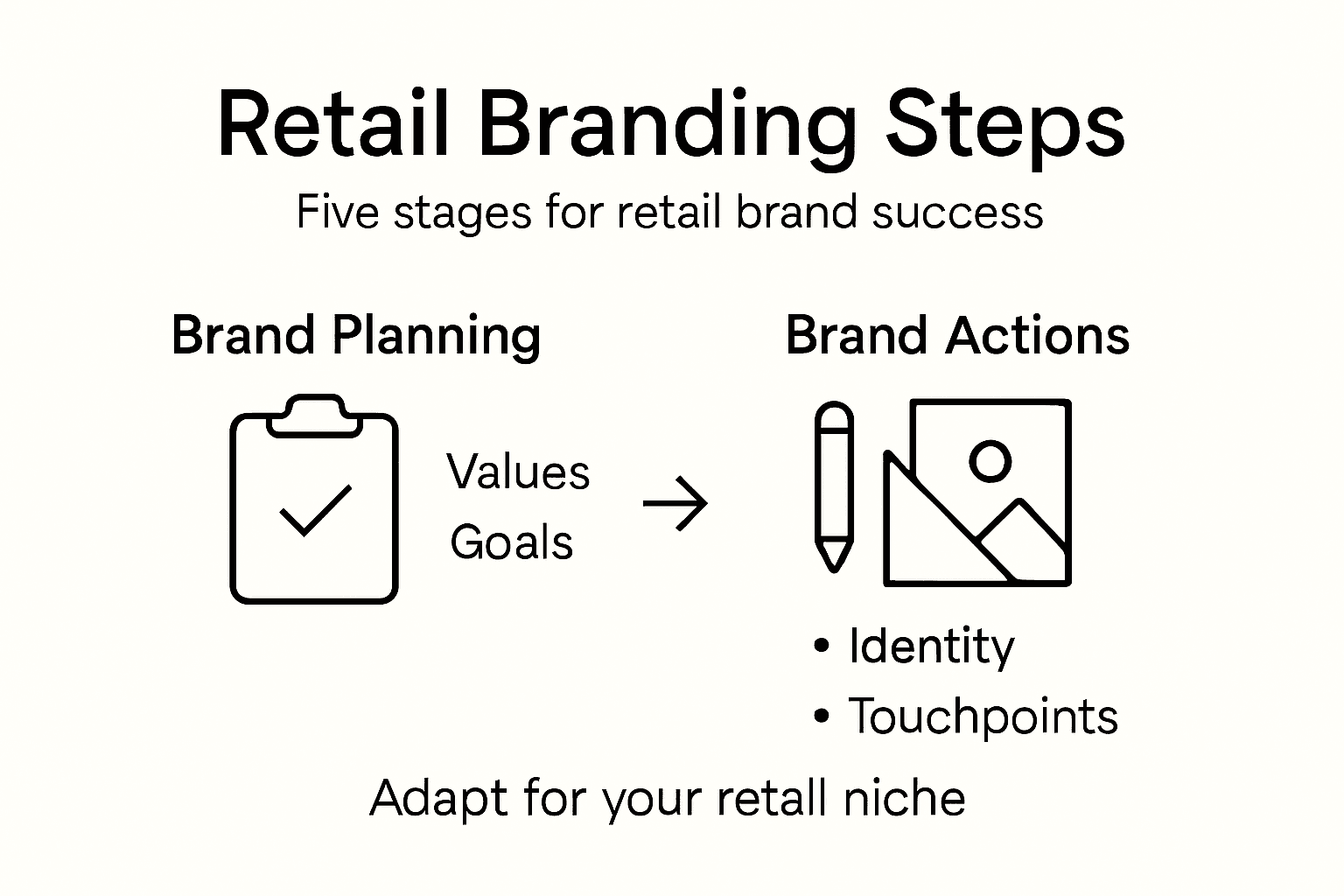
Maintaining brand consistency requires a strategic approach to brand deployment. Develop a comprehensive brand implementation plan that covers all potential customer touchpoints, ensuring your brand’s visual and communicative elements remain uniform and recognisable.
Key implementation strategies include:
- Digital platforms (website, social media, email)
- Physical marketing materials
- Customer service interactions
- Packaging and product design
- Staff uniforms and appearance
- In-store and online experiences
Create a centralised digital asset library that provides team members with easy access to approved brand materials. This ensures everyone has the correct logos, colour palettes, typography, and messaging guidelines at their fingertips.
Consistency is not about limitation, but about creating a recognisable and trustworthy brand experience.
Establish clear communication protocols and provide regular training to ensure all team members understand and can represent your brand effectively. This includes developing standardised templates and creating an automated approval workflow that maintains brand integrity.
Pro tip: Schedule quarterly brand audits to identify and address any emerging inconsistencies in your brand representation.
Step 5: Evaluate brand performance and refine strategy
Evaluating your brand’s performance is a critical process that transforms raw data into strategic insights for continuous improvement. This step allows you to measure the effectiveness of your branding efforts and make informed decisions that drive your business forward.
Brand measurement approaches require a comprehensive framework that goes beyond simple metrics. Develop a multi-level evaluation system that captures different dimensions of brand performance:
- Customer awareness metrics
- Brand perception surveys
- Behavioural impact tracking
- Sales and conversion data
- Customer loyalty indicators
- Competitive positioning analysis
Establish clear benchmarking criteria that align with your original strategic goals. This means creating specific, measurable indicators that reflect your brand’s unique objectives and market positioning.
Effective brand evaluation is not about perfection, but about continuous learning and adaptation.
Utilise both quantitative and qualitative research methods to gain a holistic understanding of your brand’s performance. This might include customer interviews, focus groups, digital analytics, and comprehensive market research.
Below is a comparison of key brand performance metrics and what they reveal:
| Metric Type | Measures | Strategic Value |
|---|---|---|
| Awareness Metrics | Recognition and recall | Gauges reach effectiveness |
| Perception Surveys | Customer attitudes | Identifies strength or issues |
| Loyalty Indicators | Repeat purchases, advocacy | Shows trust and satisfaction |
| Competitive Analysis | Relative market standing | Finds opportunities or threats |
Pro tip: Create a dashboard that tracks key brand performance indicators, allowing you to visualise progress and identify trends quickly.
Transform Your Retail Brand Vision into Lasting Success
Building a retail brand that truly resonates is no easy challenge. This article highlights key steps like defining clear brand values, understanding your target audience, and delivering a consistent visual and messaging identity. You may feel overwhelmed translating these strategic concepts into tangible designs that genuinely connect with your customers. After all, creating a distinct market position and an emotional brand connection requires expert creativity aligned with your brand’s mission.
At KUKOO Creative we have partnered with business owners across the UK for over a decade to craft impactful designs including logos websites and visual identities that ignite brand recognition and customer trust. Our tailored approach ensures your brand values evolve into powerful visual stories that captivate your audience and accelerate growth.
Ready to breathe life into your branding strategy and witness measurable results? Explore how our expert team can support your journey by visiting our website. Discover the steps to build your brand consistently with guides and tools at KUKOO Creative. Let us help you define the look and voice that will set your retail brand apart for years to come.
Take the next step today to transform your retail branding into a compelling experience that engages customers and drives success. Visit https://kukoocreative.com/ now and start creating the connection your brand deserves.
Frequently Asked Questions
How can I define my retail brand’s core values?
To define your retail brand’s core values, conduct an honest assessment of what truly matters to your business beyond profit. Identify principles such as customer service, sustainability, or community involvement that align with your mission; aim to draft clear statements within 1–2 weeks.
What methods should I use to research my target audience effectively?
Utilise methods like customer surveys, social media analysis, and industry reports to gather valuable insights about your target audience. Create detailed customer personas that reflect their demographics and behaviours within 30 days.
How do I develop a cohesive visual identity for my brand?
Develop a cohesive visual identity by selecting a consistent colour palette, typography, logo design, and imagery style that reflect your brand’s personality. Aim to create a brand identity guide within 2 weeks to maintain consistency across all platforms.
What steps should I take to implement my brand consistently?
To implement your brand consistently, create a comprehensive brand implementation plan that covers all customer touchpoints, including digital platforms and customer service interactions. Ensure all team members are trained on these standards and provide access to a central digital asset library within 1 month.
How can I evaluate my brand’s performance effectively?
Evaluate your brand’s performance by developing a multi-level evaluation system that measures metrics like customer awareness, brand perception, and sales data. Set specific benchmarking criteria and analyse this data quarterly to inform your branding strategy.