
Despite digital networking dominating 2026 business circles, 88% of paper cards are discarded quickly yet physical cards remain surprisingly powerful. While 37% of UK small businesses now adopt digital cards, the hybrid approach proves most effective. Business cards create tangible connections that digital methods alone cannot replicate, offering immediate brand impressions and trustworthy first contact in face-to-face networking situations.
Table of Contents
- Why Business Cards Still Matter: The Science And Practicality Behind Their Impact
- Common Misconceptions About Business Cards In 2026
- Design Trends And Innovations Shaping Business Cards Today
- Practical Steps To Create Effective Business Cards For UK Business Owners
- Comparison Between Physical And Digital Business Cards: Pros And Cons
- Conclusion: Leveraging Business Cards To Enhance Your Brand And Networking In 2026
- Enhance Your Business Card Design With Kukoo Creative
Key takeaways
| Point | Details |
|---|---|
| Physical cards create memorable brand moments | Tangible interaction improves recall and establishes trust faster than digital-only contact |
| Hybrid strategies win in 2026 | Combining physical cards with QR codes or NFC technology maximises both personal touch and digital convenience |
| Quality design elevates perception | Premium materials and thoughtful layouts demonstrate professionalism and brand commitment |
| Common myths persist incorrectly | Business cards complement rather than compete with digital networking tools |
| Strategic deployment matters most | Carrying cards consistently and following up digitally transforms networking ROI |
Why business cards still matter: the science and practicality behind their impact
Physical business cards trigger stronger memory formation than digital exchanges. When you hand someone a card, multiple senses engage simultaneously. Touch, sight, and spatial memory work together to cement the interaction in both parties’ minds.
Research demonstrates well-designed business cards achieve 12% lead conversion compared to average website conversions of just 2.35%. This dramatic difference stems from the personal context surrounding card exchanges. Meeting someone face-to-face builds rapport that cold digital outreach struggles to match.
Trust develops faster through physical interaction. Handing over a professionally designed card signals investment in your brand and respect for the relationship. Digital contacts feel disposable; physical cards demand intentional action to discard.
Pro Tip: Keep your cards in a dedicated case to prevent damage and ensure they look pristine when networking. A bent or worn card undermines the professionalism you’re trying to project.
Business cards also solve practical technology barriers. Not everyone uses the same platforms or has their phone readily available during conversations. Cards work universally without requiring app downloads, compatible devices, or internet connectivity. This reliability makes them indispensable at conferences, trade shows, and unexpected networking opportunities.
The physical presence creates accountability too. When someone holds your card, they’re more likely to follow through on promised actions. Digital contacts get buried in overflowing inboxes or lost among hundreds of LinkedIn connections.
Integrating cards with branding strategies for UK businesses amplifies their impact. Your card becomes a miniature brand experience, reinforcing visual identity and positioning messages. Every design choice communicates something about your business values and approach.
Key advantages of physical cards:
- Immediate visual brand impression without technical barriers
- Tactile engagement activating multiple memory pathways
- Universal compatibility across all demographics and situations
- Perceived permanence encouraging follow-through
- Personal investment signalling relationship value
Following business card design best practices ensures your cards maximise these psychological advantages while avoiding common pitfalls that diminish effectiveness.
Common misconceptions about business cards in 2026
Many business owners wrongly assume cards have become obsolete relics. This misconception ignores how networking actually happens in UK business contexts. While digital tools expanded options, face-to-face interactions remain central to building meaningful professional relationships.
The belief that printed cards signal cheapness or unprofessionalism reveals outdated thinking. Premium materials and sophisticated designs actually elevate brand perception significantly. 57% of UK business owners regard printed cards as critical, with quality materials directly enhancing perceived trustworthiness and professionalism.
Another myth suggests digital cards completely replace physical ones. Reality proves more nuanced. Digital card adoption reached 37% among UK small businesses precisely because they complement rather than substitute physical cards. Each format serves distinct purposes within comprehensive networking strategies.
“Business cards foster memorable human connections that purely digital exchanges cannot replicate. The physical act of exchanging cards creates shared moments that strengthen professional bonds.”
The complementary relationship between formats offers strategic advantages:
- Physical cards excel during in-person meetings and events
- Digital cards shine for remote connections and quick updates
- QR codes on physical cards bridge both worlds seamlessly
- Hybrid approaches let recipients choose their preferred method
- Combined use maximises reach across different networking contexts
Some believe any printed card suffices regardless of quality. This thinking costs opportunities. Recipients judge your business within seconds of receiving your card. Flimsy stock, poor printing, or cluttered design suggests similar shortcuts elsewhere in your business operations.
Investing in professional business card design demonstrates commitment to quality throughout your brand experience. Premium finishes like spot UV, embossing, or metallic inks create tactile interest that recipients remember long after initial exchanges.
The assumption that younger professionals reject physical cards also proves false. While digitally native, younger business owners appreciate thoughtful physical touchpoints that stand out from constant digital noise. Well-designed cards surprise and delight in ways digital contacts cannot.
Understanding these realities helps UK business owners make informed decisions about their networking tools. Neither purely physical nor entirely digital approaches optimise results. Strategic integration of both methods positions you ahead of competitors clinging to outdated either-or thinking.
Design trends and innovations shaping business cards today
Metallic finishes and industrial design elements dominate 2026 UK business card aesthetics. Copper, silver, and gold foiling create premium impressions that convey durability and brand strength. These finishes catch light during exchanges, drawing attention and creating memorable visual moments.
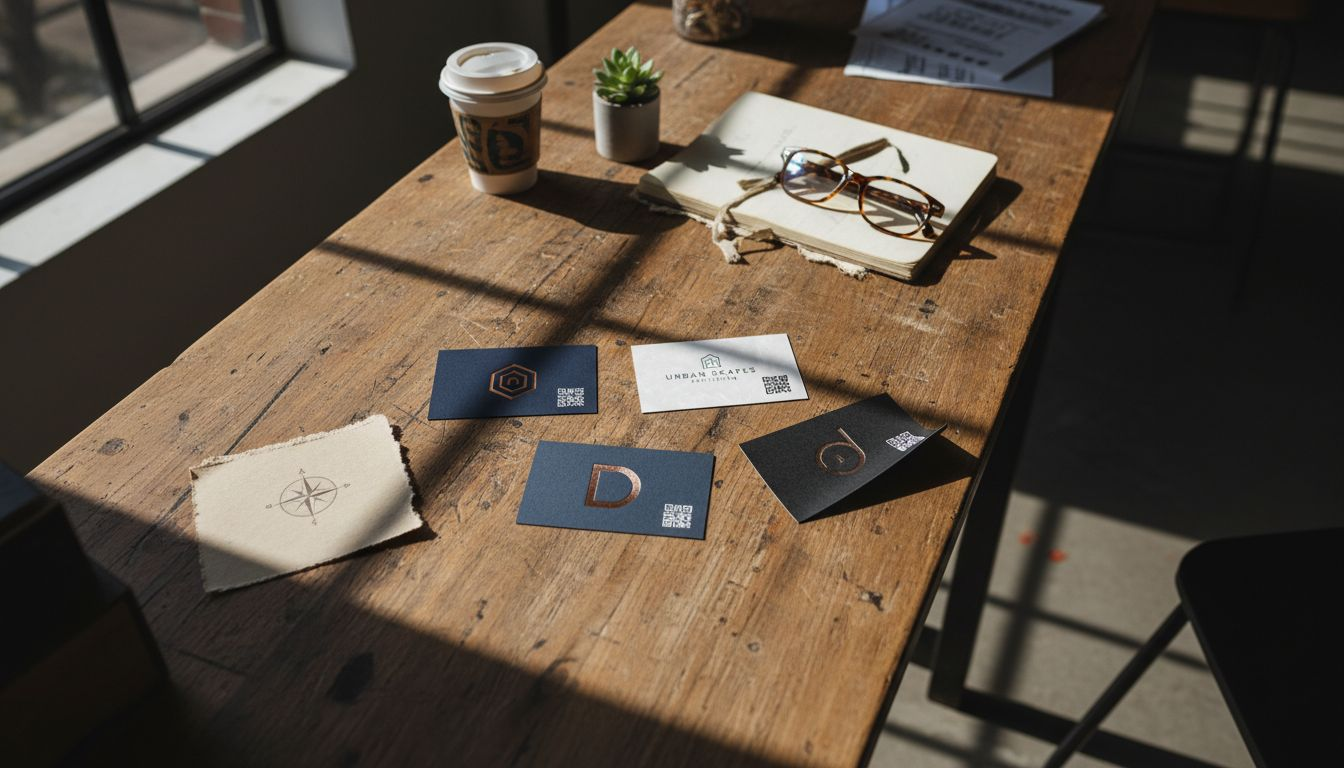
QR code integration has evolved beyond simple black squares. Modern designs incorporate branded colours and creative shapes while maintaining scannability. These codes link to digital portfolios, booking systems, or dynamic contact pages that you can update without reprinting cards.
NFC technology takes this further by enabling tap-to-share functionality. Recipients simply tap your card with their smartphone to instantly receive your contact details, portfolio links, or current offers. This seamless bridge between physical and digital removes friction from follow-up actions.
Sustainability drives material innovation across the industry. Recycled papers, vegetable-based inks, and biodegradable stocks let environmentally conscious businesses align cards with broader values. These choices communicate brand responsibility without sacrificing visual impact.
Popular 2026 design trends:
- Minimalist layouts emphasising white space and clarity
- Bold typography creating strong visual hierarchy
- Textured stocks adding tactile interest
- Rounded corners softening traditional rectangular formats
- Vertical orientations standing out from conventional designs
Pro Tip: Request printed samples before committing to large orders. Colours and finishes often appear different on screen versus physical stock, and samples prevent costly reprinting.
| Design Element | Purpose | Best For |
|---|---|---|
| Spot UV coating | Highlights logos or key text with glossy contrast | Premium service businesses |
| Embossing | Creates raised, tactile brand elements | Luxury or heritage brands |
| Letterpress | Produces subtle debossed impressions | Craftsmanship-focused businesses |
| Die-cut shapes | Custom silhouettes matching brand identity | Creative or playful brands |
| Metallic inks | Adds shimmer and perceived value | Professional services |
Modern designs balance personality with professionalism. Your card should reflect brand character while maintaining readability and clarity. Overly clever designs that sacrifice function for form frustrate recipients and undermine networking goals.
Exploring key business card design elements helps identify which trends suit your brand positioning. Not every innovation fits every business; strategic choices aligned with your audience expectations yield best results.
Hybrid physical-digital cards represent the cutting edge. These solutions combine traditional card stock with embedded technology, creating unified experiences that respect both tactile and digital preferences. Choosing among best business card makers UK ensures access to these advanced options.
Practical steps to create effective business cards for UK business owners
Define your core brand message before touching design software. What single idea should recipients remember after meeting you? This clarity drives every subsequent decision about layout, colour, and content inclusion.
Select contact information strategically. Include only details you actually want people to use. Mobile number, email, and website typically suffice. Adding rarely-checked office lines or outdated social profiles creates confusion rather than connection.
Essential information hierarchy:
- Your name and job title
- Business name and logo
- Primary phone number
- Professional email address
- Website URL
- One key social platform or QR code
Choose stock quality matching your brand positioning. Budget-conscious businesses should prioritise slightly thicker standard stock over gimmicky finishes. Premium brands benefit from investing in speciality papers and sophisticated printing techniques that reinforce positioning.
Integrate digital extensions thoughtfully. QR codes linking to your portfolio, booking calendar, or LinkedIn profile add functionality without cluttering the physical design. Position codes prominently but ensure they don’t dominate the visual composition.
Print small test batches initially. Order 250 cards to gather real-world feedback before committing to larger quantities. This approach lets you refine details based on actual recipient responses and catch errors that escaped proofreading.
Pro Tip: Photograph your cards in various lighting conditions before approving final designs. Some colour combinations or finishes that look sharp indoors appear washed out or difficult to read in natural light.
Avoid common overcrowding mistakes. White space improves readability and creates sophisticated impressions. Cramming excessive information makes cards look amateurish and overwhelms recipients with choices about how to contact you.
Carry cards everywhere professional interactions might occur. Networking opportunities arise unexpectedly at coffee shops, community events, and casual conversations. Having cards readily available transforms chance encounters into business relationships.
Follow up digitally within 24 hours of exchanging cards. Send a brief email or connection request referencing your conversation. This reinforces the initial meeting while your interaction remains fresh in both parties’ minds.
Implementing effective business card design rules streamlines this creation process. Professional guidance prevents costly mistakes while ensuring your cards achieve intended networking objectives.
Regularly review and update card details. Outdated phone numbers or defunct social media handles undermine credibility. Schedule annual reviews to keep information current and aligned with evolving business priorities.
Researching options among choosing business card makers helps identify suppliers matching your quality expectations and budget constraints. Reliable printers ensure consistent results across reorders.
Comparison between physical and digital business cards: pros and cons
Physical cards create immediate tactile brand experiences. The weight, texture, and finish communicate quality standards before any conversation begins. This sensory engagement triggers stronger memory formation than purely visual digital exchanges.
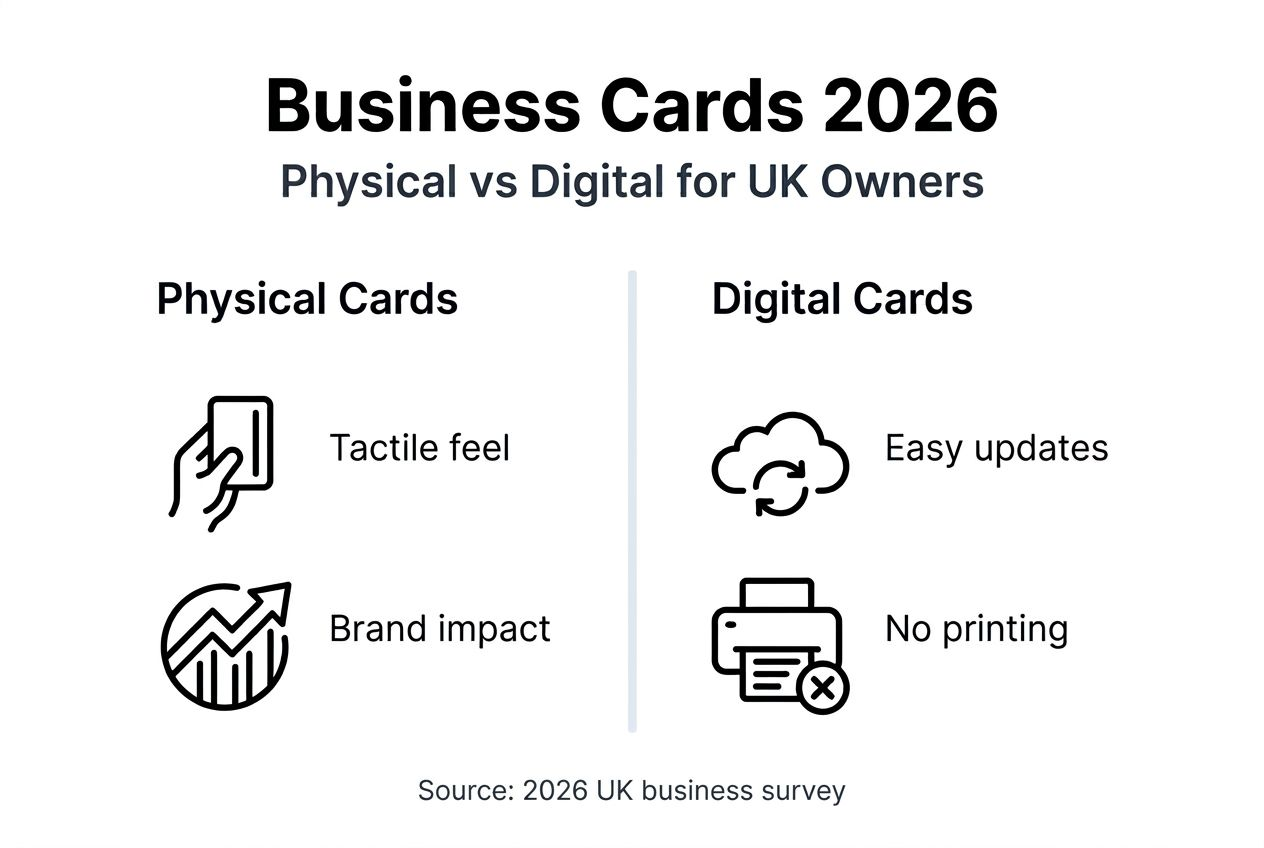
Digital cards offer instant updating capabilities. Change your phone number or role without reprinting thousands of cards. Update your digital profile once and every past recipient sees current information automatically.
| Feature | Physical Cards | Digital Cards |
|---|---|---|
| First impression | Strong tactile and visual impact | Depends on recipient’s device and app |
| Memorability | High due to physical interaction | Moderate; easily lost in digital clutter |
| Sustainability | Paper waste unless recycled materials used | Zero physical waste |
| Cost per contact | Higher for premium materials | Lower initial investment |
| Update flexibility | Requires reprinting for changes | Instant updates across all recipients |
| Technology dependence | Works universally without devices | Requires compatible smartphones |
| Follow-up friction | Recipient must manually input details | One-tap saving to contacts |
Physical cards excel in face-to-face networking at conferences, meetings, and industry events. The exchange ritual creates shared moments that strengthen relationship foundations. Digital cards shine for remote introductions, virtual conferences, and quick follow-ups where physical presence isn’t possible.
When to prioritise physical cards:
- Attending in-person networking events or trade shows
- Meeting clients or partners for initial consultations
- Building relationships in traditional or conservative industries
- Creating premium brand impressions with high-value prospects
- Networking in areas with unreliable internet connectivity
When digital cards work best:
- Conducting primarily virtual business relationships
- Needing frequent contact detail updates
- Prioritising environmental sustainability
- Operating in fast-paced tech or creative sectors
- Managing large contact volumes efficiently
Hybrid approaches combining both formats maximise networking effectiveness. Carry physical cards for face-to-face interactions while maintaining digital profiles for remote connections and updates. This flexibility respects different preferences across your network.
Environmental considerations influence many 2026 UK business decisions. Digital cards eliminate paper waste entirely, appealing to eco-conscious brands. However, sustainably produced physical cards using recycled materials and responsible printing can minimise environmental impact while retaining tactile advantages.
Convenience factors differ by context. Physical cards require no technology during exchange but create manual data entry work later. Digital cards streamline follow-up but depend on compatible devices and apps that not everyone uses consistently.
Understanding these trade-offs through business card design insights helps you allocate resources strategically. Neither option universally outperforms the other; context and audience preferences determine optimal choices.
Conclusion: leveraging business cards to enhance your brand and networking in 2026
Business cards uniquely blend physical presence with digital connectivity in ways purely virtual tools cannot replicate. They create memorable moments during exchanges while supporting ongoing digital engagement through integrated QR codes and NFC technology.
Effective cards boost trust through tangible professionalism, improve brand recall via multi-sensory engagement, and increase networking success by facilitating natural follow-up. These advantages persist despite expanding digital options because human psychology values physical interaction.
Hybrid approaches combining thoughtfully designed physical cards with strategic digital integration optimise results in the evolving 2026 UK business landscape. Neither format alone maximises opportunities; strategic deployment of both positions you ahead of competitors.
Investing in quality design and materials demonstrates brand commitment while strategic distribution and consistent follow-up transform cards from simple contact sharing into relationship-building tools. The competitive advantages remain substantial for UK business owners who use cards intentionally.
Enhance your business card design with Kukoo Creative
Transforming networking insights into impactful business cards requires expert design support. Professional guidance ensures your cards perfectly align with brand identity while maximising memorability and conversion potential.
Our business card design services integrate seamlessly with comprehensive branding solutions. Whether you’re refining an existing identity or building from scratch, we create cards that genuinely represent your business values and connect with your ideal clients.
We’ve partnered with UK business owners for over a decade, developing designs that build recognition and foster meaningful connections. From initial logo design briefing through complete brand systems, we ensure every touchpoint reinforces your positioning.
Explore our branding strategy guide to understand how professional design amplifies your networking ROI. Strategic investment in quality business cards delivers measurable returns through stronger relationships and increased referrals.
FAQ
Why are business cards still relevant in a digital-first world?
Business cards create physical, memorable connections that digital methods alone cannot replicate. The tactile exchange activates multiple senses, strengthening memory formation and building trust faster than virtual introductions. They serve as tangible brand reminders that recipients keep visible, supporting ongoing engagement beyond initial meetings.
How can UK business owners integrate digital tools with traditional business cards?
Adding QR codes or NFC chips enables instant access to online portfolios, booking systems, or social profiles. This hybrid approach links physical interaction with digital convenience, letting recipients choose their preferred engagement method. The combination respects different preferences while maximising follow-up opportunities.
What are common mistakes to avoid when designing business cards?
Avoid overcrowding cards with excessive information; focus on essential contact details and clear branding. Use premium materials and professional printing to create strong first impressions. Keep design elements balanced between personality and readability. Update details regularly to maintain accuracy and relevance across your networking activities.
Are digital business cards more sustainable than printed ones?
Digital cards produce zero physical waste and allow effortless updates without reprinting. However, eco-friendly printing materials like recycled paper and vegetable-based inks significantly reduce the environmental footprint of physical cards. A hybrid approach balances sustainability with the personal touch and memorability that physical cards provide in face-to-face networking situations.