
TL;DR:
- A digital footprint comprises all data left behind online, including deliberate posts and automatically collected information. Managing this evolving footprint is essential for protecting privacy, reputation, and maintaining a credible online presence for individuals and businesses. Regular audits, conscious sharing, and controlling accounts help mitigate risks and enhance digital reputation over time.
A digital footprint is the trail of data you leave behind every time you use the internet, from browsing a website to sending an email or liking a post on social media. Also known as a digital shadow or online footprint, it encompasses both the information you share deliberately and the data collected about you without your knowledge. Organisations like Common Sense Education and Kaspersky have long highlighted that understanding this trail is the first step towards protecting your privacy and reputation. For businesses, a poorly managed footprint can damage credibility. For individuals, it can expose sensitive personal data to identity thieves, recruiters, and data brokers alike.
What is a digital footprint and what are its two main types?
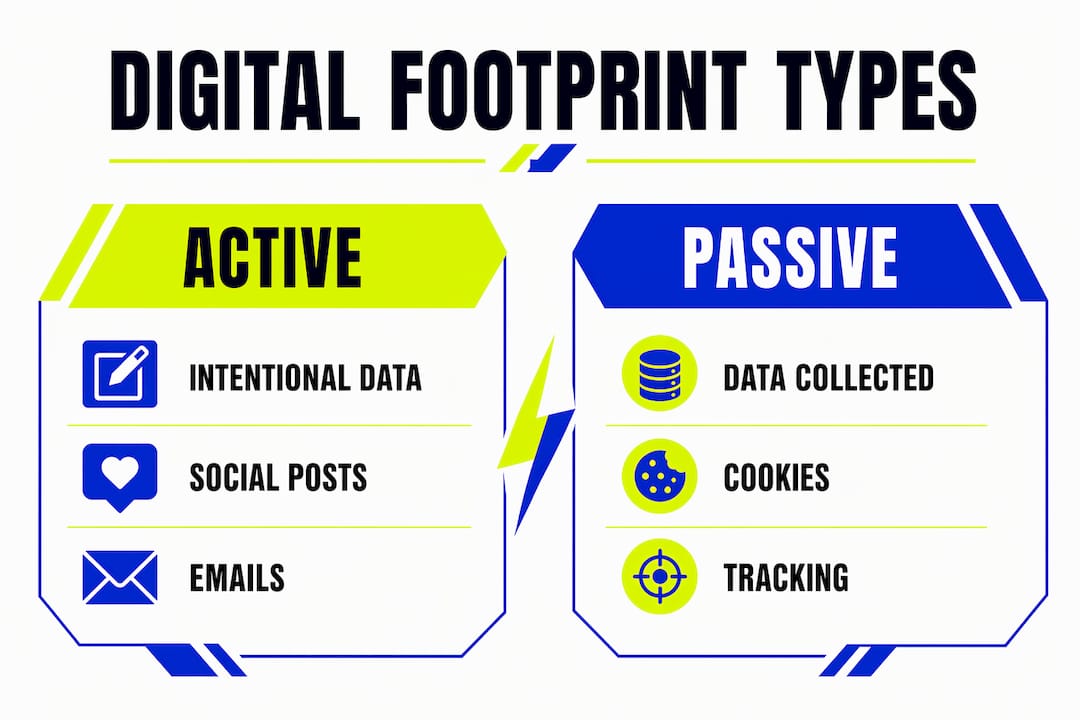
A digital footprint consists of two distinct categories: active footprints and passive footprints. Active data is what you share intentionally. Passive data is collected automatically, often without your explicit knowledge or consent.
Active digital footprint examples include:
- Posting on LinkedIn, Instagram, or Facebook
- Submitting a contact form or signing up for a newsletter
- Writing a product review or leaving a comment on a blog
- Sending emails or uploading photos to cloud storage
Passive digital footprint examples include:
- Cookies and trackers placed by websites you visit
- Your IP address being logged by servers
- Device metadata captured by apps, including location, screen size, and operating system
- Browsing history recorded by your internet service provider
The distinction matters because most people only think about what they post. The passive layer is far larger and far harder to see. Every website visit, every app opened, every search query generates data points that advertisers, platforms, and data brokers aggregate into detailed profiles of who you are and what you do.
| Type | How it’s created | Examples | Your control |
|---|---|---|---|
| Active | Intentional sharing | Social posts, form submissions, emails | High |
| Passive | Automatic collection | Cookies, IP logs, device metadata | Low |
Why does your digital footprint matter for privacy and reputation?
Your online trail carries real consequences, both for personal privacy and professional reputation. Employers and recruiters routinely use digital footprints as a first point of contact before a formal interview ever takes place. A curated, deliberate online presence signals professionalism. An unmanaged one can cost you opportunities before you even know they existed.
The privacy risks are equally serious:
- Identity theft: Personal details scattered across old accounts and data broker databases give criminals enough information to impersonate you.
- Targeted advertising: Passive data collected by platforms like Google and Meta builds behavioural profiles used to serve highly personalised ads.
- Data breaches: Every account you hold is a potential breach point. When a company’s database is compromised, your data goes with it.
- Shadow profiles: Platforms can build profiles on people who have never registered, using data scraped from third parties and public records.
“Digital footprints often serve as a professional profile proxy. Curating a deliberate virtual image is essential for the desired personal or professional impression.” — MacPaw
The flip side is equally true. A well-managed digital presence is a genuine asset. Thought leaders, consultants, and businesses that maintain consistent, credible online profiles attract clients, partnerships, and media attention. The goal is not invisibility. It is intentionality. Understanding the importance of digital presence for your brand means recognising that your footprint is always working for you or against you.
How does a digital footprint grow, and can you ever erase it?
Your footprint grows with every digital action you take. Searching for a product, streaming a film, booking a restaurant, or simply opening an app all add data points to your trail. Over time, these accumulate into a detailed record that spans years or even decades.
The common misconception is that deleting a post or closing an account removes the data. It rarely does. Here is why erasure is far more complicated than it appears:
- Reposting and screenshots: Once content is shared, others can copy it. A deleted tweet can live on in screenshots, archives, and third-party tools like the Wayback Machine.
- Data brokers: Companies like Acxiom and Experian continuously scrape public records and resell personal data. Even if you delete your own posts, data brokers repopulate your information repeatedly.
- Shadow profiles: Platforms build profiles on non-users using data gathered from contacts, public records, and third-party sources. You may have a profile on a platform you have never visited.
- Third-party sharing: Shadow data shared with brokers by apps and websites makes your footprint larger and less controllable than most people realise.
Harvard University’s privacy guidance confirms that complete anonymity is impossible. The realistic goal is intentional control, reducing your exposure to identity theft, spam, and unwanted tracking rather than disappearing entirely.
Pro Tip: Search your email inbox for terms like “password,” “account,” and your National Insurance number. Kaspersky’s research shows that email archives contain forgotten sensitive data, including passwords and personal identifiers stored in plain text, that most people never think to clean up.
How to manage your digital footprint: practical steps for 2026
Managing your online trail is not a one-time task. It requires a recurring schedule and a clear set of habits. Here is a practical framework for both individuals and businesses.

Audit your digital exposure every three months. The National Cyber Security Centre and Stay Safe Online both recommend reviewing privacy settings quarterly. This means checking app permissions for camera, contacts, location, and photos, and revoking anything you no longer use or recognise.
Clear cookies and browser history monthly. Clearing browser cookies and cache at least once a month limits the passive data trail advertisers and trackers can build on you. Most browsers, including Firefox and Brave, allow automatic clearing on close.
Reduce the number of accounts you hold. Harvard’s privacy team confirms that fewer accounts mean less data to manage and fewer breach points. If you signed up for a service you no longer use, delete the account rather than simply abandoning it.
Here is a summary of recommended tasks and their frequency:
| Task | Recommended frequency |
|---|---|
| Review app permissions and privacy settings | Every 3 months |
| Clear browser cookies, cache, and history | Monthly |
| Search your name online and review results | Every 3 months |
| Delete unused accounts and subscriptions | Every 6 months |
| Search email for sensitive data and clean up | Annually |
Additional best practices worth building into your routine:
- Use a privacy-focused browser like Firefox or Brave as your default.
- Enable two-factor authentication on all active accounts.
- Use a password manager such as Bitwarden or 1Password rather than reusing passwords.
- Opt out of data broker listings using services like DeleteMe or Kanary.
- Review the privacy settings on your social media profiles, particularly on Facebook and Instagram, at least quarterly.
Pro Tip: When signing up for newsletters or free tools, use a dedicated secondary email address. This keeps your primary inbox cleaner and makes it far easier to identify which services are selling your data.
How do digital footprints affect businesses and brand reputation?
For businesses, a digital footprint is both an asset and a liability. Every review, social media post, press mention, and employee LinkedIn profile contributes to the company’s overall online presence. That presence shapes how potential clients, partners, and investors perceive your brand before they ever speak to you.
The risks for businesses are distinct from those facing individuals:
- Data breaches: A company footprint includes customer data, internal communications, and financial records. A breach exposes not just the business but its clients.
- Reputational damage: Negative reviews on Google, Trustpilot, or Glassdoor are permanent parts of your footprint. They surface in search results and influence buying decisions.
- Inconsistent branding: Outdated logos, old social profiles, and conflicting messaging across platforms create a fragmented digital identity that erodes trust.
- Employee-generated content: Staff posts, even personal ones, can become part of your business footprint if they reference the company or are publicly visible.
Proactive management means conducting regular audits of all brand-owned profiles, ensuring branding consistency across every platform, and integrating digital footprint guidelines into your brand identity documentation. Businesses that treat their online presence as a managed asset rather than an afterthought build stronger reputations and recover faster from negative events. For professional services firms considering a future sale, a clean and credible digital reputation can directly influence valuation.
Key takeaways
A digital footprint is a permanent, growing record of your online activity, and managing it intentionally is the only realistic strategy for protecting your privacy and reputation.
| Point | Details |
|---|---|
| Two types of footprint | Active data is shared deliberately; passive data is collected automatically without consent. |
| Erasure is not possible | Data brokers and shadow profiles mean deletion is incomplete; ongoing management is required. |
| Quarterly audits matter | Review app permissions, privacy settings, and your search results every three months. |
| Fewer accounts, less risk | Every unused account is a breach point; delete rather than abandon old sign-ups. |
| Businesses face unique risks | Inconsistent branding and employee content contribute to a fragmented, harder-to-control footprint. |
Why I think most people are managing their footprint backwards
Most advice on this topic tells you to start by deleting things. I think that is the wrong place to begin. After working with businesses and individuals on their online presence for years, what I have observed is that the real problem is not what people have posted. It is what they have never thought to look at.
The passive layer, the cookies, the broker databases, the shadow profiles, the forgotten email archives, is where the genuine exposure lives. You can spend an afternoon scrubbing your Twitter history and still have your home address, phone number, and purchasing habits sitting in a data broker’s catalogue, available to anyone willing to pay a few pounds for it.
The mindset shift that actually works is moving from reactive deletion to intentional sharing. Before you create a new account, ask whether it is worth the data you are handing over. Before you grant an app location access, ask whether the feature requires it. This is not about paranoia. It is about treating your personal data with the same care you would give your front door key.
The businesses I see managing this well are the ones that have built digital footprint awareness into their brand guidelines, not as a legal checkbox, but as a genuine part of how they present themselves online. That consistency, across every profile, every review response, every employee post, is what builds lasting credibility.
— Kukoo
Build a brand presence worth finding
Your digital footprint and your brand identity are two sides of the same coin. One is what the internet records about you. The other is what you choose to project. At Kukoocreative, we help businesses take control of the second part.

From logo design to full brand identity development, we create consistent, credible visual identities that work across every platform where your business appears. A strong brand presence does not just look good. It shapes how clients, partners, and search engines perceive you before you say a word. If you are ready to make your online presence work harder for your business, we would love to help you build it.
Get in touch with Kukoocreative and let’s create something worth finding.
FAQ
What is a digital footprint in simple terms?
A digital footprint is the collection of data traces you leave behind whenever you use the internet, including websites you visit, accounts you create, and content you share. It includes both information you share deliberately and data collected about you automatically.
What are the main examples of a digital footprint?
Active examples include social media posts, emails, and form submissions. Passive examples include browser cookies, IP address logs, and device metadata recorded by apps and websites without your direct input.
Can you completely delete your digital footprint?
Complete deletion is not possible. Data brokers continuously scrape and repopulate personal information, and shadow profiles can exist even for people who have never registered on a platform. The realistic goal, as Harvard University’s privacy guidance confirms, is intentional control rather than total anonymity.
How often should I review my digital footprint?
Auditing your privacy settings and digital exposure at least every three months is recommended. This includes reviewing app permissions, checking what appears when you search your name, and deleting accounts you no longer use.
Why does a digital footprint matter for businesses?
A business digital footprint shapes how clients, investors, and partners perceive your brand before any direct contact. Inconsistent profiles, negative reviews, and outdated branding all form part of that footprint and can directly affect trust, reputation, and revenue.