
Most British consumers now research brands online before making a purchase, placing small businesses in Leeds under growing pressure to stand out. For local companies, digital branding is more than a logo or website—it is the key to shaping how customers perceive value and reliability. This guide unpacks how smart digital branding helps British business owners connect with the right audiences, stand apart from competitors, and build lasting trust in a crowded online market.
Table of Contents
- What Is Digital Branding For Businesses
- Types Of Digital Branding Channels Online
- Core Elements Of Effective Online Branding
- Digital Branding In UK Market Context
- Common Pitfalls And How To Avoid Them
Key Takeaways
| Point | Details |
|---|---|
| Strategic Digital Branding | Businesses should leverage digital branding to create meaningful connections and distinguish their identity in competitive markets. |
| Consistency Across Channels | Maintaining coherent messaging and visual identity is vital for building trust and recognition among target audiences. |
| Engagement and Adaptability | Actively engaging with audiences and adapting strategies based on feedback is essential for long-term customer loyalty. |
| Investing in Infrastructure | Ensuring a strong digital infrastructure helps enhance user experience and optimises brand communication channels. |
What Is Digital Branding For Businesses
Digital branding represents a strategic approach where businesses create, develop, and communicate their unique identity across digital platforms. Unlike traditional branding, digital branding leverages online channels to build meaningful connections with audiences, transform perceptions, and drive business growth. Digital branding strategies help small- and medium-sized enterprises establish competitive advantages by creating compelling narratives that resonate with target customers.
At its core, digital branding encompasses multiple interconnected elements: brand identity, online presence, content strategy, and digital marketing techniques. Businesses utilise websites, social media platforms, email campaigns, and digital advertising to craft consistent messaging that reflects their values, personality, and unique selling propositions. The goal is not merely visibility, but creating genuine emotional connections that transform casual browsers into loyal customers and brand advocates.
Successful digital branding requires a multifaceted approach. B2B digital co-branding strategies increasingly emphasise both emotional and functional brand attributes to differentiate themselves in competitive markets. This involves understanding audience personas, developing targeted content, maintaining visual consistency, and using data analytics to refine brand communication. Small business owners must focus on authenticity, storytelling, and delivering value through their digital interactions.
Pro tip: Develop a comprehensive digital brand style guide that outlines your visual identity, tone of voice, and key messaging to ensure consistent brand representation across all digital platforms.
Types Of Digital Branding Channels Online
Digital branding channels represent the diverse online platforms and strategies businesses can leverage to build and communicate their brand identity. Key marketing and branding platforms include social media, content marketing, email marketing, and search engine optimisation, each offering unique opportunities to engage with target audiences and strengthen brand presence.
Social media platforms stand out as particularly powerful digital branding channels. These networks allow businesses to showcase personality, share compelling narratives, and directly interact with customers. Platforms like LinkedIn, Instagram, Twitter, and Facebook enable targeted messaging, visual storytelling, and real-time engagement. Small businesses can humanise their brand by sharing behind-the-scenes content, customer testimonials, and industry insights that demonstrate expertise and build trust.

Content marketing and online advertising channels provide strategic avenues for brand communication, allowing businesses to craft nuanced narratives beyond traditional advertising. Blogs, podcasts, YouTube channels, and webinars offer depth and value, positioning brands as thought leaders. Search engine optimisation (SEO) further amplifies digital branding efforts by improving online visibility and ensuring potential customers can discover and engage with brand content more effectively. Email marketing remains a powerful direct communication channel, enabling personalised interactions and nurturing long-term customer relationships.
Pro tip: Create a comprehensive digital channel strategy that aligns your brand messaging across platforms, ensuring consistent tone, visual identity, and value proposition.
Here is a comparison of major digital branding channels and their unique strengths:
| Channel | Key Strength | Ideal Use Case |
|---|---|---|
| Social Media | Real-time engagement | Building relationships and trust |
| Content Marketing | Expertise demonstration | Thought leadership and education |
| Email Marketing | Personalised communication | Customer retention and nurturing |
| SEO | Enhanced visibility | Driving organic website traffic |
Core Elements Of Effective Online Branding
Brand Identity forms the foundational cornerstone of effective online branding. Developing a distinctive digital presence requires consistent messaging and visual elements that communicate a brand’s unique personality, enabling businesses to differentiate themselves in crowded digital marketplaces. This involves crafting a cohesive visual language that includes logos, colour palettes, typography, and design elements that remain recognisable across all digital platforms.
Consistent messaging and strategic positioning are crucial for building brand recognition and customer trust. Businesses must develop a clear value proposition that resonates with their target audience, communicating what makes them unique and why customers should choose their products or services. Online branding requires creating a cohesive experience across digital touchpoints, ensuring that websites, social media profiles, and digital communications align with the brand’s core narrative.
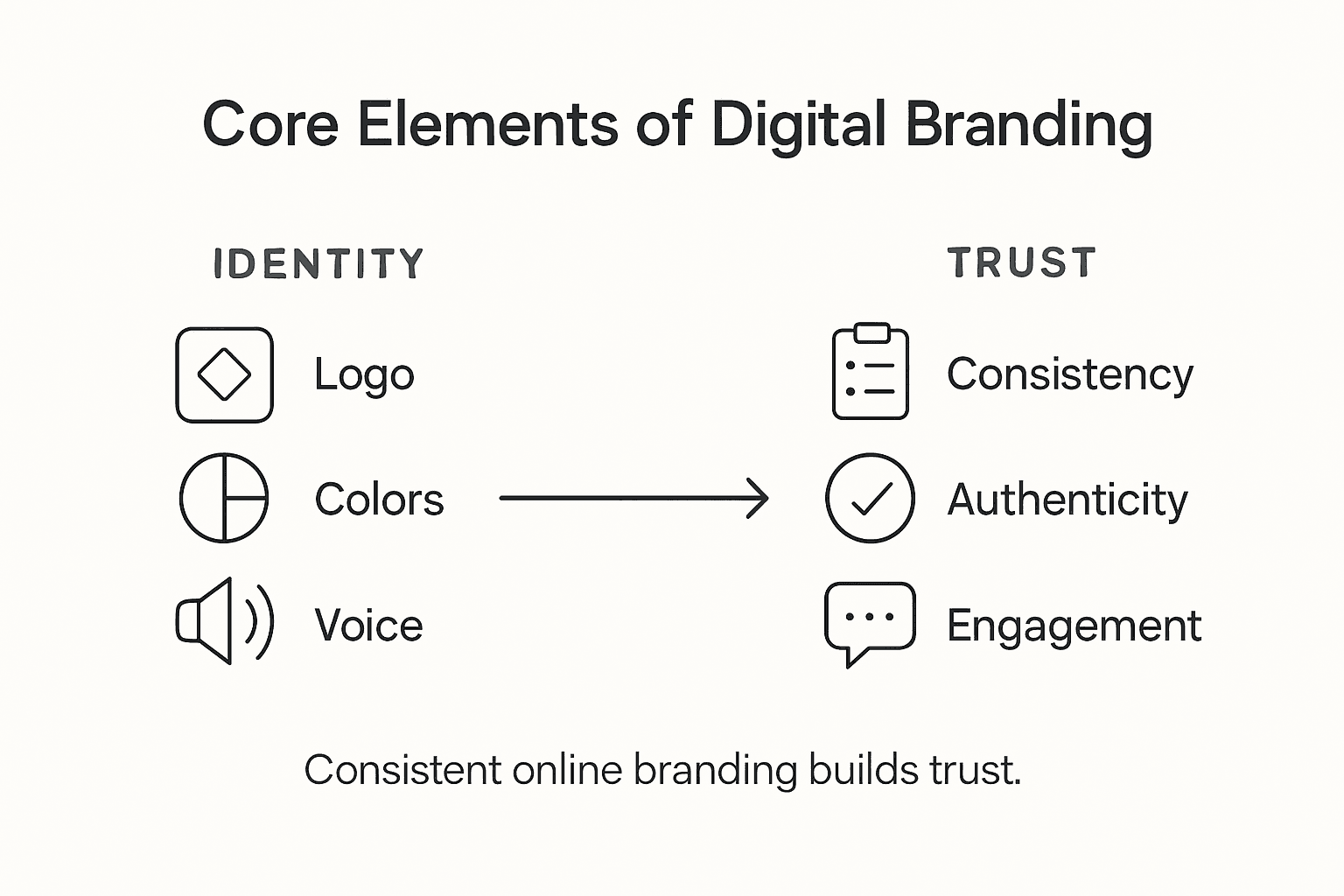
Emotional connection and authenticity play pivotal roles in effective online branding. Brands must go beyond mere visual representation and create meaningful interactions that build genuine relationships with their audience. This involves sharing compelling stories, demonstrating transparency, and consistently delivering value through content that reflects the brand’s core values and mission. Understanding audience expectations and continuously adapting branding strategies ensure relevance and sustained engagement in an ever-evolving digital landscape.
Pro tip: Conduct a quarterly digital brand audit to ensure your online presence remains consistent, relevant, and aligned with your evolving business objectives.
Digital Branding In UK Market Context
Digital branding strategies for UK businesses have become increasingly critical in navigating a competitive and rapidly evolving digital marketplace, particularly for small and medium-sized enterprises (SMEs) seeking sustainable growth. The unique characteristics of the UK market demand nuanced approaches that balance innovation with traditional business sensibilities. British businesses must contend with resource constraints while developing digital brand strategies that effectively communicate their value proposition and differentiate themselves from competitors.
The UK digital branding landscape is distinguished by sophisticated consumer expectations and a growing emphasis on authenticity and social responsibility. Companies must craft digital narratives that not only showcase their products or services but also reflect deeper organisational values. Successful digital branding in the UK requires continuous strategy evaluation, with a particular focus on sustainability, consumer wellbeing, and meaningful engagement. This means moving beyond transactional relationships and creating genuine connections that resonate with increasingly discerning British consumers.
Technology and digital literacy play pivotal roles in shaping UK digital branding strategies. With one of the most digitally advanced consumer bases in Europe, British businesses must leverage sophisticated digital marketing techniques, data analytics, and personalisation strategies to cut through the noise. This involves understanding complex audience segmentation, utilising targeted digital channels, and creating adaptive brand experiences that can quickly respond to changing market dynamics and consumer preferences.
Pro tip: Conduct regular market research and consumer sentiment analyses to ensure your digital branding strategy remains aligned with evolving UK market expectations and consumer values.
Common Pitfalls And How To Avoid Them
Inconsistent Branding represents one of the most significant digital branding challenges for businesses. Many organisations inadvertently create disjointed brand experiences across different digital platforms, confusing potential customers and diluting their brand identity. This inconsistency can manifest through misaligned visual elements, varying tone of voice, or contradictory messaging that undermines brand credibility and professional perception.
Another critical pitfall involves neglecting audience engagement and failing to adapt digital branding strategies to changing market dynamics. Businesses often make the mistake of treating digital branding as a static process, creating content and communication strategies that remain unchanged despite shifting consumer expectations. This approach leads to diminishing relevance, reduced audience connection, and ultimately, decreased brand perception and customer loyalty.
Technical limitations and poor digital infrastructure can significantly undermine digital branding efforts. Many businesses struggle with websites that are not mobile-responsive, slow loading times, unclear navigation, and poor user experience design. These technical shortcomings create barriers to effective brand communication, potentially driving potential customers away and damaging the brand’s digital reputation. Small businesses must invest in robust, user-friendly digital platforms that seamlessly reflect their brand identity and provide intuitive, engaging user experiences.
Pro tip: Create a comprehensive digital brand guidelines document that standardises visual elements, communication tone, and platform-specific strategies to maintain consistent brand representation across all digital touchpoints.
To help UK businesses address common digital branding mistakes, consider this summary of pitfalls and solutions:
| Pitfall | Impact on Business | Recommended Solution |
|---|---|---|
| Inconsistent Branding | Loss of trust | Unified brand guidelines |
| Neglecting Audience Engagement | Declining loyalty | Active, regular interaction |
| Poor Digital Infrastructure | Reduced online reach | Invest in responsive, fast platforms |
Elevate Your Digital Branding with KUKOO Creative
Building trust online is not just about being seen but about creating a consistent and authentic brand identity that truly connects with your audience. If you are facing challenges like inconsistent branding, lack of engagement, or poor digital infrastructure as highlighted in the article, you are not alone. At KUKOO Creative, we understand the importance of a cohesive digital presence that reflects your unique value and builds lasting emotional connections with your customers.
Let us help you develop impactful designs from logos to fully optimised websites that enhance your online visibility and brand recognition. With over a decade of experience partnering with business owners, we craft tailored digital branding solutions that align with your goals and resonate with your audience. Start transforming your brand strategy today by exploring how we bring clarity to your digital branding challenges at KUKOO Creative. Ready to take your digital presence to the next level? Visit our landing page and discover the difference consistency and authenticity make online.
Frequently Asked Questions
What is digital branding?
Digital branding is a strategic approach where businesses create and communicate their unique identity across digital platforms, focusing on meaningful connections with audiences to drive growth.
Why is consistency important in digital branding?
Consistency in digital branding helps build trust and credibility, ensuring that potential customers receive a unified brand experience across various digital channels.
How can small businesses improve their digital branding strategies?
Small businesses can improve their digital branding strategies by focusing on authenticity, storytelling, and delivering value through consistent messaging and engaging content across digital platforms.
What are the common pitfalls in digital branding?
Common pitfalls in digital branding include inconsistent branding, neglecting audience engagement, and having poor digital infrastructure, all of which can undermine brand credibility and customer loyalty.