
TL;DR:
- Most UK SMEs rely on websites as essential tools for growth and credibility.
- Good design and consistency significantly increase brand recognition and customer trust.
- Simplicity and regular updates are key to maximizing website effectiveness for SMEs.
Over two-thirds of UK small and medium-sized businesses now rely on websites and web technology to sell and manage their operations. That is not a trend. That is a shift in what running a viable business actually looks like. Yet many SME owners still treat their website as a digital afterthought, something to set up once and forget. This article unpacks why that thinking can bottleneck your growth, how the right website design builds genuine brand recognition, and what practical steps you can take right now to turn your site into a real business asset.
Table of Contents
- Why websites matter: The foundation for SME success
- Website design and brand recognition: Making your mark
- Overcoming common challenges: What SMEs get wrong (and how to fix it)
- Getting results: Turning your SME website into a growth engine
- Most SME websites miss the mark: Why simplicity and clarity win
- Ready to transform your SME’s online presence?
- Frequently asked questions
Key Takeaways
| Point | Details |
|---|---|
| Websites are essential | A strong web presence is now a must for UK SMEs to remain viable and credible. |
| Design builds brands | Effective web design directly boosts recognition and trust with customers. |
| Start simple, scale smart | Begin with the essentials and expand your site as your business grows. |
| Solve common hurdles early | Address budget, time, and technical worries with phased and practical solutions. |
| Consistent sites outperform | Simple, clear, and consistent websites consistently bring better results than flashy or cluttered ones. |
Why websites matter: The foundation for SME success
Your website is your digital shopfront. It is open 24 hours a day, seven days a week, and it speaks to potential customers even when you are busy running the rest of your business. A professional website design does not just look good. It builds credibility, earns trust, and makes it easy for people to find and choose you.
The numbers tell a clear story. 69% of SME employers now use web technology to sell or manage their business, up from just 50% in 2022. That is a significant jump in a short space of time.
| Year | SMEs using web technology |
|---|---|
| 2022 | 50% |
| 2024 | 69% |
“Nearly seven in ten UK SME employers now rely on web technology to run and grow their business. If your competitors are online and you are not, the gap widens every single day.”
So what does a well-built website actually deliver for your SME? Quite a lot, as it turns out.
- Always-on information: Your services, pricing, and contact details are available at any time, without you lifting a finger.
- Wider reach: A website lets you attract customers far beyond your immediate local area.
- Lead generation: Smart contact forms, calls to action, and landing pages turn visitors into enquiries.
- Brand consistency: Every page reinforces who you are and what you stand for.
Exploring the full range of web design services available to UK SMEs is a great starting point if you are not sure where to begin.
Pro Tip: Avoid treating your website as a static brochure. A modern site is a living tool. Update it regularly, track what works, and keep it aligned with where your business is heading.
Website design and brand recognition: Making your mark
Once you have a website, design choices carry enormous weight. The colours you use, the placement of your logo, the layout of your pages, the tone of your copy. Each of these sends a signal to your visitor before they have read a single word of your content.
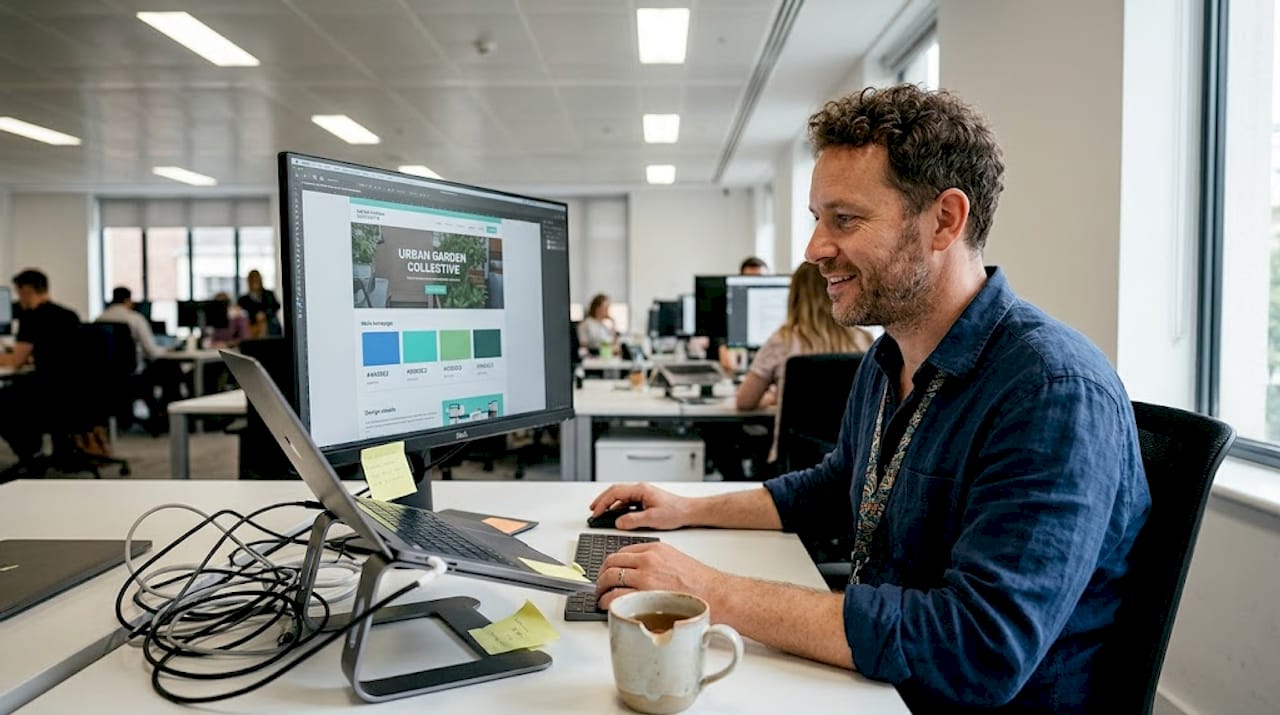
The difference between a well-designed SME site and a poorly designed one is not just aesthetic. It is commercial.
| Website quality | Customer perception | Business outcome |
|---|---|---|
| Well-designed | Credible, professional, trustworthy | Higher enquiry rates, stronger retention |
| Poorly designed | Dated, unreliable, hard to navigate | High bounce rates, lost leads |
Understanding the branding benefits for small businesses helps you see why design investment pays off in real, measurable ways. And with 69% of SME employers already using web tools, the competitive bar is rising fast.
Here are the most common branding mistakes we see on SME websites, and what to do instead.
- Inconsistent logos: Using different versions of your logo across pages confuses visitors and weakens recognition. Use one approved version, always.
- Unclear messaging: If a new visitor cannot tell what you do within five seconds, they will leave. Lead with a clear, benefit-led headline.
- Generic stock imagery: Overused stock photos make your brand feel impersonal. Real photos of your team, your workspace, or your work build far more trust.
- Mismatched colour palettes: Random colours across different pages signal a lack of attention to detail. Stick to your brand palette, consistently.
Stat spotlight: Studies show that consistent brand presentation across all platforms can increase revenue by up to 23%. Your website is the centrepiece of that consistency.
Thinking carefully about investing in web design is one of the smartest moves a growing SME can make. Not because it is trendy, but because it pays dividends in recognition and trust over the long term.
Pro Tip: Pick three to five brand colours and stick to them everywhere. Consistent colour use alone significantly boosts how quickly customers recognise your business.
Overcoming common challenges: What SMEs get wrong (and how to fix it)
We hear the same concerns from SME owners time and again. Not enough time. Not enough budget. Not enough technical know-how. These are real barriers, and they deserve honest, practical answers.
The most common obstacles are:
- Time constraints: Running a business leaves little room for website management.
- Limited budget: Many SMEs assume a quality website costs far more than it does.
- Fear of technology: Unfamiliarity with web platforms creates hesitation and inaction.
- Lack of strategy: Jumping into a website without a plan leads to a site that looks busy but delivers nothing.
Here is how to work through each one.
- Start small, build smart. You do not need a twenty-page site from day one. Focus on the essentials: a home page, an about page, a services page, and a contact page. Use that as your foundation.
- Choose the right platform. Templated solutions like WordPress or Squarespace give you a credible starting point without needing a developer for every small change. Website design tips can guide you through the options.
- Outsource strategically. You do not need to manage everything yourself. A good design partner handles the technical work while you focus on running your business. Small business IT support is also worth considering as your digital footprint grows.
- Plan for scalability. A site built with scalability for business growth in mind saves you time and money later, as your needs evolve.
Understanding website structure for SMEs is often the missing piece. Once you know what goes where and why, the whole process feels far less daunting.
“Owners who pushed past the initial setup challenges consistently reported that their website became one of the most valuable tools in their business. The hard part is simply getting started.”
Pro Tip: Do not wait until your website is perfect. A clean, clear, and live site will always outperform a brilliant one that is still in draft.
Getting results: Turning your SME website into a growth engine
Having a website is one thing. Making it work for your business is another. The good news is that turning your site into a growth engine does not require a large team or a complicated strategy.
Follow these steps to start seeing real results:
- Capture leads actively. Every page should have a clear way for visitors to get in touch. A contact form, a phone number, a booking link. Make it obvious and make it easy.
- Build trust visually and verbally. Add testimonials, case studies, and any relevant accreditations. Real proof from real customers does more than any sales copy.
- Automate your follow-ups. Use your website’s contact forms in combination with email tools to respond quickly, even outside business hours. Speed of response is a competitive advantage.
Beyond those steps, certain features consistently boost SME site performance:
- Clear calls to action on every page, guiding visitors towards the next step.
- Testimonials and reviews placed where trust matters most, such as near pricing information.
- Responsive design that works flawlessly on mobile, where the majority of web traffic now originates.
- Analytics tracking so you can see what is working and make informed decisions.
The data supports this approach. With 69% of SME employers now using web technology, businesses that actively manage their online presence are pulling ahead. Understanding the custom web design benefits available to SMEs makes it easier to invest with confidence.
The key insight here is simple. Your website is not a one-off project. It is an ongoing asset. SMEs that review and refresh their content regularly see a steady increase in enquiries and conversions over time. Treat it like a member of your team, because that is exactly what it is.
Most SME websites miss the mark: Why simplicity and clarity win
Here is something we have seen time and again over more than a decade of working with SME owners. The businesses that try to pack everything into their website, animations, pop-ups, complex navigation, endless page variations, rarely outperform those who keep things clean and clear.
Simplicity is not a compromise. It is a strategy.
When a visitor lands on your site, they make a judgement within seconds. Clutter, slow load times, or confusing menus send them straight back to the search results. A clean layout, a clear headline, and an obvious next step keep them engaged.
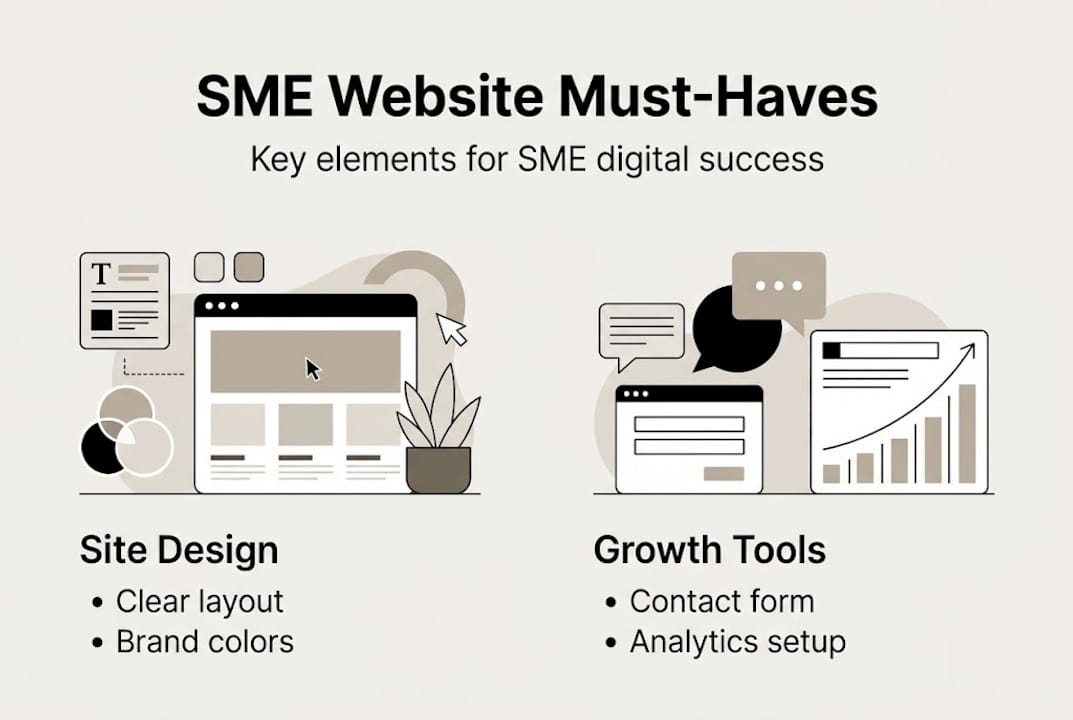
We have seen clients abandon elaborate redesigns and return to straightforward, well-structured sites, only to find that enquiries improved almost immediately. The lesson is consistent: clarity converts.
The brands that build the strongest recognition across the web, social media, and print are not those chasing every new digital trend. They are the ones who commit to a clear visual identity and repeat it, everywhere, without deviation. Checking out insights on effective SME websites reinforces this point with real-world context.
Focus on what your ideal customer needs to see in order to trust you. Then make that the centrepiece of your site.
Ready to transform your SME’s online presence?
If reading this has made you think seriously about your website, you are already ahead of most. The next step is getting the right support to turn those insights into action.
At Kukoo Creative, we have spent over a decade helping SME owners build websites and brands that genuinely work. From mapping out your visual branding workflow to delivering designs that make your business unmistakable, we are with you every step. Browse our project portfolio to see real results for real businesses. Or explore our approach to brand recognition strategies for UK SMEs. Let’s build something extraordinary together.
Frequently asked questions
Do all SMEs really need a website?
Nearly 70% of UK SMEs now use websites or online tools, proving a website is essential for visibility and staying competitive in your market.
How can a good website boost my SME brand?
A well-designed website builds immediate trust, reinforces your visual identity, and helps the right customers recognise and choose your business over competitors.
What is the most common website mistake SMEs make?
Many SMEs either overcomplicate their site with unnecessary features or leave it outdated, which actively hurts their credibility and costs them leads.
Are websites expensive or difficult to maintain for SMEs?
Modern platforms, phased rollouts, and professional design partners make websites genuinely affordable and manageable, even for very small teams with limited time.
How quickly can a new website show results for my SME?
With the right structure, clear calls to action, and regular updates, many SMEs begin to see improved enquiries and search visibility within just a few months of going live.