
TL;DR:
- A compelling business tagline can significantly enhance brand recognition and trust when it is short, benefit-focused, and authentic. Studied examples like Tesco and Specsavers show that memorable taglines often rely on simplicity, emotional resonance, and consistent use over time. Crafting a successful tagline involves understanding your brand’s core promise, testing rhythm and recall, and maintaining consistency across all touchpoints.
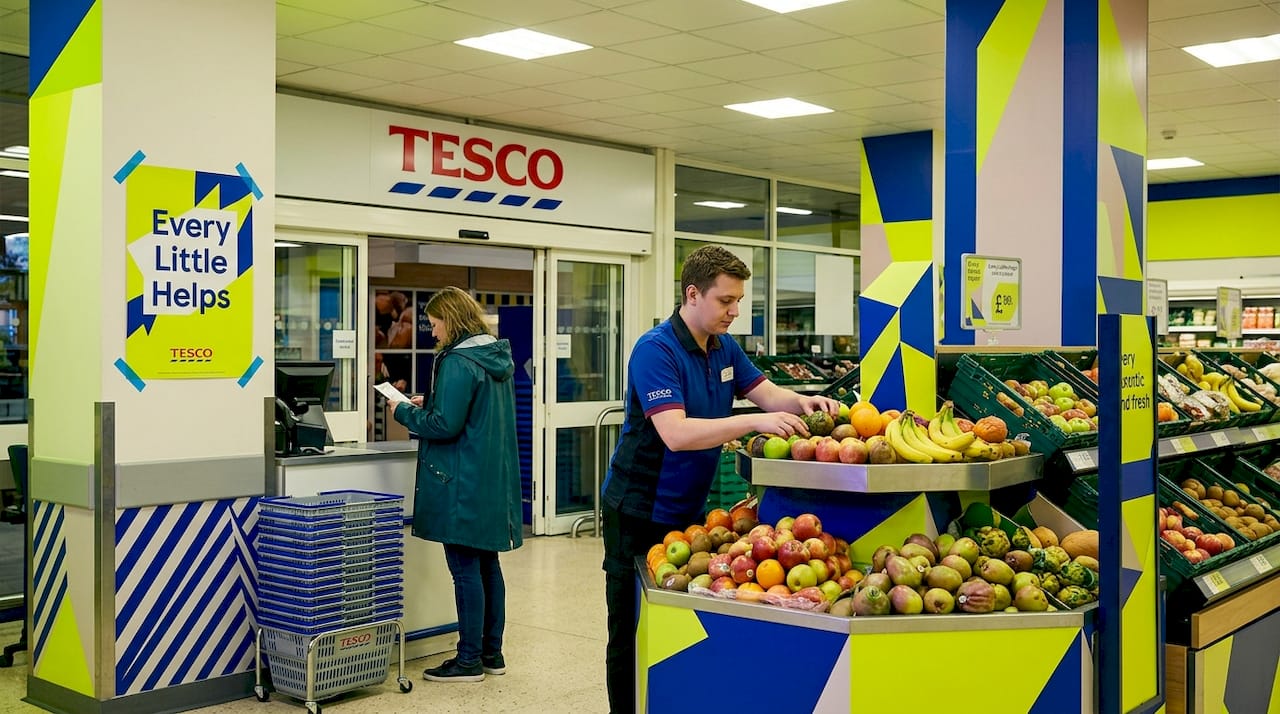
A few words can carry the weight of your entire brand. Yet for most UK business owners, writing a tagline feels like the hardest creative task imaginable. You need something short, punchy, honest, and memorable, all at once. Get it right, and your tagline does the selling for you, long before a customer ever picks up the phone. Get it wrong, and you blend into a sea of forgettable phrases. Tesco’s UK’s most memorable slogan, ‘Every Little Helps,’ launched in 1993 and is still recognised by millions today. That kind of staying power does not happen by accident.
Table of Contents
- What makes a great business tagline?
- Top examples of memorable UK business taglines
- Comparing tagline strategies: Short, long, abstract, and functional
- How to craft your own winning business tagline
- Perspective: Why most businesses overcomplicate taglines (and what actually works)
- Connect your brand with an unforgettable tagline
- Frequently asked questions
Key Takeaways
| Point | Details |
|---|---|
| Simplicity wins | Taglines that are short, clear, and benefit-led are easier for customers to remember. |
| Consistency matters | Keeping your tagline unchanged builds brand recognition and customer trust over time. |
| Style impacts effectiveness | Abstract and emotive taglines often outperform purely functional ones for memorability. |
| Use examples for inspiration | Reviewing successful UK taglines helps spark ideas for your own standout message. |
| Practical creation steps | Follow a step-by-step process for crafting, testing, and launching an effective tagline. |
What makes a great business tagline?
Before you can write a brilliant tagline, you need to know what one actually looks like. There are a handful of criteria that separate the memorable from the mundane, and understanding them will transform the way you approach the task.
The most widely cited advice is to keep it short: three to seven words, benefit-focused, simple, and rhythmic, with a voice that matches your brand’s personality. Think of it as a handshake. In just a second or two, your tagline tells a stranger exactly who you are and why they should care.
Here is what strong taglines consistently share:
- Brevity with purpose: Every word earns its place. There is no room for filler.
- A clear benefit or promise: The customer understands immediately what they gain.
- Brand alignment: The tone, style, and vocabulary match the wider brand identity.
- Rhythm and recall: The phrase rolls off the tongue and sticks in the memory.
- Longevity: It can stand the test of time without feeling dated.
That said, brevity is not everything. Research shows that longer taglines score higher on brand association tests, longevity boosts Brand Association Test scores, jingles provide a 35% uplift in recall, and using a consistent creative platform is the single top factor in tagline performance. In other words, the most memorable phrases are often the ones repeated faithfully, across every touchpoint, for years.
“A tagline is not just a slogan. It is the distillation of everything your brand stands for, expressed in the fewest possible words.”
The branding benefits of getting this right are significant. Strong taglines reinforce recognition, build trust, and give your marketing a consistent backbone that customers can rely on.
Pro Tip: Read your tagline candidate aloud three times in a row. If it feels awkward or forgettable by the third read, it needs more work. The best taglines feel satisfying to say.
A weak tagline, by contrast, tends to be vague (“Quality service you can trust”), generic (“Your local experts”), or so abstract it says nothing at all. The test is simple: could any other business in your sector use the exact same words? If the answer is yes, go back to the drawing board.
Top examples of memorable UK business taglines
Now that you know what to look for, let us look at real-world UK examples that put these principles into action. These are taglines that have genuinely shaped how consumers think and feel about the brands behind them.
Tesco: ‘Every Little Helps’
This is the gold standard of British taglines. Introduced in 1993, it is warm, humble, and universally relatable. It implies that no gesture of value is too small, which made it feel authentic during tough economic times. The UK’s most memorable slogan has endured for over three decades and was recently refreshed for 2026 with ‘Need anything from Tesco?’ The original phrase remains iconic, proving that some taglines transcend marketing campaigns entirely.
Specsavers: ‘Should’ve gone to Specsavers’
This tagline is a masterclass in humour and self-awareness. It is longer than the conventional three-to-seven-word rule, yet it is arguably one of the most recalled taglines in British advertising history. It works because it is funny, relatable, and puts the consumer’s perspective front and centre.
British Airways: ‘To fly, to serve’
Brief, aspirational, and emotionally resonant. This tagline taps into the romance of travel while also making a quiet promise of premium service. It works across cultures and contexts without losing any of its weight.
Innocent Drinks: ‘Tastes good, does good’
Simple symmetry makes this tagline satisfying to hear and easy to remember. It bridges the functional (taste) and the ethical (doing good), reflecting the brand’s dual personality perfectly. For smaller UK businesses, this is a fantastic template: acknowledge what you do and why it matters, in as few words as possible.
John Lewis: ‘Never knowingly undersold’
This one is deliberate and precise. It makes a specific promise about pricing without resorting to vague superlatives. The phrase has a formal, trustworthy tone that mirrors the brand’s heritage. It was eventually retired but remains one of the most studied examples in UK brand history.
What makes these taglines work? They all do at least one of the following things exceptionally well:
- They reflect a genuine brand truth rather than an aspirational fiction.
- They use everyday language that feels natural, never corporate.
- They carry an emotional charge, whether that is warmth, humour, or aspiration.
- They are tied to creative branding strategies that reinforce the message consistently.
Statistic to note: Research confirms that jingles and repeated creative platform use deliver a 35% uplift in brand recall, which shows just how much consistency amplifies a tagline’s impact.
The lesson here is not to simply copy these examples. It is to understand the underlying logic and then apply it to your own brand story.
Comparing tagline strategies: Short, long, abstract, and functional
Not every business needs the same style of tagline. Your choice should depend on your audience, your sector, and the personality you want to project. Let us look at the main approaches side by side.
| Tagline style | Example | Memory impact | Emotional appeal | Clarity | Longevity |
|---|---|---|---|---|---|
| Short (3 to 5 words) | ‘To fly, to serve’ | High | High | Medium | High |
| Longer (6 to 10 words) | ‘Should’ve gone to Specsavers’ | Very high | High | High | High |
| Abstract or emotive | ‘Every Little Helps’ | Very high | Very high | Medium | Very high |
| Functional or literal | ‘Never knowingly undersold’ | Medium | Medium | Very high | Medium |
Data strongly favours longer taglines for memory retention, and research consistently shows that abstract and emotive phrasing outperforms purely functional descriptions. Brands that change their taglines frequently also lose ground in recognition and trust. Stability is a competitive advantage.
So, what does this mean for you?
- If your brand is well established, a short, abstract tagline can carry enormous weight because your reputation fills in the gaps.
- If you are newer or less known, a slightly longer, more functional tagline may work harder to explain your value quickly.
- If your audience is emotionally driven (lifestyle brands, charities, hospitality), lean into emotive language.
- If your audience is rational and detail-focused (legal, financial, technical services), a functional tagline can build credibility faster.
The biggest mistake businesses make here is chasing trends rather than consistency. Your branding strategies should anchor your tagline to a long-term vision, not a short-term campaign.
Pro Tip: If you are torn between two styles, test both with a small group of real customers. Ask them to recall the tagline 48 hours later without prompting. Whichever one they remember more accurately is likely the stronger choice.
How to craft your own winning business tagline
You understand the principles. You have seen the examples. Now it is time to build your own. Here is a six-step process that we recommend to every business owner who wants a tagline that genuinely works.
-
Define your single biggest promise. What is the one thing your business does better than anyone else? Write it down in a plain sentence, then strip it back to its core idea.
-
Identify your brand’s personality. Are you warm and friendly? Bold and direct? Quietly confident? Your tagline must sound like your brand, not a generic version of it. Review your existing professional branding services and tone of voice guidelines if you have them.
-
Write ten to twenty rough options. Do not judge them yet. Just generate. Use different structures: a promise, a question, a statement of belief, a playful observation. Volume at this stage unlocks creativity.
-
Test for rhythm and recall. Read each option aloud. Does it flow? Does it have a natural beat? The best taglines often have a subtle rhythm that makes them feel satisfying to say.
-
Check it against the criteria. Is it benefit-focused and rhythmic? Is it between three and seven words, or does a longer option feel stronger? Could any competitor use it? If so, make it more specific to your brand.
-
Stress-test it across touchpoints. Say it as part of a radio advert. See how it looks on a business card. Check it on a billboard. A great tagline must work in every context. Tie your final choice into your branding consistency workflow so it is applied uniformly from day one.
Common pitfalls to avoid:
| Pitfall | Why it fails | Fix |
|---|---|---|
| Vague language (“trusted experts”) | Says nothing specific | Name the actual benefit |
| Too many words | Hard to recall | Cut to the core idea |
| Weak rhythm | Forgettable and flat | Read aloud, adjust cadence |
| Copying competitors | Confuses customers | Anchor to your unique truth |
| Changing it too often | Undermines recognition | Commit for the long term |
Pro Tip: Consider adding a simple jingle version for audio content. Research shows jingles provide a 35% uplift in recall. Even a basic melodic hook paired with your tagline can dramatically increase how quickly customers associate it with your brand.
Perspective: Why most businesses overcomplicate taglines (and what actually works)
Here is something we have observed after over a decade of working with UK business owners: the more time spent writing a tagline, the more likely it is to become overworked. And overworked taglines fail.
We see it constantly. A business owner writes forty drafts, brings in three opinions, runs a survey, and ends up with something safe and forgettable. The irony is that the taglines which endure are often the ones that came quickly, rooted in a genuine truth about the brand, expressed simply.
The evidence supports this. Research confirms that tagline longevity boosts Brand Association Test scores significantly, and that frequent changes actively damage brand recognition. Yet brands continue to refresh their messaging every two or three years, usually for internal reasons rather than customer ones.
Here is the uncomfortable truth: most tagline changes are driven by new marketing teams, rebrands, or a desire to feel current. They rarely reflect a real shift in what the business does or who it serves. And customers notice the inconsistency, even when they cannot articulate it.
What actually works is a phrase that feels easy to remember, carries a genuine emotional charge, and is applied with branding consistency across every single customer interaction. The abstract and emotive outperform the functional. The long-running outperform the newly launched. Simplicity, sincerity, and repetition beat cleverness every time.
Our advice: once you find a tagline that reflects your truth, protect it fiercely. Resist the urge to update it for the sake of it. Let it build equity over years, not campaigns.
Connect your brand with an unforgettable tagline
Your tagline is the foundation of your brand voice. But it needs to live within a strong, cohesive identity to reach its full potential. That means the right logo, the right colours, and the right visual language all working together to tell a single, clear story.
At Kukoo Creative, we have spent over a decade helping UK business owners build brands that people remember. Whether you need guidance on logo design for your brand or want to see how we bring identity to life, our branding portfolio shows exactly what is possible. If you are ready to create something extraordinary, we would love to be part of your story. Get in touch and let us build a brand identity that gives your tagline the home it deserves.
Frequently asked questions
What is the ideal length for a business tagline?
The best taglines are typically three to seven words long, balancing brevity with enough content to communicate a clear benefit.
Do longer taglines work better than shorter ones?
Research shows longer taglines can outperform shorter ones in memory tests, particularly when they are used consistently over a long period.
How often should a business change its tagline?
Avoid frequent changes. Data shows that changing taglines often undermines brand recognition, while long-running taglines build stronger consumer associations over time.
Can a tagline improve customer trust?
Yes. A consistent, benefit-driven tagline makes your brand more recognisable and relatable, just as Tesco’s tagline has built trust with British shoppers for over three decades.