
TL;DR:
- Regular annual updates improve website speed, security, and search engine rankings.
- Keeping content and design current enhances customer trust and compliance with UK regulations.
- Consistent website maintenance supports long-term growth and better adapts to market changes.
Your website is often the first thing a potential customer sees before they ever speak to you. Yet many UK business owners set theirs up once and leave it running like an old shop sign with a faded logo. With over 60% of UK web traffic now coming from mobile devices, and search engines actively penalising sites that fail to keep up, a neglected website does not just look dated. It quietly costs you customers, rankings, and revenue. This article explains why annual website updates are one of the smartest moves you can make, what to update, and how to do it efficiently.
Table of Contents
- Why annual website updates matter for UK businesses
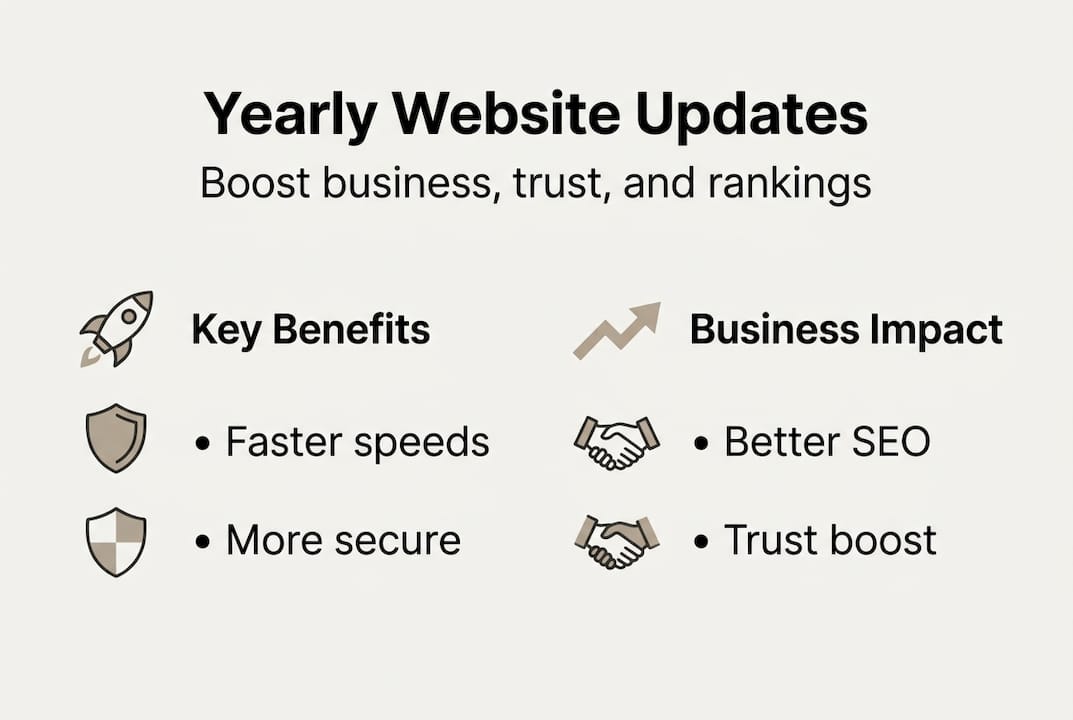
- Core benefits of updating your website yearly
- Warning signs your website needs a yearly refresh
- How to update your website efficiently: best practices for 2026
- Why yearly updates are smart strategy, not just busywork
- Ready to future-proof your online presence?
- Frequently asked questions
Key Takeaways
| Point | Details |
|---|---|
| Boost credibility | A yearly update keeps your business website modern and trustworthy for UK customers. |
| Reduce risk | Regular updates protect you from costly security issues and outdated compliance. |
| Improve mobile experience | Updating yearly ensures your site looks and works well on all mobile devices. |
| Drive better results | Consistent updates strengthen your SEO and brand engagement, leading to more leads and sales. |
Why annual website updates matter for UK businesses
UK consumers are sharp, connected, and increasingly impatient online. They expect websites to load in seconds, look polished on every screen, and feel trustworthy the moment they arrive. When your site falls short of that expectation, they leave. And they rarely come back.
The numbers make this clear. Mobile traffic in the UK now accounts for more than 60% of all web sessions. If your website is not fully optimised for mobile viewing, you are potentially alienating the majority of your visitors before they have even read your homepage. Google’s Core Web Vitals, a set of performance signals used to measure real-world user experience, also factor heavily into how your site ranks in search results. Outdated sites frequently fail these checks, which pushes them down the rankings and hands your competitors a visible advantage.
Beyond speed and performance, there is a real security dimension to consider. The Companies House data glitch highlighted how even well-known public bodies can suffer damaging technical failures when systems are not properly maintained. For small and medium businesses, a security breach or site outage can be far more damaging in proportion. Customers lose trust fast. Rebuilding it is slow and expensive.
There is also a legal angle that many UK business owners overlook. Accessibility regulations require websites to meet certain standards so that users with disabilities can navigate them properly. Failing to meet these standards is not just poor practice. It carries reputational and legal risk.
Here is a quick look at how often key website areas need attention:
| Website area | Recommended update frequency | Risk if ignored |
|---|---|---|
| Security patches and CMS | Every 1 to 3 months | Data breach, downtime |
| Mobile responsiveness | Annually | High bounce rate, lost leads |
| Content and messaging | Annually | Stale brand, poor SEO |
| Accessibility compliance | Annually | Legal exposure |
| Core Web Vitals performance | Annually | Search ranking drop |
The SEO impacts of website updates are well documented. Sites that receive regular attention consistently outperform those left unchanged, often by a significant margin in local search results.
Key reasons to update annually include:
- Maintaining brand credibility in a fast-moving digital landscape
- Protecting against security vulnerabilities that compound over time
- Meeting accessibility and compliance obligations under UK guidelines
- Keeping pace with Google algorithm changes that affect your visibility
- Ensuring your site reflects your current services, pricing, and brand identity
Refreshing your website’s look is not vanity. It is a practical business decision that pays dividends in trust, traffic, and conversions.
Core benefits of updating your website yearly
Understanding why you should update is one thing. Seeing what you actually gain makes the case even stronger. Annual updates deliver a cluster of interconnected benefits that compound over time.
1. Faster loading speeds
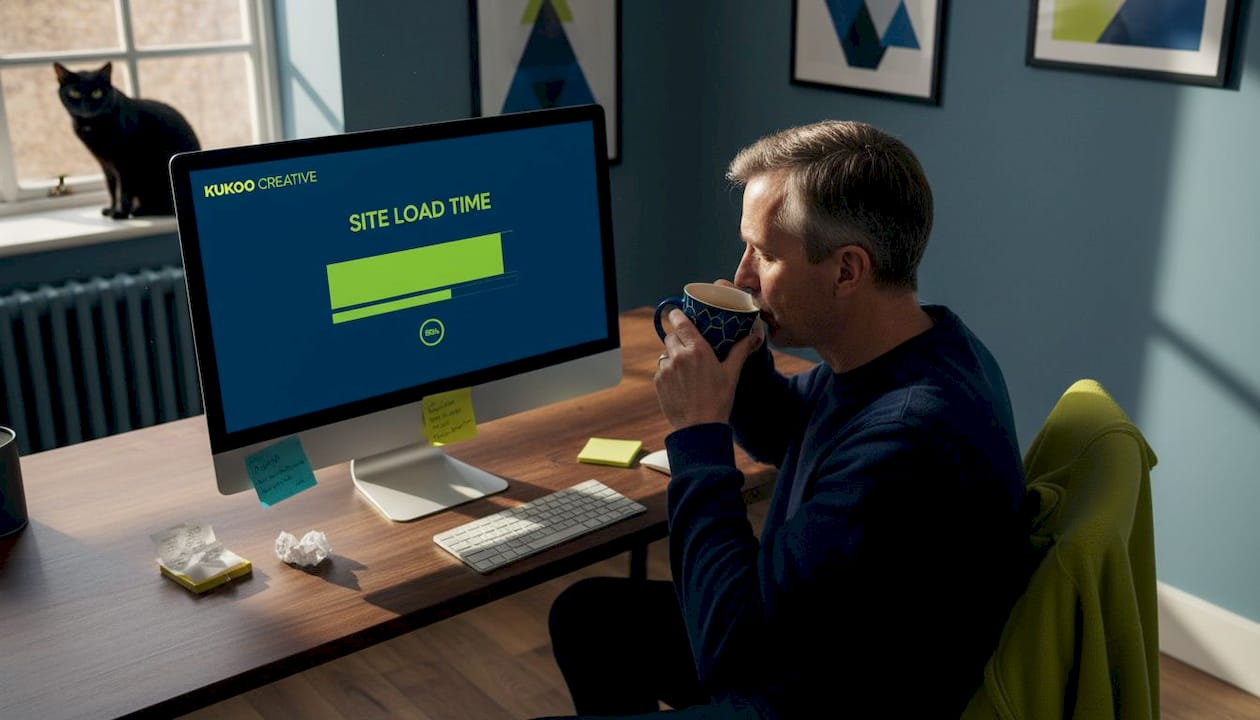
Speed is not just a comfort. It directly affects whether users stay or leave. A slow-loading site frustrates visitors and signals to Google that the experience is poor. Regular updates allow you to optimise images, streamline code, and adopt faster hosting or caching solutions. Each improvement adds up.
2. Better mobile performance
With mobile-first indexing now standard across Google’s ranking system, your site’s mobile performance is essentially your SEO score. Annual updates let you test and fix layout issues, button sizing, font rendering, and navigation menus that may have broken as device models evolved.
3. Stronger security
Every outdated plugin, theme, or CMS version is a potential entry point for malicious software. Annual security audits and patches close these gaps before they become costly problems. Think of it like servicing your car. You do not wait until the engine fails.
4. Improved search rankings
Fresh content signals activity to search engines. Updating service pages, adding new case studies, or revisiting your blog structure can give your rankings a meaningful lift. Local traffic benefits from redesigns are particularly notable, with some businesses reporting significant upticks in local search visibility after a focused annual update.
5. Greater customer trust
Users notice things. A copyright date stuck in 2021, testimonials that reference services you no longer offer, or a layout that looks broken on their phone all chip away at confidence. Building brand trust starts with showing up professionally online, every time.
Compare the two approaches side by side:
| Approach | Typical cost | Risk level | Long-term outcome |
|---|---|---|---|
| Annual updates | Low to moderate | Low | Steady growth and credibility |
| Ignoring for 3 to 5 years | Very high (overhaul) | High | Lost customers, outdated brand |
Pro Tip: Think of your website like a member of your team. You would not leave a team member without training or development for five years and expect them to perform brilliantly. Your site deserves the same investment.
Boosting conversions with redesign does not always require a complete rebuild. Sometimes targeted annual improvements to layout, calls to action, and page speed are enough to produce a measurable uplift in enquiries and sales.
Numbered summary of annual gains:
- Faster page speeds that reduce abandonment rates
- Responsive layouts that work across all devices
- Security updates that protect your customers’ data
- Fresh content that signals relevance to search engines
- A polished appearance that builds trust immediately
Warning signs your website needs a yearly refresh
How do you know when your site is due for attention? These signals are hard to ignore once you know what to look for.
Declining speed and engagement
If your bounce rate (the percentage of visitors who leave after viewing one page) has crept upward, or if your analytics show fewer people visiting compared to the same period last year, your site may be failing the first impression test. Slow load times are often the culprit.
Security alerts
Receiving warnings from your hosting provider, browser security flags, or a drop in Google’s trust signals are serious signs. Outdated CMS platforms like older versions of WordPress or Joomla are particularly vulnerable. A single unpatched plugin can expose your entire site.
Poor mobile experience
Load your site on your own phone right now. Does it look clean and professional? Are buttons easy to tap? Does the text require zooming? If the answer to any of these is unflattering, your mobile users are likely leaving in frustration. Mobile-first website design is no longer optional for UK businesses chasing local or national customers.
Stale content and inconsistent branding
If your website still mentions old services, uses an outdated logo, or features team members who left two years ago, it projects disorganisation. Customers notice inconsistency between your social media presence and your website, and it undermines confidence.
Missed compliance standards
Accessibility requirements evolve. If your site was built without accessibility in mind, or has not been checked recently, it may now fall outside current guidelines. Understanding the modern website’s role for SMEs means recognising compliance as part of your brand’s foundation, not an afterthought.
“Your website is working for you 24 hours a day. Give it the tools it needs to do the job properly.”
Pro Tip: Set a recurring reminder in your business calendar every January or April to run a quick site audit. Check speed via Google PageSpeed Insights, review your content for accuracy, and test your site on at least two different mobile devices. Fifteen minutes of attention can prevent months of lost leads.
An SEO jump from updates is well within reach when these warning signs are addressed promptly. The key is catching them early rather than reacting to a crisis.
Key warning signs to check each year:
- Bounce rate above 70%
- Page load time above 3 seconds on mobile
- Security warnings or expired SSL certificates
- Copyright footer showing a year more than two years old
- Content referencing services or staff that no longer apply
- Broken links or forms that do not submit correctly
How to update your website efficiently: best practices for 2026
Once you have identified the need, the next step is making updates without disrupting your day-to-day business. A structured approach keeps things manageable and ensures nothing important gets missed.
Step-by-step annual update process:
-
Set your review date. Choose the same month each year, perhaps January, April, or aligned with your financial year end. Block time in your diary. Treat it as a non-negotiable business appointment.
-
Pull your analytics. Use Google Analytics or your platform’s built-in reporting to identify which pages have the highest bounce rates, slowest load times, and lowest conversion rates. These are your priorities.
-
Audit your content. Read every core page with fresh eyes. Is the messaging accurate? Does it reflect your current pricing, services, and brand voice? Remove outdated information and update case studies or testimonials.
-
Test on multiple devices. Use real phones and tablets, not just browser emulators. Check that forms work, menus open cleanly, and images display at the correct size.
-
Run a security check. Update your CMS, plugins, and themes. Check your SSL certificate is active and not due to expire. Consider running a vulnerability scan via a reputable tool.
-
Review your SEO fundamentals. Check page titles, meta descriptions, and heading structures. Ensure your Google Business Profile matches what appears on your website for consistent local search signals.
-
Engage professionals where needed. If technical or structural work is beyond your current skill set, this is precisely when a design and development partner earns their value. A focused website redesign plan does not have to mean starting from scratch.
Here is a suggested timeline for a structured annual update:
| Week | Task | Owner |
|---|---|---|
| 1 | Analytics review and priority list | You or agency |
| 2 | Content audit and copy updates | You or copywriter |
| 3 | Technical and security updates | Developer |
| 4 | Design and mobile testing | Designer/Developer |
| 5 | SEO review and final checks | SEO specialist |
| 6 | Go live and monitor performance | All parties |
Following through on website maintenance tips throughout the year also reduces the scale of your annual update. Small, consistent actions prevent large, costly overhauls.
Regular updates for growth are not just about staying current. They are about compounding your digital investment so that each year builds on the last.
Why yearly updates are smart strategy, not just busywork
Here is an honest observation from our decade-plus of working with UK business owners: the businesses that grow steadily and weather market shifts are almost never the ones with the flashiest launches. They are the ones who tend to their foundations consistently.
Annual website updates are one of those foundations. Most of your competitors treat their websites as a one-off project, something to revisit only when something breaks or business slows. That creates an opportunity. When you make updates part of your annual business rhythm, you compound the benefits. Better rankings lead to more traffic. More traffic leads to more leads. More leads, if your site converts well, become more customers.
The value of regular refreshes goes beyond aesthetics. Businesses that update annually adapt more quickly to shifts in consumer behaviour, algorithm changes, and new technologies. When Google introduced Core Web Vitals as a ranking factor, businesses with recent updates absorbed the change far more smoothly than those scrambling to fix four-year-old sites overnight.
Think of your website as a living asset, not a static brochure. Every year you invest in it, you are not just maintaining. You are building. That is strategy.
Ready to future-proof your online presence?
If you have read this far, you already know your website deserves more attention than it has been getting. The good news is you do not have to navigate this alone.
At Kukoo Creative, we have spent over a decade helping UK business owners like you build websites and brands that genuinely perform. From logo design to full website refreshes, we combine creative expertise with a genuine understanding of what your audience needs. Whether you are starting a focused annual update or exploring a more significant redesign, our expert redesign guidance can help you move forward with confidence. Get in touch today for a free strategic conversation about where your website stands and how to make it work harder for your business.
Frequently asked questions
How often should I update my business website?
Most experts recommend a thorough update at least once a year to keep your site secure, competitive, and effective. As mobile traffic continues rising above 60% in the UK, staying current is essential.
What are the biggest risks of not updating a website yearly?
Neglected sites face compounding risks including security breaches, falling search rankings, and losing customer trust due to outdated features and content that no longer reflect your business.
Does updating my website help local SEO?
Absolutely. Search engines favour active, well-maintained sites, and local SEO can improve by 50% with targeted updates to content, structure, and performance.
How do yearly updates support mobile users?
Annual updates ensure your site meets the mobile-first standards that both Google and UK users now expect, keeping layouts clean, fast, and easy to navigate on any device.