
Many business owners still view web animations as flashy extras rather than essential tools for brand storytelling and user engagement. This misconception means missing out on a proven method that can boost message comprehension by 65% whilst creating memorable experiences that set your creative business apart. This guide explores how strategic web animations enhance brand narratives, improve user interaction, and deliver measurable results for UK creative businesses looking to strengthen their digital presence.
Table of Contents
- Key takeaways
- What are web animations and why do they matter?
- How web animations enhance brand storytelling and user engagement
- Choosing the right types of web animations for your business needs
- Best practices for implementing web animations effectively
- Enhance your brand with professional web animation and design
- Frequently asked questions
Key Takeaways
| Point | Details |
|---|---|
| Message clarity boost | Strategic web animations can improve audience understanding by up to 65 per cent, making complex information easier to grasp. |
| Brand storytelling tool | Strategic animations help convey brand narratives and engage users more effectively than static content. |
| Costs vary in UK market | Prices vary widely from £300 to £3,000 per minute for freelancers and £3,000 to £20,000 per minute for studios, reflecting varying production quality and scope. |
| Differentiates creative businesses | When aligned with the brand story, animations guide attention, simplify information and improve retention. |
What are web animations and why do they matter?
Web animations encompass any moving visual element on a website, from subtle button hover effects to complex illustrated sequences. These range from microinteractions that provide instant feedback to full motion graphics that explain complex concepts. The distinction between decorative and strategic animations matters significantly for business outcomes.
Microinteractions include button states, loading indicators, and form validation feedback. These small animations guide users through tasks whilst reducing confusion. Hero animations appear prominently on landing pages, immediately capturing attention and setting brand tone. Scroll-triggered animations reveal content progressively, creating narrative flow as users explore your site. Background animations add subtle movement without distracting from primary content.
The UK animation market reflects diverse pricing structures. Studios typically charge £3,000 to £20,000 per minute for high-end production, whilst freelancers offer services from £300 to £3,000 per minute. This range allows creative businesses of all sizes to access animation services appropriate for their needs.
Strategic animations serve specific purposes beyond aesthetics. They direct attention to key messages, simplify complex information, and create emotional resonance. When integrated with storytelling in design for UK SMEs, animations become powerful narrative tools. They transform static content into dynamic experiences that hold attention and improve information retention.
Pro Tip: Start with one or two strategic animations rather than overwhelming your site with movement. Focus on areas where animation genuinely improves understanding or guides user action, such as explaining your unique value proposition or highlighting key product features.
The creative industries increasingly recognise animations as essential rather than optional. Businesses using strategic animation report stronger brand recognition and improved conversion rates. The investment pays dividends through enhanced user experience and clearer communication of brand values.
How web animations enhance brand storytelling and user engagement
Animations transform abstract concepts into tangible visual narratives that audiences grasp immediately. Research shows animation usage can boost comprehension by 65% compared to static content alone. This dramatic improvement stems from animation’s ability to show processes, relationships, and changes over time in ways static images cannot match.
Brand storytelling gains depth through animated sequences that reveal your business journey, values, and personality. Movement creates emotional connections by adding human qualities to digital experiences. A thoughtfully animated logo introduction or service explanation makes your brand memorable whilst communicating professionalism. These animations work particularly effectively when aligned with brand storytelling for lead conversion strategies.
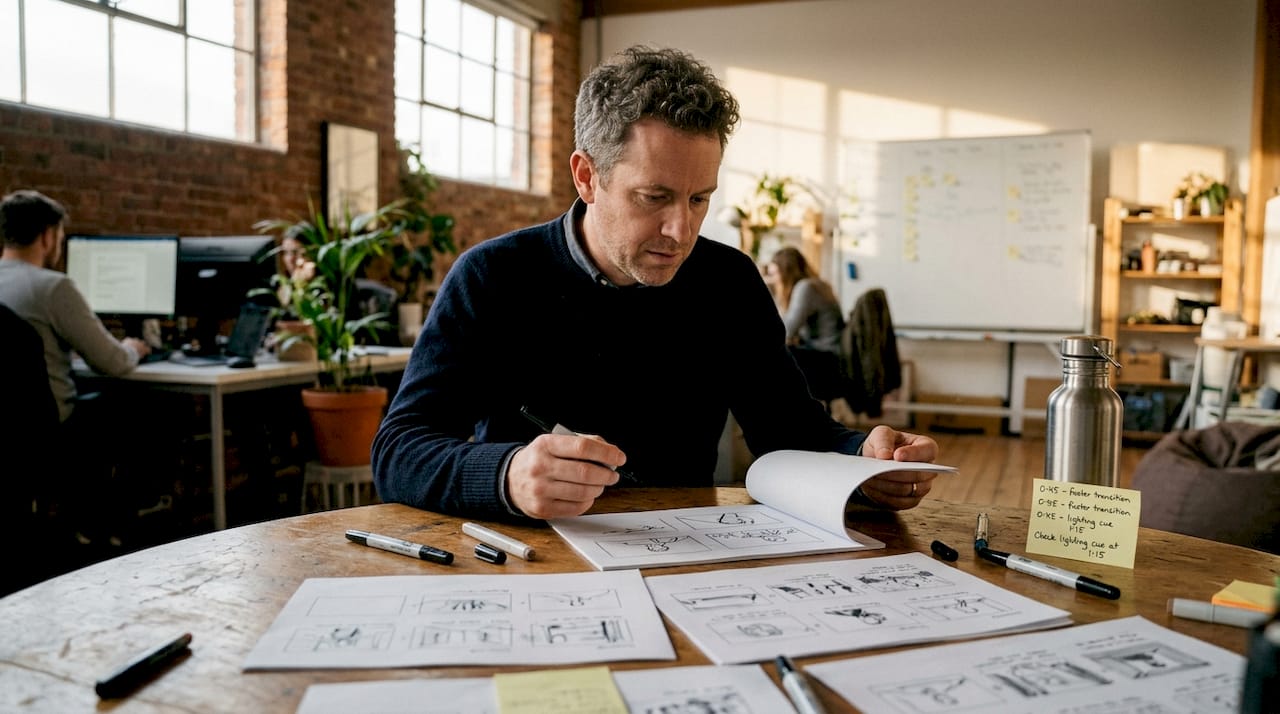
User engagement metrics improve measurably with strategic animation implementation. Visitors spend longer on pages with purposeful animations, interact more with calls to action, and remember key messages better. Animation guides the eye through content hierarchy, ensuring users notice important information in the intended sequence. This directional quality proves invaluable for complex service offerings or multi-step processes.
Consider how animations clarify your unique selling points:
- Animated infographics transform data into compelling visual stories
- Process animations show step-by-step workflows that text struggles to convey
- Product demonstrations reveal features and benefits through motion
- Testimonial animations add personality and authenticity to client feedback
- Timeline animations illustrate company history and growth milestones
The emotional impact of animation cannot be overstated. Movement triggers psychological responses that static content misses. Smooth, confident animations convey professionalism and attention to detail. Playful animations suggest creativity and approachability. The animation style you choose becomes part of your brand voice, complementing examples of visual branding strategies.
Strategic animations don’t just decorate your website; they actively participate in telling your brand story, guiding user behaviour, and creating the memorable experiences that turn visitors into clients.
UK creative businesses using animation report stronger differentiation in competitive markets. When competitors rely on static content, your animated storytelling immediately stands out. This advantage proves particularly valuable in crowded sectors where technical capabilities may be similar but presentation quality varies dramatically. Animation becomes your competitive edge, demonstrating innovation and commitment to user experience.
Choosing the right types of web animations for your business needs
Selecting appropriate animation types requires understanding your objectives, audience preferences, and budget constraints. Different animation formats serve distinct purposes and deliver varying returns on investment. The following comparison helps you match animation types to your specific business goals.
| Animation type | Best use case | Typical cost (UK) | Engagement impact | Complexity |
|---|---|---|---|---|
| Microinteractions | Button feedback, form validation | £300-£1,500 | High for usability | Low |
| Hero animations | Landing page impact, brand introduction | £1,000-£5,000 | Very high for first impressions | Medium |
| Explainer videos | Service descriptions, product demos | £3,000-£15,000 | Highest for comprehension | High |
| Scroll animations | Content revelation, narrative flow | £500-£3,000 | High for engagement | Medium |
| Background animations | Ambient movement, brand atmosphere | £400-£2,000 | Moderate for mood setting | Low to medium |
The pricing reflects current UK market rates, with studios charging £3,000 to £20,000 per minute whilst freelancers offer more accessible £300 to £3,000 per minute options. Quality correlates with price, but smaller businesses can achieve excellent results with focused freelancer partnerships.
Follow this process for selecting animations that serve your business:
- Define your primary objective (increase conversions, explain services, build brand awareness)
- Identify where users currently struggle or disengage on your site
- Match animation types to these specific pain points
- Set a realistic budget based on priority areas
- Start with one high-impact animation rather than multiple mediocre ones
- Test and measure results before expanding animation use
- Refine based on user feedback and engagement metrics
Microinteractions deliver exceptional value for modest investment. These subtle animations provide immediate feedback that reduces user uncertainty and improves task completion rates. A button that responds to hover states or a form that validates entries in real time creates confidence and reduces abandonment.
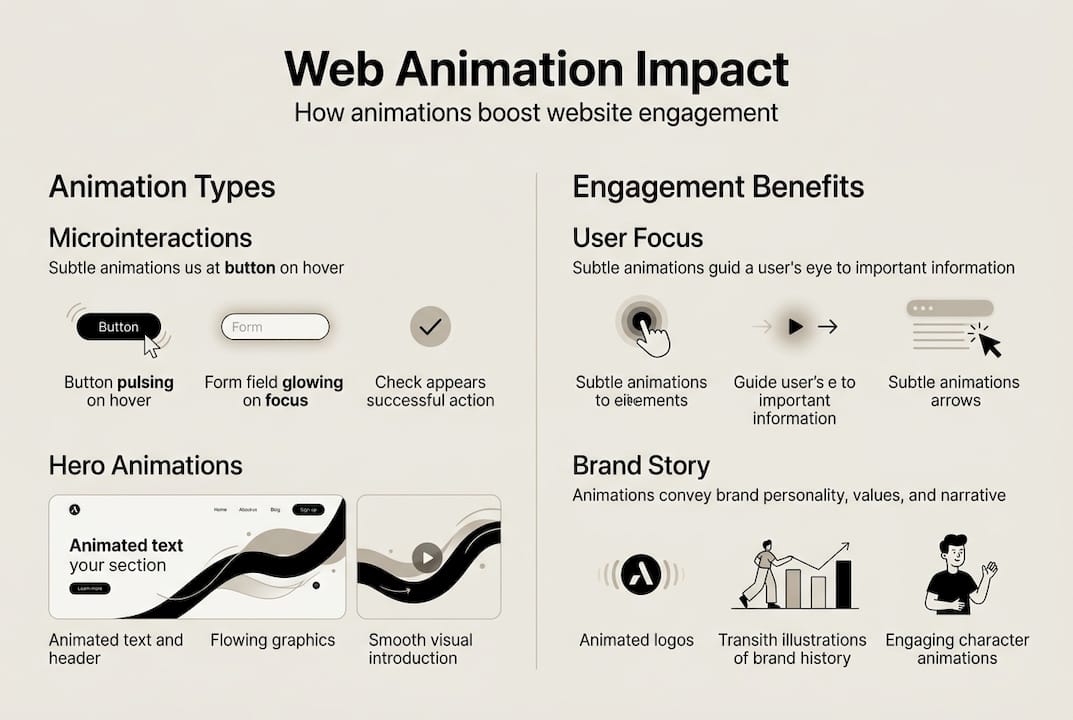
Hero animations make powerful first impressions but require careful execution. Overly complex hero animations can slow page load times and frustrate mobile users. The sweet spot combines visual impact with technical performance, typically achieved through optimised vector animations or carefully compressed video.
Explainer videos represent the highest investment but also deliver the strongest comprehension improvements. These work brilliantly for complex services that text descriptions struggle to convey. The production process involves scripting, storyboarding, illustration, animation, and sound design, justifying higher costs.
Pro Tip: Prioritise animations that directly support conversion goals rather than purely decorative elements. A well-animated call to action or service explanation typically delivers better ROI than elaborate background effects. Align your animation choices with scalable branding strategies that grow with your business.
Consider your audience’s device usage patterns. Mobile users comprise the majority of web traffic, making performance optimisation crucial. Animations must load quickly and run smoothly across devices. Responsive animation design adapts complexity based on screen size and connection speed, ensuring consistent experiences.
Best practices for implementing web animations effectively
Effective animation implementation balances visual impact with technical performance and accessibility. Poor execution undermines the benefits animations should provide, potentially harming user experience rather than enhancing it. These best practices ensure your animations deliver intended results.
Timing determines whether animations feel natural or jarring. Microinteractions should respond within 100-200 milliseconds to feel immediate. Larger animations benefit from 300-500 millisecond durations that allow users to perceive movement without waiting. Avoid animations exceeding one second unless they serve specific storytelling purposes, as longer durations test patience and slow perceived performance.
Performance optimisation protects user experience across devices and connection speeds. Use CSS animations and transforms rather than JavaScript when possible, as these leverage hardware acceleration for smoother playback. Compress animation files aggressively, particularly video formats. Implement lazy loading so animations only activate when users scroll to relevant sections. Test thoroughly on mobile devices with varied connection speeds.
Accessibility considerations ensure animations enhance rather than hinder user experience:
- Respect the prefers-reduced-motion media query for users with motion sensitivity
- Provide pause controls for animations exceeding five seconds
- Ensure animations don’t interfere with screen reader functionality
- Avoid flashing or strobing effects that trigger seizures
- Maintain sufficient colour contrast in animated elements
- Test keyboard navigation with animations active
Brand consistency requires aligning animation style with your overall visual identity. Animation timing, easing curves, and movement characteristics should reflect brand personality. Energetic brands might use quick, bouncy animations whilst luxury brands favour slower, elegant transitions. This consistency reinforces brand recognition and creates cohesive experiences across touchpoints.
The UK creative industries growing 8% per year demonstrates increasing demand for sophisticated branding methods. Staying current with animation trends whilst maintaining brand consistency positions your business as innovative yet reliable. Balance contemporary techniques with timeless principles that won’t feel dated quickly.
Integration with existing content requires thoughtful planning. Animations should complement rather than compete with text, images, and other elements. Use animation to direct attention to key messages at appropriate moments. Coordinate animation triggers with scroll position or user actions to create natural flow. Enhancing user experience through animation demonstrates how strategic placement maximises impact.
Pro Tip: Create an animation style guide documenting timing values, easing functions, and usage rules. This ensures consistency as your site evolves and simplifies collaboration with designers and developers. Include examples of approved and discouraged animation applications to maintain quality standards.
Testing reveals how real users respond to animations. Monitor analytics for pages with animations, comparing engagement metrics to similar pages without motion. Conduct user testing sessions observing how people interact with animated elements. Gather feedback about whether animations help or hinder task completion. Iterate based on data rather than assumptions.
Maintenance planning prevents animations from breaking as technology evolves. Browser updates occasionally affect animation rendering, requiring periodic testing and updates. Build relationships with developers who understand animation implementation, ensuring quick fixes when issues arise. Budget for ongoing optimisation as your site grows and animation use expands.
Enhance your brand with professional web animation and design
Transforming these animation insights into reality requires expertise that balances creativity with technical execution. Professional design services ensure animations integrate seamlessly with your brand identity whilst delivering measurable engagement improvements.
Our decade of experience partnering with business owners like you means understanding how animations amplify brand recognition and forge connections with your ideal audience. Strategic animation implementation starts with strong foundational design. How logo design will make or break your brand explores this crucial relationship between static brand elements and animated enhancements.
Developing a comprehensive logo design brief ensures animations align with your brand strategy from inception. This planning phase identifies opportunities where motion enhances storytelling whilst maintaining consistency across all touchpoints. Professional guidance helps avoid common pitfalls like overanimation or performance issues that undermine user experience.
Our approach integrates animations within holistic brand systems documented in your brand identity guide for UK businesses. This ensures every animated element reinforces your brand personality whilst serving practical user experience goals. The result is cohesive digital presence that engages audiences and drives business growth.
Frequently asked questions
What types of web animations work best for small creative businesses?
Microinteractions and subtle motion graphics deliver high engagement on smaller budgets, typically costing £300 to £1,500 for professional implementation. These include button hover states, form feedback, and scroll-triggered content reveals that improve usability without overwhelming visitors. Explainer videos prove effective when kept concise, usually 60 to 90 seconds, focusing on one clear message that static content struggles to convey.
How much should UK businesses expect to invest in quality web animations?
Costs range broadly from freelancers charging £300 to £3,000 per minute to studios commanding £3,000 to £20,000 per minute for complex productions. Investment depends on animation complexity, production quality desired, and provider experience level. Small businesses often start with £500 to £2,000 for essential microinteractions and scroll animations, expanding to explainer videos as budgets allow. Quality correlates with price, but focused freelancer partnerships deliver excellent results for businesses with clear briefs and realistic expectations.
Can animations improve website accessibility?
Animations enhance accessibility when implemented thoughtfully, respecting user preferences for reduced motion through CSS media queries. Proper execution provides navigation cues and improves comprehension for users who benefit from visual demonstrations of processes or relationships. However, accessibility best practices require pause controls for lengthy animations, avoiding flashing effects that trigger seizures, and ensuring animations don’t interfere with screen readers. Testing with diverse users, including those with disabilities, confirms animations help rather than hinder website usability.
How do I measure whether web animations improve engagement?
Track metrics including time on page, scroll depth, conversion rates, and bounce rates for pages with animations compared to similar pages without motion. Use heatmaps and session recordings to observe how users interact with animated elements, noting whether animations direct attention as intended. Conduct A/B tests introducing animations to half your traffic whilst showing static versions to the control group, measuring statistical differences in key performance indicators. User feedback through surveys or testing sessions provides qualitative insights about whether animations enhance or detract from experience.