
Nearly nine out of ten British companies consider design essential to business growth, yet many still underestimate its true potential. In a marketplace where every detail shapes perception and trust, design is doing more than just enhancing appearances. By understanding how design influences communication, customer experience, and innovation, you can see why it has become a cornerstone for success in both established and emerging British businesses.
Table of Contents
- Defining Design’s Role in Modern Business
- Types of Design Influencing Business Success
- How Design Builds Brand Recognition
- Design’s Impact on Customer Experience
- Risks of Neglecting Design in Business
Key Takeaways
| Point | Details |
|---|---|
| Design as a Strategic Driver | Design has evolved into a central component of business strategy, crucial for effective communication, differentiation, and customer connection. |
| Importance of Design Disciplines | Various design types, such as product, service, user experience, and brand design, collectively enhance organisational resilience and drive innovation. |
| Brand Recognition through Design | A cohesive visual identity fosters brand recognition and builds emotional connections with customers, influencing their perception and loyalty. |
| Risks of Design Neglect | Ignoring the strategic role of design can lead to competitive disadvantage and operational inefficiencies, harming customer engagement and brand reputation. |
Defining Design’s Role in Modern Business
Design is no longer a peripheral function but a strategic driver of business success. Today’s forward-thinking companies recognise design as a critical element that transforms how organisations communicate, compete, and connect with their audiences. Beyond mere aesthetics, design represents a comprehensive approach to problem-solving, brand positioning, and creating meaningful customer experiences.
In the modern business landscape, design serves multiple crucial functions. It acts as a powerful communication tool that translates complex organisational values and propositions into visually compelling narratives. Strategic design goes beyond visual elements, encompassing user experience, product development, and brand identity. Businesses that understand design’s strategic potential can differentiate themselves in crowded marketplaces, build emotional connections with customers, and drive tangible commercial outcomes.
The multifaceted role of design in contemporary business includes several key dimensions. Firstly, design influences brand perception by creating memorable visual identities that communicate professionalism and trustworthiness. Secondly, it plays a critical role in user experience, ensuring that products, services, and digital platforms are intuitive, accessible, and engaging. Thirdly, design serves as a problem-solving mechanism, helping businesses innovate, streamline processes, and develop solutions that address complex challenges. By integrating design thinking into core business strategies, organisations can create more responsive, customer-centric approaches that adapt quickly to changing market dynamics.
Types of Design Influencing Business Success
Modern businesses leverage multiple design disciplines to drive strategic success and competitive advantage. Design plays a pivotal role in organisational innovation, encompassing diverse approaches that transform how companies approach challenges, communicate with customers, and create value. Research indicates that design is not a singular discipline but a multifaceted ecosystem of specialised practices, each contributing uniquely to business performance.
The primary types of design influencing business success include product design, service design, user experience design, and brand design. According to research from enterprise sources, these design disciplines collectively contribute to organisational resilience and innovation. Product design focuses on creating tangible solutions that meet customer needs, while service design reimagines how businesses deliver experiences. User experience design ensures digital and physical interactions are intuitive and engaging, and brand design crafts visual and emotional connections that differentiate organisations in competitive markets.
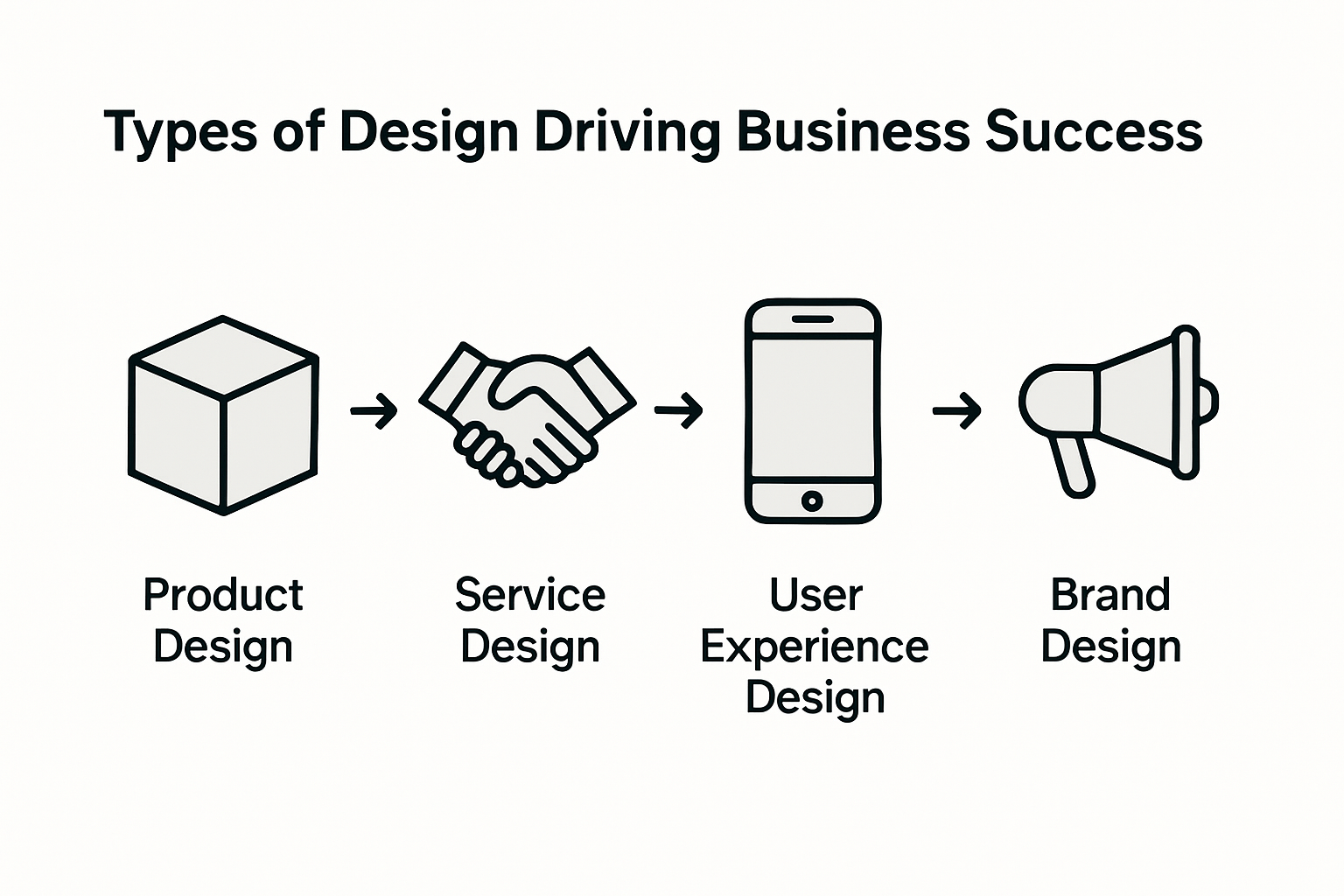
Each design type brings specific strategic advantages to businesses. Web design and digital interfaces create critical touchpoints for customer engagement, while product design drives functional innovation. Brand design communicates organisational values and builds emotional resonance, and service design helps businesses develop more responsive, customer-centric approaches. By integrating these design disciplines strategically, organisations can create holistic solutions that address complex business challenges, enhance customer satisfaction, and drive sustainable growth.
How Design Builds Brand Recognition
Brand recognition emerges from a strategic visual language that communicates an organisation’s core identity and values. Design serves as the critical bridge between a company’s internal essence and its external perception, transforming abstract concepts into tangible, memorable visual experiences. When executed effectively, design becomes a powerful communication tool that instantly connects with audiences, creating immediate emotional and psychological associations.

Visual consistency plays a fundamental role in building brand recognition. This involves developing a cohesive design ecosystem that includes logos, colour palettes, typography, imagery, and digital interfaces. Each visual element works harmoniously to create a recognisable brand signature that consumers can identify across multiple touchpoints. By maintaining precise design standards, businesses can create a sense of familiarity and trust that distinguishes them from competitors, helping potential customers quickly recognise and remember their brand.
The psychological impact of design extends beyond mere aesthetics. Thoughtful branding strategies demonstrate how design communicates organisational personality, values, and professional credibility. Successful brands understand that every design choice signals something about the company’s character transforming visual elements into a nuanced narrative. Whether through minimalist elegance, bold graphics, or warm colour schemes, design becomes a silent communicator that builds emotional connections, drives customer loyalty, and ultimately supports long-term business growth.
Design’s Impact on Customer Experience
Design transforms customer experience by creating intuitive, emotionally engaging interactions that connect businesses with their audiences on a deeper level. Web design plays a crucial role in shaping how customers perceive and interact with a brand, turning every digital touchpoint into an opportunity for meaningful connection. The user’s journey is no longer just about functionality, but about crafting seamless, memorable experiences that resonate with their needs and expectations.
Customer-centric design focuses on understanding and anticipating user requirements through careful observation and empathetic interface development. This approach involves mapping out every stage of the customer interaction, identifying potential friction points, and creating solutions that feel natural and effortless. Visual elements, navigation structures, colour psychology, and interactive components all work together to guide users, reduce complexity, and create a sense of comfort and confidence in their interactions with a brand.
Effective design goes beyond aesthetic appeal, serving as a strategic tool for building trust and loyalty. Social media profile design demonstrates how carefully crafted visual experiences can communicate brand personality and professionalism. By prioritising user experience and creating intuitive, responsive designs across all platforms, businesses can transform casual interactions into meaningful connections, ultimately converting potential customers into loyal brand advocates who feel genuinely understood and valued.
Risks of Neglecting Design in Business
Design neglect represents a significant strategic vulnerability that can undermine a business’s competitive position and long-term sustainability. When organisations fail to prioritise thoughtful design strategies, they expose themselves to multiple critical risks that extend far beyond aesthetic considerations. The consequences of design negligence manifest in reduced market relevance, diminished customer engagement, and potential brand erosion.
Competitive disadvantage emerges as the most immediate threat for businesses that overlook design’s strategic importance. Companies that fail to invest in sophisticated, user-centric design solutions often find themselves struggling to differentiate from competitors, communicate their unique value proposition, and attract discerning customers. This design deficit can result in missed opportunities, reduced customer loyalty, and ultimately, decreased market share. Visual communication becomes fragmented, brand messaging loses coherence, and potential customers may perceive the organisation as outdated or unprofessional.
Beyond visual perception, design neglect can significantly impair operational efficiency and innovation potential. Poorly designed interfaces, inconsistent branding, and user-unfriendly experiences create friction points that frustrate customers and internal stakeholders alike. Such design shortcomings can lead to increased customer churn, reduced employee productivity, and higher costs associated with rectifying systemic design failures. By treating design as an afterthought rather than a strategic imperative, businesses risk becoming increasingly disconnected from evolving market expectations and technological advancements.
Unlock the Power of Strategic Design for Your Business Growth
Are you aware that neglecting design can weaken your brand’s trust and market position? This article highlights the challenge of building a cohesive visual identity and customer experience that truly resonates. If your goal is to enhance brand recognition, streamline customer interactions, and stand out in competitive markets, then embracing strategic design is essential.
At KUKOO Creative, we have partnered with business owners for over a decade to deliver impactful solutions—from expert logo creation to bespoke website design—that transform how your customers connect with your brand. Our focus on brand recognition and web design ensures your business leverages every visual touchpoint to build trust and emotional engagement.
Take action now to prevent the risks of design neglect and start building a memorable brand presence today. Visit KUKOO Creative and discover how thoughtful design can drive your business success with confidence and clarity.
Frequently Asked Questions
What is the role of design in modern business?
Design serves as a strategic driver of business success, influencing communication, user experience, and brand identity. It helps organisations connect with their audiences and differentiate themselves in competitive markets.
How can design improve customer experience?
Effective design creates intuitive and engaging interactions, allowing businesses to anticipate user needs and reduce friction points, resulting in memorable and seamless customer experiences.
What types of design are most beneficial for business growth?
Key types of design that drive business success include product design, service design, user experience design, and brand design, each contributing uniquely to innovation and customer engagement.
What risks do businesses face by neglecting design?
Neglecting design can lead to competitive disadvantage, operational inefficiencies, and brand erosion, as poorly designed solutions frustrate customers and decrease market relevance.
Recommended
- Why Bespoke Web Design: The Essential Guide
- Brand Storytelling: How It Helps Your Business Convert Leads – Kukoo Creative
- The Importance Of Sustainability In Business | Kukoo Creative
- Why Should a Business Consider Custom Web Design? – Kukoo Creative
- Understanding Managing Customer Expectations in Diesel Services – My WordPress