
TL;DR:
- A landing page is a standalone web page designed around a single conversion goal, removing distractions to guide visitors toward one action. Key elements include a clear headline, a single focused call-to-action, social proof with specific metrics, strong visuals above the fold, fast loading times, and friction reducers beneath the CTA. Building with pre-made templates and testing on real devices ensures higher conversions, while clear, intent-matching copy and disciplined iteration optimize performance.
A landing page is a standalone web page built around one single conversion goal, whether that is capturing an email address, booking a call, or selling a product. Unlike a homepage, it removes every distraction and guides your visitor towards one specific action. Tools like Canva, Wix, and WordPress make it possible to build one without a developer. Knowing how to create a landing page properly, though, is what separates a page that sits idle from one that consistently brings in leads and sales.
What essential elements make a high-converting landing page?
The structure of your page determines whether visitors stay or leave. Get these elements right and you give every visitor a clear reason to act.
- A headline that passes the five-second test. Your headline must answer the visitor’s immediate question: “What is this and why should I care?” Outcome-focused headlines convert better than product descriptions because they speak to the result the visitor wants, not the features you are proud of.
- One focused call-to-action, repeated consistently. A single CTA outperforms pages with five or more CTAs by 10.5 times in conversion potential. That is not a marginal gain. It is the difference between a page that works and one that confuses. Use the exact same CTA wording three to four times throughout the page, spaced evenly after each content section.
- Social proof placed near your CTA. Vague testimonials like “Great service!” do almost nothing. Specific client metrics increase trust scores by 22% compared to vague descriptors. Use real numbers: “Increased revenue by £14,000 in 90 days” beats “Highly recommended” every time.
- Visuals above the fold. Product screenshots or demo videos placed above the fold improve first impressions by 15–20%. Visitors form a judgement within seconds. A strong hero image or short video buys you the time to make your case.
- Short forms and fast load times. High-converting pages load in under 2.5 seconds on mobile and use forms with three or fewer fields. Every extra field you add reduces the chance someone completes it.
- Friction reducers below your CTA button. A short line of text directly beneath your button, such as “No credit card required” or “Cancel anytime,” lowers visitor hesitation without requiring any redesign. It is one of the highest-return tweaks you can make.
Pro Tip: Build your page in this fixed order: headline, hero visual, proof, trust signals, body copy, repeated CTA. Following this sequence prevents the most common structural mistakes beginners make.
What tools and templates are best for building landing pages?

Starting from a blank canvas wastes time and invites technical errors. Pre-made responsive templates help non-developers avoid common pitfalls and reach a finished page far faster. The right platform depends on your existing setup and technical comfort.
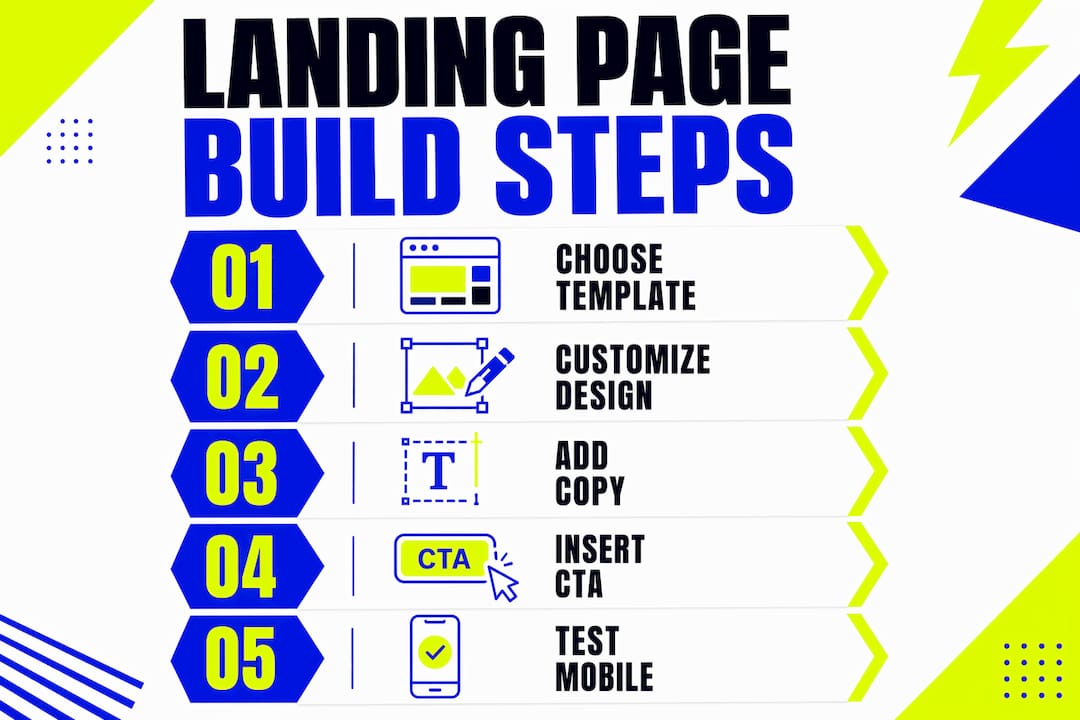
Here is a comparison of the most widely used options:
| Platform | Best For | Free Plan | Key Strength |
|---|---|---|---|
| Canva | Beginners and visual-first pages | Yes | Drag-and-drop simplicity |
| Wix | Small business sites with landing pages | Yes | All-in-one hosting and design |
| WordPress | Flexible, SEO-focused builds | Yes (self-hosted) | Plugin ecosystem and control |
| Mailchimp | Email-integrated lead capture pages | Yes | Built-in audience and automation |
When choosing a template, prioritise three things: mobile responsiveness, semantic HTML for SEO, and integration with your existing marketing tools. A template that looks great on desktop but breaks on a phone will cost you conversions. Most visitors, particularly those arriving from social media ads, are on mobile devices.
Mailchimp works well if your primary goal is list building, because your landing page and email sequence live in the same platform. WordPress with a page builder like Elementor gives you the most control over design and SEO. Wix suits business owners who want speed and simplicity without touching code. Canva is ideal for creating a visually polished page quickly, though its SEO capabilities are more limited than the others.
How do you write copy that matches visitor intent?
Landing page copy is not about sounding clever. It is about matching what your visitor already believes they need when they arrive on your page.
This concept is called “information scent.” When someone clicks an ad or a search result, they carry an expectation into your page. If your headline does not reflect the exact promise that brought them there, they leave. Carrying the search query into your headline and matching the visitor’s awareness stage is one of the most reliable ways to hold attention and drive conversions. Your website content strategy must maintain this message continuity from ad to page.
Follow this copy structure to keep visitors moving:
- Headline: State the outcome the visitor will achieve. “Get 30 More Leads Per Month Without Paid Ads” beats “Welcome to Our Marketing Service.”
- Subheadline: Clarify who this is for and how it works. One sentence is enough.
- Body copy: Write at a clear, accessible reading level. Short paragraphs of two to three sentences work best. Avoid industry jargon unless your audience uses it daily.
- Social proof: Place a testimonial or client result directly after your first body section. Use specific numbers wherever possible.
- Friction reducer: Add a short reassurance line beneath your CTA button. “Join 1,200 UK business owners” or “No long-term contract” both work well.
- Repeated CTA: Close every major section with the same button text. Consistency builds confidence.
Pro Tip: Write your headline last. Draft the body copy first, then distil the single strongest promise into your headline. This prevents vague, generic openers that fail the five-second test.
The persuasion sequence that works is: promise in the headline, proof through testimonials and logos, then repeated CTAs after each section. Deviating from this order tends to reduce conversions, even when the individual elements are strong.
What are the most common landing page mistakes?
Most landing pages underperform not because of bad design, but because of avoidable structural errors. Here are the mistakes that cost small business owners the most conversions.
- Treating the page like a homepage. Most small business owners mistake landing pages for homepages by trying to educate visitors rather than driving one conversion goal. A landing page is not the place for your company history or a full service catalogue.
- Using multiple CTAs. Giving visitors three different buttons to click creates choice paralysis. Pick one action and commit to it across the entire page.
- Skipping real device testing. Browser developer tools do not replicate the experience of using a real phone. Testing on actual mobile devices uncovers usability issues that emulators miss, particularly around touch target sizing and text legibility.
- Ignoring page speed. A page that loads in four seconds on mobile will lose a significant portion of visitors before they read a single word. Compress images, remove unnecessary scripts, and test with Google PageSpeed Insights.
- Vague or poorly placed social proof. A testimonial buried at the bottom of the page does little work. Place your strongest proof point near the top, close to your first CTA.
- Building from scratch. Starting with a blank design file adds hours of work and increases the risk of mobile layout errors. Templates exist precisely to solve this problem.
“The best landing page is the simplest one that still answers every objection your visitor has before they think to ask it.”
Key takeaways
A high-converting landing page succeeds by combining one clear goal, outcome-focused copy, specific social proof, and consistent CTA repetition throughout the page.
| Point | Details |
|---|---|
| One CTA wins every time | Pages with a single CTA outperform multi-CTA pages by 10.5 times in conversion potential. |
| Specific proof builds trust | Use real client numbers and metrics rather than vague testimonials to increase trust by 22%. |
| Speed and simplicity matter | Load pages in under 2.5 seconds and keep forms to three fields or fewer on mobile. |
| Match your headline to intent | Carry the visitor’s search query into your headline to reduce bounce and increase conversions. |
| Test on real devices | Emulators miss critical usability issues; always test on physical mobile hardware before launch. |
What i have learnt from watching business owners build landing pages
After working with business owners across the UK for over a decade, I have noticed the same pattern repeat itself. The page looks good. The copy sounds reasonable. But the conversions are not there. Nine times out of ten, the problem is not the design. It is that the page is trying to do too much.
Business owners pour time into explaining their background, listing every service they offer, and adding five different buttons because they are afraid of missing an opportunity. That instinct is understandable, but it works against you. A landing page is not a brochure. It is a conversation with one purpose.
The fix is almost always the same: strip the page back, pick one CTA, and repeat it with the same wording every time it appears. Then test it on your phone. Not in a browser preview. On your actual phone, with your actual thumbs. You will find things that need fixing every single time.
The businesses I have seen grow fastest are the ones willing to keep iterating. They launch a version, measure it, change one thing, and measure again. That discipline, more than any design choice, is what builds a page that genuinely performs.
— Kukoo
How Kukoocreative can help you build a page that performs
Creating a landing page that converts takes more than a good template. It takes clear brand identity, confident copy, and design that earns trust from the first glance. At Kukoocreative, we have spent over a decade helping UK business owners build brand assets that do exactly that, from logos to full web design projects.
If you are ready to create a landing page that reflects your brand and drives real results, we would love to help. Whether you are starting from scratch or refining what you already have, our team brings the creative expertise and commercial thinking your page needs. Explore how strong logo design underpins every credible online presence, and get in touch to talk through your project.
FAQ
What is a landing page and how does it differ from a homepage?
A landing page is a standalone web page built around one conversion goal, such as capturing a lead or making a sale. A homepage serves multiple purposes and audiences, whereas a landing page removes all distractions to guide one specific action.
How many ctas should a landing page have?
A landing page should have one CTA, repeated three to four times throughout the page with identical wording. Pages with a single focused CTA outperform those with five or more by 10.5 times in conversion potential.
What makes a good landing page headline?
A strong headline states the outcome the visitor will achieve, not the features of your product or service. It must answer “What is this and why should I care?” within five seconds or your bounce rate will rise.
How do i optimise a landing page for mobile?
Keep load times under 2.5 seconds, limit forms to three fields or fewer, and always test on real devices rather than browser emulators. Touch targets must be large enough to tap comfortably, and text must be legible without zooming.
Which platform is best for creating a landing page?
Wix and Canva suit beginners who need speed and simplicity. WordPress with Elementor offers the most flexibility and SEO control. Mailchimp is the strongest choice when your primary goal is email list building with built-in automation.