
Most business owners treat feedback like a formality. You ask a few people what they think, nod politely, and move on. But here’s the uncomfortable truth: only 38% of feedback interventions actually improve performance, and poorly structured feedback can drop outcomes by 33%. For UK businesses building brand identity and customer connection, this isn’t just a statistic. It’s a warning. The difference between feedback that strengthens your design and feedback that derails it comes down to how you collect, structure, and act on it. This guide shows you exactly how to turn feedback into a competitive advantage.
Table of Contents
- Why feedback is critical for brand-focused design
- What effective feedback looks like: models and methods
- From chaos to clarity: turning raw feedback into action
- Feedback as a driver for brand identity and customer trust
- Practical tips for getting the most from design feedback
- Partner with experts to amplify your brand
- Frequently asked questions
Key Takeaways
| Point | Details |
|---|---|
| Impact of feedback | Feedback can dramatically boost or harm design results depending on how you use it. |
| Structured frameworks | Models like DACI and affinity mapping make feedback clear, actionable, and valuable for your brand. |
| Customer-centric focus | Prioritise real customer input over internal opinions to build a more distinctive, trusted brand. |
| Edge-case inclusion | Address feedback from edge cases to remove friction and boost customer satisfaction. |
| Practical application | Using simple templates and best practices ensures feedback shapes every design round for the better. |
Why feedback is critical for brand-focused design
Let’s start with the evidence. Research confirms that only 38% of feedback interventions improve performance, whilst poor feedback actively harms outcomes. For business owners, this matters because your brand’s success hinges on decisions made during the design process. Relying on gut feeling is risky. Studies show that marketers overestimate fame and underestimate uniqueness of brand elements when compared to actual consumer data across 405 elements. Your intuition about what makes your logo memorable or your website engaging is probably wrong.
Customer connection and brand distinctiveness depend on actionable, external input. Not assumptions. Here’s what effective versus poor feedback looks like in practice:
- Effective feedback strengthens brand recognition, reduces customer churn, and builds trust through consistency
- Poor feedback dilutes identity, creates confusion, and wastes resources on changes that don’t resonate
- No feedback leaves you designing in a vacuum, disconnected from the people who matter most
“The gap between what business owners think customers value and what customers actually respond to is wider than most realise. Feedback closes that gap.”
For UK customers, design must be both memorable and meaningful. A logo that stands out but doesn’t communicate your values is just noise. A website that looks polished but frustrates users won’t drive connection. Structured feedback ensures every design decision serves both goals. When you refresh brand visuals, feedback tells you whether the changes enhance recognition or just create change for change’s sake. When you refine your visual branding workflow, feedback reveals where the process supports your goals and where it creates friction.
Now that you see feedback’s pivotal but risky role for brand and design, let’s decode how the best feedback systems actually work.
What effective feedback looks like: models and methods
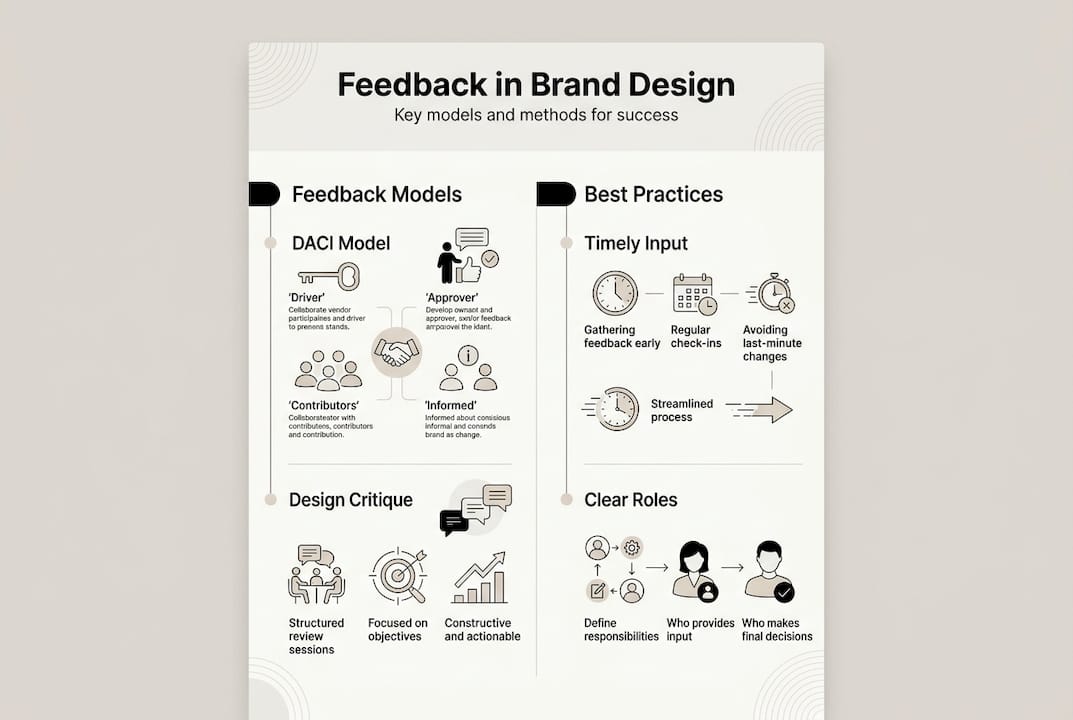
Structured feedback isn’t complicated, but it does require a framework. Two models stand out: DACI and structured design critiques. DACI assigns clear roles (Driver, Approver, Contributor, Informed) so everyone knows their input level. Design critiques and structured UX critiques enable cross-functional alignment, ensuring feedback serves the project rather than personal preferences.
Here’s how these approaches compare:
| Method | Alignment | Clarity | Speed | Risk |
|---|---|---|---|---|
| DACI | High | Very clear roles | Fast decisions | Low |
| Structured critique | High | Clear process | Moderate | Low |
| Loose client feedback | Low | Ambiguous | Slow | High |
The difference is night and day. Loose feedback creates confusion. Structured methods create progress.
Pro Tip: Always provide 24-hour context sharing before a feedback session. It boosts relevance and reduces misunderstandings.
Here’s how to prepare a high-impact feedback session:
- Share context early so participants understand the project goals, constraints, and target audience
- Set clear objectives for the session (e.g., validate colour choices, test navigation flow)
- Ask specific questions rather than “What do you think?” (e.g., “Does this layout guide your eye to the call-to-action?”)
- Mix participant types to balance internal expertise with external customer perspective
- Document everything so insights don’t get lost between sessions
The best feedback blends qualitative opinions with quantitative data. Feedback must be timely, specific, and structured, integrating A/B tests with interviews. When you’re presenting design concepts, this combination gives you confidence that changes are evidence-based, not just popular opinion. When you’re refining branding strategies, it ensures every tweak strengthens customer connection.
Once you have a strong model, the key is knowing what to do with the feedback you collect.
From chaos to clarity: turning raw feedback into action
Raw feedback is messy. Comments conflict. Priorities clash. Your job is to turn that chaos into a focused improvement plan. Affinity mapping and prioritisation frameworks turn raw feedback into actionable tasks. Here’s a simple data table showing how different feedback types map to actions:

| Feedback Type | Example | Action |
|---|---|---|
| Qualitative insight | “The logo feels outdated” | Design tweak: modernise typography |
| Metric trend | 40% drop-off on contact page | Research: identify friction points |
| Edge case | “Form breaks on mobile” | Fix: test across devices |
| Recurring theme | Five users mention confusing navigation | Redesign: simplify menu structure |
Three methods help you prioritise what to tackle first:
- Impact/effort matrix: Plot feedback on a grid. High-impact, low-effort changes go first.
- Recurring theme tally: Count how many people mention the same issue. Frequency signals importance.
- Edge-case first: Start with errors and confusion. Edge cases are often main user journeys in multi-stage processes.
That last point deserves emphasis. Most businesses design for the happy path: the user who lands on your site, finds what they need, and converts smoothly. But real users interrupt their journey, make mistakes, and encounter errors. Designing for these moments builds trust and reduces friction. Feedback that highlights edge cases is gold.
Pro Tip: Start with feedback around errors and confusion, not just the main happy path. These insights prevent customer frustration before it happens.
When you refine your branding workflow process, this approach ensures every stage serves real customer needs. When you’re refreshing your visuals, it guarantees changes address actual pain points rather than imagined ones.
So how do you use this actionable feedback to elevate both your brand and your customer relationships?
Feedback as a driver for brand identity and customer trust
Internal assumptions fail more often than they succeed. You think your brand communicates professionalism, but customers see it as cold. You believe your website is intuitive, but users get lost. Customer feedback guards against this disconnect. It’s the reality check every business needs.
Here’s how feedback strengthens your brand:
- Uniqueness: Feedback reveals which elements truly differentiate you from competitors, not just which ones you like
- Consistency: Regular feedback cycles ensure your brand feels cohesive across touchpoints, building recognition
- Trustworthiness: Listening to customers and acting on their input demonstrates that you value their experience
“Marketers’ intuitive judgements on brand elements are inaccurate. They overestimate fame and underestimate uniqueness. Real users decide value, not internal teams.”
Frequent feedback cycles keep brands meaningful in the market. A brand that felt fresh five years ago might feel stale today. Customer input tells you when it’s time to evolve. For UK businesses, this is especially important. You’re navigating a competitive landscape where customer expectations shift quickly. Narrowing the gap between your intention and real-world customer perception isn’t optional. It’s survival.
When you focus on brand recognition impact, feedback ensures your efforts actually register with your audience. It’s the difference between a rebrand that revitalises your business and one that confuses your customers.
Ready to put these lessons into practice? Let’s review actionable tips to elevate each feedback round.
Practical tips for getting the most from design feedback
You now understand why feedback matters and how to structure it. Here’s your checklist for getting the most from every session:
- Ask the right questions: Replace “Do you like this?” with “Does this communicate our core value of reliability?”
- Provide context: Share project goals, target audience, and constraints before asking for input
- Mix your participants: Combine internal team members, existing customers, and potential customers for balanced perspectives
- Use a clear structure: Templates like ‘I Like/I Wish’ encourage honest, actionable feedback without overwhelming participants
- Close the loop: Show what changed based on feedback. This builds trust and encourages future participation.
Pro Tip: Use simple templates like ‘I Like/I Wish’ to encourage honest, actionable feedback. It removes the pressure to be overly critical or overly positive.
One key pitfall undermines everything: ignoring or cherry-picking feedback. If you only act on input that confirms what you already wanted to do, you’re wasting everyone’s time. Feedback must be timely, specific, and structured, integrating both quantitative and qualitative insights. Treat it as data, not validation.
Embed these tips in your next design initiative. Whether you’re refining branding strategies for success or launching a new visual identity, this checklist ensures feedback drives real improvement.
Armed with these practical strategies, business owners can now choose expert partners to support their brand transformation.
Partner with experts to amplify your brand
Structured, evidence-led feedback boosts every element of branding and design. But implementing these frameworks consistently whilst running a business is challenging. That’s where professional support makes the difference.
When you partner with specialists, you gain ongoing access to proven feedback frameworks and actionable improvements. We’ve spent over a decade helping UK business owners like you transform brand identity through smart design decisions. From how logo design will make or break your brand to refining your entire visual branding workflow, we use structured feedback at every stage to ensure your brand connects with the people who matter most. Our approach combines the models and methods outlined in this guide with deep expertise in what works for UK businesses. The result? Brand recognition for small businesses that drives real growth. Explore how we can support your next design initiative and turn feedback into your competitive advantage.
Frequently asked questions
What is the most effective type of feedback for improving design?
Structured, context-rich feedback using proven models like DACI or design critiques is most effective. It creates alignment and reduces ambiguity.
How can I avoid feedback slowing down my design process?
Prepare by sharing context early, use focused frameworks, and turn feedback into prioritised action steps. Preparation like 24-hour context sharing improves feedback quality and speeds iteration.
Why is customer feedback more reliable than internal opinions in design?
Empirical data shows marketers often misjudge brand element fame and uniqueness, making customer feedback a more objective choice for design decisions.
How does feedback help reduce friction in the user journey?
Addressing feedback on edge cases and problem points ensures designs work in real-world scenarios. Edge cases represent majority of interactions in multi-stage processes, so designing recovery paths first prevents friction.
What is one simple feedback technique I can apply tomorrow?
Use the ‘I Like/I Wish’ template in your next feedback session. It prompts constructive and actionable input without overwhelming participants.
Recommended
- Make your business look fantastic – Kukoo Creative
- 5 Branding Strategies for Better Success – Kukoo Creative
- Role of Design in Business – Driving Growth and Trust
- Web Page Design: Enhancing User Experience
- Tips to Build a Powerful Brand for Your Law Firm – Attorney Assistant
- Master social media for entrepreneurs: boost visibility