
Winning client approval often starts with a carefully crafted design presentation that speaks to both creative ambition and business goals. For small business owners in Leeds, especially within creative industries, mastering the art of visual storytelling can mean the difference between a concept accepted and one overlooked. Discover how strategic asset preparation, tailored communication, and a focus on visual communication turn your ideas into compelling narratives that foster engagement and build client trust.
Table of Contents
- Step 1: Prepare Design Assets For A Compelling Reveal
- Step 2: Tailor Your Presentation To Your Client’s Needs
- Step 3: Showcase Concepts And Explain Your Design Thinking
- Step 4: Invite Feedback And Address Client Concerns
- Step 5: Confirm Project Alignment Before Moving Forward
Quick Summary
| Key Point | Explanation |
|---|---|
| 1. Curate high-quality design assets | Select and organise compelling visual elements like mockups and colour palettes to effectively communicate your design narrative. |
| 2. Tailor presentations to client needs | Research each client’s context and communication preferences to ensure your design solutions resonate with their strategic goals. |
| 3. Articulate design thinking clearly | Explain the rationale behind your design choices, highlighting how they address the client’s specific challenges and objectives. |
| 4. Create a constructive feedback environment | Foster a collaborative atmosphere where client feedback is welcomed and used to enhance design solutions, maintaining professionalism throughout. |
| 5. Confirm project alignment thoroughly | Summarise key objectives and establish mutual understanding to ensure all stakeholders are on the same page before moving forward. |
Step 1: Prepare design assets for a compelling reveal
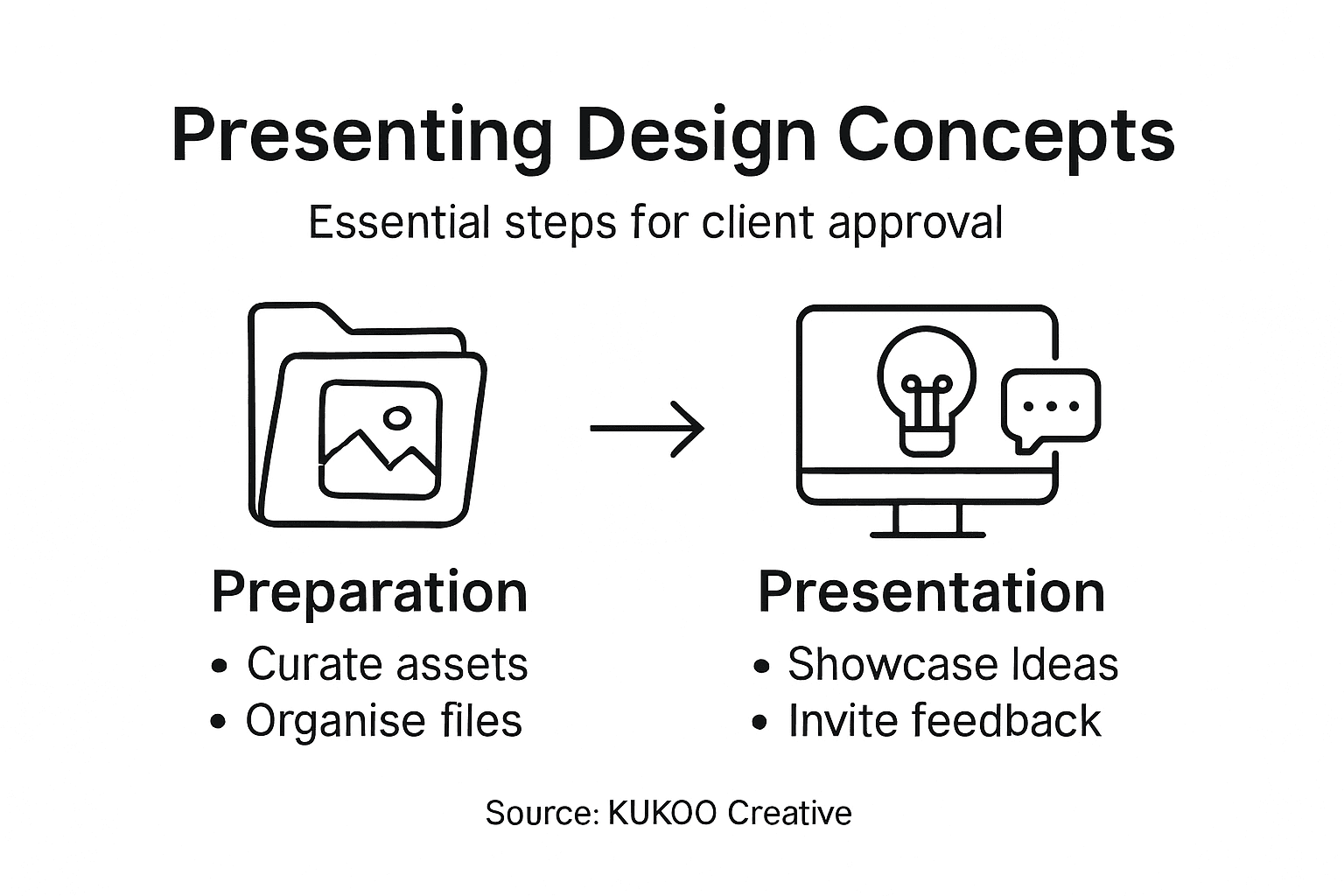
Designing a persuasive design presentation requires meticulous preparation of visual assets that communicate your creative vision effectively. Your goal is to create a presentation that not only showcases your design concepts but also tells a compelling narrative about your proposed solution.
Begin by curating a comprehensive collection of design assets that demonstrate the depth and thoughtfulness of your approach. This includes selecting high-resolution images, creating clean mockups, and developing a cohesive visual narrative that guides your client through your design journey. When preparing your visual branding assets, consider the following strategic elements:
- High-quality digital mockups that show designs in realistic contexts
- Colour palette variations demonstrating design versatility
- Typography and graphic element samples highlighting design consistency
- Comparative mood boards illustrating design evolution and rationale
Each asset should serve a specific purpose in communicating your design strategy. Professional designers understand that visual communication is about more than aesthetic appeal – it’s about creating a narrative that resonates with the client’s brand identity and business objectives.
Strategic design asset preparation transforms a simple presentation into a powerful storytelling experience.
Organise your assets logically, ensuring a smooth flow that takes the client through your creative thought process. This means arranging mockups from broad conceptual overviews to specific detailed implementations, allowing your client to understand both the macro and micro perspectives of your design solution.
Expert advice: Prepare a digital presentation folder with redundant backups and ensure all files are high-resolution and professionally formatted.
Step 2: Tailor your presentation to your client’s needs
Successfully presenting design concepts requires more than just visual appeal – it demands a strategic approach that resonates with your client’s unique business objectives and communication preferences. Your presentation should demonstrate not just design skills, but a deep understanding of the client’s specific context and requirements.
To effectively tailor design presentations, you must conduct thorough preliminary research about your client’s organisational culture, brand identity, and strategic goals. This means going beyond surface-level aesthetics and understanding the deeper narrative they want to communicate:
- Analyse the client’s existing brand materials
- Review their current marketing communications
- Investigate their industry landscape
- Understand their target audience demographics
Professional designers recognise that each client interaction is unique, requiring a bespoke communication strategy. Your presentation should reflect a nuanced understanding of their specific challenges and aspirations.
Effective design presentations are not about showcasing your skills, but solving your client’s strategic problems.
Consider adapting your presentation format and language to match the client’s communication style. Some clients prefer detailed technical breakdowns, while others appreciate a more narrative-driven approach that emphasises emotional and strategic impact.

Customise your visual narrative to highlight how your design solutions directly address their specific business needs and challenges. This might involve creating custom mockups that reflect their brand environment or demonstrating how your design solves particular operational requirements.
Expert advice: Prepare multiple presentation variations that can be quickly adjusted based on the client’s real-time feedback and communication preferences.
Step 3: Showcase concepts and explain your design thinking
Presenting design concepts is an art form that goes beyond simply displaying visual solutions – it requires articulating the strategic thinking and creative problem-solving behind your work. Your goal is to transform complex design decisions into a compelling narrative that demonstrates your professional insight and deep understanding of the client’s challenges.
Utilising the design thinking framework, you’ll need to walk your client through the intellectual journey that shaped your proposed solutions. This means breaking down your design process into clear, digestible stages that reveal the intentionality behind every creative choice:
- Document your initial research findings
- Highlight problem definition stages
- Demonstrate concept evolution
- Show how user insights influenced design
Professional designers understand that transparency builds trust. Your presentation should not just showcase the final design, but illuminate the strategic reasoning that makes your solution unique and valuable.
Great design is not about what it looks like, but about how thoughtfully it solves real problems.
When explaining your design thinking, focus on storytelling techniques that connect your visual solutions to the client’s specific business objectives. This might involve creating visual timelines, showing iterative sketches, or presenting comparative analysis that demonstrates how your design addresses specific challenges.
Articulate your design rationale with clarity and confidence. Explain the strategic decisions behind colour choices, typography selections, and compositional elements. Show how each design component serves a specific purpose in meeting the client’s communication and business goals.
Expert advice: Prepare visual annotations and design process diagrams that help clients understand the intellectual depth behind your creative recommendations.
Step 4: Invite feedback and address client concerns
Successfully presenting design concepts is not a one-way communication process, but a collaborative dialogue that requires active listening and genuine openness to client perspectives. Your ability to create a comfortable, constructive feedback environment can significantly impact project success and long-term client relationships.
Employing effective feedback practices, you’ll want to create a structured yet comfortable space for honest dialogue. This means preparing yourself mentally and strategically for a range of potential client responses:
- Maintain a neutral, professional demeanour
- Listen actively without becoming defensive
- Ask clarifying questions
- Take detailed notes during discussions
- Demonstrate flexibility and adaptability
Professional designers understand that feedback is an opportunity for refinement, not a personal critique. Your goal is to transform potential concerns into collaborative problem-solving moments that strengthen client trust.
Feedback is a gift that helps you understand precisely what your client needs.
Create a safe feedback environment by setting clear expectations about the discussion. Explain that you view their input as valuable input for design refinement, not as criticism. Frame your responses positively, focusing on solutions and potential design iterations.
Develop strategies for handling different types of feedback constructively. Some clients might offer specific technical suggestions, while others may express more emotional or intuitive responses. Your role is to listen, understand the underlying motivations, and demonstrate how you can address their core concerns.
The table below compares common client feedback types and effective designer responses:
| Feedback Type | Client’s Likely Concern | Designer’s Optimal Response |
|---|---|---|
| Technical suggestion | Usability or practicality issue | Offer alternative or adjustment |
| Emotional response | Brand fit or tone discomfort | Ask clarifying questions |
| Vague input | Unclear or hesitant feedback | Probe for specific examples |
| Enthusiastic support | High satisfaction | Validate and discuss next steps |
Expert advice: Prepare a flexible design presentation with alternative options that can be quickly adjusted based on anticipated client feedback.
Step 5: Confirm project alignment before moving forward
Bringing a design presentation to its conclusion requires more than simply obtaining client approval – it demands a strategic, comprehensive approach to ensuring mutual understanding and commitment. Your objective is to transform initial design concepts into a clear, actionable roadmap that aligns perfectly with the client’s strategic vision.
Utilising project success conditions, you’ll need to conduct a thorough alignment confirmation process that leaves no room for ambiguity. This involves creating a structured dialogue that validates every aspect of the proposed design strategy:
- Summarise key design objectives
- Confirm client’s primary expectations
- Clarify potential implementation challenges
- Establish precise project milestones
- Agree on review and revision protocols
Professional designers understand that alignment is not a single moment, but an ongoing collaborative process. Your goal is to create a shared understanding that builds confidence and eliminates potential future misunderstandings.
Alignment is the bridge between creative vision and successful project execution.
Develop a comprehensive alignment document that captures the essence of your discussions. This should include detailed notes on design rationale, client feedback, agreed modifications, and explicit expectations for the next project phases.
Create a visual project roadmap that demonstrates how your proposed design solutions directly address the client’s strategic goals. Use clear, concise language that translates design concepts into tangible business outcomes.
Expert advice: Prepare a written summary of the meeting with explicit next steps and request client confirmation to ensure complete alignment.
Here is a summary of how key design presentation strategies contribute to client engagement:
| Strategy | Primary Benefit | Impact on Project Success |
|---|---|---|
| Visual storytelling | Engages clients emotionally | Enhances memorability and resonance |
| Tailored communication | Aligns with client expectations | Builds trust and relevance |
| Transparent design thinking | Demonstrates professional process | Increases client confidence |
| Structured feedback sessions | Encourages open client input | Promotes collaborative improvements |
| Alignment confirmation | Clarifies mutual understanding | Minimises miscommunication risks |
Transform Your Design Presentations Into Client Approval Success
Presenting design concepts can be challenging when you need to clearly communicate your creative thinking and address client concerns effectively. The article highlights common pain points such as preparing compelling visual storytelling, tailoring presentations to client needs, and managing feedback constructively. If you find yourself wanting to bridge the gap between your design ideas and client approval with confidence and clarity, you are not alone.
At KUKOO Creative, we have partnered with business owners just like you for over a decade, helping create impactful branding and web designs that resonate with your audience and secure enthusiastic client buy-in. From detailed mockups to strategic storytelling, our expert team supports you every step of the way in crafting presentations that engage and persuade. Discover how our services can elevate your design communication by visiting our main website and explore examples of visual branding for agencies to see how strong assets help tell your story. We provide tailored solutions that ensure your creative vision is understood and embraced.
Looking to confidently present your next design concept and gain client approval without hesitation
Take the next step today by partnering with us at KUKOO Creative. Let’s transform your design presentations into powerful narratives that win trust and propel your projects forward.
Frequently Asked Questions
How can I prepare my design assets for a client presentation?
To prepare design assets effectively, curate high-resolution images, clean mockups, and a cohesive visual narrative. Arrange these assets logically to guide your client through your design journey, starting from broad concepts to detailed implementations.
What should I focus on when tailoring my presentation to a client’s needs?
Focus on understanding the client’s brand identity and business objectives by conducting thorough preliminary research. Customise your visual narrative and presentation language to match their communication style, ensuring that your design solutions directly address their specific challenges.
How can I explain my design thinking during the presentation?
Articulate your design thinking by breaking down your process into clear stages, such as research findings, problem definition, and concept evolution. Use storytelling techniques to connect your design decisions to the client’s business goals, thus demonstrating the strategic reasoning behind each choice.
What strategies can I use to invite feedback from clients?
To invite feedback constructively, create a supportive environment by actively listening and maintaining a neutral demeanour. Set clear expectations for the discussion and encourage clients to share both specific and general thoughts on your design concepts.
How do I confirm project alignment after presenting my design concepts?
Confirm project alignment by summarising key design objectives and clarifying client expectations during the discussion. Develop a written summary that includes agreed modifications and explicit next steps to ensure both you and the client are on the same page moving forward.