
Finding a provider that offers branding and website design with transparent pricing and scalable options is often complicated for UK businesses. Most agencies gate advanced site integration or unlimited design revisions behind high minimum retainers, making discovery and budgeting unpredictable until late in the process. This comparison lets you select a branding and web design partner based on entry-level cost, revision policy and how much control you retain as your brief grows.
Table of Contents
Kukoo Creative
At a Glance
Entry-level identity work starts at £50, with complete visual identity systems beginning at £750+, giving a clear low-cost entry point and an upgrade pathway for growing teams.
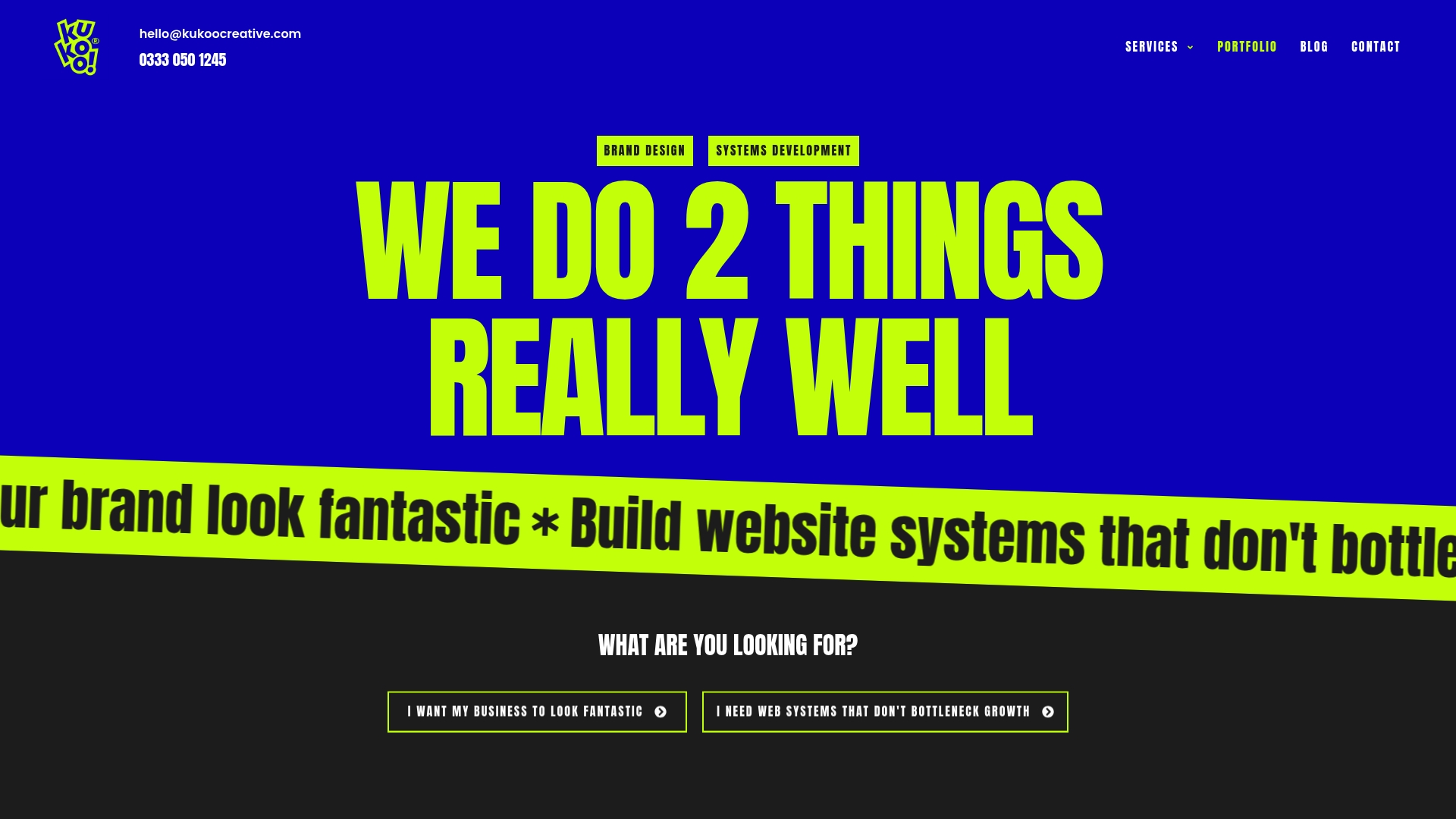
Founded in 2014, Kukoo Creative focuses on branding, web design and web system development for small and medium-sized businesses; the vendor advertises awards and positive client testimonials that emphasise professionalism, creativity and value.
Core Features
-
Brand design covering logos, visual identity and print artwork tailored to each client.
-
Web design and development emphasising aesthetic clarity and usability for visitors and editors.
-
Web systems building including dashboards, CRM, automations and third-party integrations to reduce operational bottlenecks.
-
Ongoing maintenance, security and performance optimisation to keep sites reliable as traffic and features grow.
-
Flexible packages from light polish to full visual systems, with custom scopes priced on application.
Key Differentiator
A simple three-step delivery process combined with an unlimited revisions guarantee gives clients repeated chances to refine the outcome without penalty. That structure pairs bespoke design with a predictable workflow that reduces rounds of ad-hoc change requests.
Pros
-
Kukoo places a heavy emphasis on bespoke, professional design by UK-qualified designers, which helps teams present confidently to investors or clients.
-
The three-step process provides clear milestones and responsibilities, so feedback cycles are shorter and decisions land faster.
-
Ongoing maintenance and security services mean the agency hands over a living system rather than a static site; useful for businesses that lack in-house dev capacity.
-
Flexible packages let you start with a small visual refresh and scale to a full system as budget or complexity increases.
-
A strong portfolio and positive client testimonials help you judge fit before committing to a scoped brief.
Cons
- Pricing is scope-dependent with no fixed tariffs for custom packages, which makes final cost discovery necessary before signing.
Who It’s For
Small to medium-sized business owners seeking professional brand identity and scalable web systems, especially teams that want a single agency to design visual identity and build the CRM or automation flows that support sales and marketing.
Unique Value Proposition
Published entry points from £50 let smaller organisations commission a focused identity exercise without a large upfront retainer, while the unlimited revisions and three-step process create a clear path from initial concept to a maintainable web system.
Real World Use Case
A small retailer commissions a visual identity and website to support a post‑investment relaunch. Kukoo delivers a logo and brand guidelines, builds the site with an integrated CRM and automations for abandoned cart follow-ups, then provides a maintenance package to keep performance and security current.
Pricing
Starts at £50 for basic visual identity work. Complete visual identity systems begin at £750+. Custom packages and larger web system builds are priced POA based on scope and integrations.
Website: https://kukoocreative.com
monday.com
At a Glance
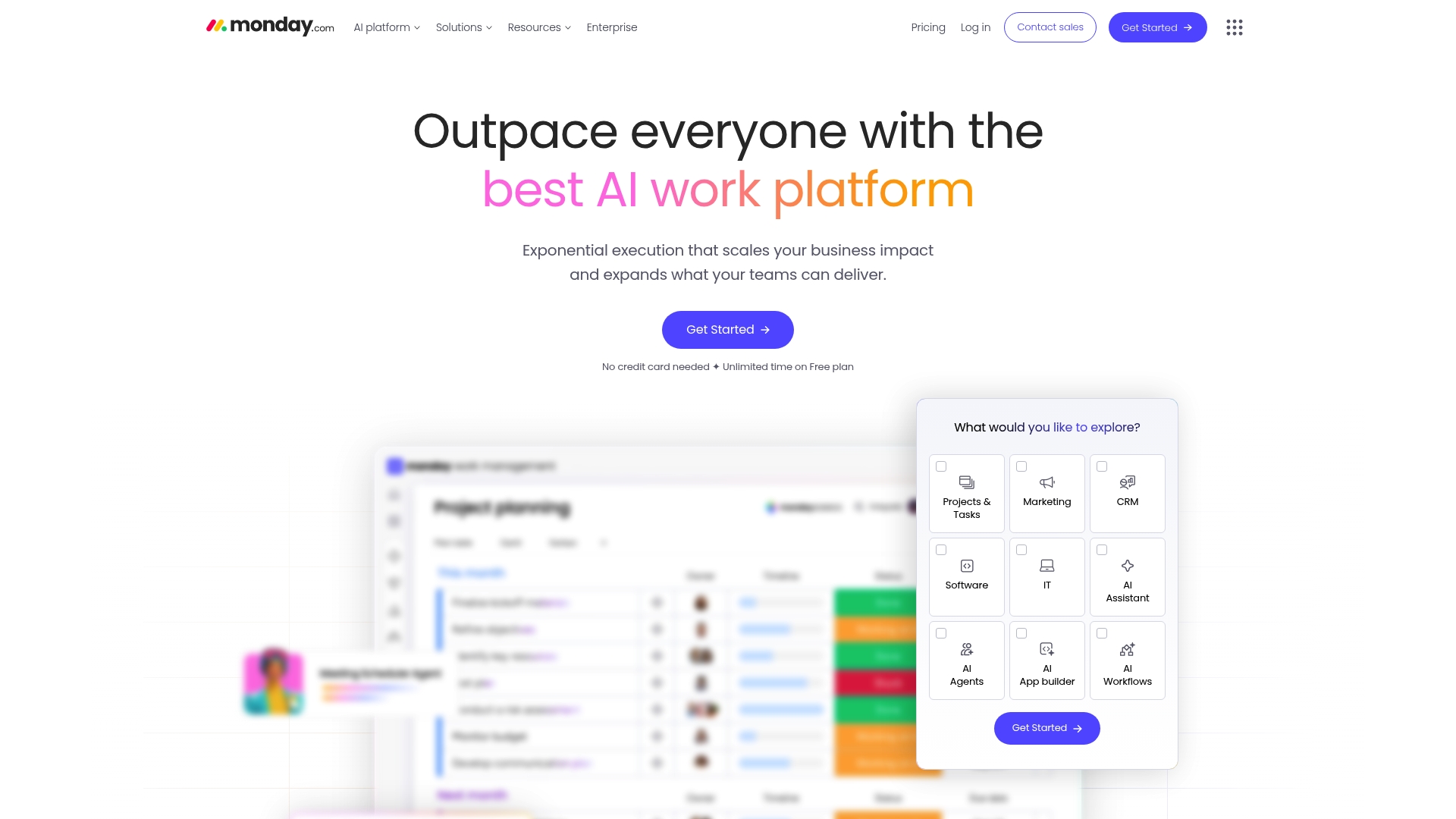
monday.com’s combination of AI assistants and a custom agent builder sits alongside deep workflow customisation and broad third-party connectors such as Slack and Salesforce. The platform favours configurability over out-of-the-box simplicity, which makes setup a deliberate project for many teams.
Core Features
- Customisable workspaces: boards, views and dashboards you can reshape for marketing, HR, IT or product workflows.
- AI assistants and agent builder: automate routine decisions and generate task suggestions within boards.
- Automations: rule-based triggers to move items, notify people and reduce repetitive work.
- Reporting and dashboards: roll up metrics from multiple boards into real-time visual reports.
- Centralised task and file management: keep tasks, updates and attachments alongside integrations.
Key Differentiator
The platform’s real differentiator is the mix of deep customisation plus AI-driven agents that sit inside workflows. That pairing lets teams build tailored processes where automations and AI take on coordination chores rather than relying solely on human routing.
Pros
- Highly customisable templates let you reflect existing processes, reducing the need to change how teams work.
- Strong task tracking and reporting make it easier to measure cycle time and progress across many boards.
- The interface is approachable for day-to-day users, so collaborators adopt boards faster than many enterprise tools.
- Automations reduce manual handoffs, useful for approval chains and recurring tasks.
- Centralising work on one platform cuts context switching between chat, email and documents.
Cons
- Customisation comes at a cost: setup can be time-consuming and requires someone to own configuration.
- Several advanced capabilities and integrations sit behind higher-tier plans, which raises total cost for feature-heavy teams.
- Performance can degrade on very large boards, with occasional slow loading on mobile and desktop.
- Navigation can feel dense for teams that only need simple task lists.
When It May Not Fit
If you need a plug-and-play tool that works with minimal configuration, monday.com is likely more than you want. Small teams on a shoestring budget will find advanced automations and agents expensive. Also avoid it if your operations rely on huge single boards that must remain snappy on mobile.
Notable Integrations
- Slack
- Google Workspace
- Salesforce
- Microsoft Teams
- Zoom
- Zapier
Who It’s For
Teams and organisations that want a single work management platform they can adapt: midsize product teams, marketing departments, IT service teams and enterprise units that plan to invest in configuration and automation to reflect existing processes.
Real World Use Case
A marketing team builds campaign boards with approval automations, AI-generated copy drafts and dashboards that pull performance data. Integrations with email, analytics and file storage keep commentary and assets in one place so campaign managers make decisions faster.
Pricing
The vendor publishes tiered subscription plans; pricing depends on seat counts and feature tiers. Advanced automations, agent capabilities and some integrations are typically available only on higher plans, so budget for configuration and ongoing licence costs.
Website: https://monday.com
Asana
At a Glance
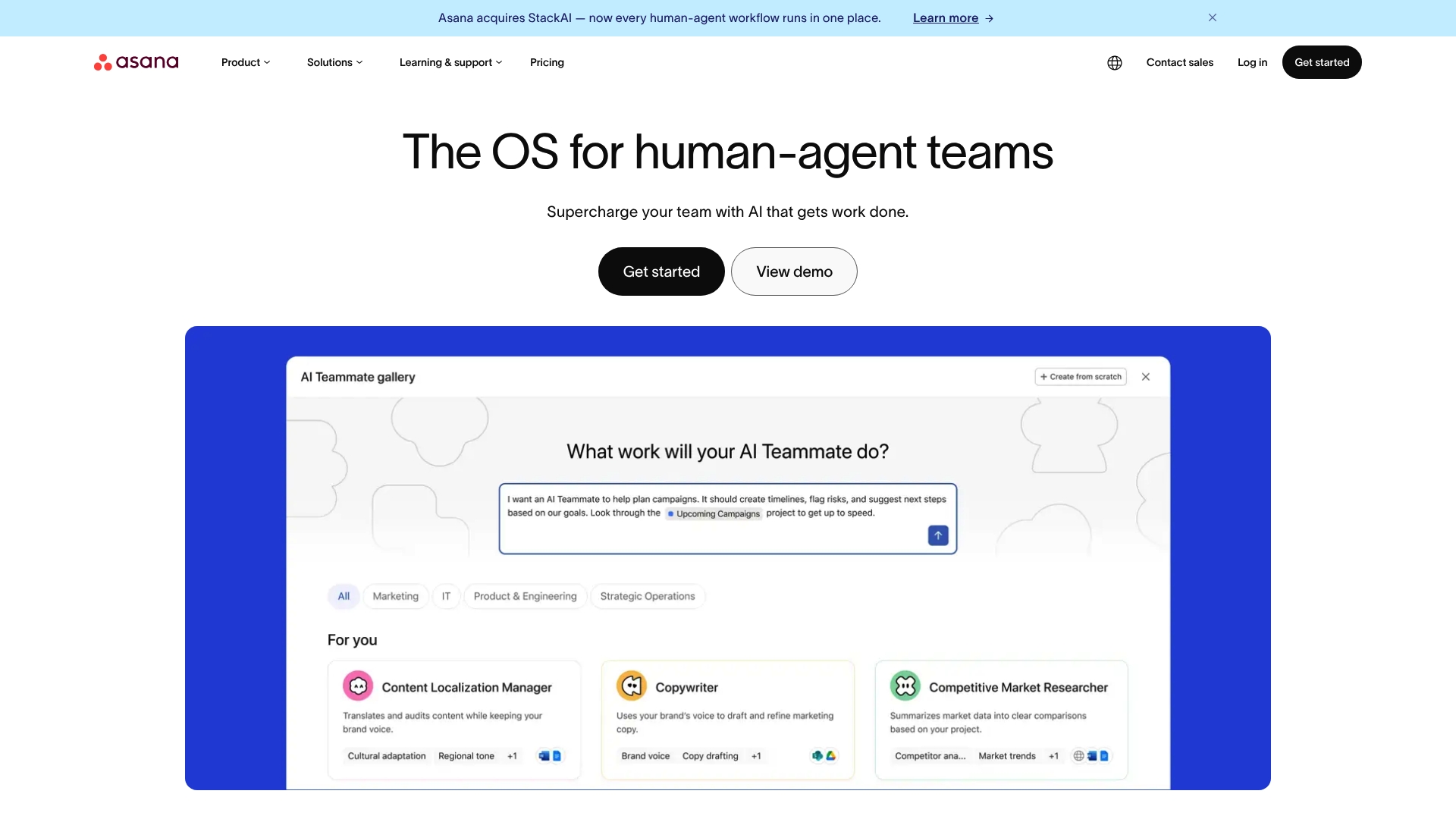
According to the company, Asana Gov has achieved FedRAMP ‘In Process’ status, creating a governed option for public sector teams. The platform also adds AI Teammates after the StackAI acquisition, shifting automation from single tasks to collaborative, context aware assistance.
Core Features
Asana centralises tasks, subtasks and dependencies, supports goal alignment across teams, and offers workflow rules plus dashboards for tracking progress and bottlenecks in real time.
- Task and project hierarchy with due dates and subtasks
- Team collaboration with file sharing and comments
- AI Teammates for automating content and process work
- Workflow automation and custom rules
- Time tracking and progress dashboards
- Asana Gov option for regulated environments and compliance
Key Differentiator
The primary distinction is AI Teammates that operate with project context and governance, turning complex automations into collaborative assistants rather than simple triggers. That approach helps reduce manual orchestration when multiple stakeholders and approvals are involved.
Pros
- Keeps multiple projects visible in one place, which helps teams reduce reliance on scattered spreadsheets and email chains.
- Real time reporting and portfolio views assist senior managers in spotting bottlenecks across programmes without manual consolidation.
- Strong organisational controls like dependencies and subtasks support complex delivery models for product and delivery teams.
- Automation rules cut repetitive work for project coordinators, saving time on task assignment and status updates.
- The combination of collaboration tools and reporting makes handovers and remote work clearer for distributed teams.
Cons
- As projects grow with nested subtasks and many dependencies, complexity can rise quickly and become hard to manage for project owners.
- Higher tier plans are pricier and many advanced features require those levels, which can stretch smaller budgets.
- User feedback highlights occasional issues around subscription billing, renewals and refunds.
- Customer support responsiveness varies, so teams expecting consistently fast vendor support may be disappointed.
When It May Not Fit
If you run a small team with a tight budget and need an immediately simple interface, Asana’s richer feature set and tiered pricing may feel like overkill. Equally, teams that rely on very lightweight task lists or require highly responsive vendor support could find the UX and help channels frustrating.
Notable Integrations
- Slack
- Google Drive
- Salesforce
- Microsoft 365
- Jira
- Figma
- Zendesk
- Tableau
Who It’s For
Mid sized to large organisations and government teams that need task management plus automation and governance. Product teams, campaign managers and delivery groups that require portfolio visibility and rule based workflows will get the most value.
Real World Use Case
A marketing team uses Asana to plan campaign milestones, assign tasks automatically when briefs land, and surface progress to stakeholders via dashboards. The automation reduced manual assignments and made cross functional handovers clearer for remote contributors.
Pricing
Asana offers a free basic plan and paid tiers that unlock automation, advanced reporting and enterprise controls. The vendor states higher tiers are pricier for advanced functionality and enterprise needs, so budget planning is important for larger teams.
Website: https://asana.com
Comparative Analysis
For businesses requiring branding and web design expertise, the available choices present diverse strengths and focus areas tailored to varying organisational requirements. Below is an analysis of kukoo creative, monday.com, and asana, highlighting their core offerings and differentiating factors to assist in making an informed decision.
Pricing and Accessibility
Regarding cost and service accessibility, kukoo creative provides the most transparent and entry-level friendly pricing, starting at only £50 for basic identity services and scaling to £750+ for brand systems. This positioning can be particularly appealing for small organisations or start-ups. Conversely, both monday.com and asana offer tiered subscription models that, while beneficial for scaling, might constrain budget-sensitive teams due to the graduated cost associated with advanced feature access.
Feature Customisation and Flexibility
In terms of customisation, monday.com takes the lead with its extensive customisability, offering adaptable workspaces, a broad selection of third-party integrations, and tools like AI-assisted agents to refine workflows. Asana, on the other hand, delivers a strong framework for task and project management, which includes portfolio visibility and context-aware AI Teammates to streamline project orchestration. kukoo creative, while emphasising tailored branding solutions, lacks the automation and diverse integration features present in the other platforms. However, it compensates with a focus on design customisation and iterative collaboration.
Best Fit
- Choose kukoo creative if your small to medium-scale business requires professional branding and scalable web systems with a client-centred approach, as well as the flexibility to start small and grow.
- Opt for monday.com if your organisation needs an intelligent and fully customisable work management platform, capable of adapting to varied workflows and reducing operational bottlenecks through automation.
- Select asana if a more structured organisation and advanced project collaboration tools are crucial for managing complex projects and governance-intensive environments.
Our Pick
Considering the primary aim of this analysis, kukoo creative stands out as the ideal choice for organisations prioritising professional, bespoke design services combined with an emphasis on ongoing system maintenance alongside clear and transparent pricing options. Companies with established internal project management setups, however, may find platforms like monday.com or asana align better with their operational needs.
Branding and Website Design Solutions Comparison
Explore options for branding and website solutions equipped for diverse scenarios, comparing key features, pricing, and constraints.
| Product | Core Feature | Key Differentiator | Pricing | Notable Limitation |
|---|---|---|---|---|
| KukooCreative | Comprehensive branding, web design, and automation services | Unlimited revisions with a three-step delivery process | £50 to £750+ | Pricing for large scopes requires a custom quote |
| monday.com | Customisable workflows with AI-powered tools | AI-driven workflow automations | Subscription tiers | Advanced features require higher-tier subscriptions |
| Asana | Task and project management with AI-powered assistants | AI Teammates assisting with collaborative efforts | Free with paid upgrades | Complexity increases with project size and structure |
Discover How Visual Identity and Smart Systems Complement the Best Project Management Software UK
Choosing the best project management software should not mean settling for generic designs or disconnected workflows. If you want to strengthen your brand while enhancing your project coordination, KukooCreative specialises in bespoke logos, visual identity, and tailored web systems built for growing businesses. Their focus on clarity and professional design helps your team present confidently to clients and investors alike.
Take control today by visiting KukooCreative to commission a customised brand identity and integrated system that supports your project goals. Book a design consultation and leave with a complete visual identity package that fits your budget and scales as you grow.
Frequently Asked Questions
How does Kukoocreative’s pricing compare for branding work?
Kukoocreative offers entry-level identity work starting at £50, making it accessible for small businesses. The article states that complete visual identity systems begin at £750+, allowing for scalability as needs grow. This starting price enables smaller organisations to engage in focused branding without significant financial commitment.
What is the difference between Kukoocreative and monday.com for project management?
Monday.com excels in customisability, allowing teams to deeply tailor their workspaces for various workflows. In contrast, Kukoocreative focuses on delivering bespoke branding and web design services that support marketing and sales efforts, making it a better fit for businesses looking for comprehensive brand identity solutions. Choosing Kukoocreative means prioritising a strong visual identity while leveraging ongoing web systems support.
Can I use Kukoocreative for ongoing web maintenance?
Yes, Kukoocreative provides ongoing maintenance, security, and performance optimisation for websites. The agency ensures websites remain reliable as traffic demands and features evolve, which is particularly valuable for businesses lacking in-house development capacity. Businesses can rely on Kukoocreative not just for initial design but also for long-term support as their online presence grows.
Does Kukoocreative offer unlimited revisions for their designs?
Kukoocreative’s unlimited revisions guarantee allows clients to refine their designs without incurring additional costs. This structure is part of a three-step delivery process that the article highlights, ensuring that clients have ample opportunity to tailor their designs to meet their vision. Clients can engage deeply in the design process, resulting in a more satisfactory final product.
Which platform is better for small teams needing quick set-up: Kukoocreative or Asana?
Asana is a great choice for teams needing task management tools and automation, but its complexity may overwhelm smaller teams requiring a straightforward interface. Kukoocreative, however, is tailored more towards businesses seeking comprehensive branding solutions with a clear entry-point pricing model. For rapid brand development and design, Kukoocreative offers a more direct path than Asana’s multi-layered setup.