
TL;DR:
- Copywriting is a strategic discipline rooted in research and customer insight that shapes brand perception and drives conversions. It encompasses persuasive texts across various formats, emphasizing outcomes, clarity, and ethical communication to build trust and lasting relationships. In the AI era, human judgment and strategic messaging remain essential for effective brand positioning and customer engagement.
Most business owners think copywriting means writing catchy slogans or snappy product descriptions. It doesn’t. The role of copywriting in professional marketing is far more strategic than that. It’s a research-driven discipline that shapes how customers perceive your brand, how they move through your sales funnel, and ultimately whether they buy. Effective copywriters spend 60% of their time on market research and customer insight, not writing. If you’re building or growing a brand, understanding what copywriting actually does is one of the most commercially useful things you can do.
Table of Contents
- Key takeaways
- The role of copywriting in marketing
- How copy shapes customer decisions
- Copywriting in the age of AI
- Integrating copy into your marketing strategy
- My honest take on the power of words
- Let’s build your brand story properly
- FAQ
Key takeaways
| Point | Details |
|---|---|
| Copywriting is strategic, not just creative | Professional copy is built on research and customer insight, not clever phrasing alone. |
| It directly affects conversion rates | Strategic persuasive writing can increase conversions two to five times over generic copy. |
| Microcopy matters more than most realise | Button labels, error messages, and form text all influence whether visitors complete actions. |
| AI has raised the bar for human copy | As AI floods the web with generic content, skilled persuasion and positioning are more valuable than ever. |
| Build your messaging before your design | Developing copy alongside web design prevents costly mismatches between layout and content. |
The role of copywriting in marketing
The industry term for what most people loosely call “copywriting” is persuasive writing or, more formally, direct response copywriting. It refers to any text written with the explicit goal of prompting a specific action: clicking a button, signing up for a newsletter, requesting a quote, or making a purchase.
This is what separates copywriting from content writing. Content writing informs and builds authority over time. Copywriting converts. Both matter in a full marketing strategy, but they serve different functions. Confusing the two is one of the most common and costly mistakes businesses make.
Copywriting deliverables span a wide range of formats:
- Paid advertising copy (Google Ads, social media ads)
- Landing pages and sales pages
- Email sequences and nurture campaigns
- Website headlines, subheadings, and calls-to-action
- Microcopy such as button labels, form instructions, and error messages
- Product descriptions and category pages
What all of these share is intent. Every word is chosen to move the reader closer to a decision. And because the stakes are so high commercially, writing-related roles are projected to grow 4% between 2024 and 2034, with specialist copywriting commanding extraordinary salaries. Top copywriter roles in AI tech now pay between £200,000 and £310,000 annually. That’s not the market rewarding wordplay. That’s the market rewarding strategic thinking.
Pro Tip: Before briefing a copywriter, document your core customer: their main problem, their objections, and the one outcome they most want. A copywriter working with this information will produce significantly stronger results than one left to guess.
How copy shapes customer decisions
The most direct way to understand the importance of copywriting is to look at what changes when you get it right. Strategic copy can boost conversion rates two to five times compared with generic alternatives. That’s not a marginal improvement. On a page receiving 1,000 visitors a month, the difference between a 2% and a 6% conversion rate is four times the leads, for the same traffic spend.

Here’s what separates copy that converts from copy that doesn’t:
| Weak copy | Strong copy |
|---|---|
| Describes features (“10GB storage”) | Communicates outcomes (“Never delete a file again”) |
| Speaks to everyone | Speaks to one specific person with one specific problem |
| Ignores objections | Addresses doubts directly and honestly |
| Generic calls-to-action (“Submit”) | Specific, benefit-led calls-to-action (“Get my free quote”) |
| Treats all pages equally | Matches message to the buyer’s stage in the funnel |
One area that’s often overlooked is microcopy. Microcopy such as button labels and error messages critically affects whether users complete forms, proceed through checkouts, or abandon your site entirely. The difference between “Submit” and “Get my free audit” on a single button can measurably shift your conversion rate. Small words, serious impact.
“Copywriting is an infrastructure layer in marketing; it integrates research, strategy, and writing to create a persuasive pathway.” — Fast Copywriting
There’s also an ethical dimension worth stating plainly. Ethical persuasion, transparency, and honest value communication are not optional extras in modern copywriting. They’re the foundation of lasting customer relationships. Manipulation might win a single transaction. Honest, clear persuasion builds a brand people trust and return to.
Pro Tip: When reviewing your own website copy, read each page and ask: “Does this tell the reader exactly what they get, why it matters to them, and what to do next?” If any answer is unclear, that page is costing you conversions.
Copywriting in the age of AI
AI has changed the copywriting landscape considerably, but not in the way most people assume. It hasn’t made copywriting less important. It’s made skilled copywriting far more valuable. Copywriting remains crucial in 2026 precisely because AI has flooded the web with generic, informational content, exposing just how rare genuinely persuasive writing actually is.
The role of digital copywriting has shifted from chasing SEO traffic with volume to building positions of authority through clarity and persuasion. Here’s what that means practically for your brand:
- You need to clearly communicate the specific problem your business solves
- You need to define your audience with precision, not broad demographic strokes
- Your unique value must be immediately obvious, not buried in paragraph three
- Your messaging must work for both human readers and AI discovery tools, since positioning clearly for both human decision-makers and AI recommenders is now the foundation of effective copy
The consequence of poor positioning isn’t just a low conversion rate. It’s invisibility. When someone asks an AI assistant to recommend a brand like yours, vague or generic messaging means your business simply doesn’t get mentioned.
Human oversight remains non-negotiable. AI can generate words quickly, but it cannot replicate the insight that comes from genuinely understanding a specific customer’s specific frustration. The core skill for a top copywriter is market research and strategic insight, not writing speed. That’s what AI cannot replace. The brands winning in 2026 are those treating their messaging as infrastructure, not decoration.
For a useful perspective on why human judgement still matters in professional communications, AI versus real professional work is worth reading alongside any conversation about automating your brand assets.
Integrating copy into your marketing strategy
If you’re ready to treat copywriting as the business discipline it actually is, here’s a practical framework to get started.
-
Build a messaging house first. Before writing a single word of web copy or ad text, define your value proposition, your customer’s primary pain points, the key benefits you offer, and the proof points that back your claims. This document becomes the foundation for all copy across all channels.
-
Develop copy and design together. One of the most common and costly mistakes is designing a website and then trying to fit words into it afterwards. Developing copy alongside visual design prevents the mismatch where beautiful layouts end up carrying weak, truncated messages that don’t convert.
-
Audit your microcopy. Check every button, form label, confirmation message, and error state on your website. Are they clear? Are they encouraging? Do they tell the user exactly what happens next? Consistency in brand voice and microcopy across all digital touchpoints builds trust and reduces the cognitive friction that causes buyers to hesitate.
-
Test and iterate systematically. A/B testing copy is not reserved for large e-commerce brands. Even simple headline tests on a landing page, run over four to six weeks, can reveal which messages genuinely resonate with your audience. Gut feel is a starting point. Data is what improves it. For practical steps, the converting website checklist from Kukoocreative is a solid reference.
-
Know when to bring in a professional. For conversion-critical pages, such as your homepage, key service pages, or lead generation landing pages, professional copywriting delivers a measurable return. The investment is almost always justified by the improvement in results.
Pro Tip: Don’t treat your homepage as a general introduction to your business. Treat it as a sales page. It should answer three questions within five seconds: What do you do? Who do you do it for? What should I do next?
My honest take on the power of words
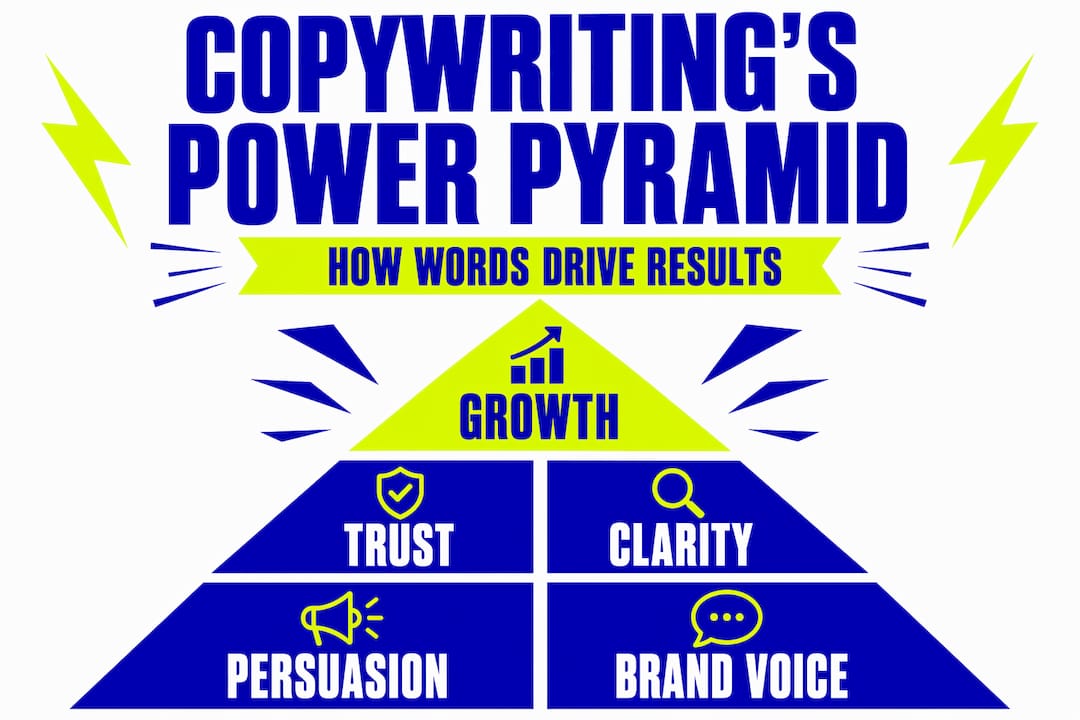
I’ve worked with business owners across a wide range of industries, and the pattern I see repeatedly is this: the businesses that struggle most with marketing are not short on budget or traffic. They’re short on clarity. Their messaging is vague, polished-sounding but empty, and it speaks to no one in particular.
What I’ve learned is that copywriting strategies for businesses don’t need to be complicated to be effective. They need to be specific. The moment a business owner can articulate, in plain language, the exact problem they solve and exactly who they solve it for, their conversion rates improve. Often dramatically, without a single design change.
I’ve also seen the damage that comes from treating copy as an afterthought. One client had a genuinely excellent service, a well-built website, and a healthy advertising budget. But their homepage headline described their company history rather than their customer’s outcome. Changing that one headline, after two weeks of proper customer research, increased enquiries by over 40%.
My view on AI is practical rather than emotional. Use it for drafts, for research summaries, for speed. But never hand over the persuasion layer entirely. Copywriting in web design is where human judgement earns its keep, because the nuance of a customer’s unspoken doubt is not something a language model can reliably detect or address.
Treat your copy as infrastructure. Build it properly, test it regularly, and never assume it’s finished.
— Kukoo
Let’s build your brand story properly
At Kukoocreative, we’ve spent over a decade helping business owners build brands that genuinely connect with the right people. We know that extraordinary results come from great design and great messaging working together. A beautifully crafted logo or website only reaches its potential when the words alongside it are just as considered. If you’re ready to see how professional copy and brand-defining logo design can work in harmony to build your credibility and grow your business, our portfolio of work is a great place to start. Let’s create something that truly represents what you do and speaks directly to the people who need it most.
FAQ
What is the role of copywriting in marketing?
Copywriting drives specific customer actions, such as clicking, signing up, or purchasing. It is the persuasive layer of marketing that turns traffic and brand awareness into measurable revenue.
How does copywriting influence sales?
Strategic copy addresses customer pain points, answers objections, and communicates clear outcomes. Research shows it can increase conversion rates two to five times compared with generic writing.
Is copywriting still relevant with AI tools available?
Yes. AI has made skilled copywriting more valuable, not less. Copywriting in 2026 is central to brand positioning and persuasion in a web increasingly saturated with AI-generated informational content.
What are the benefits of professional copywriting for small businesses?
Professional copy builds trust, reduces buyer hesitation, and improves conversion rates across your website and advertising. It also ensures your brand voice is consistent, which strengthens recognition over time.
How is copywriting different from content writing?
Copywriting is written to prompt immediate action and convert readers. Content writing builds authority and educates audiences over time. Both serve important purposes, but they require different approaches and skills.