
Every small business in Leeds reaches a point where standing out from the competition becomes a real challenge. As markets shift and customer preferences evolve, understanding strategic rebranding can give your business the edge it needs to attract more local customers. If you are considering a fresh approach to your visual identity or messaging, this guide breaks down the core concepts of rebranding, helping you make confident decisions that reflect your goals and strengthen your presence across West Yorkshire.
Table of Contents
- What Is Rebranding? Key Concepts Explained
- Types Of Rebranding For Small Businesses
- Step-By-Step Rebranding Process In The UK
- Costs, Risks And Common Pitfalls To Avoid
- How Rebranding Impacts Leeds SMEs
Key Takeaways
| Point | Details |
|---|---|
| Comprehensive Approach | Rebranding involves a strategic overhaul of visual identity, messaging, and market positioning, necessitating a deep understanding of business objectives and audience expectations. |
| Types of Rebranding | Small businesses can choose between partial, full, incremental, and comprehensive rebranding, each suited for different strategic needs and market conditions. |
| Costs and Risks | Rebranding can be costly, ranging from £5,000 to £25,000, with risks such as customer confusion and loss of brand equity; careful planning and stakeholder engagement are crucial. |
| Impact on SMEs | Successful rebranding can enhance market positioning, attract new customers, and unlock growth opportunities, signalling a professional and forward-thinking approach. |
What Is Rebranding? Key Concepts Explained
Rebranding represents a strategic transformation of a business’s visual identity, messaging, and market positioning. It goes far beyond simply changing a logo or colour scheme – it’s about fundamentally reimagining how your Leeds business communicates its core values and connects with customers.
At its core, rebranding involves several critical components:
- Repositioning your market perception
- Updating visual brand elements
- Realigning your messaging strategy
- Reflecting evolving business goals
Businesses typically pursue rebranding for multiple compelling reasons. Urban brand regeneration strategies demonstrate how companies can fundamentally reshape their market identity. Whether responding to changing market dynamics, recovering from negative perceptions, or signalling significant organisational evolution, rebranding offers a powerful strategic tool.
The process requires careful consideration of both external perceptions and internal organisational culture. Strategic rebranding isn’t merely cosmetic – it’s a comprehensive approach to repositioning your business in the marketplace. Companies must thoroughly analyse their current brand equity, understand audience expectations, and develop a cohesive strategy that resonates authentically.
Pro tip: Conduct comprehensive stakeholder research before initiating your rebranding to ensure your new identity genuinely reflects your business’s core values and market positioning.
Types Of Rebranding For Small Businesses
Rebranding for small businesses is a nuanced process that can take multiple strategic forms. Different branding approaches allow companies to refresh their market positioning and reconnect with their target audience.
Small businesses typically explore several key types of rebranding:
-
Partial Rebranding
- Updating visual elements
- Refining brand messaging
- Subtle adjustments to existing brand identity
-
Full Rebranding
- Complete transformation of brand identity
- Developing new logo and visual language
- Radical shift in brand positioning
Incremental Rebranding represents a measured approach where businesses make strategic, calculated changes. This might involve modernising a logo, adjusting colour palettes, or subtly evolving communication styles without completely dismantling existing brand recognition.
Moreover, comprehensive rebranding requires deep understanding of your business goals, market dynamics, and customer expectations. Small businesses must carefully evaluate whether they need a minor refresh or a complete brand overhaul, considering factors like market perception, competitive landscape, and long-term strategic objectives.
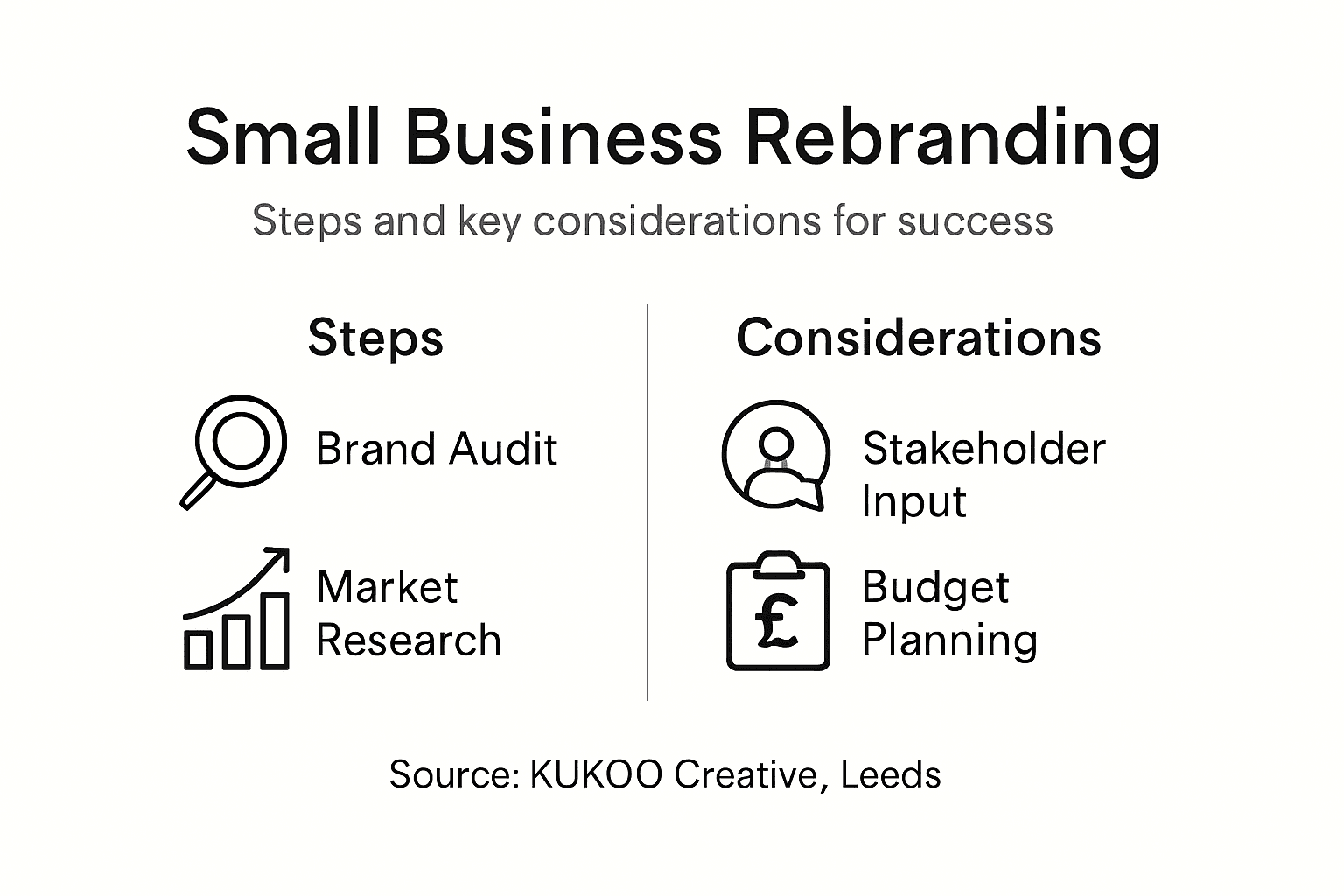
Pro tip: Conduct thorough market research and gather stakeholder feedback before implementing any rebranding strategy to ensure alignment with your business’s core values and audience expectations.
Here is a comparison of rebranding approaches commonly used by small businesses:
| Approach | Typical Triggers | Level of Change | Suited For |
|---|---|---|---|
| Partial Rebranding | Outdated visuals, mild confusion | Moderate updates | Firms with brand equity to retain |
| Full Rebranding | Major strategy shift, mergers | Complete brand overhaul | Businesses seeking reinvention |
| Incremental Rebranding | Gradual market evolution | Continuous minor adjustments | Companies pursuing steady updates |
| Comprehensive Rebranding | New business model, bold vision | Organisation-wide transition | Enterprises with changing mission |
Step-By-Step Rebranding Process In The UK
Rebranding is a strategic journey that requires meticulous planning and execution. Comprehensive brand transformation demands a structured approach tailored to your unique business landscape.
Here’s a detailed roadmap for UK businesses considering a rebrand:
-
Conduct Initial Brand Audit
- Evaluate current brand perception
- Analyse market positioning
- Identify strengths and weaknesses
-
Define Rebranding Objectives
- Establish clear strategic goals
- Determine desired market positioning
- Set measurable outcomes
-
Research and Stakeholder Engagement
- Gather customer insights
- Conduct competitor analysis
- Consult internal team members
The strategic planning phase is crucial for understanding the depth of transformation required. Small businesses must carefully assess whether they need a subtle refresh or a complete brand overhaul, considering factors like market trends, customer expectations, and long-term business vision.

Implementation requires a systematic approach. Brand rollout involves creating comprehensive guidelines, updating visual assets, and ensuring consistent messaging across all communication channels. This might include redesigning logos, revising colour palettes, and developing a new tone of voice that resonates with your target audience.
Pro tip: Develop a phased implementation plan that allows for gradual transition and provides opportunities for feedback and adjustment throughout the rebranding process.
Costs, Risks And Common Pitfalls To Avoid
Rebranding presents significant challenges that can potentially derail your business transformation. Corporate rebranding risks require careful strategic planning and thoughtful execution to mitigate potential negative outcomes.
Key financial and strategic risks include:
-
Financial Considerations
- Design and implementation costs
- Marketing and communication expenses
- Potential short-term revenue disruption
-
Brand Perception Risks
- Customer confusion
- Loss of existing brand equity
- Potential alienation of loyal customers
Cost Breakdown for a typical small business rebrand might range from £5,000 to £25,000, depending on complexity. This investment typically covers logo redesign, website updates, marketing materials, and internal communication strategies.
The most critical pitfalls to avoid include inadequate stakeholder communication, rushing the process, and failing to conduct comprehensive market research. Small businesses must ensure their rebranding effort authentically reflects their core values while simultaneously addressing market expectations and competitive positioning.
Pro tip: Allocate a contingency budget of 15-20% above your initial rebranding estimate to accommodate unexpected challenges and ensure smooth implementation.
This summary outlines major rebranding risks and effective mitigation strategies:
| Risk Type | Example Consequence | Mitigation Strategy |
|---|---|---|
| Customer Confusion | Loss of loyal customers | Communicate changes proactively |
| Financial Overrun | Exceeding original budget | Set contingency, track expenses |
| Brand Equity Loss | Diluted recognisability | Preserve core brand elements |
| Poor Internal Buy-in | Staff resistance, low morale | Involve teams in planning |
How Rebranding Impacts Leeds SMEs
Rebranding presents a transformative opportunity for local small businesses to reimagine their market positioning and competitive strategy. SME growth strategies demonstrate how strategic brand evolution can unlock new business potential.
Key impacts for Leeds SMEs include:
-
Market Positioning
- Enhanced competitive differentiation
- Improved local market visibility
- Clearer value proposition
-
Business Growth Opportunities
- Attracting new customer segments
- Accessing fresh investment channels
- Supporting scalability objectives
Strategic Transformation means more than visual changes. For Leeds small businesses, rebranding represents a comprehensive approach to repositioning their organisation, communicating evolving capabilities, and demonstrating responsiveness to market dynamics.
Financial considerations are equally important. Successful rebranding can help SMEs secure better investment opportunities, improve stakeholder perceptions, and create a more compelling narrative about their business potential. This strategic investment signals professional maturity and forward-thinking approach to potential partners and customers.
Pro tip: Conduct a thorough market analysis and gather stakeholder feedback before initiating your rebranding to ensure the new brand identity genuinely reflects your business’s strategic direction.
Transform Your Leeds Business with Expert Rebranding Support
Rebranding your Leeds business is more than just a logo change. It involves repositioning your market presence and realigning your messaging to connect authentically with your audience. If you are facing challenges like outdated visuals, customer confusion, or the need for a full brand overhaul, you are not alone. Many businesses struggle with managing the costs and risks while ensuring their new identity reflects core values and drives growth.
At KUKOO Creative, we understand these critical pain points and specialise in delivering impactful designs that build strong brand recognition. From crafting refreshed logos to designing cohesive websites, we help you make a confident, strategic transformation that resonates with your customers and unlocks new opportunities. Discover how strategic rebranding can elevate your business positioning and growth by partnering with experts who have supported brands like yours for over a decade.
Take the first step to redefine your brand. Visit KUKOO Creative to explore tailored design solutions that bring your rebranding vision to life. Don’t let hesitation hold you back from communicating your evolving business story — start your transformation today with our dedicated team.
Expert Rebranding Solutions
Brand Identity Development
Create Impactful Designs
Frequently Asked Questions
What is the first step in the rebranding process?
The initial step in the rebranding process is to conduct a brand audit to evaluate your current brand perception, analyse market positioning, and identify strengths and weaknesses.
What types of rebranding strategies are available for small businesses?
Small businesses can pursue various rebranding strategies, including partial rebranding, full rebranding, incremental rebranding, and comprehensive rebranding, each tailored to their specific needs and goals.
How much does rebranding typically cost for small businesses?
The cost of rebranding for small businesses can range from £5,000 to £25,000, depending on the complexity of the changes, including logo redesign, website updates, and marketing materials.
What are some common pitfalls to avoid during the rebranding process?
Common pitfalls include inadequate communication with stakeholders, rushing the rebranding process, and failing to conduct thorough market research. It is essential to ensure that the new brand identity aligns with your core values and market expectations.