
Nearly 60 percent of british designers now incorporate Artificial Intelligence into their creative workflows, reshaping how visual ideas come to life. As these tools become more common, businesses face both excitement and uncertainty about what AI can truly achieve. This guide unpacks how AI in British design is misunderstood, explores its evolving role, and reveals what creative professionals and brands must know to stay ahead in a rapidly changing industry.
Table of Contents
- Defining AI In Design And Common Misconceptions
- Types Of AI Tools Shaping Design Today
- How AI Transforms Business Branding And Creativity
- Limitations And Ethical Risks For UK Businesses
- Maximising Value And Avoiding Common Pitfalls
Key Takeaways
| Point | Details |
|---|---|
| AI Augments Creativity | AI should be viewed as a collaborative tool that enhances design capabilities, rather than a replacement for human creativity. |
| AI Tools Transform Processes | Incorporating AI tools can streamline workflows, automate repetitive tasks, and suggest design improvements for greater efficiency. |
| Ethical Considerations Are Crucial | Businesses need to be aware of potential algorithmic bias and intellectual property issues that arise from using AI in design. |
| Effective Integration Strategies | A human-centred approach, along with ongoing training and clear guidelines for AI use, is essential to realise maximum value from AI technologies. |
Defining AI in Design and Common Misconceptions
Artificial Intelligence (AI) in design represents a groundbreaking technological approach that transforms creative processes, enabling businesses to reimagine how visual solutions are developed. At its core, AI is not a mysterious technological marvel but a sophisticated computational system designed to analyse data, recognise patterns, and generate intelligent outputs.
Contrary to popular belief, AI is not about replacing human creativity but augmenting design capabilities through advanced computational techniques. The University of Stirling’s research highlights that many prevalent myths mischaracterise AI’s role, suggesting that designers should view AI as a powerful collaborative tool rather than a threat to their professional expertise.
Key misconceptions about AI in design include the belief that it can completely autonomously generate creative work. In reality, AI functions best as an intelligent assistant that provides suggestions, accelerates repetitive tasks, and offers data-driven insights. Designers remain crucial in interpreting these suggestions, applying nuanced aesthetic judgement, and ensuring the final output aligns with strategic brand objectives. The most effective design processes now integrate AI as a supportive technology that enhances human creativity rather than attempting to replace it entirely.
Understanding AI’s genuine capabilities allows businesses to strategically leverage these tools. Designers can utilise AI for:
- Rapid prototype generation
- Colour palette recommendations
- Pattern and trend analysis
- Automated image editing
- User experience optimisation
By demystifying AI and recognising its collaborative potential, creative professionals can transform technological innovation into a competitive advantage that drives more intelligent, efficient design solutions.
Types of AI Tools Shaping Design Today
The contemporary design landscape is experiencing a profound transformation through sophisticated AI tools that are redefining creative workflows and technological capabilities. Innovative platforms are emerging that enable designers to transcend traditional limitations, offering unprecedented opportunities for efficiency and creativity across multiple design domains.
Image generation and manipulation tools represent a significant category of AI design technologies. These sophisticated systems can generate complex visual compositions, modify existing imagery, and create unique design elements with remarkable precision. By analysing vast datasets of visual content, these tools can suggest colour palettes, recommend design variations, and even generate entirely original graphic concepts that designers can refine and customise.
Another critical category includes AI-powered design assistants that streamline workflow processes. These intelligent systems can automate repetitive tasks such as resizing graphics, suggesting layout improvements, and generating quick prototypes. Such tools are particularly valuable for small businesses and independent designers who need to maximise productivity without compromising creative quality.
The primary types of AI design tools currently transforming the industry include:
- Generative design platforms
- Intelligent image editing software
- Automated layout and composition tools
- Predictive design recommendation engines
- Personalised branding and visual identity generators
By embracing these technological innovations, designers can position themselves at the forefront of a creative revolution that balances technological efficiency with human imagination and strategic thinking.
How AI Transforms Business Branding and Creativity
Artificial Intelligence is revolutionising how businesses conceptualise and execute their brand identity, offering unprecedented opportunities for creative expression and strategic communication. Advanced AI design tools are transforming workflow processes by enabling designers to explore innovative approaches that were previously constrained by traditional methodologies.

The emergence of generative AI technologies has fundamentally reshaped the creative landscape, particularly in design concept exploration. These intelligent systems can rapidly generate multiple design iterations, analyse aesthetic nuances, and provide data-driven insights that help businesses refine their visual communication strategies. By understanding semantic and visual patterns, AI tools can suggest design elements that resonate more deeply with target audiences, creating more impactful and emotionally intelligent branding solutions.
Beyond visual design, AI is transforming how businesses understand and implement their brand identity. Intelligent algorithms can analyse consumer sentiment, predict design trends, and provide real-time feedback on visual communication effectiveness. This allows businesses to create more adaptive, responsive branding strategies that can quickly evolve to meet changing market demands.
Key ways AI is revolutionising business branding include:
- Automated logo and visual identity generation
- Predictive design trend analysis
- Personalised brand messaging development
- Rapid prototyping of marketing materials
- Consumer sentiment and engagement prediction
Comprehensive branding strategies now integrate AI as a collaborative tool, enabling businesses to create more nuanced, responsive, and compelling brand narratives that connect authentically with their target audiences.
Limitations and Ethical Risks for UK Businesses
While artificial intelligence presents transformative opportunities for business design, it simultaneously introduces significant ethical challenges that UK businesses must carefully navigate. Generative AI tools carry inherent limitations that demand rigorous critical evaluation and proactive risk management strategies.
One of the most pressing concerns is the potential for algorithmic bias and misinformation. Generative AI systems can produce outputs that perpetuate systemic prejudices, inadvertently creating design recommendations that misrepresent diverse audience perspectives. These ‘AI hallucinations’ can lead to brand communications that appear tone-deaf or culturally insensitive, potentially damaging an organisation’s reputation and customer relationships.
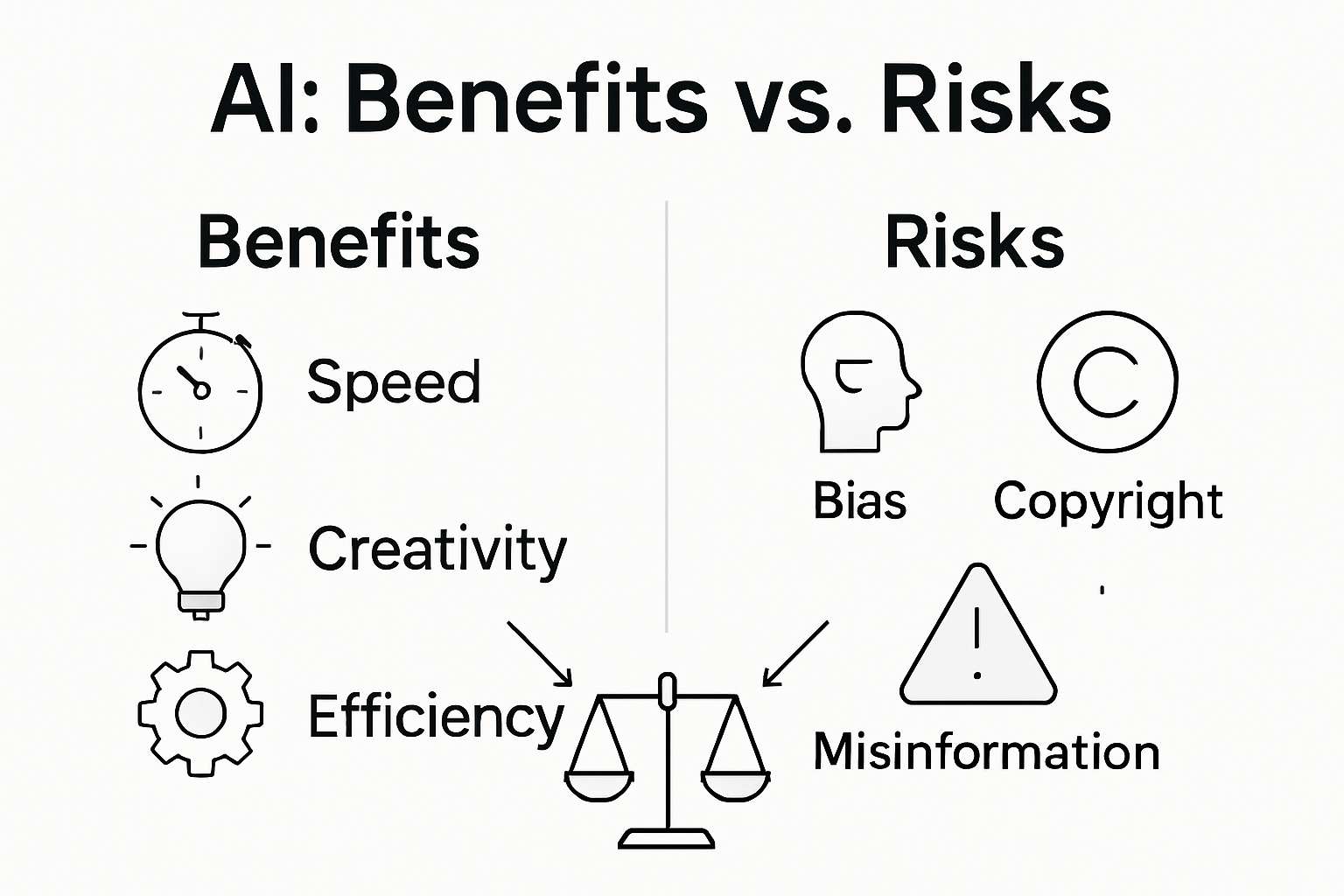
Furthermore, the intellectual property landscape surrounding AI-generated content remains complex and legally ambiguous. Businesses must carefully consider ownership rights, potential copyright infringements, and the ethical implications of using AI-generated designs. This requires developing robust governance frameworks that establish clear guidelines for AI tool usage, ensuring transparency, accountability, and maintaining the fundamental creative integrity of design processes.
Key ethical risks businesses should monitor include:
- Unintended algorithmic bias
- Potential intellectual property conflicts
- Loss of human creative nuance
- Data privacy and consent issues
- Reliability and accuracy of AI-generated content
Comprehensive branding strategies must now incorporate sophisticated AI risk management protocols, balancing technological innovation with responsible, human-centred design practices.
Maximising Value and Avoiding Common Pitfalls
Systematic research in design AI reveals critical strategies for businesses seeking to effectively integrate artificial intelligence into their creative processes. Understanding the nuanced approach to AI implementation is crucial for organisations wanting to extract maximum value while mitigating potential risks.
The key to successful AI integration lies in developing a strategic, human-centred approach. Future creative models emphasise collaborative intelligence, where AI serves as an augmentative tool rather than a replacement for human creativity. This means treating AI as a sophisticated assistant that can generate initial concepts, streamline repetitive tasks, and provide data-driven insights, while human designers maintain creative direction and strategic oversight.
Businesses must invest in comprehensive training programmes that help design teams develop AI literacy and critical evaluation skills. This involves understanding AI tool capabilities, recognising potential biases, and learning how to effectively prompt and refine AI-generated outputs. Developing a robust framework for AI tool selection, implementation, and ongoing assessment ensures that technological investments translate into genuine creative and strategic advantages.
Key strategies for maximising AI value include:
- Establishing clear AI usage guidelines
- Investing in continuous team training
- Maintaining human creative oversight
- Regularly assessing AI tool performance
- Creating feedback loops for continuous improvement
Comprehensive branding strategies now require a sophisticated approach to technological integration, balancing innovative AI capabilities with fundamental human creativity and strategic thinking.
Harness AI to Elevate Your Business Branding and Creativity
The evolution of artificial intelligence in design offers transformative possibilities for your brand. As featured in the article, businesses face challenges such as managing algorithmic bias, maintaining human creative nuance, and integrating AI thoughtfully into branding strategies. At Kukoo Creative, we understand these pain points and are ready to help you blend AI innovation with authentic human insight. Our decade-long experience in crafting impactful logos, websites, and comprehensive branding solutions ensures your identity resonates deeply and adapts swiftly to market trends.
Empower your business with design that reflects both cutting-edge AI capabilities and the irreplaceable touch of human creativity. Whether you need automated logo generation, strategic brand messaging, or user-focused websites that connect with your audience, we provide tailored services that address the exact challenges highlighted in the article. Discover how seamless integration of AI tools can enhance your visual identity without compromising ethical considerations or creative integrity.
Explore how our proven expertise transforms technological opportunities into compelling brand stories that truly engage. Take the first step towards future-proofing your business by visiting our website today.
Looking to innovate your brand with AI-supported design that values creativity and strategy?
Connect with us at Kukoo Creative to unlock the full potential of intelligent design solutions crafted just for your business needs.
Frequently Asked Questions
What is the role of AI in design?
AI enhances the design process by analysing data, recognising patterns, and generating intelligent outputs, allowing designers to create more efficient and innovative solutions without replacing human creativity.
How can businesses leverage AI for branding?
Businesses can utilise AI for automated logo generation, predictive design trend analysis, and personalised brand messaging, thereby making their branding strategies more adaptive and effective.
What are the limitations of AI in the design process?
AI can produce outputs that exhibit algorithmic bias or lack human creative nuance. It also raises questions about intellectual property rights regarding AI-generated content, making ethical considerations crucial.
How can companies maximise the value of AI tools in design?
Companies can maximise AI value by incorporating clear usage guidelines, investing in training for design teams, maintaining human oversight, and establishing feedback loops for continuous improvement.
Recommended
- Role of Design in Business – Driving Growth and Trust
- Business Card Design – Kukoo Creative
- Business Cards Are NOT dead – Kukoo Creative
- Top logo design platforms for smes – Expert Comparison 2025 – Kukoo Creative
- 7 Top Digital Transformation Trends for Smarter Display Solutions – Projector Display