
Standing out in the Leeds retail market demands more than a new logo or updated shopfront. Changing customer expectations and increased competition challenge even established brands to rethink their identity. For small and medium-sized business owners, understanding the realities behind corporate rebranding—not just cosmetic tweaks but a strategic transformation—can unlock new opportunities for customer engagement and market relevance. This guide sheds light on the core ideas and misconceptions surrounding rebranding to help you navigate decisions that support long-term growth.
Table of Contents
- Rebranding Defined: Core Concepts And Misconceptions
- Common Triggers For Rebranding In Retail
- Types Of Rebranding: Refresh Vs Overhaul
- Impact On Customer Perception And Engagement
- Risks And Pitfalls To Avoid When Rebranding
- Practical Steps For Effective Rebranding Process
Key Takeaways
| Point | Details |
|---|---|
| Comprehensive Process | Rebranding involves a strategic transformation of a business’s identity, beyond mere visual changes. |
| Engagement of Stakeholders | Involving employees and customers is crucial for authentic representation and successful alignment throughout the rebranding journey. |
| Careful Assessment | Choosing between a brand refresh and a complete overhaul depends on market perception and strategic objectives. |
| Risk Management | A detailed risk assessment and clear communication plan can mitigate potential pitfalls during the rebranding process. |
Rebranding Defined: Core Concepts And Misconceptions
Rebranding is far more than a simple visual refresh – it represents a strategic transformation of a business’s core identity and market positioning. At its essence, corporate rebranding involves deliberately modifying key brand attributes such as name, visual identity, colour palette, and underlying values. Corporate brand transformation goes beyond superficial changes, representing a profound organisational shift.
Contrary to popular misconceptions, rebranding is not merely about designing a new logo or updating marketing materials. It encompasses a comprehensive process of repositioning and revitalising a company’s strategic narrative. Rebranding models illustrate that this strategic practice involves multiple dimensions:
- Modifying corporate identity
- Differentiating from competitors
- Repositioning brand values
- Aligning internal and external perceptions
Successful rebranding requires deep introspection and a holistic approach. It demands not just external communication changes, but also internal alignment. Employees must understand and embody the new brand promise, ensuring authentic representation across all organisational touchpoints.
Key Rebranding Considerations:
- Understand your current brand perception
- Identify strategic objectives for transformation
- Engage employees in the rebranding process
- Develop a comprehensive communication strategy
- Monitor and measure rebranding impact
Pro tip: Treat rebranding as an organisational journey, not just a marketing exercise, by involving team members at every stage of the transformation.
Common Triggers For Rebranding In Retail
Retail businesses face numerous complex scenarios that necessitate strategic rebranding. Market presence challenges drive retailers to reconsider their brand identity, responding to dynamic market conditions and evolving consumer expectations.
The most prominent triggers for rebranding in retail include:
- Declining market share
- Outdated brand perception
- Shifts in customer demographics
- Technological disruption
- Mergers and acquisitions
- Negative public reputation
- Need to differentiate from competitors
These triggers are not isolated events but interconnected strategic considerations. Retail brand transformation requires understanding deeper organisational dynamics. For instance, a stagnant brand image might signal the need for comprehensive repositioning, while technological advances could demand a complete visual and strategic overhaul.
Successful rebranding demands more than cosmetic changes. It involves a holistic approach that aligns internal capabilities with external market expectations. Retailers must carefully navigate brand equity, ensuring that transformation maintains core heritage while signalling innovation and relevance.
Strategic Rebranding Considerations:
- Conduct thorough market research
- Analyse current brand perception
- Understand emerging customer needs
- Evaluate competitive landscape
- Develop a comprehensive transformation strategy
Pro tip: Approach rebranding as a strategic evolution, not a quick fix, by deeply understanding your brand’s current strengths and market potential.
Types Of Rebranding: Refresh Vs Overhaul
Retail businesses have two primary approaches to rebranding: the brand refresh and the complete brand overhaul. Logo redesign strategies demand careful consideration of a business’s current market position, growth objectives, and brand perception.
A brand refresh involves subtle yet strategic modifications:
- Minor logo adjustments
- Updated colour palette
- Refined typography
- Subtle visual language updates
- Incremental messaging refinements
In contrast, a complete brand overhaul represents a more comprehensive transformation. This approach fundamentally reimagines the brand’s core identity, involving significant changes that go far beyond cosmetic updates. Such a transformation might include completely redesigning visual elements, restructuring brand messaging, and potentially repositioning the company’s market approach.

Choosing between a refresh and an overhaul depends on several critical factors. Businesses must assess their current brand equity, market perception, and strategic objectives. A refresh works well for organisations with strong existing brand recognition, while an overhaul becomes necessary when the current brand no longer resonates with target audiences or fails to communicate the company’s evolving vision.
To clarify the differences between brand refresh and full overhaul, see the comparison below:
| Aspect | Brand Refresh | Complete Overhaul |
|---|---|---|
| Visual Identity Change | Subtle visual updates | Total redesign |
| Market Message Shift | Refined, consistent themes | New positioning and narrative |
| Speed of Process | Typically short-term | Extended time frame required |
| Impact on Brand Equity | Maintains core recognition | Risk of diluting legacy |
| Typical Cost | Lower investment | Significant financial outlay |
Key Decision Factors:
- Current brand perception
- Market positioning
- Customer feedback
- Competitive landscape
- Long-term business goals
Pro tip: Conduct comprehensive market research and stakeholder feedback before deciding between a brand refresh or complete overhaul to ensure alignment with your business strategy.
Impact On Customer Perception And Engagement
Rebranding represents a critical moment in a business’s relationship with its customers, directly influencing customer engagement and perception. Retail innovation strategies demonstrate that thoughtful brand transformation can significantly enhance customer loyalty and connection.
Customer perception is shaped by multiple interconnected dimensions:
- Emotional resonance
- Brand authenticity
- Perceived innovation
- Visual communication
- Consistency of messaging
- Alignment with customer values
Successful rebranding requires a nuanced understanding of consumer engagement dynamics. When retailers align their brand transformation with genuine consumer needs and expectations, they create powerful opportunities for deeper emotional connections. This approach goes beyond aesthetic changes, focusing on developing a brand narrative that feels both familiar and progressive.
The psychological impact of rebranding cannot be understated. Customers seek brands that reflect their evolving identities, aspirations, and social values. A well-executed rebrand signals adaptability, demonstrating that a business is listening and responsive to its community’s changing expectations.
Key Customer Engagement Factors:
- Transparency in transformation
- Maintaining core brand promise
- Communicating strategic rationale
- Ensuring visual and messaging consistency
- Creating emotional connection
Pro tip: Engage your existing customer base throughout the rebranding process by soliciting feedback and making them feel integral to your brand’s evolution.
Risks And Pitfalls To Avoid When Rebranding
Rebranding is a strategic minefield where one misstep can potentially damage years of carefully built brand equity. Rebranding risk management reveals critical challenges that can derail even the most well-intentioned transformation efforts.
The most significant risks for retail businesses include:
- Alienating existing customer base
- Losing brand recognition
- Generating negative market perception
- Experiencing substantial financial losses
- Undermining existing brand trust
- Creating internal organisational confusion
Successful rebranding demands meticulous planning and comprehensive strategic preparation. Many businesses underestimate the complexity of a full brand transformation, failing to recognise that rebranding extends far beyond visual design. It requires a holistic approach that considers financial implications, operational logistics, and stakeholder perceptions.
Understanding potential pitfalls allows businesses to develop robust mitigation strategies. This means conducting thorough market research, maintaining transparent communication, and ensuring gradual, considered implementation that preserves core brand values while signalling meaningful evolution.
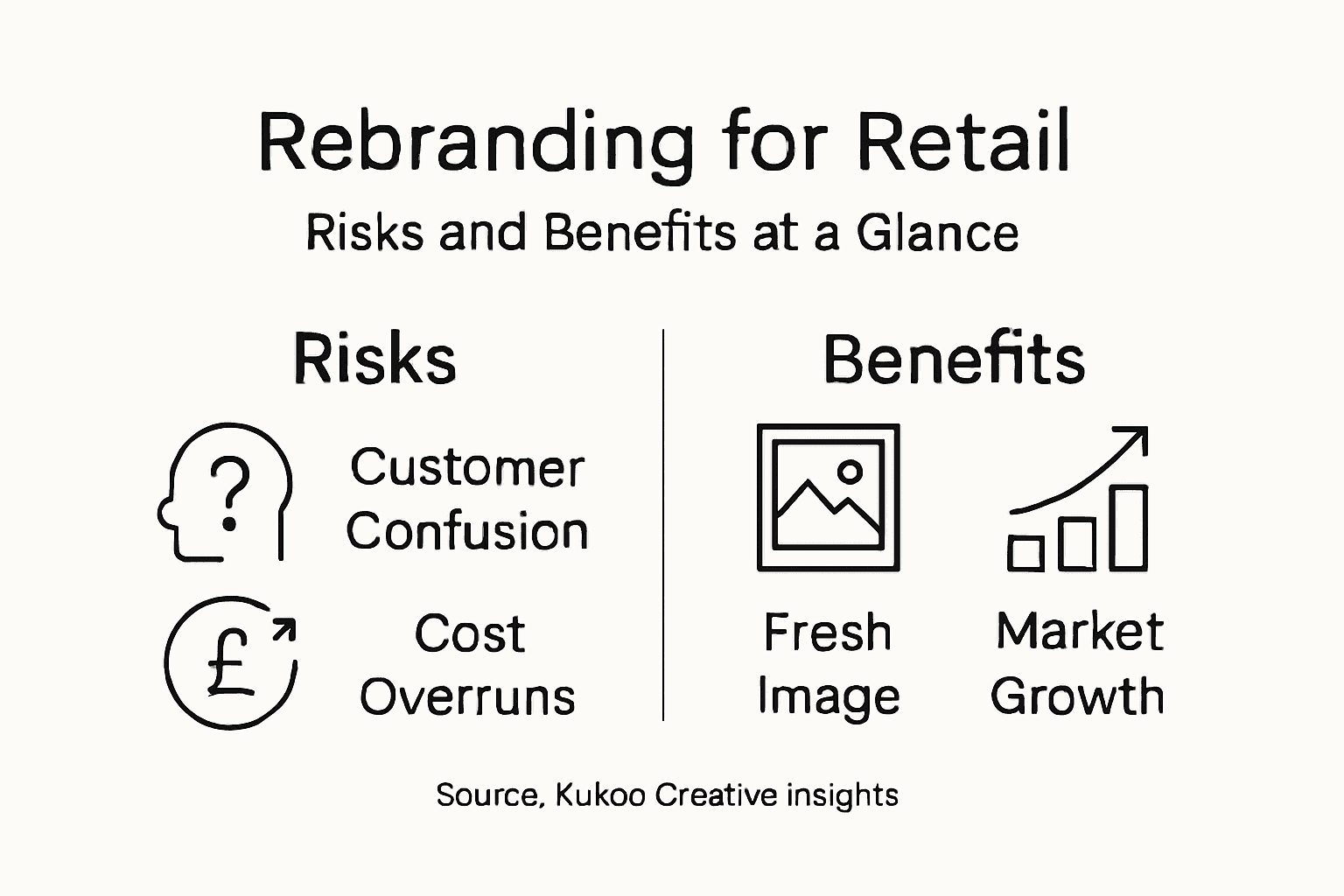
Here’s a summary of the main risks and corresponding mitigation strategies retail businesses should consider:
| Risk Identified | Potential Impact | Suggested Mitigation |
|---|---|---|
| Alienating loyal clients | Loss of customer base | Engage customers early |
| Financial overrun | Threat to profitability | Detailed budgeting upfront |
| Brand confusion | Erosion of trust | Clear phased communication |
| Loss of brand equity | Reduced recognition or loyalty | Retain core brand elements |
Critical Risk Mitigation Strategies:
- Conduct comprehensive stakeholder research
- Develop clear communication plans
- Maintain brand consistency
- Budget for unexpected implementation costs
- Create phased rollout approach
- Monitor customer and employee feedback
Pro tip: Create a detailed risk assessment matrix that anticipates potential challenges and develops specific contingency plans before launching your rebranding initiative.
Practical Steps For Effective Rebranding Process
Transforming a brand requires a strategic, methodical approach that goes far beyond superficial design changes. Internal brand communication strategies are fundamental to ensuring successful organisational alignment and buy-in throughout the rebranding journey.
A comprehensive rebranding process involves several critical stages:
- Comprehensive market research
- Current brand perception audit
- Strategic value alignment
- Stakeholder engagement
- Phased implementation planning
- Continuous feedback mechanisms
- Post-launch evaluation
Collaborative rebranding approach emphasises the importance of involving multiple organisational stakeholders. This means creating cross-functional teams that represent different perspectives, ensuring the rebranding effort reflects both internal capabilities and external market expectations.
Successful implementation requires a nuanced, iterative strategy. Businesses must remain flexible, ready to adapt their approach based on stakeholder feedback and emerging market insights. The rebranding process is not a linear trajectory but a dynamic, responsive journey that demands continuous refinement and strategic agility.
Key Implementation Considerations:
- Maintain transparent communication
- Document every strategic decision
- Create robust feedback channels
- Allocate sufficient resources
- Develop comprehensive training programmes
- Monitor key performance indicators
Pro tip: Create a dedicated cross-functional rebranding team with representatives from marketing, operations, and leadership to ensure holistic and integrated transformation.
Elevate Your Leeds Retail Brand With Strategic Rebranding
Leeds retail businesses face challenges like outdated brand perception and shifting customer demographics that demand thoughtful rebranding approaches. If you are seeking to transform your brand identity with either a subtle refresh or a complete overhaul, you need more than a simple logo change. Deep introspection and strategic alignment are essential to protect your brand equity and build lasting connections with your customers.

Partner with us at Kukoo Creative to bring your rebranding vision to life. For over a decade, we have specialised in crafting impactful designs, from logos to websites, that help retail businesses in Leeds foster emotional resonance and customer engagement. Start your strategic evolution now and secure your market position before competitors do. Discover how we can help you with a brand refresh or full overhaul — your next chapter in retail brand success begins today.
Frequently Asked Questions
What are the main reasons a retail business might consider rebranding?
Retail businesses might consider rebranding due to declining market share, outdated brand perception, shifts in customer demographics, technological disruptions, mergers and acquisitions, negative public reputation, or the need to differentiate from competitors.
What are the differences between a brand refresh and a complete brand overhaul?
A brand refresh entails subtle visual updates and messaging refinements, while a complete brand overhaul fundamentally reimagines the brand’s core identity with significant changes in visual elements and positioning.
How can a retail business ensure successful customer engagement during rebranding?
To ensure successful customer engagement during rebranding, businesses should maintain transparency about the transformation, communicate the strategic rationale clearly, and create emotional connections by aligning the brand with customer values.
What are some common risks associated with rebranding?
Common risks include alienating the existing customer base, losing brand recognition, generating negative market perception, experiencing financial losses, undermining brand trust, and creating internal organisational confusion.