
TL;DR:
- Integrated marketing coordinates all channels to provide a consistent, customer-focused brand experience across every touchpoint.
- Its success depends on aligning messaging, data, and teams, making integration a cultural principle rather than just a process.
Integrated marketing is the strategic coordination of all your marketing channels and messages to deliver a consistent, customer-centric brand experience at every touchpoint. Known formally as Integrated Marketing Communications (IMC), it prioritises the customer journey over internal sales silos, aligning every campaign, email, social post, and advertisement around shared business objectives. For marketing professionals and business owners, this is not a trend. It is the operational standard that separates brands customers trust from brands customers ignore.
The core principle is deceptively simple: your audience should receive the same brand message whether they find you on Google, Instagram, or a printed flyer. What makes it difficult is the coordination required across teams, data systems, and channels to make that consistency feel natural rather than repetitive.
What is integrated marketing and what channels does it involve?
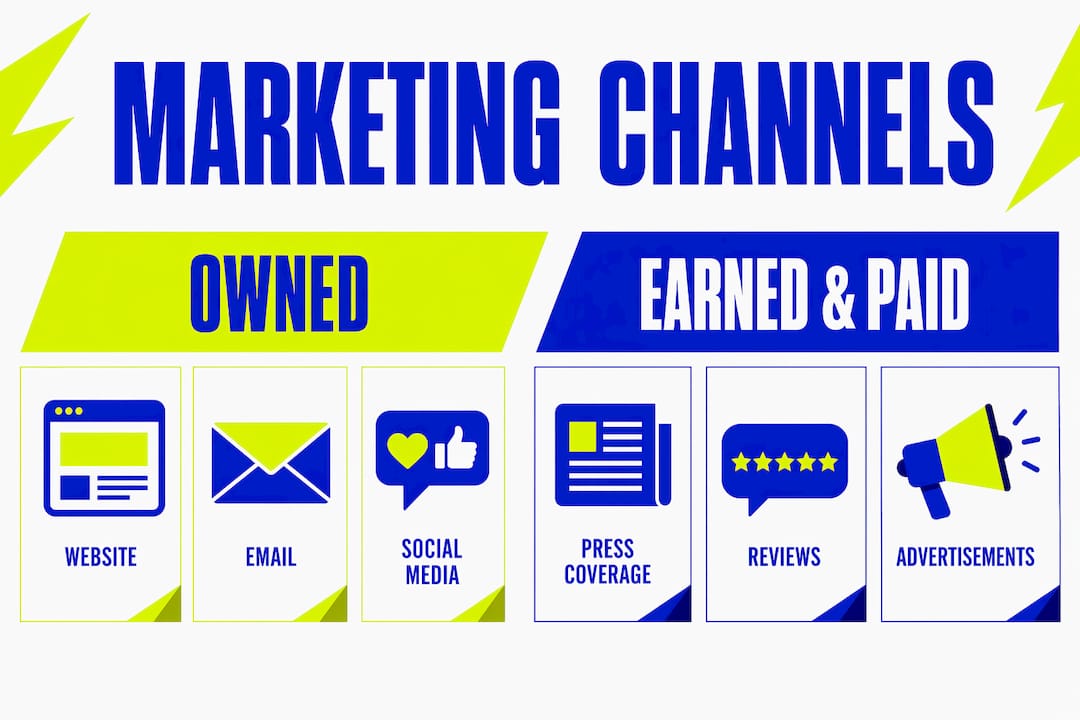
Integrated marketing organises your marketing activity into three channel types: owned, earned, and paid. Owned channels include your website, email list, and social media profiles. Earned channels cover press coverage, reviews, and word-of-mouth referrals. Paid channels include Google Ads, Meta advertising, and sponsored content.

The power of IMC comes from making these three channel types work together. A paid ad drives traffic to a landing page (owned), which prompts a review or share (earned). Each step reinforces the same message and moves the customer closer to a decision.
Key components that hold this together include:
- Consistent messaging: Your tone, value proposition, and visual identity must remain recognisable across every channel, even when the format changes.
- Data centralisation: Customer data from your CRM, web analytics, and social platforms must be unified. Failure to align data across these systems produces poor customer experiences despite well-planned campaigns.
- Cross-functional team alignment: Marketing, sales, and customer service teams must share goals, assets, and customer insights. Siloed teams produce siloed messages.
- Technology and CRM integration: Tools like HubSpot, Salesforce, or Mailchimp connect customer data to campaign delivery, making personalisation at scale achievable.
- Adaptable content: The same core message needs to be reformatted for each channel. A blog post becomes a social caption, an email teaser, and a short video script.
A branding consistency workflow helps small businesses manage this without a large team. The goal is not to produce more content. It is to produce smarter content that works harder across more touchpoints.
Pro Tip: Build a single brand messaging document that every team member references before creating content. One shared source of truth prevents the drift that quietly undermines integrated campaigns.
How does integrated marketing work in practice?
The 10-step integrated marketing strategy process follows a clear sequence. Understanding it removes the mystery from what can feel like a complex undertaking.
- Set campaign goals. Define what success looks like. More leads, higher retention, or greater brand awareness each require different channel mixes.
- Define buyer personas. Know who you are speaking to before choosing where to speak. Personas shape tone, channel selection, and content format.
- Audit your current channels. Identify what you already own and where gaps exist. Most businesses underuse their email list and overinvest in paid ads.
- Select your channels. Choose channels where your audience already spends time. Not every business needs TikTok. Every business needs a functional website.
- Align your teams. Brief every department on the campaign goals, messaging, and timeline before launch.
- Create and scale content. Produce a core content asset (a guide, a video, a campaign page) and adapt it for each channel.
- Synchronise your data. Connect your CRM to your analytics and advertising platforms so customer behaviour informs every message.
- Launch in sequence. Stagger channel activity so each touchpoint builds on the last rather than competing with it.
- Track performance rigorously. Monitor channel-specific metrics and overall campaign performance weekly, not monthly.
- Iterate and refine. Adjust messaging, channel mix, and timing based on what the data tells you.
The primary investment here is time and cross-functional planning, not additional ad spend. AI tools like ChatGPT, Jasper, and Canva’s AI features now support content scaling significantly, reducing the production burden for smaller teams.
| Stage | Primary focus | Common mistake |
|---|---|---|
| Planning | Goal setting and persona definition | Skipping persona research |
| Execution | Channel alignment and content scaling | Treating each channel independently |
| Measurement | Performance tracking and iteration | Reviewing data too infrequently |
Pro Tip: Use a shared project management tool like Asana or Notion to give every team member visibility of the campaign timeline. Misaligned launch dates are one of the most common reasons integrated campaigns underperform.
A practical marketing plan checklist built for UK SMEs gives you a ready-made framework to work through these steps without starting from scratch.
What are the measurable benefits of integrated marketing?
Brands that unify messaging across multiple digital channels during lifecycle events see their highest-ever engagement and sales days. That outcome is not accidental. It is the direct result of preventing repeated, irrelevant promotions that drive customer disengagement.
“Integrated marketing improves brand trust, enhances marketing visibility, and builds authority through consistent messaging and alignment across teams and channels.” — Optimizely
The business case for integration rests on four concrete advantages.
Improved customer retention. Customers who receive consistent, relevant messages across channels stay engaged longer. Disjointed experiences, where a customer sees a discount ad after already purchasing, erode trust quickly. Analytics-driven marketing prevents this by connecting purchase data to campaign targeting.
Higher conversion rates. A customer who sees your brand on social media, reads a blog post, and then receives a relevant email is far more likely to convert than one who encounters a single isolated ad. Each touchpoint builds familiarity and confidence.
Greater marketing efficiency. Integrated campaigns eliminate redundant content production. Teams stop creating the same asset in isolation and start building from a shared library. This reduces costs and speeds up campaign delivery.
Stronger brand authority. Consistent messaging across channels signals credibility. Customers and search engines both reward brands that communicate clearly and reliably. Proven customer retention strategies consistently point to consistent brand communication as a primary driver of loyalty.
What are the common misconceptions about integrated marketing?
The biggest myth is that integrated marketing requires a large budget and a big team. Integration simplifies marketing operations by eliminating redundant content production and focusing teams on a unified goal. It does not require doubling your spend. It requires redirecting your existing resources more deliberately.
Other misconceptions worth addressing directly:
- Consistency means repetition. It does not. Integrated marketing tailors successive messages to the customer’s journey stage. A first-time visitor receives an introductory message. A returning customer receives something that builds on their prior engagement. Sending the same message to both audiences is repetition, not integration.
- Integration is a one-time project. Many teams treat it as a static document or a campaign-level decision. True integration is an ongoing operational framework, not a launch checklist.
- Technology alone delivers integration. Tools support integration, but they do not create it. Organisational silos block data sharing, asset reuse, and shared objectives. No CRM fixes a culture where marketing and sales do not communicate.
- Small businesses cannot do it. Integrated marketing scales down effectively. A sole trader with a website, an email list, and one social channel can practise genuine integration with the right messaging discipline.
Avoiding common branding mistakes is part of building the foundation that makes integration possible. Inconsistent logos, mismatched tone, and off-brand visuals undermine even the most carefully planned campaigns.
How can you start transitioning to integrated marketing today?
Starting does not require a complete overhaul. Most businesses already have the raw ingredients. The work is in connecting them deliberately.
Begin with these practical steps:
- Audit your current messaging. Pull examples from your website, email, social profiles, and any printed materials. Identify where the tone, visuals, or value proposition diverge.
- Define your brand voice in writing. A one-page brand messaging guide covering tone, key phrases, and visual rules gives every team member a reference point. A brand messaging guide is a good starting point for this process.
- Centralise your customer data. Connect your email platform, CRM, and web analytics. Even a basic integration between Mailchimp and Google Analytics gives you visibility of how channels interact.
- Assign channel ownership. Every channel needs one person responsible for maintaining consistency. Shared ownership without clear accountability produces inconsistency.
- Start with two channels. Align your website and email list first. These are the two channels you fully control. Once those are consistent, extend the approach to social and paid channels.
- Review monthly, not quarterly. Integration drifts without regular review. A monthly check of messaging consistency across channels catches problems before they compound.
| Approach | Siloed marketing | Integrated marketing |
|---|---|---|
| Messaging | Different per channel | Unified across all channels |
| Data | Separate per platform | Centralised and shared |
| Team structure | Independent departments | Cross-functional collaboration |
| Content production | Duplicated effort | Shared assets, adapted per channel |
| Customer experience | Fragmented and inconsistent | Coherent and contextual |
The shift from siloed to integrated marketing is not instant. Incremental progress, measured and adjusted monthly, produces lasting results.
Key takeaways
Integrated marketing works because it aligns your channels, data, and teams around a single customer-centric message, making every touchpoint reinforce the last.
| Point | Details |
|---|---|
| IMC is the formal term | Integrated Marketing Communications unifies messaging, data, and campaigns across all channels. |
| Data centralisation is non-negotiable | Connecting your CRM, analytics, and ad platforms is what makes true integration possible. |
| Consistency is not repetition | Tailor each message to the customer’s journey stage rather than sending identical content everywhere. |
| Integration simplifies, not complicates | Unified campaigns reduce redundant content production and focus team effort on shared goals. |
| Start small and build | Aligning two channels well beats attempting six channels poorly. |
Why integration is really a cultural problem, not a technical one
Working with business owners over many years, the pattern is consistent. The businesses that struggle most with integrated marketing are not the ones with the smallest budgets. They are the ones where the marketing team, the sales team, and the leadership team each have a different answer to the question: “What do we stand for?”
No tool fixes that. HubSpot cannot align a team that does not share a common understanding of the customer. Canva cannot make your messaging consistent if your sales team is pitching something different from what your website promises. The technology is the easy part. The cultural shift, getting every person who touches the customer experience to work from the same playbook, is where most businesses stall.
What I have found works is starting with a single, honest conversation about who your customer actually is and what they need from you at each stage of their relationship with your brand. From that conversation, everything else follows: the messaging, the channel choices, the content plan. Without it, you are just producing more content and hoping it lands.
Integration is a philosophy before it is a process. The businesses that get it right treat it as a permanent operating principle, not a campaign-level decision. They review it regularly, update it when the customer changes, and hold every piece of content to the same standard. That discipline is what builds the kind of brand recognition that compounds over time.
— Kukoo
How Kukoocreative supports your integrated marketing foundation
Strong integrated marketing starts with strong brand assets. If your logo, colour palette, and visual identity are inconsistent, no amount of channel coordination will create a coherent customer experience.
At Kukoocreative, we have spent over a decade helping business owners build the visual foundations that make integrated marketing work. From creating consistent brand assets to digital branding that holds up across every channel, we design with recognition and coherence in mind. When your brand looks and feels the same everywhere your customers find you, your integrated marketing strategy has the foundation it needs to perform. Get in touch with Kukoocreative and let’s build something your customers will remember.
FAQ
What is the definition of integrated marketing?
Integrated marketing, formally known as Integrated Marketing Communications (IMC), is the strategic coordination of all marketing channels and messages to deliver a consistent, customer-centric brand experience. It prioritises the customer journey over internal departmental goals.
What are the main integrated marketing channels?
The main channels fall into three categories: owned (website, email, social media), earned (press coverage, reviews, referrals), and paid (search ads, display advertising, sponsored content). Effective integration connects all three so each channel reinforces the others.
How does integrated marketing differ from traditional marketing?
Traditional marketing treats each channel independently, often producing inconsistent messages and duplicated effort. Integrated marketing aligns all channels around a single strategy, shared data, and unified messaging to create a coherent customer experience.
Do small businesses need a large budget for integrated marketing?
No. Integration simplifies marketing operations by eliminating redundant content and focusing teams on shared goals. The primary investment is time and planning, not additional spend.
What is the biggest challenge in integrated marketing?
The biggest challenge is breaking down organisational silos. Sharing data, assets, and objectives across departments requires a cultural shift that tools alone cannot deliver.