
TL;DR:
- Design professionals in 2025 must balance rapid technological advancements with cultural shifts, emphasizing creativity and strategic clarity. Key trends include AI-enhanced workflows, tactile textures, bold aesthetics, unconventional colors, immersive media, and sustainable, inclusive design practices. Treat trends as a vocabulary, integrating those that serve your brand’s story while maintaining human judgement and authenticity.
Design professionals face a genuine challenge in 2025. Technology is moving fast, cultural tastes are shifting, and the pressure to stay creatively relevant without losing brand consistency has never been greater. The top design trends 2025 brings to the table are not just aesthetic whims. They reflect deeper changes in how we communicate, connect, and tell stories visually. From AI-powered workflows to bold colour experimentation and sustainable thinking, this year demands both creative courage and strategic clarity. Here is what you genuinely need to know.
Table of Contents
- Key takeaways
- 1. AI-powered design workflows
- 2. Textured grains and tactile aesthetics
- 3. Maximalism and bold minimalism
- 4. Unconventional colour combinations and retro influences
- 5. 3D objects, motion design, and immersive experiences
- 6. Sustainability and inclusivity in design thinking
- 7. Summary comparison of top design trends 2025
- My honest take on trends versus creative instinct
- Ready to build something extraordinary?
- FAQ
Key takeaways
| Point | Details |
|---|---|
| AI accelerates but does not replace | Use AI tools to speed up ideation and production while keeping human judgement at the centre of every creative decision. |
| Texture and tactility are back | Grainy, imperfect visuals create warmth and authenticity that hyper-polished designs simply cannot replicate. |
| Bold aesthetics are polarising on purpose | Maximalism and muscular minimalism both reward designers willing to commit fully to a clear visual direction. |
| Sustainability is now a design standard | Zero-waste principles and accessible visuals are no longer optional extras. They are expected by clients and audiences alike. |
| Immersive media is the new baseline | 3D, motion, and AR/VR are fast becoming standard tools for brands that want to engage and retain attention. |
1. AI-powered design workflows
AI-enhanced design practices dominate the 2025 conversation, and for good reason. These tools have dramatically shortened the gap between a creative idea and a finished visual. What used to take days of exploration can now be prototyped in hours.
The key is knowing what AI does well and where it falls short. It excels at generating visual options, resizing assets, and suggesting colour palettes. It struggles with nuance, brand voice, and the kind of typographic storytelling that makes a design genuinely memorable. Combining AI speed with expert narrative skills is precisely what separates good creative output from generic content.
Practical applications designers are using right now include:
- Generating mood boards and concept variations at pace
- Automating repetitive production tasks like asset resizing and format conversion
- Using AI image generators as starting points for original illustration work
- Running rapid A/B testing on visual layouts before committing to a final direction
Pro Tip: Select AI tools that integrate with your existing creative software rather than replacing it entirely. The goal is to add speed to your process, not to hand over your creative instincts.
2. Textured grains and tactile aesthetics
There is a genuine reaction happening against the hyper-smooth, glass-like visuals that dominated graphic design for the past several years. Grainy, tactile textures are coming back with real force, and they bring something that polished 3D work rarely achieves: warmth.
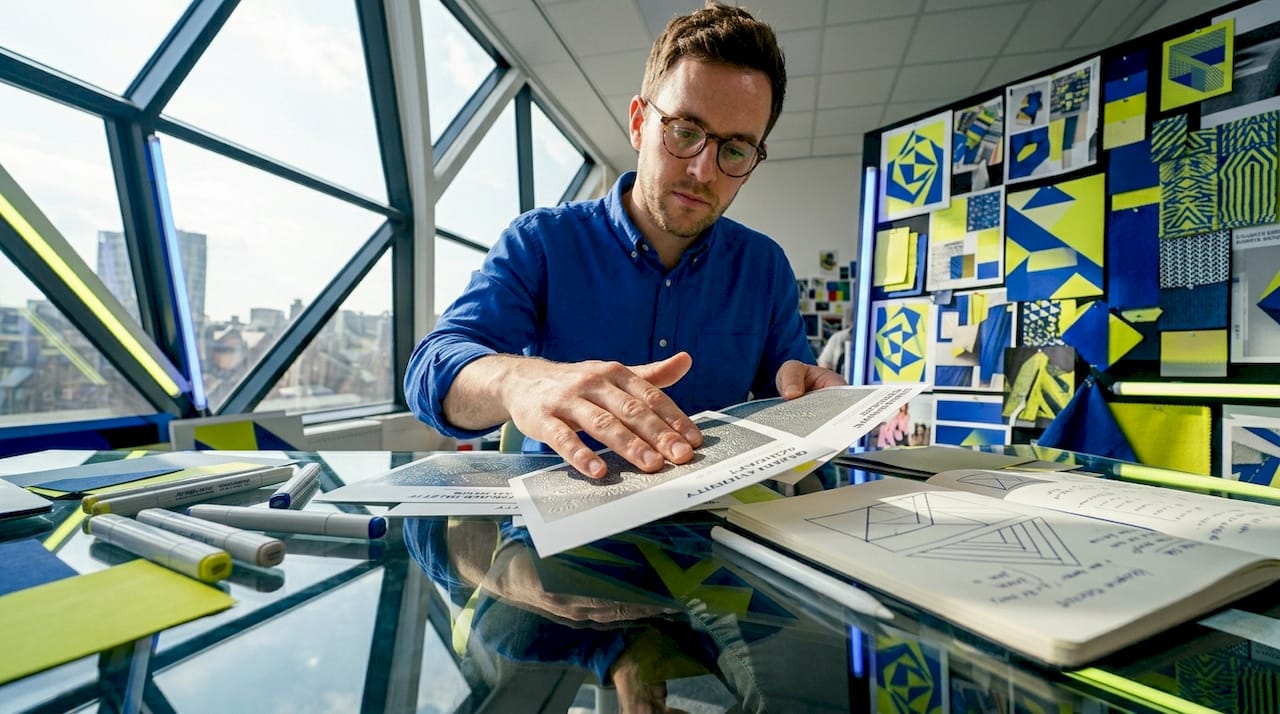
Think risograph prints, analogue film grain, hand-pressed textures, and the slightly rough edges of screen printing. These qualities make digital work feel physical. They signal craft. They tell a viewer that a human being made deliberate choices here, and that feeling resonates in a world saturated with algorithmically generated content.
Where this trend is showing up most strongly:
- Brand identity work for independent food and lifestyle brands
- Digital scrapbooking and editorial illustration
- Social media content that wants to feel handmade rather than produced
- Packaging design where tactile visual cues support the physical product experience
The balance to strike is important. Texture used without restraint quickly makes a design feel muddy. Applied with precision, it gives depth and personality to layouts that might otherwise feel flat.
3. Maximalism and bold minimalism
These two approaches sound like opposites, and in theory they are. In practice, maximalism and bold minimalism are both gaining popularity at the same time, which says something interesting about where design taste currently sits. Audiences are tired of the timid middle ground.
Maximalism in 2025 leans into dense illustration, layered patterns, and rich colour with no apologies. It suits brands that want to feel abundant, expressive, and culturally specific. Bold minimalism, on the other hand, strips everything back to create visual tension through scale, negative space, and strong typographic hierarchy. Neither approach tolerates being done half-heartedly.
| Approach | Key characteristics | Best suited for | Main challenge |
|---|---|---|---|
| Maximalism | Rich layering, dense illustration, saturated palettes | Lifestyle, fashion, food and culture brands | Maintaining clarity and readability |
| Bold minimalism | Strong type hierarchy, generous space, high contrast | Professional services, tech, luxury brands | Avoiding coldness or emptiness |
| Hybrid approach | Selective maximalist elements within minimal frameworks | Editorial, publishing, creative agencies | Knowing when to stop adding |
The most interesting work right now sits in the hybrid space, where designers borrow selectively from both directions. A bold typographic headline on a richly textured background, for example, creates genuine tension that neither approach achieves alone.
4. Unconventional colour combinations and retro influences
Safe colour choices are getting left behind. Designers are experimenting with unexpected pairings like acid yellow and slate blue, burnt sienna and pale mint, or deep violet paired with warm cream. These combinations feel fresh because they break the rules most brand guidelines were written around.
Alongside this, retro typography is having a serious moment. Gothic letterforms, ornate serif badge designs, and condensed display typefaces borrowed from mid-century signage are appearing in contemporary brand identities with real confidence. The cultural resonance is part of the appeal. These styles carry emotional memory and a sense of heritage that modern sans-serif fonts simply do not.
Colour and type choices to explore in 2025:
- Warm neutrals combined with unexpected accent colours rather than the standard black and white
- Distressed or hand-drawn type treatments that feel analogue even in digital contexts
- High-contrast typography combinations that cut through information overload in digital spaces
- Palette choices inspired by vintage print materials, particularly browns, ochres, and faded reds
The risk here is coherence. Bold experiments with colour and type only work when they serve the brand’s story rather than override it. Brand storytelling clarity keeps the creative experiments grounded and purposeful.
5. 3D objects, motion design, and immersive experiences
3D visuals, motion graphics, and AR/VR integration are no longer the exclusive territory of big-budget campaigns. Accessible tools and faster render engines have brought these techniques within reach of independent designers and smaller studios.
Here is where the practical adoption is happening:
- Web design is incorporating animated 3D product renders that allow users to explore products spatially before purchasing.
- Brand identity work is using motion as a core part of the visual system, with logos that animate across digital touchpoints.
- Social media content uses short motion loops to stop the scroll in ways that static imagery rarely achieves anymore.
- Retail and events are using AR overlays to create experiences that extend the physical space with digital information and storytelling.
- Publishing and editorial design is adopting subtle micro-animations to guide reading flow and signal interactive content.
The sectors pushing hardest into this space right now are fashion, technology, and consumer goods. But the appetite is growing across professional services, healthcare, and education too. The storytelling possibilities are simply too good to ignore.
6. Sustainability and inclusivity in design thinking
Eco-friendly and accessible design has moved from an optional consideration to a genuine expectation in 2025. Clients ask about it. Audiences notice it. And brands that ignore it are increasingly conspicuous.
What this looks like in practice:
- Zero-waste design thinking: Modular design systems that extend the life of visual assets rather than requiring constant reproduction
- Accessible colour choices: Combinations that meet WCAG contrast standards without compromising aesthetic quality
- Inclusive imagery: Representative photography and illustration that reflect real audience diversity rather than a narrow default
- Material-conscious decisions: In print and packaging, choosing substrates and inks that align with environmental commitments
Sustainability also influences colour choices in unexpected ways. Earth tones, botanical greens, and undyed material palettes are not just on-trend aesthetically. They signal values alignment to audiences who care deeply about environmental responsibility.
Pro Tip: Build accessibility checks into your design review process from the start rather than treating them as a final-stage fix. Tools like colour contrast checkers take seconds to run and save significant rework down the line.
7. Summary comparison of top design trends 2025
Here is a consolidated view of the key trends, their applications, and where to focus your creative energy:
| Trend | Impact level | Best application | Creative challenge |
|---|---|---|---|
| AI-powered workflows | High | Ideation, production, asset management | Preserving brand voice and human judgement |
| Textured grain aesthetics | Medium | Branding, editorial, social content | Avoiding visual clutter |
| Maximalism | High | Lifestyle, culture, entertainment brands | Maintaining readability |
| Bold minimalism | High | Professional services, luxury, tech | Avoiding sterility |
| Unconventional colour | Medium | Brand identity, packaging, editorial | Ensuring brand coherence |
| Retro typography | Medium | Badges, heritage brands, food and drink | Feeling fresh rather than dated |
| 3D and motion design | High | Web, campaigns, social media | Budget and technical complexity |
| AR and VR experiences | Growing | Retail, events, education | Accessibility of the medium |
| Sustainable design | High | All sectors | Balancing ethics with aesthetics |
| Inclusive visuals | High | All sectors | Authenticity over tokenism |
The emerging design concepts pulling the most attention right now are the ones where technology and human craft genuinely intersect. That combination produces work that is both efficient to produce and meaningful to experience.
My honest take on trends versus creative instinct
I have worked with a lot of designers who feel anxious about trends. Either they chase everything and lose their voice, or they ignore all of it and gradually feel out of touch. Neither extreme serves you well.
What I have found, working across brand identity and visual communication projects over many years, is that the most effective creative professionals treat trends as a vocabulary rather than a script. You do not have to use every word in the dictionary to write well. You just need to know which words are available, and choose the ones that serve your story.
AI is a good example. I have seen designers resist it entirely out of principle, and I have seen others hand over their creative process to it completely. The truth is that AI as a workflow accelerator works brilliantly when you still bring the judgement. The machine does not know your client’s history, their audience’s anxieties, or the cultural context that makes a particular visual choice land rather than miss.
My advice is this: pick two or three of the trends in this article that genuinely excite you, and go deep on them. Experiment. Get it wrong a few times. That is how you build real fluency rather than surface-level familiarity. And always ask whether a trend serves the brand’s story before you apply it. That question alone will save you from a lot of creative decisions you will regret.
— Kukoo
Ready to build something extraordinary?
At Kukoocreative, we have spent over a decade helping business owners translate their brand vision into design work that genuinely performs. Whether you are looking to apply the latest design trends to a new logo, refresh your visual identity, or build a website that reflects where your brand is headed, we are here for it.
Understanding how logo design shapes brand identity is the starting point for any serious brand investment. And if you are ready to get specific about what you need, our logo design brief guide walks you through exactly what to prepare. You can also explore our design portfolio to see how these trends translate into real, finished work for real businesses. Let us build something fantastic together.
FAQ
What are the top design trends in 2025?
The top design trends 2025 highlights include AI-powered workflows, grainy tactile textures, bold maximalism and minimalism, unconventional colour pairings, 3D and motion design, and sustainable inclusive visual thinking.
How is AI changing graphic design in 2025?
AI is accelerating ideation and production significantly, but human judgement remains critical for brand storytelling, typographic decisions, and ensuring creative outputs feel genuinely distinctive.
Are retro design styles still relevant in 2025?
Yes. Retro serif typography and gothic badge styles are actively being used in contemporary brand identities because they carry emotional resonance and a sense of heritage that modern typefaces often lack.
How can designers balance trends with brand consistency?
Treat trends as a vocabulary rather than a mandate. Select the elements that genuinely serve your brand’s story and audience, and test them deliberately before committing to a full visual direction.
What does sustainable design mean in practice for 2025?
Sustainable design in 2025 means building modular asset systems, meeting accessibility contrast standards, using inclusive imagery, and making material choices in print and packaging that reflect genuine environmental responsibility.