
TL;DR:
- Most UK business owners recognize the existence of local SEO, but few understand its dramatic recent changes driven by AI. Building a credible, multi-platform presence, including a well-optimized Google Business Profile and consistent reviews, is essential for visibility in 2026. Prominence, relevance, and AI-driven discovery now outweigh proximity as key ranking factors.
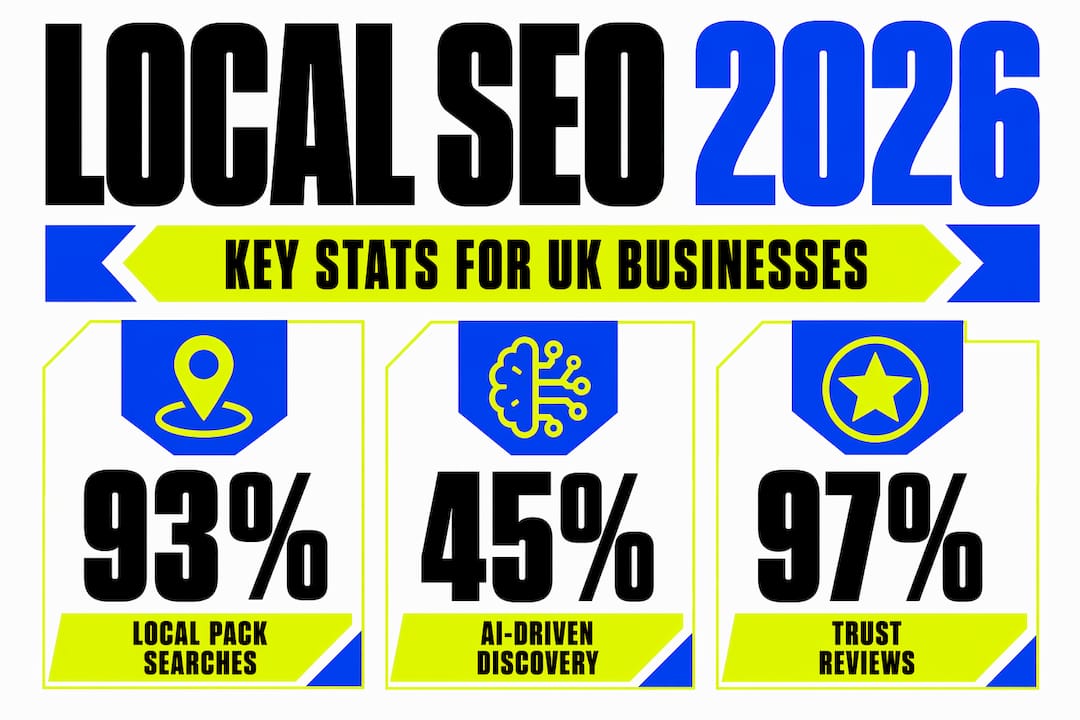
Most UK business owners know local SEO exists. Far fewer understand how dramatically it has changed. AI now drives 45% of local business recommendations, up from just 6% the year before. That single shift has rewritten the rules on how customers find you, trust you, and choose you over the competition. The role of local SEO in 2026 is no longer about ticking a few boxes on Google. It is about building a credible, consistent presence across multiple platforms so both search engines and AI tools can confidently recommend your business to nearby customers who are ready to buy.
Table of Contents
- Key takeaways
- Core local SEO ranking signals in 2026
- How AI is reshaping local search discovery
- Common misconceptions about local SEO
- Local SEO strategies that actually work in 2026
- My honest take on local SEO in 2026
- Grow your local visibility with Kukoocreative
- FAQ
Key takeaways
| Point | Details |
|---|---|
| GBP is your most powerful asset | Google Business Profile influences 32% of local rankings, making it the single highest-impact signal to optimise first. |
| AI has changed local discovery | Nearly half of consumers now use AI tools for local recommendations, so multi-platform visibility is no longer optional. |
| Prominence beats proximity | A well-optimised business can outrank a closer competitor simply by building stronger relevance and review signals. |
| NAP consistency is non-negotiable | Inconsistent name, address, and phone data fragments your online entity and causes direct drops in Local Pack visibility. |
| Measure what matters | Track Local Pack rankings, calls, direction requests, and review velocity to understand what is and is not working. |
Core local SEO ranking signals in 2026
To understand the importance of local SEO, you first need to understand what actually drives rankings. Google evaluates local businesses using three core criteria: relevance, distance, and prominence. Relevance is how well your business matches what someone searched for. Distance is how close you are to the searcher. Prominence is how well-known and trusted your business appears online.
Local ranking factors in 2026 break down like this across different signal types:
- Google Business Profile signals: 32% — Categories, completeness, photos, posts, and attributes all feed into this.
- On-page signals: 19% — Local keywords in titles, headings, schema markup, and mobile performance on your website.
- Review signals: 16% — Volume, recency, sentiment, and how quickly you respond all count.
- Link signals: 15% — Quality backlinks from local and industry-relevant websites.
- Behavioural signals: 8% — Clicks, calls, and direction requests tell Google people trust and engage with your listing.
- Citation signals: 7% — Consistent mentions of your business name, address, and phone across directories.
Your Google Business Profile is effectively a free storefront. Complete and optimised GBP profiles consistently outperform incomplete ones in Local Pack rankings, regardless of backlink strength. Think accurate categories, recent photos, regular posts, and a compelling business description.
Reviews carry enormous weight too. 97% of consumers read online reviews for local businesses, and the businesses that appear in the Google Local Pack capture 40 to 50% of all local clicks. That is not a small margin. It is the difference between a full booking diary and an empty one.
Pro Tip: Add schema markup to your website’s contact page and homepage. Local business schema helps Google and AI tools extract your business details accurately, which directly supports your entity recognition in search results.
How AI is reshaping local search discovery
Here is the shift that catches most business owners off guard. Local search used to mean one thing: appearing in Google’s Local Pack or organic results. That is no longer the whole picture.
AI tools for local recommendations have exploded in adoption, with nearly half of consumers now using them regularly. When someone asks an AI assistant to recommend a plumber in Sheffield or a café near Leeds city centre, that tool does not simply pull from Google. It triangulates data from multiple sources: review platforms, social profiles, business directories, your website, mentions in local articles, and more.
Being present and consistent across platforms is what makes you visible in AI-generated responses. Businesses with a “Google-only” mindset are already losing ground to competitors who have built credible presences on TripAdvisor, Facebook, Yelp, and relevant industry directories.
The implications of this shift are significant:
- AI Overviews in Google pull structured data, reviews, and cross-platform mentions to generate business recommendations.
- 63% of active AI users trust AI recommendations nearly as much as traditional reviews, though most still verify by checking real reviews afterwards.
- Businesses that appear consistently across multiple platforms are far more likely to be surfaced by AI tools.
- Consumers trust and use diverse platforms including Google, Facebook, TikTok, and TripAdvisor. Relying on Google alone means missing a growing share of your potential customers.
“AI-powered local search metrics rely on multi-platform entity clarity, including consistent NAP, reviews, and local mentions. Businesses must maintain coherent brand presence or risk invisibility in AI results.” — How Google ranks local businesses 2026
The 2025 SEO trends for UK businesses reinforce this point clearly. AI integration in search is not a future concern. It is already reshaping how local businesses are discovered right now.
Common misconceptions about local SEO
Several myths quietly hold UK business owners back from seeing real results. Let us address the most damaging ones directly.
The proximity paradox is perhaps the most misunderstood aspect of local search. Many business owners assume that if a competitor is physically closer to a searcher, there is nothing they can do. That is not accurate. Prominence can outweigh proximity, meaning a well-optimised business with strong reviews, complete GBP data, and good on-site signals can consistently outrank a nearer, less active competitor. Distance is a factor. It is not the only factor.
| Myth | Reality |
|---|---|
| Closest business always ranks first | Prominence and relevance can and do outrank proximity in many searches |
| You need a physical shopfront to appear locally | Service-area businesses can rank well with a verified address, even if hidden publicly |
| One-off optimisation is enough | Local SEO requires ongoing updates, reviews, and content to sustain visibility |
| Google-only presence is sufficient | AI tools and diverse platforms now influence a significant share of local discovery |
The second major misconception involves Google Business Profile address requirements. Google requires a real, verifiable physical address for GBP verification, even for service-area businesses. Using a virtual office or a PO box is a genuine risk. Google’s guidelines are clear, and profiles verified with non-compliant addresses face suspension. If you run a service-area business, you can verify with your real home or business address and then choose to hide it publicly.
Pro Tip: If you are a service-area business, complete your GBP with your legitimate address for verification purposes, then enable the service-area feature to display the regions you cover rather than your physical location.
Inconsistent NAP data across directories is the third silent killer. If your business is listed as “Kukoocreative” in one place, “Kukoo Creative Ltd” in another, and “Kukoo Creative” somewhere else, Google struggles to confirm it is the same entity. That fragmentation reduces trust and directly impacts your Local Pack rankings. Consistency is not glamorous work, but it pays off reliably.
Local SEO strategies that actually work in 2026
Understanding the importance of local SEO is one thing. Knowing what to actually do with that knowledge is what creates results. Here is a practical sequence you can follow right now.
-
Audit and complete your Google Business Profile. Check every field: business name, address, phone, website, categories, attributes, opening hours, and photos. An incomplete profile leaves ranking signals on the table. Post updates at least once a fortnight to signal ongoing activity.
-
Build a diverse review portfolio. Do not concentrate all your efforts on Google alone. Actively request reviews on platforms relevant to your sector, whether that is TripAdvisor for hospitality, Checkatrade for tradespeople, or Facebook for local retail. Review velocity (how regularly new reviews arrive) matters as much as total volume.
-
Optimise your website for local search terms. Create dedicated location pages if you serve multiple areas. Use local keywords naturally in page titles, headings, and body content. Add local business schema markup to help search engines and AI tools understand exactly what you do and where you do it. Explore local SEO tools for your business to track your progress and spot gaps.
-
Audit your citations across directories. Check your business details on Yell, Thomson Local, Bing Places, Apple Maps, and industry-specific directories. Correct any discrepancies in your name, address, or phone number immediately.
-
Create content that targets local intent. A blog post answering “best accountant in Birmingham for small businesses” or “how to choose a plumber in Manchester” directly serves what local searchers are looking for. This content also builds the topical and geographic signals that support your broader SEO for small businesses strategy.
-
Monitor and respond to reviews consistently. Responding to reviews, both positive and negative, is a trust signal. It shows Google and potential customers that your business is active, accountable, and engaged. Aim to respond within 48 hours.
Pro Tip: Ask satisfied customers for reviews at the moment they are most delighted, whether that is immediately after a completed job or straight after a great experience in your shop. Timing dramatically improves the conversion rate from request to published review.
Measuring the impact of local SEO
Investing time and budget into local search engine optimisation only makes sense if you can see it working. These are the metrics that genuinely reflect the local SEO benefits you are generating:
- Local Pack rankings for your primary search terms across different device types
- Website traffic from local searches, visible in Google Analytics by filtering for organic traffic with local keywords
- Calls and direction requests from your Google Business Profile Insights dashboard
- Review volume and sentiment trends across all platforms over rolling 30 and 90-day periods
- AI platform mentions by periodically searching for your business category and location across major AI tools to check whether your business appears
- Conversion rate from local landing pages, showing whether your local traffic is translating into real enquiries
The Local Pack appears in 93% of searches with local intent, which means your ranking position in that pack has a direct and measurable impact on how many potential customers ever see your business. Review these metrics monthly and adjust your focus based on what the data tells you.
My honest take on local SEO in 2026
Working alongside UK businesses for over a decade, I have watched the local SEO goalposts move considerably. And the businesses that struggle most are the ones chasing things they cannot control, proximity being the obvious example.
Here is what I have learned: distance is baked into Google’s algorithm and you cannot change where your business is located. What you absolutely can change is how prominent and relevant you appear. I have seen businesses in less central locations consistently outrank town-centre competitors simply because they invested in genuine review strategies, kept their GBP active, and built credible mentions across the web.
The AI shift genuinely worries me for businesses that have not adapted yet. If a potential customer asks an AI assistant for a recommendation and your business has a patchy digital footprint, thin reviews, and inconsistent listings, you simply will not appear. The brands that invest in authentic, multi-platform visibility now are building a serious advantage.
The other thing I would stress: local SEO and brand identity are not separate conversations. A well-designed website with clear local signals, strong visuals, and a credible brand presence performs better in search and converts far more of the traffic it earns. The two genuinely reinforce each other, and treating them in isolation bottlenecks your growth.
— Kukoo
Grow your local visibility with Kukoocreative
At Kukoocreative, we have spent over a decade helping UK business owners build brands that get noticed, online and off. Local SEO does not exist in a vacuum. Your website design, your logo, your visual identity, and your online presence all work together to build the trust that search engines and customers reward.

If your website is not pulling its weight in local search, we can help you fix that. From professionally designed sites built with local SEO in mind to brand identity that builds credibility, we create digital assets that do real work for your business. Explore our client portfolio to see the kind of results we deliver, or get started with our web design process guide tailored specifically for UK business owners. Your next customer is searching right now. Let us make sure they find you.
FAQ
What is the role of local SEO for small businesses?
The role of local SEO is to make your business visible to nearby customers who are actively searching for what you offer. For small businesses, it is one of the most cost-effective ways to compete with larger brands in a specific geographic area.
How does local SEO work in practice?
Local SEO works by optimising your Google Business Profile, building consistent citations, earning reviews, and using local keywords on your website. Together, these signals help Google understand where you are, what you do, and how trustworthy you are.
Does proximity always determine local search rankings?
No. While distance is a ranking factor, prominence can outweigh proximity, meaning a better-optimised business can rank above a closer competitor with weaker signals.
Why does local SEO matter more in 2026?
The impact of local SEO has grown because AI tools now drive a significant share of local discovery. With 45% of consumers using AI for local recommendations, businesses with consistent multi-platform visibility have a clear advantage.
Can a service-area business rank locally without showing an address?
Yes. Google allows service-area businesses to hide their physical address publicly while still being eligible for Local Pack rankings. You must verify with a legitimate address, but your location does not need to be displayed to customers.