
TL;DR:
- Client testimonials are crucial social proof that significantly influence consumer trust and purchase decisions. Businesses that consistently collect, display, and respond to testimonials build stronger credibility and improve conversion rates.
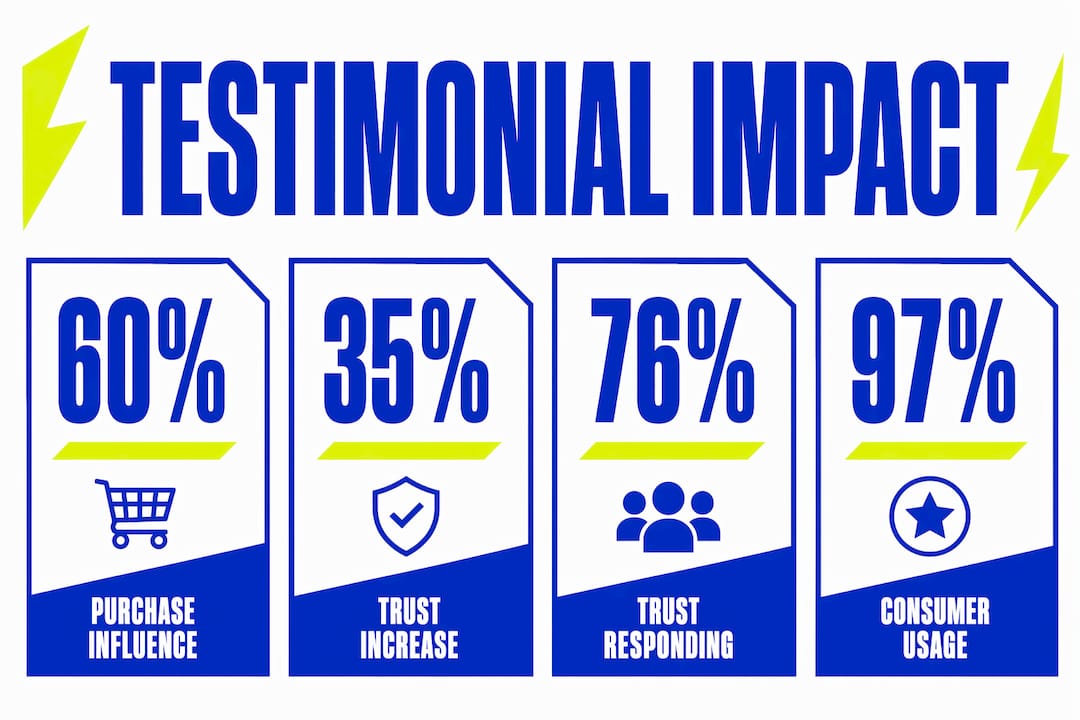
Client testimonials are defined as authentic, peer-generated accounts of a customer’s experience with a business, and they are the most powerful form of social proof available to you. 97% of consumers use online reviews to guide purchase decisions, placing testimonials second in importance only to price. That single figure tells you everything about the role of client testimonials: they are not a nice addition to your website. They are a core part of how customers decide whether to trust you. UK customers, confirmed by the Advertising Standards Authority, trust peer-generated content significantly more than traditional brand messages. If you are building a business, ignoring testimonials means leaving credibility on the table.
How do client testimonials influence consumer trust and purchase decisions?

The importance of client reviews goes far beyond simple star ratings. Testimonials work because they reduce the perceived risk of buying from a business a customer has never used before. When a potential client reads a detailed account from someone in a similar situation, they see themselves in that story. That recognition builds confidence faster than any marketing copy.
The numbers confirm this. Testimonials rank second in purchase influence at 60%, sitting just behind price at 79%. Nearly half of consumers, 47%, actively avoid businesses with fewer than 20 reviews. That threshold matters because it signals an established track record rather than a handful of cherry-picked quotes.
The impact of testimonials also depends heavily on recency and volume. Consumers expect reviews to be current. A page full of glowing feedback from three years ago raises questions rather than answering them. Businesses that collect testimonials consistently, rather than in one burst, maintain the kind of credibility that compounds over time.
Key factors that increase the trust value of a testimonial:
- Specificity. Vague praise like “great service” carries little weight. Details about a specific problem solved are far more persuasive.
- Recency. Reviews from the past 12 months signal an active, reliable business.
- Volume. A minimum of 20 reviews establishes a credible pattern of performance.
- Responsiveness. Businesses that reply to reviews signal that they care about their clients.
Pro Tip: Ask clients to leave a review within 48 hours of a positive interaction. Recency and emotional freshness produce the most detailed, persuasive testimonials.
What makes client testimonials effective and credible in 2026?
Not all testimonials carry equal weight. Generic, anonymised quotes do very little for your brand. The benefits of client feedback only materialise when testimonials are structured, specific, and clearly attributed.
Structured testimonial prompts produce the most effective results. When you guide a client through three questions, what was the challenge before working with you, what was the experience like, and what measurable result did they achieve, you get a story rather than a slogan. Stories are what persuade.
Attribution is equally critical. Testimonials including a full name, role or business type, and photo increase trust by 35% compared to anonymous quotes. A first name and a vague “small business owner” label is not enough. The more specific the attribution, the more credible the account.
Authenticity signals also extend to ratings. 18% of consumers distrust perfect 5.0 ratings when there is no negative feedback at all. A business with 4.7 stars and a mix of detailed reviews reads as more trustworthy than one with a suspiciously flawless score. Perfection raises eyebrows. Honest, balanced feedback builds genuine confidence.
For AI search visibility and featured snippets, testimonial length matters too. The ideal testimonial runs 60–150 words. Too short and it lacks the detail search engines and readers need. Too long and the key message gets buried.
Formats that maximise testimonial impact:
- Text with full attribution. The foundation of any testimonial strategy.
- Star ratings linked to verified platforms such as Trustpilot or Google. Linking to independent platforms enhances credibility for both consumers and AI search engines.
- Video testimonials. 51% of marketers rate video as the most effective testimonial format. Video combines emotional authenticity with visual proof in a way text alone cannot replicate.
Pro Tip: When requesting a testimonial, send three specific questions rather than an open request. Clients find it far easier to respond to a prompt than to a blank page, and the results are consistently stronger.
Where should businesses display testimonials for maximum impact?
Placement is as important as content. A brilliant testimonial buried on a low-traffic page contributes almost nothing to your conversion rate. The goal is to position social proof at the exact moment a potential client is weighing up a decision.
Placing testimonials near calls-to-action boosts click-through rates by 25%. That is a significant uplift from a simple design decision. Pages featuring testimonials convert 11.4% better than identical pages without them. These figures make testimonial placement a website design priority, not an afterthought.
High-impact placement locations, ranked by conversion value:
- Pricing pages. Clients considering cost need reassurance at that precise moment. A testimonial from a client who found the investment worthwhile removes the final hesitation.
- Landing pages. The first impression a visitor gets should include social proof. A strong testimonial above the fold sets the tone immediately.
- Contact and enquiry sections. Clients about to reach out are close to a decision. A testimonial here confirms they are making the right call.
- Homepage hero sections. A single, powerful quote from a recognisable client type signals credibility before a visitor has read a word of your copy.
Linking testimonials to verifiable platforms adds a further layer of trust. A quote that connects to a live Google or Trustpilot review cannot be dismissed as invented. That verification matters to sceptical buyers. You can find practical guidance on this in Kukoocreative’s converting website checklist, which covers how to position social proof for better sales results.
| Placement location | Primary benefit |
|---|---|
| Pricing page | Reduces cost objections at the decision point |
| Landing page hero | Builds immediate credibility on arrival |
| Contact section | Confirms the decision to reach out |
| Homepage | Sets the trust tone for the entire visit |
How does responding to client testimonials and reviews affect brand credibility?
Collecting testimonials is only half the work. How you respond to them shapes your reputation just as much as the reviews themselves.
76% of consumers say that a business responding to reviews materially increases their trust. Yet only 28% of businesses respond to more than half of their reviews. That gap is an opportunity. If your competitors are ignoring feedback and you are engaging with it, you stand out immediately.
The quality of your response matters as much as the speed. Personalised responses increase consumer trust by 30%, whereas templated or generic replies actively cause distrust. Copying and pasting the same “Thank you for your kind words” to every review signals that you are going through the motions. Clients notice.
Best practices for responding to reviews:
- Respond within 24 hours to negative reviews. Delay signals indifference.
- Use the client’s name and reference a specific detail from their review to show you have actually read it.
- Keep positive responses warm but brief. A short, genuine reply is more credible than an effusive paragraph.
- Address criticism directly. Acknowledge the issue, explain what you have done, and invite further dialogue offline.
Responses are themselves a form of social proof. A potential client reading your replies learns as much about your business values as they do from the original review. Businesses that respond consistently outperform competitors in consumer trust and signal genuine commitment to their clients.
How can testimonials support your broader marketing and growth strategy?
Client testimonials do not exist in isolation. They are a thread that runs through your entire brand presence, from your website to your social media to your sales conversations.
The benefits of client feedback extend well beyond the review page. Testimonials reduce perceived risk for new clients who have never worked with you. They validate the claims you make in your marketing copy. They give you credible, specific language to use across your brand, because the words your clients use to describe your work are often more persuasive than anything you would write yourself.
Testimonials also support your digital branding by reinforcing the story your brand tells about itself. A business that positions itself as reliable, creative, and client-focused needs testimonials that confirm exactly those qualities. When your social proof aligns with your brand identity, the overall impression is coherent and convincing.
Practical ways to integrate testimonials into your growth strategy:
- Use testimonial language in your copywriting. The phrases clients use to describe results are often your strongest headlines.
- Share testimonials on social media with the client’s permission. Short quotes with attribution perform well as standalone posts.
- Include testimonials in proposals and pitch documents. A relevant case study from a similar client removes doubt at the sales stage.
- Align testimonials with customer journey stages. Awareness-stage content benefits from broad credibility signals. Decision-stage content needs specific, results-focused proof.
Building a consistent testimonial collection process is part of building brand trust over the long term. The businesses that grow fastest are those that treat testimonials as an ongoing asset, not a one-off task.
Key takeaways
Client testimonials are the second most influential purchase factor after price, and businesses that collect, display, and respond to them consistently build measurably stronger brand credibility and higher conversion rates.
| Point | Details |
|---|---|
| Testimonials drive decisions | 97% of consumers use reviews to guide purchases; testimonials rank second only to price in influence. |
| Authenticity signals matter | Full attribution, photos, and specific details increase trust by 35% over anonymous quotes. |
| Placement near CTAs converts | Testimonials placed near calls-to-action boost click-through rates by 25% and improve conversions by 11.4%. |
| Responding builds trust | 76% of consumers trust businesses more when they respond to reviews; personalised replies increase trust by 30%. |
| Video leads on format | 51% of marketers rate video testimonials as the most effective format for emotional engagement and authenticity. |
Why I think most businesses are sitting on their best marketing asset
After working with business owners for over a decade, I have noticed a consistent pattern. The businesses that invest in professional branding and design often have genuinely happy clients. Those clients would gladly share their experience. But nobody asks them.
The testimonials that would build real credibility are sitting in email inboxes, in WhatsApp threads, in brief conversations at the end of a project. They never make it onto a website or a Google profile. That is the gap I see most often, and it is entirely fixable.
What I have also found is that the quality of a testimonial reflects the quality of the prompt. A client asked “would you leave us a review?” will write something polite but vague. A client asked “what was the specific challenge you faced before we worked together, and what changed?” will write something genuinely useful. The prompt is the product.
The other thing worth saying: testimonials work harder when your brand looks credible. A strong testimonial on a poorly designed website loses half its power. The design, the copy, and the social proof all need to work together. When they do, the effect on trust and conversion is significant.
— Kukoo
How Kukoocreative helps you build a brand that earns great testimonials
A credible brand attracts credible testimonials. At Kukoocreative, we have spent over a decade helping business owners build the kind of visual identity and digital presence that makes clients want to share their experience.

From logo design that builds brand recognition to website design that places your social proof where it converts, we bring together design expertise and strategic thinking in one place. Our branding and design services are built for business owners who want their brand to work as hard as they do. If you are ready to build a brand that earns fantastic testimonials and puts them to work, we would love to help.
FAQ
What is the role of client testimonials in marketing?
Client testimonials act as authentic social proof that reduces perceived risk and builds trust with potential customers. They rank second only to price as a purchase influence factor, according to the BrightLocal Local Consumer Review Survey 2026.
How many reviews does a business need to appear credible?
Nearly half of consumers avoid businesses with fewer than 20 reviews. Reaching that threshold signals an established track record rather than a handful of selected quotes.
What makes a testimonial more trustworthy?
Testimonials that include a full name, job role or business type, and a photo increase trust by 35% over anonymous quotes. Specific details about a challenge and result are far more persuasive than generic praise.
Does responding to reviews actually make a difference?
Yes. 76% of consumers say that a business responding to reviews increases their trust. Personalised responses increase trust by a further 30%, while templated replies actively reduce it.
Where is the best place to display testimonials on a website?
The highest-impact placements are pricing pages, landing page hero sections, and contact forms. Testimonials placed near calls-to-action boost click-through rates by 25%.