
TL;DR:
- In 2025, search success depends on visibility, brand mentions, and credibility instead of ranking positions. AI Overviews now decrease organic clicks significantly, making brand recognition and authoritative content vital for online growth. Marketers must focus on building entity clarity, leveraging multi-platform content, and tracking citation signals to succeed.
SEO in 2025 is defined by one fundamental shift: visibility has replaced clicks as the primary measure of search success. Google’s AI Overviews, multi-platform discovery, and algorithmic trust signals have rewritten the rules for digital marketers and business owners alike. The old game of chasing rank positions is over. The new game is about appearing in AI-generated answers, earning brand mentions, and building the kind of credibility that search engines and AI models recognise as authoritative. Understanding these SEO trends in 2025 is not optional. It is the difference between growing your online presence and watching it quietly shrink.
How AI Overviews are changing what SEO success looks like
AI Overviews have fundamentally altered click behaviour across Google Search. The number one position now loses approximately 58% of its historical organic clicks when an AI Overview appears above it. That is not a marginal dip. It is a structural collapse of the traditional traffic model.
Organic search traffic declined by 21% year over year as users increasingly receive answers directly from AI-generated results. Users treat AI Overviews as fact sheets, reading the summary and moving on without clicking through to any source. This means your content can rank in the top three and still generate a fraction of the traffic it once did.
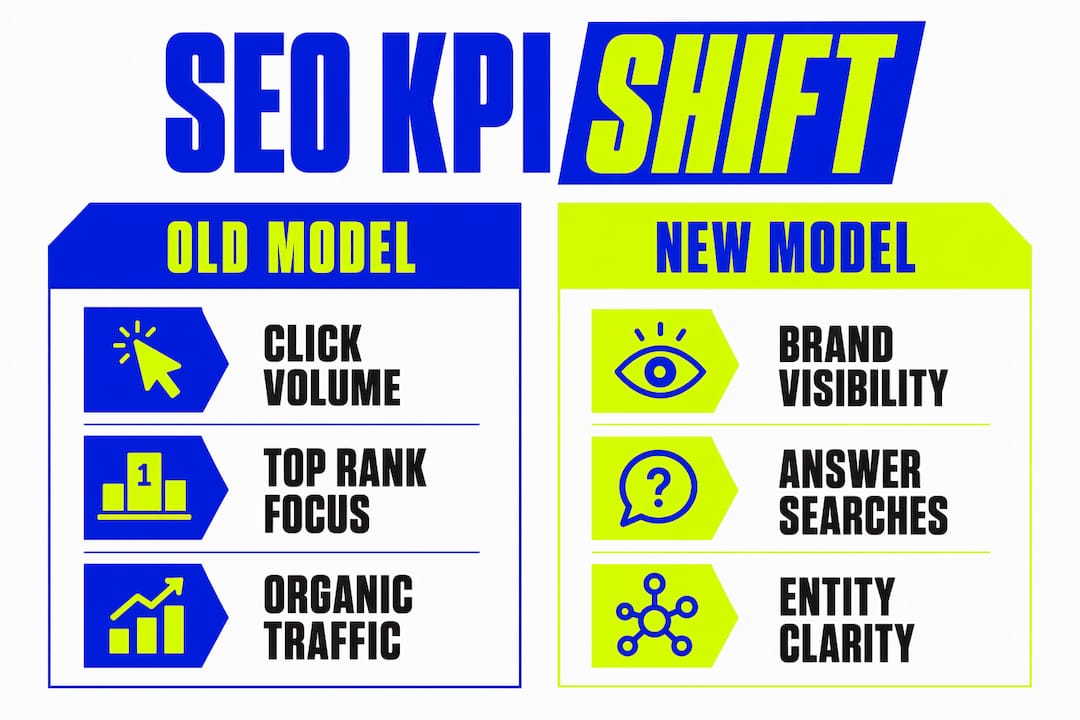
The response from leading practitioners has been clear. SEO professionals now prioritise visibility as a KPI over clicks, focusing on brand mention share and citation frequency within AI answers. Getting cited in an AI Overview builds brand presence even when no click follows. That presence compounds over time as users associate your brand with credible answers.

| Metric | Old model | New model |
|---|---|---|
| Primary KPI | Organic click volume | Brand mention and answer share |
| Success signal | Page one ranking | AI Overview citation |
| Content goal | Drive traffic | Earn trust and visibility |
| Measurement tool | Google Analytics sessions | Brand monitoring and share of voice |
Pro Tip: Set up Google Alerts and a brand monitoring tool like Mention or Brand24 to track how often your business appears in AI-generated answers and editorial content. Citation frequency is now a meaningful SEO signal.
For a practical look at how local SEO visibility is shifting under AI-driven search, the picture is equally striking for UK businesses.
Why E-E-A-T is now an algorithmic gatekeeper, not a guideline
E-E-A-T stands for Experience, Expertise, Authoritativeness, and Trustworthiness. Google introduced it as a quality guideline, but in 2025 it functions as an algorithmic gatekeeper, actively filtering out content that fails to demonstrate genuine credibility. AI models use the same signals to decide which sources to cite.
The saturation problem makes this urgent. Only 13.5% of pages ranking in the top 20 for competitive keywords are purely human-written. The rest is AI-generated content, and much of it is generic. To stand out, your content must demonstrate first-hand experience, original research, or specialist knowledge that a language model cannot fabricate convincingly.
Technical signals reinforce E-E-A-T at the entity level. AI models rely heavily on entity-based signals including Knowledge Panels, schema markup, and consistent NAP (name, address, phone) data to assess trustworthiness before citing a source. If your business entity is unclear or inconsistent across the web, AI systems will pass you over in favour of a competitor with cleaner signals.
Practical steps to build E-E-A-T credibility include:
- Author bios with verifiable credentials. Link author profiles to LinkedIn, published work, or professional bodies. Google’s quality raters check these.
- First-person case studies and original data. Publish findings from your own client work or surveys. Generic advice is invisible to AI citation filters.
- Consistent NAP across all directories. Your business name, address, and phone number must match exactly on Google Business Profile, Bing Places, Yell, and every other listing.
- Schema markup on every key page. Use Organisation, Article, and FAQ schema to give search engines structured signals about who you are and what you do.
Pro Tip: Claim your Google Knowledge Panel immediately if you have not already. Search your brand name, scroll to the panel, and click “Claim this knowledge panel.” It is one of the fastest ways to signal entity clarity to Google’s AI systems.
Are social platforms replacing Google for product discovery?
45% of Gen Z users use social platforms like TikTok and Instagram for product research alongside traditional search engines. This is not a fringe behaviour. It represents a genuine fragmentation of search across multiple surfaces, each with its own ranking logic.
Google still controls approximately 90% of worldwide search volume, so abandoning traditional SEO would be a serious mistake. The point is that discovery now happens across a wider set of platforms, and each one rewards different content formats and signals.
A practical multi-platform approach for 2025 looks like this:
- TikTok SEO. Use keyword-rich captions and spoken words in videos. TikTok’s search function indexes both. Short, specific answers to common questions perform best.
- Instagram discoverability. Alt text on images, keyword-rich profile bios, and location tags all feed Instagram’s internal search algorithm. Reels with clear spoken keywords rank in both Instagram and Google video results.
- Reddit and forum presence. Reddit’s organic traffic grew by over 600% since mid-2023. Google surfaces Reddit threads prominently for research queries. Participating authentically in relevant subreddits builds brand presence in search results without any paid promotion.
- YouTube optimisation. YouTube is the world’s second largest search engine. Transcripts, chapters, and keyword-rich descriptions all contribute to ranking in both YouTube and Google.
- Pinterest for visual categories. Pinterest drives significant search traffic in home, fashion, food, and lifestyle categories. Boards and pin descriptions function like traditional SEO metadata.
Does user-generated content actually improve SEO performance?
User-generated content (UGC) is now a measurable SEO asset, not just a social proof tool. Interest in UGC-related SEO strategies increased 575% over five years, and platforms built on community content are reaping the rewards in organic search.
The reason is straightforward. AI-driven search engines are trained to discount generic content and surface authentic, experience-based material. A genuine customer review discussing a specific product problem and how it was solved carries more credibility signals than a polished brand description. UGC is also naturally rich in long-tail keywords because real people describe their experiences in the same language they use to search.
Brands that actively encourage and integrate UGC gain a compounding advantage. Each new review, forum post, or social mention adds another indexed page or signal pointing back to the brand entity. Over time, this builds the kind of trust footprint that AI models recognise as authoritative.
| UGC type | SEO benefit | Best platform |
|---|---|---|
| Customer reviews | Trust signals, long-tail keywords | Google Business Profile, Trustpilot |
| Community discussions | Organic traffic, brand mentions | Reddit, Facebook Groups |
| Social testimonials | Entity signals, reach | Instagram, LinkedIn |
| Case study contributions | E-E-A-T, original data | Brand website, YouTube |
Strategies to build UGC into your SEO plan include:
- Ask for reviews at the right moment. Request a Google review immediately after a positive client interaction, not weeks later when the experience has faded.
- Create a community space. A Facebook Group or branded forum gives customers a place to discuss your products. That discussion generates indexed content you did not have to write.
- Feature client stories on your website. Authentic client testimonials and case studies are among the highest-performing content types for both E-E-A-T and conversion.
What are the most effective SEO strategies for 2025?
The most effective SEO strategy for 2025 combines content structure for AI selection, entity clarity, and multi-channel distribution. Each element supports the others. Content that is well-structured but lacks entity signals will not get cited. Entity signals without quality content will not earn trust.
-
Structure content for AI Overview selection. Use clear H2 and H3 headings that mirror common search questions. Open each section with a direct, concise answer in the first two sentences. AI systems extract these opening sentences when building Overview responses.
-
Claim and complete your Google Knowledge Panel. Add your logo, description, social profiles, and founding date. Every field you complete reduces ambiguity for AI citation systems.
-
Implement schema markup site-wide. Organisation schema, Article schema, and FAQ schema are the three highest-priority types for most business websites. Tools like Google’s Rich Results Test confirm correct implementation.
-
Shift your measurement framework. Track brand mention volume, AI Overview citation frequency, and share of voice alongside traditional metrics like sessions and conversions. Tools like Semrush’s Brand Monitoring or Ahrefs’ Brand Radar provide this data. The shift from clicks to visibility as a success metric requires new dashboards, not just new tactics.
-
Build a cross-platform content calendar. Publish a core piece of content on your website, then adapt it for LinkedIn, Instagram, and relevant Reddit communities. Each adaptation creates new indexed content and new entry points for discovery.
-
Invest in digital branding as an SEO asset. A consistent visual identity, clear brand voice, and recognisable name across all platforms strengthen entity signals. Search engines and AI models are more likely to cite brands they can clearly identify and verify.
Pro Tip: Write a dedicated “About” page that names your team, lists credentials, and links to external verification sources like professional associations or press coverage. This single page can significantly improve your E-E-A-T score for the entire domain.
Key takeaways
SEO success in 2025 depends on brand visibility, entity clarity, and authentic content across multiple platforms, not rank position alone.
| Point | Details |
|---|---|
| Visibility over clicks | AI Overviews reduce top-ranking click rates by up to 58%, making brand citation the new primary KPI. |
| E-E-A-T is enforced algorithmically | Generic content is filtered out; first-hand expertise and structured entity signals are required to earn citations. |
| Multi-platform search is real | 45% of Gen Z use social platforms for discovery, requiring tailored content strategies beyond Google. |
| UGC compounds trust signals | Authentic reviews and community content build the trust footprint that AI models recognise as credible. |
| Measure visibility, not just traffic | Track brand mentions, answer share, and citation frequency alongside sessions and conversions. |
The uncomfortable truth about SEO in 2025
Working with business owners across a range of industries, I have noticed one pattern that separates those gaining ground from those losing it. The businesses winning in search right now are not the ones with the biggest content budgets. They are the ones that have invested in being genuinely recognisable and credible, both to humans and to machines.
The uncomfortable truth is that most SEO advice still focuses on tactics: keyword density, backlink counts, page speed scores. Those things still matter, but they are table stakes. The real differentiator in 2025 is whether your brand has a clear, consistent identity that AI systems can verify and trust. Kevin Indig’s framing of the “end of the click economy” resonates deeply with what I see in practice. Clicks are no longer the currency. Trust is.
The businesses I see struggling are those still measuring success purely in sessions and rankings. When their traffic drops because an AI Overview absorbed their clicks, they panic and produce more content. But volume is not the answer. Credibility is. Invest in your brand entity, your author credentials, your community presence, and your structured data. Those assets appreciate over time in a way that keyword-stuffed blog posts never did.
— Kukoo
How Kukoocreative helps your brand win in the new SEO era
Building visibility in 2025 starts with a brand that search engines and real people can trust and recognise. At Kukoocreative, we have spent over a decade helping business owners create the kind of credible, consistent brand presence that now sits at the heart of effective SEO.
From visual identity creation to structured web content that meets AI citation criteria, our work is built around making your business easy to find, easy to trust, and easy to remember. Whether you are starting from scratch or refreshing an existing brand, we bring the creative expertise and strategic thinking your online presence needs. Take a look at our client portfolio to see how we have helped businesses like yours build lasting recognition. We would love to do the same for you.
FAQ
What is SEO in 2025?
SEO in 2025 is the practice of building brand visibility, credibility, and entity clarity across search engines and social platforms. Success is measured by AI Overview citations and brand mention share, not clicks alone.
How do AI Overviews affect my website traffic?
AI Overviews reduce clicks to top-ranking pages significantly, with the number one position losing approximately 58% of its historical organic clicks when an Overview appears. Brands that appear within AI answers maintain visibility even without the click.
Which platforms matter for SEO beyond Google?
TikTok, Instagram, Reddit, YouTube, and Pinterest all function as search surfaces with their own ranking signals. Each requires a tailored content approach to drive discovery and brand mentions.
How does E-E-A-T affect my content strategy?
E-E-A-T requires your content to demonstrate first-hand experience, verifiable expertise, and consistent entity signals such as schema markup and a complete Google Knowledge Panel. Generic AI-generated content fails these filters.
What should I measure instead of just organic traffic?
Track brand mention volume, AI Overview citation frequency, and share of voice alongside traditional metrics. These visibility indicators reflect how your brand performs in an AI-driven search environment where clicks no longer tell the full story.