
Brand growth often stalls when creative businesses rely on outdated strategies. For british entrepreneurs in Leeds’ creative sector, the real challenge is building recognition that adapts as their work evolves. Over half of small businesses struggle to keep their branding relevant during rapid growth. This guide explains how scalable branding helps creative professionals create memorable brands with the flexibility to thrive in a changing market.
Table of Contents
- What Is Scalable Branding For Creatives
- Design Elements That Enable Scalability
- Strategic Foundations For Brand Adaptability
- Real-World Applications In The Creative Sector
- Risks, Common Mistakes And How To Avoid Them
Key Takeaways
| Point | Details |
|---|---|
| Scalable Branding Definition | Scalable branding allows creative professionals to build adaptable brand identities that grow with their business, maintaining consistency while facilitating evolution. |
| Key Components | Essential elements include a strong visual identity, a coherent narrative, and brand guidelines that encourage creative exploration. |
| Strategic Foundations | A clear brand purpose and engagement with stakeholders help ensure adaptability and alignment with market conditions. |
| Risks to Manage | Common mistakes include rigid brand guidelines and inconsistent messaging; regular audits and updates can mitigate these risks. |
What is scalable branding for creatives
Scalable branding represents a strategic approach where creative professionals develop brand identities that can grow, adapt, and expand alongside their business objectives. Unlike static brand representations, scalable branding enables entrepreneurs to maintain consistent visual and narrative messaging while flexibly accommodating business evolution. At its core, this concept involves creating brand foundations robust enough to support multiple stages of business development.
Understanding scalable branding requires recognising how creative businesses can build distinctive brand strategies that remain flexible yet recognisable. Creative professionals need brand systems that communicate their unique value proposition while allowing room for future growth, market shifts, and emerging opportunities. This means developing visual identities, communication styles, and brand narratives that can stretch and transform without losing their fundamental essence.
The key components of scalable branding include establishing a strong visual identity with adaptable design elements, crafting a clear brand narrative that transcends specific products or services, and building brand guidelines that provide structure while permitting creative exploration. For creative entrepreneurs in Leeds, this might mean designing logos with modular designs, developing colour palettes that work across different media, and creating communication frameworks that can represent both current offerings and potential future expansions.
Pro tip: Create a flexible brand style guide that outlines core visual and narrative principles while leaving strategic space for future evolution and creative interpretation.
The following table compares static branding with scalable branding for creative professionals:
| Aspect | Static Branding | Scalable Branding |
|---|---|---|
| Adaptability | Limited to current offerings | Evolves with business growth |
| Visual Consistency | Generally fixed | Consistent yet flexible |
| Strategic Longevity | Prone to becoming outdated | Supports multiple growth stages |
| Narrative Scope | Tied to specific products | Transcends products and services |
| Creative Freedom | Restrictive over time | Encourages reinterpretation |
Design elements that enable scalability
Scalable design elements are the architectural foundation of a flexible brand identity, providing creative professionals with strategic tools to communicate consistently while allowing room for future growth. Modular design systems represent the cornerstone of these scalable approaches, enabling businesses to create visual frameworks that can be easily adapted and reimagined across different contexts and platforms.
Key design elements that support brand scalability include consistent typography and adaptive visual frameworks. These components allow creative businesses to maintain a recognisable visual language while providing flexibility for expansion. Graphic designers in Leeds can achieve this by developing logo variations that work across multiple sizes and formats, creating colour palettes with sufficient depth and versatility, and establishing clear design guidelines that permit creative interpretation without losing core brand integrity.
A comprehensive scalable design strategy typically involves developing a robust visual system with several critical components. These include a primary logo with alternative lockups, a carefully curated colour palette with primary and secondary colours, flexible typography that functions across digital and print media, and a set of graphic elements or visual motifs that can be reconfigured to suit different communication needs. For creative entrepreneurs, this means designing brand assets that can seamlessly transition between business cards, websites, social media platforms, and potential future marketing materials.
Pro tip: Develop a comprehensive brand style guide that includes not just static rules, but provides creative professionals with a framework for interpreting and extending your visual identity across different mediums and future business iterations.
Strategic foundations for brand adaptability
Brand adaptability requires a strategic approach that goes beyond visual design, encompassing a holistic framework for organisational communication and market positioning. Core brand positioning serves as the fundamental anchor, providing creative businesses with a clear strategic direction that can withstand market fluctuations and evolving industry dynamics.
Successful brand adaptability hinges on developing robust strategic frameworks that balance consistency with flexibility. This involves creating a brand identity that remains true to its fundamental values while being nimble enough to respond to changing market conditions. For creative professionals in Leeds, this means developing a brand strategy that can pivot quickly, communicate effectively across multiple platforms, and maintain a coherent narrative regardless of business growth or market shifts.
The strategic foundations of brand adaptability include several critical components. These encompass a clear articulation of brand purpose, a deep understanding of target audience dynamics, continuous stakeholder engagement, and a systematic approach to brand evaluation and refinement. Creative businesses must develop mechanisms for regular brand assessment, ensuring that their messaging, visual identity, and overall brand strategy remain aligned with their evolving business objectives and market expectations.
Pro tip: Conduct quarterly brand audits that assess your current positioning, market relevance, and alignment with your business’s strategic goals, allowing for incremental and proactive brand evolution.
Real-world applications in the creative sector
Real-world scalable branding goes beyond theoretical concepts, demonstrating how creative professionals can transform strategic approaches into tangible business growth. Brand innovation becomes the critical mechanism through which creative enterprises differentiate themselves, create unique market positions, and expand their strategic capabilities across different sectors and platforms.
Creative businesses are increasingly adopting strategic branding approaches that drive innovation by developing adaptable brand narratives. For instance, graphic design studios in Leeds are developing brand strategies that allow them to serve multiple industry segments while maintaining a consistent core identity. This might involve creating modular brand systems that can be easily reconfigured for different client projects, demonstrating how scalable branding enables businesses to remain flexible and responsive to market changes.
Practical applications of scalable branding in the creative sector include developing comprehensive brand guidelines that provide clear frameworks while allowing creative interpretation, creating visual identities that can be seamlessly adapted across digital and physical platforms, and designing communication strategies that can evolve with the business. These approaches enable creative professionals to build brands that are both distinctive and adaptable, capable of growing and transforming without losing their fundamental character or market recognition.

Pro tip: Create a flexible brand playbook that outlines your core brand principles while providing creative teams with enough latitude to innovate and respond to emerging market opportunities.
Risks, common mistakes and how to avoid them
Scalable branding demands strategic awareness of potential pitfalls that can derail creative businesses. Brand vulnerability emerges when entrepreneurs fail to understand the complex dynamics of maintaining a consistent yet adaptable brand identity, leading to missed opportunities and market confusion.
Creative professionals must be vigilant about strategic branding risks and mitigation that can compromise their growth potential. Common mistakes include over-rigidity in brand guidelines, inconsistent messaging across platforms, and neglecting to evolve brand narrative with changing market conditions. For Leeds-based creative enterprises, this might manifest as clinging to outdated visual identities, failing to reflect technological shifts, or presenting a brand persona that no longer resonates with target audiences.
Several critical risks require proactive management in scalable branding. These include brand dilution through inconsistent application, losing core brand identity while attempting to be too adaptable, and failing to communicate a clear value proposition. Successful creative businesses develop robust brand frameworks that provide structural integrity while allowing strategic flexibility. This involves creating comprehensive brand guidelines that offer clear direction without stifling creativity, regularly auditing brand performance, and maintaining an open dialogue with target audiences to ensure continued relevance and engagement.
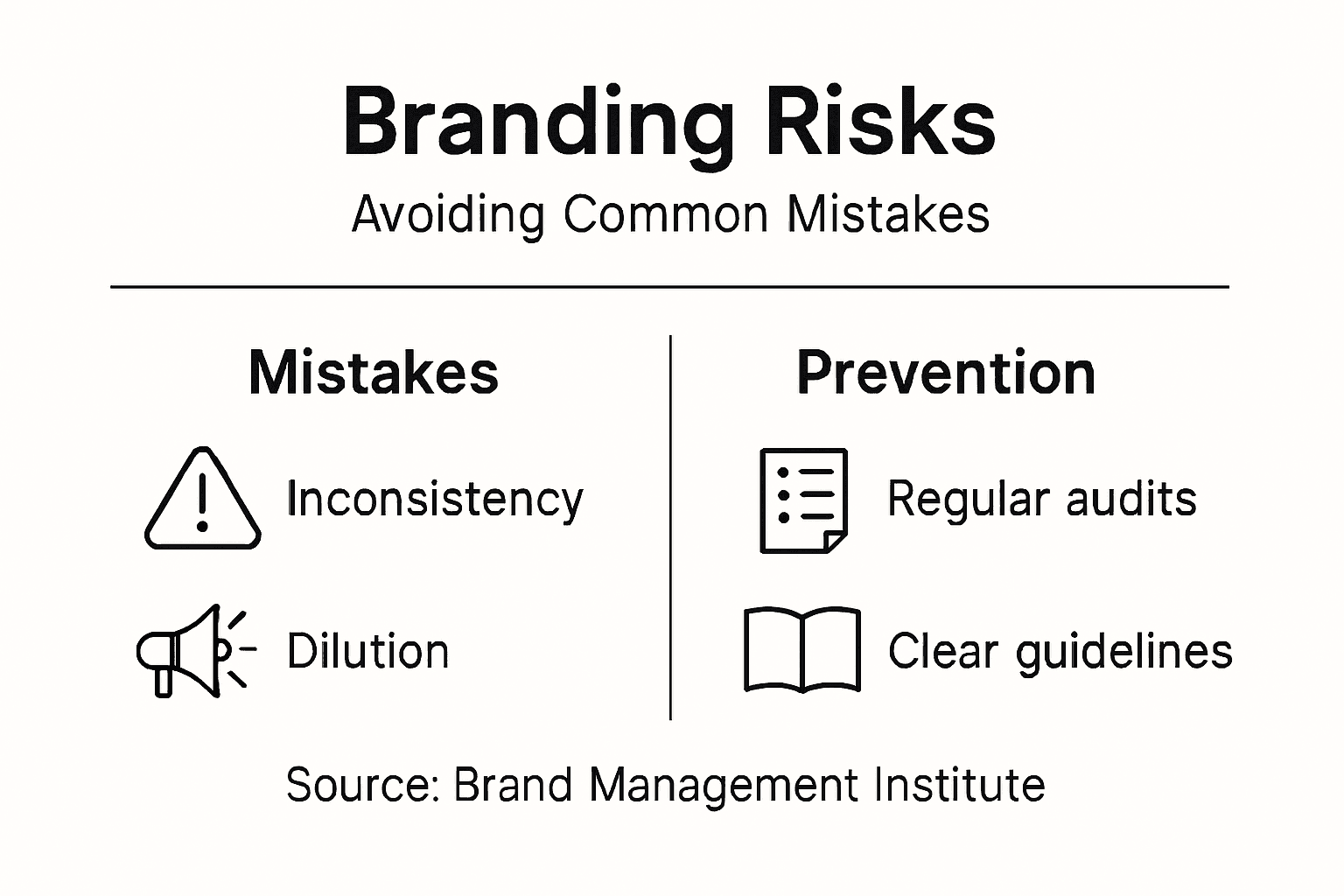
Pro tip: Conduct biannual brand health checks that systematically review your brand’s market positioning, audience perception, and alignment with your evolving business strategy.
Here is a summary of common risks in scalable branding and practical solutions for creative businesses:
| Risk Area | Typical Mistake | Effective Prevention |
|---|---|---|
| Brand Guidelines | Overly rigid or unclear rules | Update guidelines annually |
| Messaging | Inconsistent cross-platform tone | Align narratives across channels |
| Visual Identity | Outdated design elements | Introduce regular visual refreshes |
| Market Alignment | Disconnect from target audience | Schedule recurring audience reviews |
| Strategic Focus | Losing core brand values | Reaffirm core principles quarterly |
Elevate Your Creative Brand with Scalable Design Solutions
Scalable branding challenges creative professionals to build adaptable yet consistent identities that evolve alongside their business growth. If you find yourself struggling with maintaining a strong visual presence that flexes with new opportunities or market shifts, you are not alone. The key pain points such as brand adaptability, modular design, and strategic longevity require expert guidance to prevent brand vulnerability and ensure your narrative remains compelling and relevant.
At KuKoo Creative, we understand these challenges deeply. For over a decade, we have partnered with creative business owners to deliver impactful designs that not only build immediate brand recognition but also provide the flexibility needed for future evolution. Whether you need a versatile logo system or a cohesive website that reflects your brand’s story across all platforms, our team excels in creating solutions grounded in scalable branding principles. Learn more about how we bring these concepts to life on our main website.
Take control of your brand’s future now by exploring our full range of design services tailored for growing creative enterprises. Discover our design approach and see why consistency paired with flexibility can be your greatest asset.
Transform your brand today with KuKoo Creative. Connect with us to build a resilient, recognisable identity that grows with your ambitions. Visit https://kukoocreative.com/ and start your scalable branding journey now.
Frequently Asked Questions
What is scalable branding?
Scalable branding is a strategic approach where creative professionals develop flexible brand identities that can grow and adapt alongside their business objectives, enabling them to maintain consistent messaging while evolving over time.
Why is it important for creative businesses to adopt scalable branding?
Adopting scalable branding is crucial for creative businesses as it allows them to remain relevant in a dynamic market, respond to changing consumer preferences, and facilitate sustainable growth while preserving their core identity.
What are the key components of scalable branding?
The key components of scalable branding include a strong visual identity with adaptable design elements, a clear and evolving brand narrative, and well-defined brand guidelines that allow for creative flexibility without compromising core values.
How can creative professionals avoid risks associated with scalable branding?
Creative professionals can avoid risks associated with scalable branding by ensuring their brand guidelines are clear yet flexible, regularly updating their brand identity, maintaining consistent messaging across platforms, and conducting regular brand audits to align with evolving market conditions.