
A striking logo is more than decoration for a british business, it drives perception and trust across every customer interaction. Studies show that people form their first impression of a brand within just seven seconds, making your logo a powerful tool in a crowded market. Whether you are refreshing a tired design or aiming for a bold new look, understanding each stage of the logo redesign process will help you create a brand identity that truly stands out.
Table of Contents
- Stage 1: Assess Your Current Logo And Brand Needs
- Stage 2: Research Your Market And Audience Expectations
- Stage 3: Define Objectives And Essential Brand Elements
- Stage 4: Collaborate With Designers To Create New Concepts
- Stage 5: Refine And Test Your Logo Redesign For Effectiveness
- Stage 6: Implement Your Updated Logo Across All Brand Materials
Quick Summary
| Essential Insight | Detailed Explanation |
|---|---|
| 1. Conduct a thorough brand assessment | Evaluate your current logo’s strengths and weaknesses to understand its effectiveness in representing your brand identity. |
| 2. Research your target market extensively | Develop a detailed customer profile and analyse their preferences to ensure your new logo resonates with your audience. |
| 3. Set clear objectives for redesign | Define specific goals for your logo redesign that align with your broader business strategy and communicate your brand effectively. |
| 4. Collaborate closely with designers | Engage professional designers by providing comprehensive briefs and encouraging iterative feedback to refine your logo concepts. |
| 5. Test logo effectiveness with feedback | Gather insights from focus groups to validate your logo design, ensuring it meets your audience’s perceptions and expectations. |
Stage 1: Assess your current logo and brand needs
Redesigning your logo begins with an honest, comprehensive evaluation of your current brand identity. Your logo serves as the visual cornerstone of your business communications, and understanding its strengths and limitations is crucial for meaningful transformation.
Start by conducting a rigorous strategic brand assessment that examines multiple dimensions of your visual representation. This involves performing a structured SWOT analysis to pinpoint your brand’s current positioning. Evaluate how your existing logo communicates your business values, considering aspects like colour psychology, typography, and graphic elements. Are these components still aligned with your company’s mission and target audience?
Careful brand audits often reveal surprising insights. For instance, colours that felt contemporary five years ago might now appear dated, or graphic elements that once seemed innovative could now appear generic. By systematically exploring signs indicating a potential rebrand, you can determine whether a subtle refinement or a complete logo overhaul is necessary. Professional branding experts recommend gathering feedback from customers, employees, and stakeholders to gain a holistic perspective on your current visual identity.
Prepare to gather concrete data about your logo’s performance across various platforms and mediums. Screenshot your logo’s appearance on different devices, print materials, and digital channels. This comprehensive documentation will prove invaluable in your redesign process.
Stage 2: Research your market and audience expectations
Understanding your target market is the critical foundation for an effective logo redesign. Your visual branding must resonate deeply with the people who will interact with your business, making comprehensive market research an essential preliminary step.
Begin by developing a detailed profile of your ideal customer. Analyse demographic information including age range, professional background, income levels, and geographical location. Explore their interests, pain points, and aesthetic preferences that might influence their perception of your brand. This isn’t just about collecting data it is about understanding the nuanced psychology of your audience.
Gather insights through multiple channels. Conduct surveys with existing customers, analyse competitor branding, review industry trends, and engage with focus groups. Pay special attention to visual communication strategies that successful brands in your sector are using. Look beyond surface level design and seek to understand how colour, typography, and graphic elements communicate deeper brand values.
Remember that market research is an ongoing conversation. The insights you gather now will not only inform your current logo redesign but will become a valuable resource for future brand evolution.
Stage 3: Define objectives and essential brand elements
Crafting a successful logo redesign requires setting clear and achievable objectives that align precisely with your broader business strategy. Your brand elements are not just visual decorations they are strategic communication tools that convey your company’s core identity and values.
Begin by articulating specific goals for your logo redesign. Are you seeking to modernise your brand, appeal to a new target demographic, or differentiate yourself from competitors? Each objective will influence your design decisions. Developing comprehensive brand guidelines becomes crucial at this stage. These guidelines should meticulously outline essential elements including colour palettes, typography preferences, imagery styles, and logo usage parameters.

Consider creating a mood board that captures the essence of your brand personality. This visual reference will help you and your design team maintain consistency and focus. Think beyond aesthetics and consider how each design element communicates your brand story. Your logo should function seamlessly across various platforms from digital interfaces to printed materials while retaining its core visual integrity.
Remember that defining brand elements is an introspective process. It requires honest reflection about your business identity, target audience, and long term vision. The more precisely you can articulate these elements, the more effective your logo redesign will become.
Stage 4: Collaborate with designers to create new concepts
Partnering with professional design experts transforms your logo redesign from a theoretical exercise into a strategic visual communication process. This collaboration requires open communication, clear expectations, and a shared vision for your brand’s visual identity.
Begin by preparing a comprehensive design brief that articulates your brand objectives, target audience insights, and visual preferences. Utilise market research insights to provide designers with a nuanced understanding of your business landscape. Share your mood board, brand guidelines, and any existing visual assets that can inform the design process.
Establish a collaborative workflow that includes multiple review stages. Request initial concept sketches, provide constructive feedback, and be prepared to iterate. Remember that great design is a dialogue not a unilateral directive. Your designers bring technical expertise while you bring intimate knowledge of your brand. The most successful logo redesigns emerge from this synergistic approach.
Encourage your design team to explore multiple conceptual directions. A diverse range of initial concepts will help you discover unexpected visual solutions that might perfectly capture your brand’s essence.
Stage 5: Refine and test your logo redesign for effectiveness
Utilising focus group research is crucial for validating your new logo design and ensuring it genuinely resonates with your target audience. This stage transforms your design from a theoretical concept into a strategically validated visual asset.
Begin by gathering a diverse group of participants who represent your target demographic. Implement comprehensive Voice of Customer research to collect nuanced feedback about your logo redesign. Prepare a structured feedback session that explores multiple dimensions including visual appeal, brand perception, memorability, and emotional response.
Develop multiple test scenarios to evaluate your logo across different contexts. Assess its performance on digital platforms, printed materials, social media profiles, and physical signage. Pay attention to how the logo scales at different sizes and maintains clarity across various backgrounds. Be open to subtle refinements based on the insights you gather.
Remember that logo testing is an iterative process. Your first round of feedback might reveal unexpected insights that could significantly improve your final design. Approach this stage with curiosity and a willingness to make strategic adjustments that elevate your brand’s visual identity.
Stage 6: Implement your updated logo across all brand materials
Establishing comprehensive brand guidelines is essential for a seamless and professional logo implementation across your business ecosystem. This strategic rollout ensures your new visual identity appears consistent and polished across every customer touchpoint.
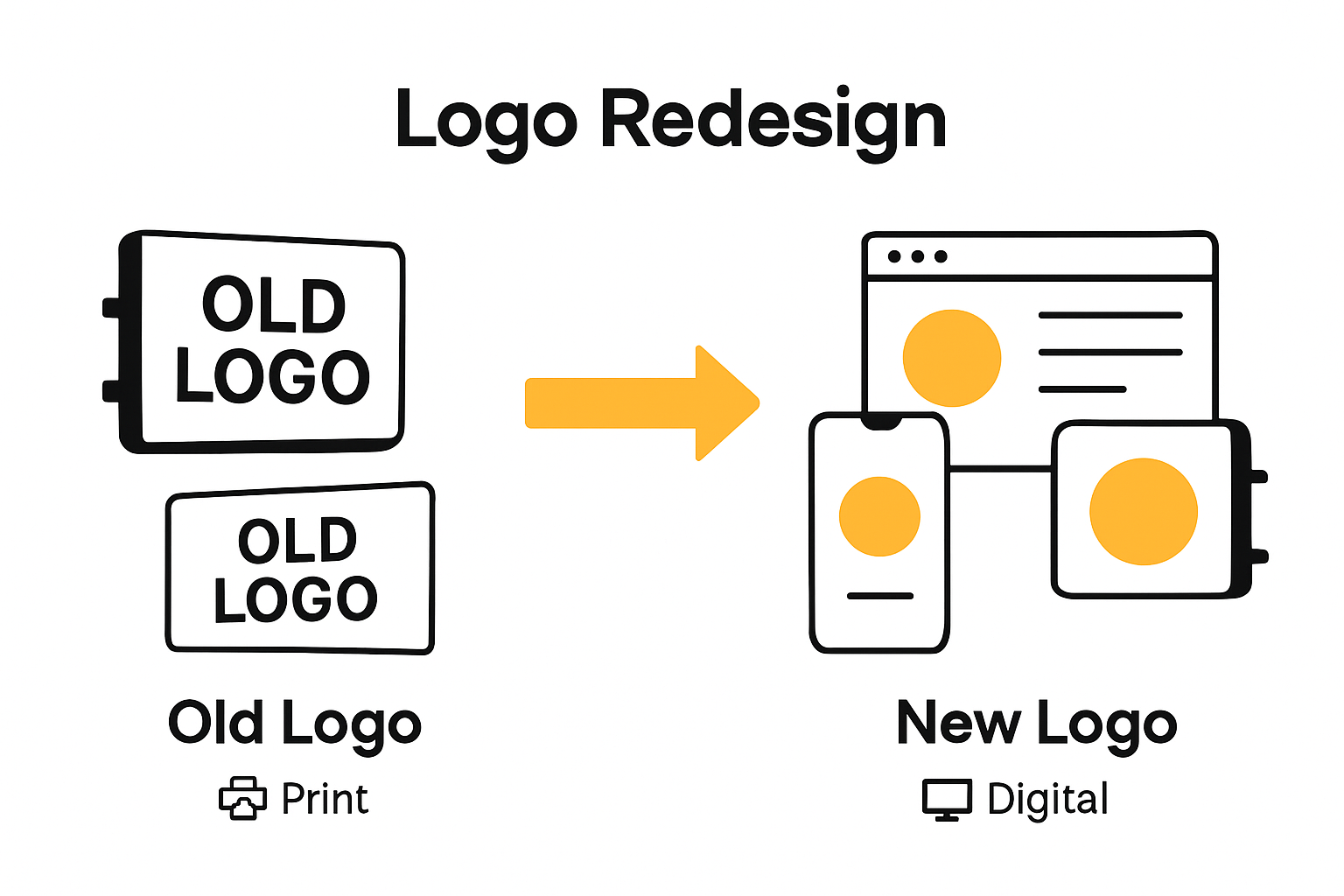
Developing a structured marketing budget and implementation plan will help you methodically update your brand materials. Begin with digital platforms like your website, social media profiles, and email templates. Next, transition to printed materials including business cards, letterheads, signage, product packaging, and marketing collateral.
Create a comprehensive checklist of every location where your logo appears. This might include physical spaces like office walls, vehicle branding, uniforms, and promotional merchandise. Consider working with a professional designer who can help you maintain visual consistency during this transition. Update all materials simultaneously to prevent confusion and reinforce your new brand identity.
Remember that a successful logo implementation is more than just replacing an old image with a new one. It is about telling a consistent brand story that resonates with your audience across every interaction.
Transform Your Logo Redesign Vision into Impactful Reality
Redesigning your logo can feel overwhelming as you navigate brand assessment challenges, market research complexities and the need for clear brand guidelines. If you are seeking to modernise your visual identity, resonate deeply with your audience and implement your new logo seamlessly you deserve expert support that understands these crucial steps. With over a decade of experience partnering with business owners like you, we specialise in turning strategic brand insights and collaborative designs into logos that truly connect.
Key benefits of working with us:
- Tailored logo concepts based on your unique business values and customer profile
- Collaborative process that respects your vision and goals
- Guidance on consistent implementation across all brand materials
Take the next step to elevate your brand identity today by visiting Kukoo Creative. Discover how our expertise can simplify your logo redesign journey from initial evaluation through to final rollout. Don’t let your brand story remain hidden in a dated logo. Embrace a transformation that captures attention and builds lasting recognition.
Start your logo redesign consultation now to experience strategic design that delivers.
Explore solutions at Kukoo Creative website
Visit Kukoo Creative to begin your journey towards a striking new logo that embodies your brand’s true essence.
Frequently Asked Questions
What is the first step in the logo redesign process for my business?
Start with an assessment of your current logo and brand needs. Conduct a thorough analysis to identify what aspects of your logo work well and what may need improvement.
How can I research my target audience effectively for a logo redesign?
Develop a detailed profile of your ideal customer, including their demographics and preferences. Use surveys and focus groups to gather insights that will guide your design choices.
What objectives should I set for my logo redesign?
Define clear and achievable objectives that align with your overall business strategy, such as modernising your brand or appealing to a new market. This clarity will influence your design decisions.
How do I collaborate with designers during the logo redesign?
Prepare a comprehensive design brief detailing your goals, audience insights, and visual preferences. Establish an open dialogue, sharing feedback throughout the design process to ensure alignment with your brand vision.
What should I do after creating new logo concepts?
Refine and test your new logo design by gathering feedback from focus groups representing your target audience. Use their insights to make adjustments that enhance the visual effectiveness of your logo.
How can I ensure consistent implementation of my new logo?
Develop comprehensive brand guidelines to maintain visual consistency across all materials. Create a checklist to update your logo on both digital platforms and printed materials within 30 days.