
TL;DR:
- Content marketing builds trust and long-term growth for UK small businesses through strategic content creation and measurement.
- Effective formats include blogs, videos, podcasts, and newsletters, all combined with repurposing and multichannel distribution.
- Success relies on clear goals, audience research, optimisation for both Google and AI, and consistent measurement over time.
Content marketing is defined as the strategic creation and consistent delivery of valuable, relevant content that builds audience trust, generates leads, and drives long-term business growth. For UK small and mid-sized businesses, this approach outperforms paid advertising over time. Content builds long-term engagement rather than delivering instant sales, which means patience and planning are your two most important assets. Tools like Semrush for keyword research, Google Analytics for performance tracking, and Salesforce CRM for engagement measurement form the backbone of any credible content operation in 2026. This guide walks you through every stage, from strategy to measurement, so you can build something that genuinely grows your brand.
What are the essential steps in a content marketing guide for UK businesses?
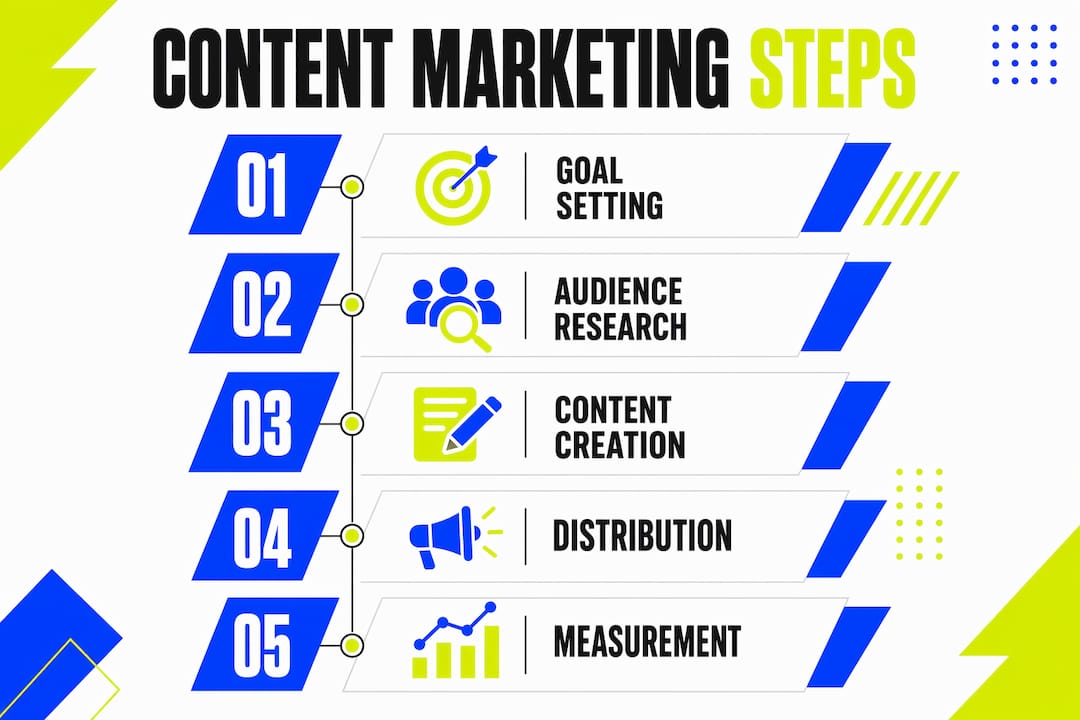
Building a content marketing strategy is not about publishing as much as possible. It starts with knowing exactly what you want to achieve and who you are trying to reach. Clearly defined goals and KPIs are the foundation of any strategy worth investing in. Without them, you cannot measure progress or justify the time you spend.
Follow these steps to build your foundation:
- Set measurable business goals. Decide whether you want to increase website traffic, generate enquiries, grow your email list, or build brand authority. Each goal requires a different content approach.
- Define your audience segments. Create simple buyer personas based on your best existing customers. Note their job roles, challenges, preferred content formats, and where they spend time online.
- Audit your existing content. Review what you already have. Identify what performs well, what has gaps, and what can be updated or repurposed.
- Map topics to the buyer journey. Match content ideas to awareness, consideration, and decision stages. A prospect who has never heard of you needs different content from someone comparing suppliers.
- Choose your formats and channels. Decide where your audience actually is. LinkedIn suits B2B audiences. Instagram and TikTok work well for consumer-facing brands. Email newsletters give you direct, owned access to your readers.
- Build a content calendar. Plan at least one month ahead. Assign topics, formats, deadlines, and the person responsible for each piece.
- Create a workflow and approval process. Structured workflows reduce revisions and keep your brand voice consistent, especially if more than one person is creating content.
Pro Tip: Start with a simple spreadsheet for your content calendar. Include columns for topic, format, channel, publish date, and owner. You do not need expensive software to stay organised.
| Strategy stage | What to do |
|---|---|
| Goal setting | Define 2-3 measurable outcomes tied to business growth |
| Audience research | Build buyer personas from real customer data |
| Content audit | Identify gaps, wins, and repurposing opportunities |
| Topic mapping | Align content ideas to each stage of the buyer journey |
| Channel selection | Choose platforms where your audience is most active |

Which content formats deliver the best engagement for UK SMEs?
The most effective content marketing mixes formats rather than relying on a single type. Combining blogs, videos, podcasts, and social media increases reach and serves different audience preferences at different stages of the buying process. A prospect might discover you through a short video on LinkedIn, read a detailed blog post to learn more, and then subscribe to your email newsletter before making contact.
Here is what works well for UK small and mid-sized businesses:
- In-depth blog posts. Long-form articles of 1,000 to 2,000 words that answer specific questions rank well on Google and build authority over time. Focus on topics your customers genuinely search for.
- Explainer and tutorial videos. Short videos of two to five minutes perform strongly on LinkedIn, YouTube, and Instagram. They are particularly effective for demonstrating products or explaining complex services simply.
- Podcasts. A growing format for B2B audiences. A monthly podcast positions you as a thought leader and gives you content that can be repurposed into blog posts, social clips, and newsletters.
- Infographics. Ideal for presenting data or step-by-step processes in a visual format. They are highly shareable on social media and work well as supporting assets within blog posts.
- Email newsletters. Your email list is an owned channel. Unlike social media, no algorithm controls who sees your content. A fortnightly newsletter keeps your brand front of mind with warm prospects and existing customers.
Repurposing is one of the most underused tactics available to small businesses. A single blog post can become a LinkedIn article, a short video script, three social media posts, and a section of your next newsletter. This multiplies your output without multiplying your workload.
Pro Tip: When you publish a new blog post, immediately plan how you will repurpose it across at least two other channels. Build this into your content calendar as a standard step.
Good brand storytelling ties all your formats together. When your content consistently reflects the same voice, values, and visual identity, it builds recognition far faster than any single piece of content can on its own.
How do you create content that ranks on Google and gets found by AI?
Creating content that performs in 2026 means satisfying two audiences at once: human readers and AI-driven platforms like Google’s Search Generative Experience, ChatGPT, and Perplexity. These systems pull answers from well-structured, authoritative content. The good news is that what satisfies AI also satisfies Google.
Start with keyword research using a tool like Semrush or Google Search Console. Identify the specific questions your audience types into search engines, then build content that answers those questions directly and thoroughly. This captures both traditional search intent and the query patterns used by AI tools.
Follow these execution steps for every piece of content you publish:
- Lead with the answer. State your main point in the first sentence or paragraph. AI systems and busy readers both reward this.
- Use clear headings and subheadings. Structure your content so both humans and AI can scan it quickly. Question-based headings perform particularly well for AI citation.
- Write from genuine expertise. AI tools fast-track drafts but cannot replace your real client outcomes, case studies, or professional opinion. Add these to every piece.
- Optimise your metadata. Write a clear title tag and meta description for every page. Include your primary keyword naturally, not forcefully.
- Use internal linking. Connect related articles and pages on your website. This helps search engines understand your content structure and keeps readers engaged longer.
- Add schema markup. FAQ schema and How-To schema help Google and AI platforms understand your content type and surface it in rich results.
Measuring both SEO and AI visibility is now a requirement, not an option. These two signals do not always move together, which means a piece of content can rank well on Google but never appear in an AI-generated answer, or vice versa. Tracking both gives you a complete picture.
Pro Tip: Use a tool like Think&Craft to monitor how often your content appears in AI-generated answers alongside your standard Google rankings. This dual-track view reveals gaps your standard analytics will miss.
A website audit is a practical starting point if you are unsure how your current content performs technically. It surfaces issues with page speed, broken links, and metadata that quietly suppress your rankings.
What metrics should UK businesses track to measure content success?
Measurement turns content marketing from a creative exercise into a business function. UK small businesses publishing quality content consistently can generate 40 to 70 per cent of inbound leads from organic content within 18 to 24 months. That is a significant return, but only if you track the right signals from the start.
Track these core metrics using Google Analytics and Google Search Console:
- Organic traffic growth. Monitor the number of visitors arriving from search engines each month. Look for upward trends over three to six month periods rather than week-to-week fluctuations.
- Engagement rate. Track time on page, scroll depth, and pages per session. High engagement signals that your content is genuinely useful.
- Lead generation. Count how many enquiries, downloads, or sign-ups originate from content pages. This connects your content directly to business outcomes.
- Conversion rate. Of the visitors who arrive via content, what percentage take a desired action? Even a small improvement here has a significant impact on revenue.
- AI and LLM citation frequency. Monitor how often your brand or content appears in AI-generated answers. Tools like Think&Craft and specialised SEO platforms now track this signal alongside traditional rankings.
Accurate attribution through UTMs and CRM tracking reveals the true contribution of content to your pipeline. Last-click attribution typically underestimates content marketing because organic content often initiates the customer relationship long before a conversion is recorded. Set up UTM parameters on all links you share across channels, and connect them to your CRM so you can trace the full customer journey.
Pro Tip: Review your top ten performing content pages every quarter. Identify what they have in common, then apply those patterns to new content. This compounds your results over time.
Understanding why professional copywriting matters for business growth helps you make the case internally for investing in quality content rather than cutting corners on execution.
Key takeaways
Effective content marketing for UK small businesses requires a clear strategy, consistent execution, and measurement across both traditional SEO and AI-driven discovery channels.
| Point | Details |
|---|---|
| Strategy before content | Set measurable goals and build buyer personas before creating a single piece of content. |
| Mix formats and channels | Combine blogs, video, email, and social media to reach your audience at every stage of their journey. |
| Optimise for AI and Google | Structure content with clear headings, direct answers, and genuine expertise to perform across both platforms. |
| Track the full funnel | Use UTMs, CRM tracking, and AI citation monitoring alongside standard Google Analytics metrics. |
| Repurpose everything | Turn each piece of content into multiple formats to maximise reach without multiplying your workload. |
What I have learned from a decade of content and brand work
The most common mistake I see UK small business owners make is treating content marketing as a short-term campaign rather than a long-term system. They publish ten blog posts, see no immediate spike in enquiries, and conclude it does not work. Content marketing is a relationship-building system, not a quick-sales mechanism. The businesses that win are the ones that show up consistently for twelve to eighteen months and let trust accumulate.
I have also seen the opposite problem: businesses that automate everything and lose their voice entirely. AI writing tools are genuinely useful for research, first drafts, and repurposing. But the content that actually converts is the content that sounds like a real person with real opinions and real experience. Your clients can tell the difference, and so can Google.
The other thing worth saying plainly: your brand identity and your content strategy are not separate projects. When your visual identity, tone of voice, and content topics are all aligned, every piece of content you publish reinforces your brand rather than just filling a calendar slot. That compound effect is where the real growth comes from. Quality over quantity, always.
— Kukoo
Ready to make your content work harder?
Strong content marketing starts with a strong brand. If your visual identity does not reflect the quality of what you do, your content will always be working against itself. At Kukoocreative, we have spent over a decade helping UK business owners build brand identities that make every piece of content more credible and more memorable.
Whether you are starting from scratch or refreshing an established brand, our brand identity services are built around your business goals. We also help businesses think through logo design as a strategic asset, not just a visual one. If you are ready to build a brand presence that amplifies everything you publish, we would love to talk.
FAQ
What is content marketing in simple terms?
Content marketing is the practice of creating and sharing useful, relevant content to attract and retain customers, rather than advertising directly. It builds trust over time and supports long-term business growth.
How long does content marketing take to show results?
Most UK small businesses begin to see meaningful organic traffic growth within six to twelve months of consistent publishing. Inbound leads from organic content typically become significant within 18 to 24 months.
What content formats work best for UK small businesses?
In-depth blog posts, short explainer videos, email newsletters, and LinkedIn content consistently perform well for UK SMEs. The best approach combines formats to reach different audience segments across multiple channels.
Do I need to optimise content for AI as well as Google?
Yes. Measuring SEO and AI visibility separately is now standard practice because the two signals do not always correlate. Structuring content with clear headings and direct answers improves performance on both.
How do I measure whether my content is generating leads?
Set up UTM parameters on all content links and connect them to your CRM. This lets you trace which pieces of content initiate customer relationships, even when the final conversion happens weeks or months later.