
Over 60 percent of british small business owners admit brand inconsistency undermines customer trust. In Leeds, presenting an aligned image across digital platforms can feel daunting when workflows lack structure. Crafting and maintaining a unified brand identity matters because every detail influences how your audience connects with your business. This guide offers practical steps for building effective branding processes, ensuring your business stands out with professional credibility and reliable visual impact.
Table of Contents
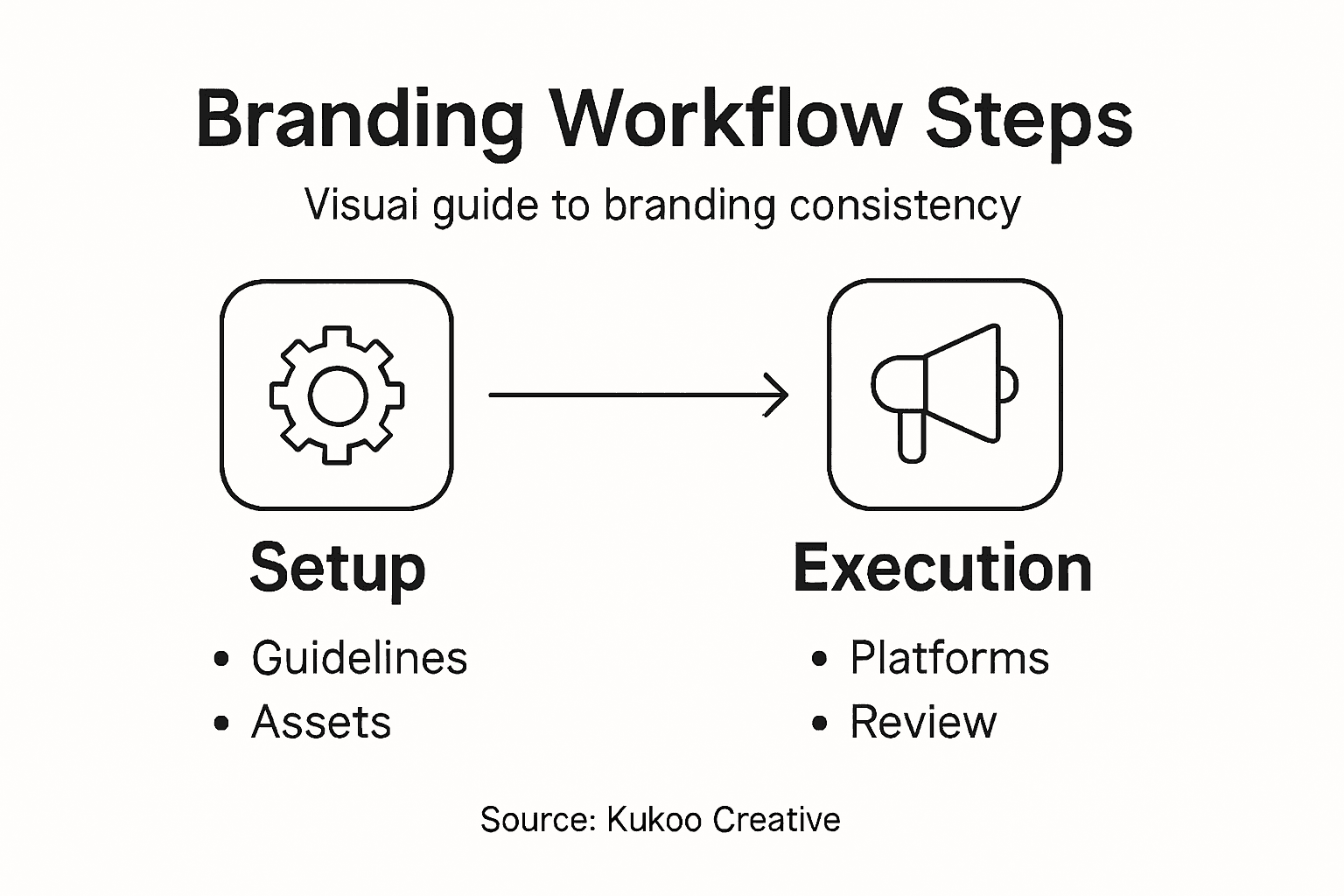
- Step 1: Define Brand Guidelines And Assets
- Step 2: Centralise Digital Materials For Easy Access
- Step 3: Implement Branding Elements Across Platforms
- Step 4: Review Platforms For Visual Consistency
- Step 5: Monitor And Update Branding Regularly
Quick Summary
| Essential Insight | Explanation |
|---|---|
| 1. Develop Comprehensive Brand Guidelines | Create detailed brand guidelines that outline visual elements to ensure a cohesive identity across all platforms. |
| 2. Centralise Digital Assets | Use a cloud storage system to organise brand assets, providing easy access and maintaining consistency in materials. |
| 3. Implement Unified Branding Strategy | Ensure consistent application of branding elements across all digital and physical touchpoints for maximum impact. |
| 4. Conduct Regular Visual Audits | Perform audits every quarter to evaluate visual consistency and uphold the integrity of your brand representation. |
| 5. Monitor Brand Performance Continuously | Regularly review brand metrics to adapt and refine your branding efforts, keeping alignment with business development. |
Step 1: Define brand guidelines and assets
Defining your brand guidelines represents the foundation for consistent visual and messaging communication across all business touchpoints. A comprehensive brand guideline ensures your small business presents a unified identity that resonates with customers and builds professional credibility.
To create robust brand guidelines, start by documenting your core visual elements. This includes your primary colour palette, typography choices, logo variations, imagery style, and preferred graphic design elements. These assets should reflect your business personality and target audience preferences. Brand management fundamentals emphasise creating tangible elements that control how customers perceive your organisation.
Your brand asset documentation should include high resolution logo files in multiple formats (PNG, JPEG, vector), specific colour hex codes, approved font families, and usage instructions for different contexts. Consider creating a digital brand handbook that team members and external contractors can easily access and reference. This ensures everyone communicates your brand consistently whether designing marketing materials, developing websites, or creating social media content.
Practical Insight: Store all brand assets in a centralised digital folder with clear version control to prevent inconsistent or outdated materials from being used across your business communications.
Here is a summary of essential digital brand asset types and their recommended file formats:
| Asset Type | Recommended Formats | Purpose |
|---|---|---|
| Logo | PNG, JPEG, Vector | Flexible use in print and web |
| Colour Palette | PDF, TXT, HEX codes | Accurate colour reproduction |
| Typography | OTF, TTF, PDF | Consistent text style implementation |
| Imagery | High-res JPEG, PNG | Professional graphics and photos |
| Templates | DOCX, PPTX, PDF | Standardised marketing materials |
Step 2: Centralise digital materials for easy access
Streamlining your digital brand assets into a centralised system transforms how your small business manages and deploys critical marketing resources. By creating a single source of truth for all brand materials, you eliminate confusion and ensure consistent brand representation across every communication channel.

Implement a structured digital archive that consolidates organisational data repositories efficiently. Start by selecting a cloud storage platform like Google Drive or Dropbox Business that allows granular access permissions. Organise your brand assets into clear folders: logos, colour palettes, typography, imagery, templates, and marketing collateral. Each folder should include version controlled files with clear naming conventions that indicate date, version, and usage context.
By developing a systematic approach to digital asset management, you create a robust framework that supports seamless collaboration. Ensure all team members and external contractors have appropriate access levels, enabling them to quickly locate and utilise the most recent brand materials. This approach not only enhances operational efficiency but also protects your brand’s visual integrity across different projects and platforms.
Practical Insight: Conduct a quarterly audit of your digital asset repository to remove outdated files and ensure all team members are using the most current brand resources.
The table below compares popular cloud storage solutions for brand asset management:
| Platform | Access Control Features | Collaboration Strength |
|---|---|---|
| Google Drive | Granular file/folder sharing | Real-time document editing |
| Dropbox Business | Group permissions, audit log | Seamless external access |
| Microsoft OneDrive | Integrated with MS Office | Versioning and rollback |
Step 3: Implement branding elements across platforms
Creating a consistent brand presence requires strategic implementation across every digital and physical touchpoint your business occupies. Your goal is to build a unified brand experience that immediately communicates your unique identity to potential customers.
Building a comprehensive brand platform involves meticulously translating your brand guidelines into practical applications. Start by auditing all your existing platforms: website, social media profiles, email templates, marketing materials, and physical signage. Ensure each platform reflects identical visual elements like logos, colour schemes, typography, and imagery style. Pay special attention to maintaining consistent messaging tone that aligns with your brand personality.
Implement a cross platform strategy that adapts your core brand elements while preserving their fundamental characteristics. This means your Instagram post should feel connected to your website design and printed brochure. Use templates that enforce brand consistency, and create style guides for team members and contractors. By developing a systematic approach to brand representation, you transform scattered communications into a cohesive narrative that reinforces your business identity.
Practical Insight: Create a digital brand checklist that team members can reference when developing any new marketing or communication materials to ensure absolute consistency.
Step 4: Review platforms for visual consistency
Ensuring visual consistency across your business platforms is crucial for building a recognisable and professional brand identity. A systematic review process helps you maintain the integrity of your visual communication and reinforce your brand’s unique personality.
Understand the fundamental building blocks of visual design that create a cohesive brand experience. Conduct a comprehensive audit of all digital and physical platforms where your brand appears. This includes your website, social media channels, email templates, printed materials, signage, and marketing collateral. Examine each platform critically for alignment with your established brand guidelines.
Focus on key visual elements during your review: colour palette accuracy, logo placement and scaling, typography consistency, imagery style, and overall visual hierarchy. Create a detailed checklist that allows you to systematically evaluate each platform against your brand standards. Pay attention to subtle variations that might dilute your brand’s visual identity. By implementing a rigorous review process, you transform fragmented brand interactions into a unified and professional brand representation.
Practical Insight: Schedule quarterly visual brand audits and create a standardised review template to ensure ongoing brand consistency across all platforms.
Step 5: Monitor and update branding regularly
Maintaining a dynamic and relevant brand requires consistent monitoring and strategic updates that reflect your business evolution. Your branding is a living asset that needs regular attention to remain competitive and authentic in the marketplace.
Implement a systematic approach to brand management tracking that allows you to evaluate your brand’s performance and relevance. Establish key performance indicators that measure brand perception, customer engagement, and alignment with your current business strategy. These metrics might include customer feedback, market research insights, social media sentiment, and comparative analysis with competitors.
Conduct comprehensive brand health checks at least twice yearly. This involves reviewing your visual identity, messaging consistency, and overall brand positioning. Look for opportunities to refine your branding elements without losing the core essence of your brand identity. Pay attention to emerging market trends, shifts in customer preferences, and technological changes that might impact how your brand communicates and connects with its audience.
Practical Insight: Create a simple brand evolution dashboard that tracks your key branding metrics and triggers review processes when significant variations are detected.
Strengthen Your Brand with Expert Design Support
Maintaining branding consistency as highlighted in the “Branding Consistency Workflow for Small Businesses” article can be challenging. Centralising digital assets, aligning visual elements across platforms, and conducting regular brand audits are essential steps but require time and expertise that many business owners simply do not have. You want your brand to feel unified and professional so it connects deeply with your audience and builds lasting trust.
At KUKOO Creative, we understand these challenges and partner with small businesses to create impactful designs that bring your brand guidelines to life. From expertly crafted logos that reflect your unique personality to cohesive website designs that ensure visual consistency across all channels, we help you present a polished, memorable identity. Discover how our team supports your brand evolution at KUKOO Creative while providing you with centralised digital assets and ongoing guidance to keep your brand fresh and relevant.
Take control of your branding workflow today and stop letting inconsistency hold your business back. Visit KUKOO Creative now to explore our design solutions that make brand management simpler and allow you to focus on what matters most – growing your business. Let’s build a brand that truly connects with the people who matter most.
Frequently Asked Questions
How do I define brand guidelines for my small business?
To define brand guidelines, start by documenting your core visual elements such as colour palette, typography, logo variations, and imagery style. Compile these into a digital brand handbook to ensure consistent use by all team members and contractors.
What should I include in my brand asset documentation?
Include high-resolution logo files in multiple formats, specific colour hex codes, approved font families, and usage instructions for different contexts. This detailed documentation helps maintain consistency in your branding across all platforms.
How can I centralise my digital brand materials effectively?
Centralise your brand materials by selecting a cloud storage platform and organising your assets into clearly labelled folders. Regular audits can help you maintain up-to-date resources, ensuring your team accesses the latest versions.
What steps should I take to implement branding elements across platforms?
To implement branding elements, conduct a comprehensive audit of your existing platforms, like your website and social media profiles. Ensure each platform maintains consistent visual elements and messaging tone reflecting your brand identity.
How often should I review my branding for visual consistency?
Schedule quarterly visual brand audits to systematically assess your platforms for alignment with established brand guidelines. Use a standardised review template to streamline this process and maintain cohesive brand representation.
What metrics should I track to monitor my branding effectiveness?
Track key performance indicators related to brand perception, customer engagement, and alignment with your business strategy. Conduct brand health checks at least twice yearly to evaluate and update your branding as necessary.
Recommended
- Role of Branding in Sales – Driving Loyalty and Growth
- Role of Consistency in Branding: Building Trust Locally
- 7 Essential Types of Branding for Small Retail Owners
- Social Branding: Connecting Leeds Businesses to Customers
- How to Print Small Business Labels for Professional Results – www.printcafeusa.com