Most people recognise famous logos instantly, yet few realise their true power. For british businesses, a well-crafted brand mark isn’t just a pretty image. It’s a strategic tool that shapes first impressions and drives loyalty. Studies show that a strong brand mark can boost customer recognition by over 80 percent. This article explains how understanding the purpose and design of a brand mark can set your business apart from the competition.
Table of Contents
- Defining A Brand Mark And Its Core Purpose
- Major Brand Mark Types And Examples
- Key Elements Of Effective Brand Marks
- Legal Protection And Trademark Issues In The UK
- Common Pitfalls When Creating Brand Marks
Key Takeaways
| Point | Details |
|---|---|
| Brand Mark Definition | A brand mark is a strategic visual identifier that encapsulates a business’s core values and unique market positioning. |
| Key Characteristics | Effective brand marks should be simple, memorable, and scalable, conveying the brand’s essence while fostering emotional connections with the audience. |
| Trademark Protection | Understanding the nuances of trademark types is essential for legal protection of brand marks, including visual and audio elements. |
| Common Pitfalls | Businesses should avoid overly complex designs and ensure visual consistency across platforms to maintain clarity and impact. |
Defining a Brand Mark and Its Core Purpose
A brand mark is more than just a visual symbol – it’s the strategic heartbeat of your business identity. According to research from WhiteRose, a brand mark serves as the primary visual identifier that encapsulates an organisation’s core idea with remarkable impact, brevity, and immediacy.
At its essence, a brand mark transcends mere graphic design. It represents the fundamental promise your business makes to customers – communicating your values, personality, and unique market positioning in a single, powerful visual element. Bath University highlights that successful brand marks are underpinned by a compelling idea that captures customer attention by fulfilling unmet needs.
Effective brand marks typically accomplish several strategic objectives:
- Create immediate visual recognition
- Communicate core brand values
- Differentiate from competitors
- Establish emotional connection with target audience
- Represent the brand’s personality and ethos
The most powerful brand marks distill complex organisational narratives into elegant, memorable symbols that resonate deeply with their intended audience. They are not just logos, but strategic communication tools that speak volumes without uttering a single word.
Major Brand Mark Types and Examples
According to experts at ForoAlfa, brand marks can be strategically classified into six distinct categories, each with unique characteristics and communication potential. These comprehensive types include logotype (text-only representation), logotype with symbol (text and graphic sign existing separately), combination mark (text and symbol fused into one unit), symbol only (non-verbal sign representing the brand), logotype with accessory (text with minor graphic element), and logotype with background (text within a graphic shape).
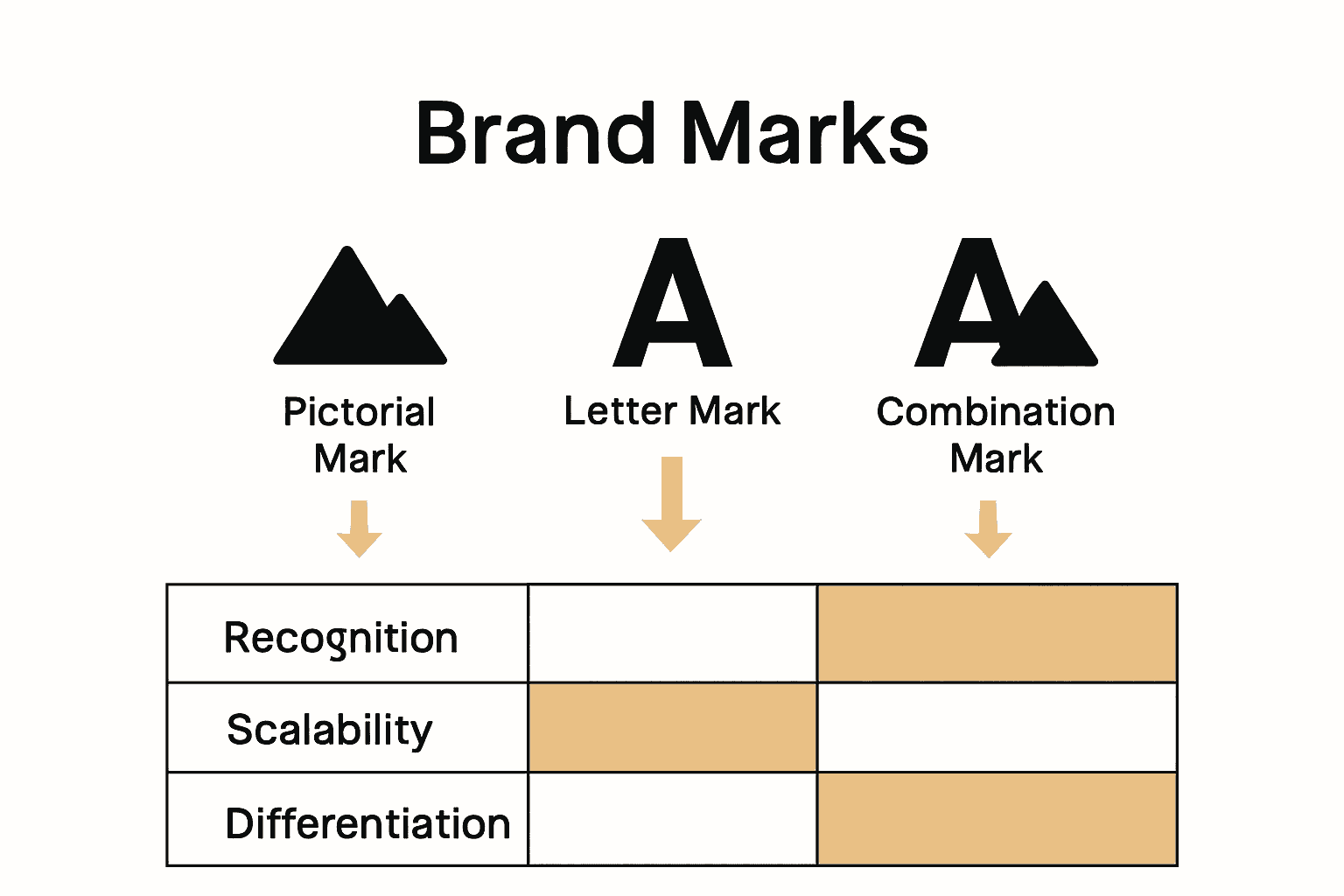
From a practical business perspective, Shopify highlights three primary logo design approaches that UK businesses frequently adopt. These include pictorial marks (graphic icons representing the brand), letter marks (using company initials), and combination marks that blend text and symbol. Well-known global brands exemplify these categories perfectly – think of Apple’s iconic pictorial logo, Louis Vuitton’s distinctive letter mark, or Adidas’s powerful combination mark.
When selecting a brand mark type, businesses should consider several critical factors:
- Brand personality and industry context
- Target audience preferences
- Scalability and versatility of the design
- Potential for digital and print adaptability
- Long-term brand recognition potential
Ultimately, the most effective brand mark transcends visual aesthetics. It becomes a strategic asset that communicates your business’s core values, differentiates you from competitors, and creates an immediate emotional connection with your target audience. Choosing the right brand mark type is not just a design decision – it’s a crucial business communication strategy.
Key Elements of Effective Brand Marks
Research from WhiteRose emphasizes that an effective brand mark must present the organization’s core idea with three critical attributes: impact, brevity, and immediacy. This means creating a visual identifier that communicates your brand’s essence quickly and powerfully, without overwhelming the viewer.
Bath University highlights that truly compelling brand marks are constructed around a resolute core purpose, generating a Customer Value Proposition that resonates both functionally and emotionally. This goes beyond mere aesthetic design – it’s about crafting a strategic visual narrative that connects with your target audience on multiple levels.
Key elements that define an exceptional brand mark include:
- Simplicity and clarity of design
- Distinctive and memorable visual language
- Authentic representation of brand personality
- Scalability across different media platforms
- Consistent and recognisable visual identity
Successful brand marks are not just graphical elements – they are strategic communication tools that distill complex organisational stories into elegant, memorable symbols. By carefully considering each design element, UK businesses can create brand marks that not only catch the eye but also build lasting emotional connections with their customers. With logo design best practices, your brand mark can become a powerful asset in your overall business strategy.
Legal Protection and Trademark Issues in the UK
According to SprintLaw, trademark protection in the UK is nuanced and offers multiple registration categories. Trademark types include word marks (protecting brand names or slogans without stylization), figurative or logo marks (protecting stylized graphics), and combined marks (protecting specific logo and name arrangements). Each trademark type provides distinct legal protections and strategic advantages for UK businesses.
Interestingly, trademark protection extends beyond visual representations. Wikipedia reveals that sound trademarks are legally recognized in the UK, functioning as distinctive brand identifiers similar to visual logos. This means businesses can potentially protect unique audio signatures, jingles, or sonic branding elements under intellectual property legislation.
Key considerations for UK businesses seeking trademark protection include:
- Conducting comprehensive trademark searches
- Understanding different trademark registration categories
- Assessing the geographical scope of protection needed
- Monitoring potential infringements
- Renewing trademark registrations periodically
Navigating trademark protection requires strategic thinking and legal expertise. While the process might seem complex, protecting your brand’s unique identity is crucial in today’s competitive business landscape. For comprehensive insights into building a robust brand strategy, check out our guide on brand identity that can help UK businesses make informed decisions about legal brand protection.
Common Pitfalls When Creating Brand Marks
According to ForoAlfa, one of the most fundamental mistakes in brand mark creation is the misuse of technical terminology and a lack of understanding about proper logo classification. This seemingly minor error can cascade into significant branding challenges, potentially undermining a company’s visual communication strategy and professional credibility.
UK businesses frequently encounter several critical missteps when developing their brand marks. These pitfalls often stem from insufficient research, rushed design processes, or a limited understanding of visual communication principles. Common errors include creating overly complex designs that lose impact at smaller scales, selecting colour schemes that don’t resonate with target audiences, and failing to consider how the brand mark will translate across different marketing platforms.
Key pitfalls to avoid in brand mark development include:
- Overcomplicated design that sacrifices clarity
- Inconsistent visual representation across platforms
- Designs that lack meaningful connection to brand values
- Failing to conduct comprehensive competitor research
- Neglecting scalability and versatility of the design
By understanding these potential challenges, businesses can approach brand mark creation more strategically. With careful planning and thoughtful execution, you can develop a visual identity that truly represents your brand’s essence. For more comprehensive guidance on navigating this complex process, check out our custom branding guide for business owners that provides in-depth insights into creating compelling visual identities.
Elevate Your Brand Mark to Make a Lasting Impression
Creating a brand mark that truly reflects your business values and connects emotionally with your audience is no easy task. Many UK businesses struggle with clarity, consistency and the challenge of standing out in a crowded market. If you feel overwhelmed by the complexity of design choices, trademark considerations or crafting a brand mark that delivers impact, brevity and immediacy then you are not alone.
At Kukoocreative, we specialise in transforming these challenges into powerful visual identities that build recognition and trust. With over a decade of experience partnering with business owners just like you, we understand how to create designs that resonate deeply and perform across digital and print platforms. Whether you need a distinctive new logo or a comprehensive brand identity, our expert team can guide your journey from concept to legal protection.
Don’t let common pitfalls hold your brand back or risk losing valuable business opportunities. Visit Kukoocreative to explore how our creative solutions align with your goals. Start crafting a memorable brand mark today that truly speaks for your UK business and connects you with the people who matter most. Discover more about building coherent brand identities in our brand identity guide and learn to avoid costly mistakes with our custom branding guide for business owners. Your brand deserves a mark that means more than just a logo.
Frequently Asked Questions
What is a brand mark?
A brand mark is a strategic visual identifier that represents a business’s core idea, essence, and identity, allowing for immediate recognition and communication of its values.
What are the key elements of an effective brand mark?
Key elements include simplicity, clarity of design, distinctiveness, authenticity, scalability across various media, and a consistent visual identity that resonates with the target audience.
How can I ensure my brand mark differentiates from competitors?
To differentiate your brand mark, focus on your unique value proposition, conduct competitor research, and ensure your design reflects your brand’s personality and resonates with your audience.
What are the common pitfalls to avoid when creating a brand mark?
Common pitfalls include overly complex designs, inconsistent visual representation, a lack of meaningful connection to brand values, neglecting scalability, and insufficient competitor research.
Recommended
- Why Branding Matters: Complete Guide For UK Business Owners – Kukoo Creative
- 7 Logo Design Best Practices Every UK Business Owner Needs – Kukoo Creative
- Role of Logo Design: Complete Guide for UK Businesses – Kukoo Creative
- Brand Identity Explained: Essential Guide for UK Businesses – Kukoo Creative
- The Rise of UK Perfumes: Understanding the Fragrance Industry
- Why Alexandria Fragrances are a Better Option than Other Brands