
Most British businesses underestimate how much brand guidelines impact their reputation. A consistent visual identity is not just for major corporations—it is essential for building trust and credibility, especially in a crowded market. According to recent surveys, consistent branding can increase revenue by up to 23 percent. Understanding the fundamentals of brand guidelines equips British companies with the tools to stand out, boost recognition, and protect their brand across every platform.
Table of Contents
- Brand Guidelines Explained For UK Businesses
- Key Elements Of Effective Brand Guidelines
- How Brand Guidelines Drive Consistency
- Staff Training And Brand Alignment
- Legal Protection And Risk Avoidance
Key Takeaways
| Point | Details |
|---|---|
| Importance of Brand Guidelines | Strong brand guidelines create a professional image, enhance recognition, and build trust among customers. |
| Core Components | Key elements include logo specifications, colour palettes, typography, and communication tone. |
| Consistency and Legal Protection | Consistent branding ensures recognisable identity and protects against legal vulnerabilities. |
| Ongoing Review and Training | Regularly update guidelines and train staff to maintain alignment with brand values and standards. |
Brand Guidelines Explained For UK Businesses
Every business needs a strong visual identity, and brand guidelines provide the essential blueprint for communicating your company’s personality consistently. These comprehensive documents serve as a strategic roadmap that ensures every visual and communicative element represents your brand’s core values and unique character.
Brand guidelines are more than just a collection of design rules. They act as a critical framework that governs how your organisation presents itself across multiple platforms. From your website to marketing materials, brand guidelines from GOV.UK demonstrate how systematic visual standards can create instant recognition and professional credibility. These guidelines typically include specific instructions about colour palettes, typography, logo usage, imagery style, and tone of communication.
For UK businesses, developing robust brand guidelines is particularly important in today’s competitive marketplace. These documents help smaller enterprises compete with larger corporations by creating a professional, consistent image. When potential clients or customers encounter your brand, they should immediately recognise your unique visual language. This consistency builds trust, reinforces brand memory, and communicates professionalism across every touchpoint.
The core components of effective brand guidelines usually include:
- Detailed logo specifications
- Approved colour schemes
- Typography and font guidelines
- Imagery and visual style rules
- Communication tone and voice parameters
Pro Tip: Document Control: Create a single, shareable digital document that all team members and external contractors can easily access, ensuring everyone understands and can implement your brand’s visual standards precisely.
Pro Tip: Regular Review: Schedule annual reviews of your brand guidelines to ensure they remain contemporary and aligned with your evolving business strategy.
Here is a comparison of the business impacts of well-developed versus poorly-developed brand guidelines:
| Aspect | Strong Brand Guidelines | Weak or Missing Guidelines |
|---|---|---|
| Customer Trust | Builds immediate trust and loyalty | Results in uncertainty and doubt |
| Market Recognition | Enhances brand recall and clarity | Causes confusion and inconsistency |
| Team Efficiency | Streamlines creative collaboration | Leads to repetitive decision-making |
| Legal Protection | Reduces risk of IP misuse | Increases vulnerability to disputes |
| Competitive Advantage | Elevates perception and credibility | Makes standing out far more difficult |
Key Elements Of Effective Brand Guidelines
Creating robust brand guidelines requires a strategic approach that goes beyond simple design rules. Brand consistency is the cornerstone of professional communication, ensuring that every interaction reflects your business’s core identity and values. Effective brand management principles emphasise the importance of developing a framework that is both comprehensive and adaptable.
The most effective brand guidelines typically encompass several critical components. Consistent tone of voice and communication standards are fundamental, defining how your organisation speaks and connects with its audience. These guidelines should provide clear direction on visual elements like logo usage, colour palettes, and typography, as well as linguistic guidelines that capture your brand’s unique personality and communication style.

A well-constructed brand guideline serves multiple strategic purposes. It acts as a comprehensive reference that empowers your team to create cohesive marketing materials, ensures visual and communicative alignment across different platforms, and protects the integrity of your brand’s visual and verbal identity. By establishing clear, detailed parameters, you prevent inconsistent or off-brand communications that could potentially dilute your organisation’s professional image.
Key elements to include in your brand guidelines:
- Detailed logo specifications and usage rules
- Precise colour palette with hex and RGB codes
- Typography guidelines, including font families and hierarchy
- Imagery and visual style instructions
- Tone of voice and communication principles
- Digital and print application guidelines
Pro Tip: Collaborative Development: Involve team members from different departments when creating brand guidelines to ensure comprehensive coverage and widespread understanding of your brand’s identity.
Pro Tip: Digital Accessibility: Ensure your brand guidelines are easily accessible in a shareable, digital format that can be quickly referenced by all team members and external partners.
How Brand Guidelines Drive Consistency
Consistency is the cornerstone of powerful brand communication, transforming fragmented messaging into a unified, recognisable identity. Government branding guidelines demonstrate how systematic visual and communicative standards can create a cohesive representation that resonates with audiences across different platforms and contexts.
Brand guidelines serve as a critical mechanism for maintaining uniformity across all business communications. By establishing precise rules for visual elements like typography, colour palettes, and logo usage, organisations create a recognisable framework that reinforces their professional image. Unified identity systems ensure that every piece of communication, whether a social media post, marketing brochure, or email signature, speaks with a consistent and authentic voice.
The strategic importance of consistency cannot be overstated. When customers encounter your brand across multiple touchpoints, a cohesive visual and verbal language builds trust, credibility, and memorability. This uniformity helps smaller businesses compete with larger organisations by presenting a professional, well-organised image that suggests reliability and attention to detail. By defining clear parameters for communication, brand guidelines prevent inconsistent messaging that could potentially confuse or alienate potential customers.
Key ways brand guidelines drive consistency:
- Standardise visual design elements
- Define communication tone and language
- Establish clear usage rules for brand assets
- Create a recognisable brand personality
- Ensure professional representation across all platforms
- Simplify content creation for team members
Pro Tip: Visual Audit: Conduct quarterly reviews of your brand’s visual communications to ensure ongoing adherence to your established guidelines.
Pro Tip: Team Training: Develop a comprehensive onboarding process that introduces new team members to your brand guidelines, ensuring universal understanding and implementation.
Staff Training And Brand Alignment
Brand alignment is far more than a theoretical concept—it’s a practical necessity that requires deliberate, consistent effort across your entire organisation. Ensuring employees understand the company’s vision and strategic objectives becomes crucial for creating a unified brand experience that resonates with customers and stakeholders alike.
Effective staff training goes beyond simple orientation sessions. It involves creating comprehensive programmes that immerse employees in the brand’s core values, communication standards, and visual identity. Providing staff with access to brand assets and training enables team members to represent the brand authentically and confidently across all interactions, whether internal or customer-facing.
The alignment process requires a multifaceted approach that combines structured learning with ongoing reinforcement. By developing clear communication channels, interactive training modules, and regular brand refresher sessions, organisations can ensure that every team member becomes a genuine brand ambassador. This approach transforms brand guidelines from a static document into a living, breathing framework that evolves with the company’s growth and adapts to changing market dynamics.
Key strategies for staff training and brand alignment:
- Create comprehensive onboarding programmes
- Develop interactive brand guideline workshops
- Establish regular brand communication sessions
- Design visual and verbal brand training modules
- Implement brand consistency review processes
- Encourage ongoing learning and brand engagement
Pro Tip: Brand Ambassador Programme: Identify and nurture team members who naturally embody your brand values, creating internal champions who can inspire and educate their colleagues.
Pro Tip: Feedback Loop: Establish a systematic process for staff to provide insights about brand implementation, ensuring continuous improvement and relevance of your brand guidelines.
Legal Protection And Risk Avoidance
Brand guidelines play a crucial role in mitigating legal risks and protecting your business’s intellectual property. GDPR compliance principles provide a fundamental framework for ensuring that your brand’s data handling and communication strategies remain legally sound and ethically responsible.
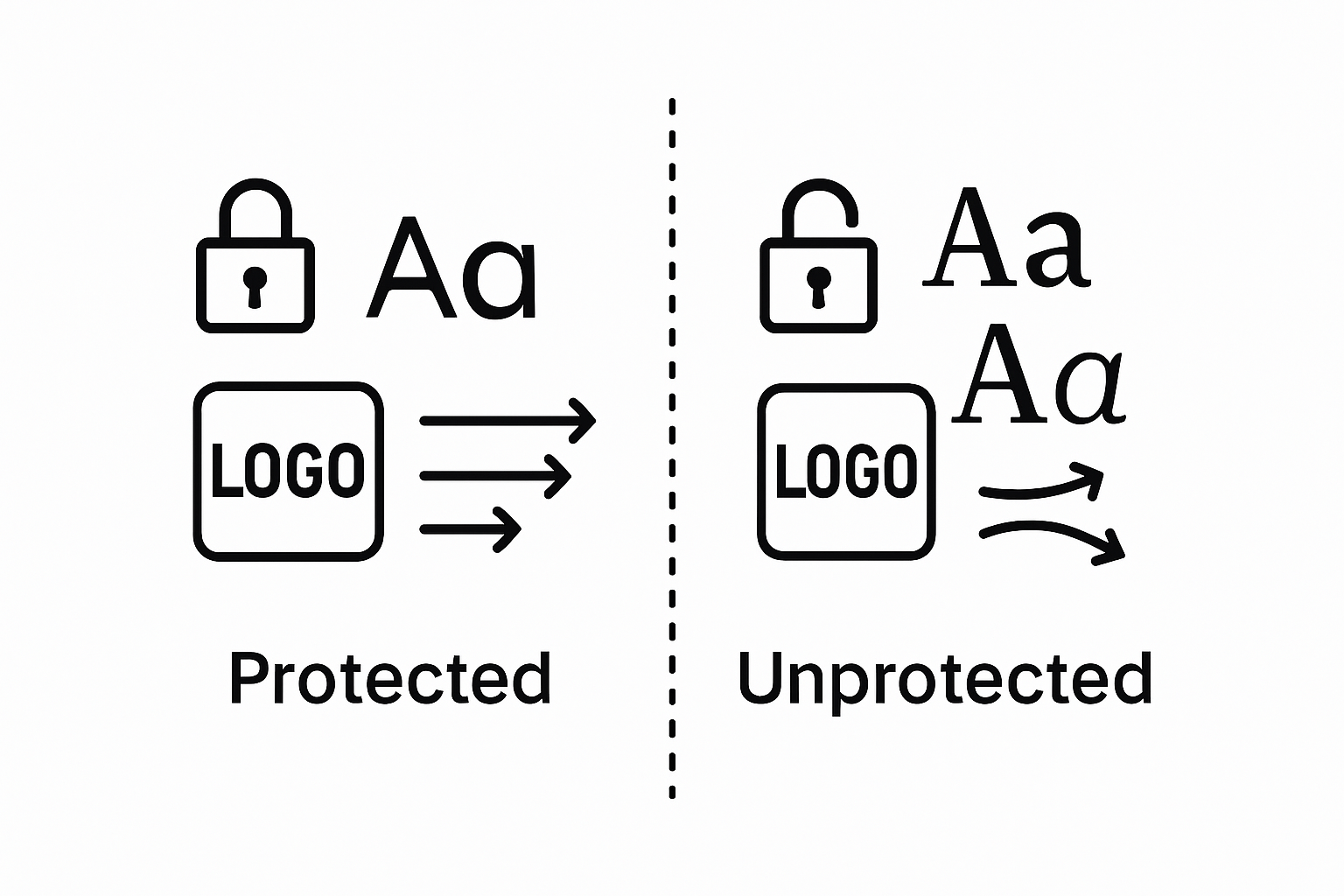
Comprehensive brand guidelines serve as a defensive mechanism against potential legal vulnerabilities. By establishing clear rules for brand usage, trademark protection, and communication standards, businesses can prevent inadvertent misrepresentation or misuse of their brand assets. Government brand implementation guidelines demonstrate how systematic documentation can create a robust legal shield that protects an organisation’s visual and verbal identity across various platforms.
Legal protection extends beyond simple visual consistency. It encompasses carefully crafted protocols that address intellectual property rights, trademark usage, content ownership, and communication boundaries. By developing precise guidelines that outline permissible and restricted uses of brand elements, businesses can proactively prevent potential disputes, protect their reputation, and maintain control over their brand’s representation in the marketplace.
Key legal protection strategies in brand guidelines:
- Define precise trademark usage rules
- Establish clear intellectual property boundaries
- Create content ownership protocols
- Specify permissible brand asset usage
- Outline communication compliance standards
- Develop dispute resolution mechanisms
Pro Tip: Legal Review: Collaborate with intellectual property lawyers to review and validate your brand guidelines annually, ensuring comprehensive legal protection.
Pro Tip: Documentation Trail: Maintain a comprehensive record of brand guideline versions and approval processes to demonstrate proactive brand management in potential legal scenarios.
Below is a quick reference guide to the legal aspects addressed by brand guidelines:
| Legal Aspect | Purpose | Business Benefit |
|---|---|---|
| Trademark Usage Rules | Prevents brand infringement | Avoids costly legal disputes |
| IP Boundaries | Clarifies ownership of assets | Safeguards creative investments |
| Asset Usage Protocols | Controls external brand use | Maintains consistency and control |
| Compliance Standards | Ensures adherence to regulation | Reduces risk of penalties |
| Dispute Resolution | Outlines handling disagreements | Speeds up legal response |
Secure Your Business Identity with Expert Brand Guideline Solutions
Your article highlights a common challenge faced by UK businesses: maintaining consistency and protection of their brand through detailed brand guidelines. Without clear and robust rules, businesses risk confusion, loss of trust, and even legal vulnerabilities. Key pain points such as inconsistent messaging, inefficient team collaboration, and risk of intellectual property misuse directly impact your brand’s credibility and growth potential.
At Kukoo Creative, we understand these challenges deeply. For over a decade, we have helped business owners create impactful designs—including logos and websites—that build lasting brand recognition and protect your brand’s unique identity. Our approach ensures your brand communication remains clear, consistent, and compelling across all channels. Let us help you implement strong visual standards and strategic brand assets that safeguard your identity and resonate with your audience.
Elevate your business reputation and eliminate confusion today by partnering with creative experts who prioritise brand integrity. Explore how our services can empower your brand in line with the principles of brand consistency and professional brand management.
Ready to protect and amplify your brand with robust, memorable design solutions

Visit Kukoo Creative now to start building a strong foundation that sets your business apart and safeguards your identity for years to come.
Frequently Asked Questions
What are brand guidelines?
Brand guidelines are comprehensive documents that outline the visual and communicative elements of a brand, including logo usage, colour palettes, typography, imagery style, and tone of communication. They serve as a blueprint for maintaining consistency across all brand representations.
Why are brand guidelines important for businesses?
Brand guidelines are crucial because they help build a professional and consistent image, ensuring that every interaction with your audience reflects your brand’s core identity. This consistency fosters trust, enhances recognition, and can give smaller businesses an edge against larger competitors.
How do brand guidelines contribute to legal protection?
Brand guidelines aid in legal protection by establishing clear rules for trademark usage and communication standards. They help prevent misrepresentation, safeguard intellectual property rights, and mitigate the risk of potential legal disputes related to brand identity and usage.
What should be included in effective brand guidelines?
Effective brand guidelines should include detailed specifications for logo usage, approved colour schemes, typography and font guidelines, rules for imagery and visual style, and parameters for tone of voice and communication standards.