
Walking through a Leeds shop, customers often remember more than products; they recall how a brand made them feel. For small retail business owners, creating these strong emotional moments is now a powerful way to encourage lasting loyalty. By focusing on emotional branding strategies that resonate with personal dreams and community values, you can move beyond transactions and build genuine relationships with your customers.
Table of Contents
- What Emotional Branding Means For Retailers
- Types Of Emotional Branding Strategies Used
- How Emotional Branding Drives Customer Loyalty
- Steps To Create Emotional Connections Locally
- Common Pitfalls And How To Avoid Them
Key Takeaways
| Point | Details |
|---|---|
| Emotional Branding Importance | Retailers should focus on building meaningful connections with customers by addressing their deeper emotional needs. |
| Customer Loyalty Mechanisms | Emotional brand attachment creates profound connections that go beyond simple repeat purchases, enhancing long-term loyalty. |
| Local Engagement Strategies | Successful emotional branding requires an understanding of local cultural nuances and genuine community engagement. |
| Avoiding Common Pitfalls | Retailers must ensure authenticity in their messaging and avoid emotional manipulation to maintain consumer trust. |
What Emotional Branding Means for Retailers
Emotional branding represents a strategic approach that transforms retail interactions from purely transactional exchanges into meaningful connections. Rather than simply selling products, retailers in Leeds can create profound relationships by understanding and addressing deeper customer emotions.
At its core, emotional branding involves connecting customers with brand experiences that resonate beyond functional benefits. This strategy recognises that consumers don’t just purchase products; they invest in narratives, feelings, and identities that align with their personal aspirations.
Key characteristics of emotional branding include:
- Creating authentic storytelling that reflects customer values
- Developing sensory experiences that trigger positive emotional responses
- Demonstrating genuine understanding of customer needs and dreams
- Building trust through consistent, empathetic communication
- Positioning the brand as more than a mere commercial entity
Successful emotional branding requires retailers to move beyond surface-level marketing. It demands deep psychological insight, genuine empathy, and a commitment to understanding what truly motivates their target audience. By crafting experiences that feel personal and meaningful, retailers can transform casual shoppers into loyal brand advocates.
Pro tip: Conduct regular customer interviews and feedback sessions to continuously understand the emotional drivers behind your audience’s purchasing decisions.
Types of Emotional Branding Strategies Used
Emotional branding strategies have evolved dramatically, offering retailers in Leeds sophisticated approaches to connect deeply with their customers. Diverse emotional connection techniques now provide multiple pathways for creating meaningful brand relationships beyond traditional marketing methods.
Retail businesses can leverage several key emotional branding strategies:
- Sensory Branding: Creating immersive experiences that engage multiple senses
- Storytelling: Constructing narrative frameworks that resonate with customer identities
- Cause Branding: Aligning brand values with social or environmental missions
- Digital Personalisation: Using technology to create tailored emotional experiences
- Influencer Collaboration: Developing authentic connections through trusted personalities
Successful implementation requires understanding that each strategy must authentically reflect the brand’s core values. For instance, sensory branding might involve carefully curated in-store music, lighting, and product displays that evoke specific emotional responses. Storytelling could mean sharing the brand’s origin, highlighting local Leeds connections, or showcasing customer journeys that demonstrate genuine impact.
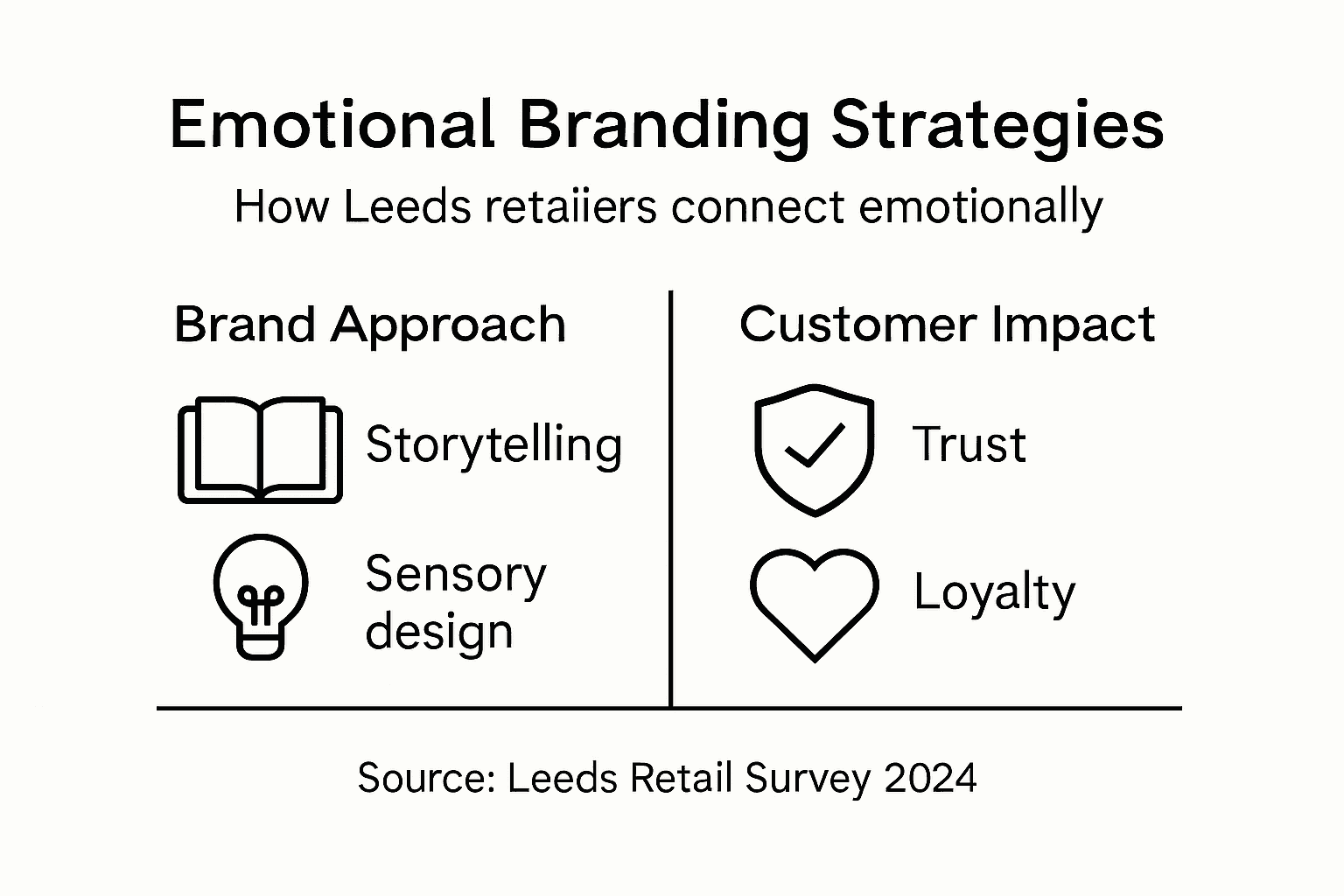
Here’s a comparison of emotional branding strategies and their potential business impact for retailers:
| Strategy | Core Approach | Expected Business Impact |
|---|---|---|
| Sensory Branding | Multi-sensory store environments | Enhances store memorability |
| Storytelling | Brand and customer narratives | Deepens customer emotional ties |
| Cause Branding | Social responsibility engagement | Builds social trust and loyalty |
| Digital Personalisation | Tailored online experiences | Increases repeat visit rates |
| Influencer Collaboration | Partnerships with trusted figures | Accelerates word-of-mouth growth |
Emotional branding transforms commercial interactions into meaningful human connections, turning transactions into relationships.
Modern retailers must recognise that consumers increasingly seek brands that understand their deeper emotional needs. This means moving beyond product features to create experiences that feel personal, purposeful, and genuinely connecting.
Pro tip: Regularly map your customer’s emotional journey, identifying key touchpoints where genuine, empathetic communication can create lasting brand loyalty.
How Emotional Branding Drives Customer Loyalty
Customer loyalty goes far beyond simple repeat purchases. Emotional brand attachment creates profound connections that transform casual shoppers into passionate brand advocates.
The mechanisms driving loyalty through emotional branding are multifaceted:
- Trust Building: Creating consistent, authentic interactions
- Memory Creation: Developing positive emotional experiences
- Identity Alignment: Connecting brand values with customer self-perception
- Narrative Engagement: Sharing compelling stories that resonate
- Personalised Experiences: Demonstrating genuine understanding
Retail businesses in Leeds must recognise that modern consumers seek more than transactional relationships. They want brands that understand their deeper aspirations, challenges, and emotional landscapes. This means moving beyond traditional marketing approaches to create genuine, empathetic connections that make customers feel truly seen and valued.
Emotional loyalty transcends rational decision-making, creating bonds that price and convenience cannot easily break.
Successful emotional branding requires a strategic, nuanced approach. It involves carefully crafting experiences that tap into customers’ core emotional needs, whether that’s feeling understood, supported, inspired, or part of a larger community.

Pro tip: Conduct regular customer feedback sessions to continuously understand and refine the emotional touchpoints that genuinely matter to your audience.
Steps to Create Emotional Connections Locally
Creating emotional connections requires more than generic marketing strategies. Local storytelling techniques enable retailers to forge genuine relationships that resonate deeply with their community’s unique identity and values.
Key steps for developing meaningful local emotional connections include:
- Community Mapping: Understanding local cultural nuances
- Narrative Development: Crafting stories rooted in local experiences
- Sensory Experience Design: Creating in-store environments that reflect local aesthetics
- Cultural Alignment: Demonstrating genuine understanding of community values
- Collaborative Engagement: Involving customers in brand storytelling
Successful local emotional branding demands authentic representation. This means moving beyond superficial marketing tactics to genuinely understand and reflect the specific emotional landscape of Leeds. Retailers must listen carefully, observe local dynamics, and create experiences that feel personal and meaningful.
Authentic local connections transform customers from passive consumers into active brand champions.
Implementing these strategies requires continuous learning and adaptation. By demonstrating a sincere commitment to understanding and serving the local community, retailers can build trust that transcends traditional transactional relationships.
Pro tip: Conduct monthly community listening sessions to continuously refine your understanding of local emotional triggers and evolving customer expectations.
Common Pitfalls and How to Avoid Them
Emotional branding is complex, with numerous potential missteps that can derail genuine customer connections. Emotional branding risks range from superficial messaging to complete misalignment with audience expectations.
Common pitfalls retailers must carefully navigate include:
- Emotional Manipulation: Forcing inauthentic emotional narratives
- Inconsistent Messaging: Presenting conflicting brand experiences
- Cultural Insensitivity: Failing to understand local emotional nuances
- Overused Emotional Triggers: Creating emotional fatigue
- Lack of Genuine Connection: Treating emotions as marketing tactics
Successful emotional branding requires a delicate balance between strategic communication and authentic representation. Leeds retailers must develop a deep, nuanced understanding of their community’s emotional landscape, moving beyond simplistic attempts to trigger predetermined responses.
To assist retailers in Leeds, here’s a summary of emotional branding pitfalls and practical ways to avoid them:
| Pitfall | Risk for Retailers | Recommended Avoidance Approach |
|---|---|---|
| Emotional Manipulation | Customer distrust | Use honest, authentic messaging |
| Inconsistent Messaging | Loss of brand credibility | Align communication across channels |
| Cultural Insensitivity | Offending local communities | Research and respect local norms |
| Overused Emotional Triggers | Audience fatigue | Refresh campaign themes regularly |
| Lack of Genuine Connection | Poor long-term loyalty | Engage authentically with feedback |
Authenticity cannot be manufactured; it must be genuinely lived and communicated.
Maintaining emotional integrity means constant vigilance. Brands must continuously listen, adapt, and demonstrate genuine commitment to their community’s evolving emotional needs. This requires ongoing research, honest self-reflection, and a willingness to transform strategies based on genuine feedback.
Pro tip: Establish a monthly review process that critically examines your brand’s emotional messaging, seeking external perspectives to ensure continued authenticity and relevance.
Strengthen Your Retail Brand Through Genuine Emotional Connections
Building lasting loyalty in Leeds retail requires more than just transactional marketing it demands authentic emotional branding that truly resonates with your customers’ values and identities. If you are facing challenges such as inconsistency in messaging or difficulty creating personalised experiences that reflect your community’s unique culture Kukoo Creative is here to help. We specialise in impactful designs and brand experiences that go beyond the surface to forge deep, meaningful bonds with your audience.
Ready to transform casual shoppers into passionate brand advocates with authentic storytelling and sensory branding tailored specifically for your local market? Visit our website to discover how our decade of expertise can help you build trust and emotional loyalty through creative solutions. Don’t wait to make your brand the one that Leeds customers truly connect with and remember.
Frequently Asked Questions
What is emotional branding in retail?
Emotional branding is a strategic approach that aims to create meaningful connections between customers and brands by addressing deeper emotional needs, rather than just focusing on transactional exchanges or product features.
How can retailers implement emotional branding strategies?
Retailers can implement emotional branding strategies by creating sensory experiences, storytelling aligned with customer identities, engaging in cause branding, personalising digital experiences, and collaborating with influencers to foster authentic connections.
What are the benefits of emotional branding for customer loyalty?
Emotional branding enhances customer loyalty by building trust, creating memorable experiences, aligning with customers’ identities, engaging them narratively, and providing personalised interactions that make them feel valued and understood.
What common pitfalls should retailers avoid in emotional branding?
Retailers should avoid pitfalls such as emotional manipulation, inconsistent messaging, cultural insensitivity, overusing emotional triggers, and creating a lack of genuine connection. Authenticity and understanding the customer’s emotional landscape are crucial to successful branding.