
Over 75 percent of british consumers say they are more likely to trust companies with a modern, well-designed logo. For small business owners in Leeds, an outdated logo can make your brand seem out of touch, sending the wrong message to potential customers. A smart refresh not only keeps your brand current, it shows you understand what today’s market expects and care about engaging them visually.
Table of Contents
- What A Logo Refresh Really Means
- Signs Your Logo Needs Updating
- Key Benefits Of A Logo Refresh
- Risks Of Outdated Branding For Smes
- Best Practices For A Successful Refresh
Key Takeaways
| Point | Details |
|---|---|
| Logo Refresh Significance | A logo refresh is a strategic communication process that modernises visual identity while retaining core brand recognition. |
| Indicators for Update | Signs like dated design or misalignment with current business positioning indicate it’s time for a logo refresh. |
| Benefits of Refresh | An effective logo refresh enhances customer engagement, reflecting growth and contemporary relevance. |
| Best Practices | Engaging stakeholders and conducting thorough design research are crucial for a successful logo refresh. |
What a Logo Refresh Really Means
A logo refresh goes far beyond simply changing colours or tweaking a graphic. It represents a strategic communication process where businesses reimagine their visual identity to connect more authentically with contemporary audiences. Unlike complete rebrands, logo refreshes maintain core brand recognition while subtly modernising visual language.
For small business owners in Leeds, a logo refresh signals careful evolution rather than radical transformation. This nuanced approach allows companies to demonstrate they understand current market dynamics without alienating existing customers. The strategic guide to logo design highlights how thoughtful modifications can communicate business growth and adaptability.
Successful logo refreshes typically involve minimal yet meaningful adjustments. These might include simplifying complex design elements, updating typography, adjusting colour palettes, or reimagining graphic proportions. The goal is creating a visual representation that feels contemporary while retaining the emotional connection established with long-standing clients.
Pro Tip: Strategic Planning: Before initiating a logo refresh, conduct informal customer feedback sessions to understand how your current visual identity resonates and where subtle modernisation could enhance perception.
Here’s a useful comparison of logo refresh versus full rebranding to clarify their strategic differences:
| Aspect | Logo Refresh | Full Rebranding |
|---|---|---|
| Core Visual Identity | Retained and modernised | Completely redesigned |
| Brand Recognition | Preserved | Often reset |
| Typical Timeframe | Short to medium | Long, multi-phase process |
| Customer Disruption | Minimal | Potentially significant |
| Financial Outlay | Lower cost | Higher investment |
| Best For | Market adaptation, updates | Major business repositioning |
Signs Your Logo Needs Updating
Navigating the complex world of visual branding requires businesses to recognise when their logo has become outdated. Visual obsolescence can subtly undermine a company’s perceived relevance, potentially driving potential customers towards more modern-looking competitors. Updated logo strategies for UK businesses demonstrate how visual communication directly impacts market perception.
Several key indicators suggest it might be time for a logo refresh. Firstly, if your current logo looks like it was designed more than a decade ago, it likely appears disconnected from contemporary design trends. Dated typography, overly complicated graphic elements, or colour schemes that feel reminiscent of past decades can signal an urgent need for modernisation.
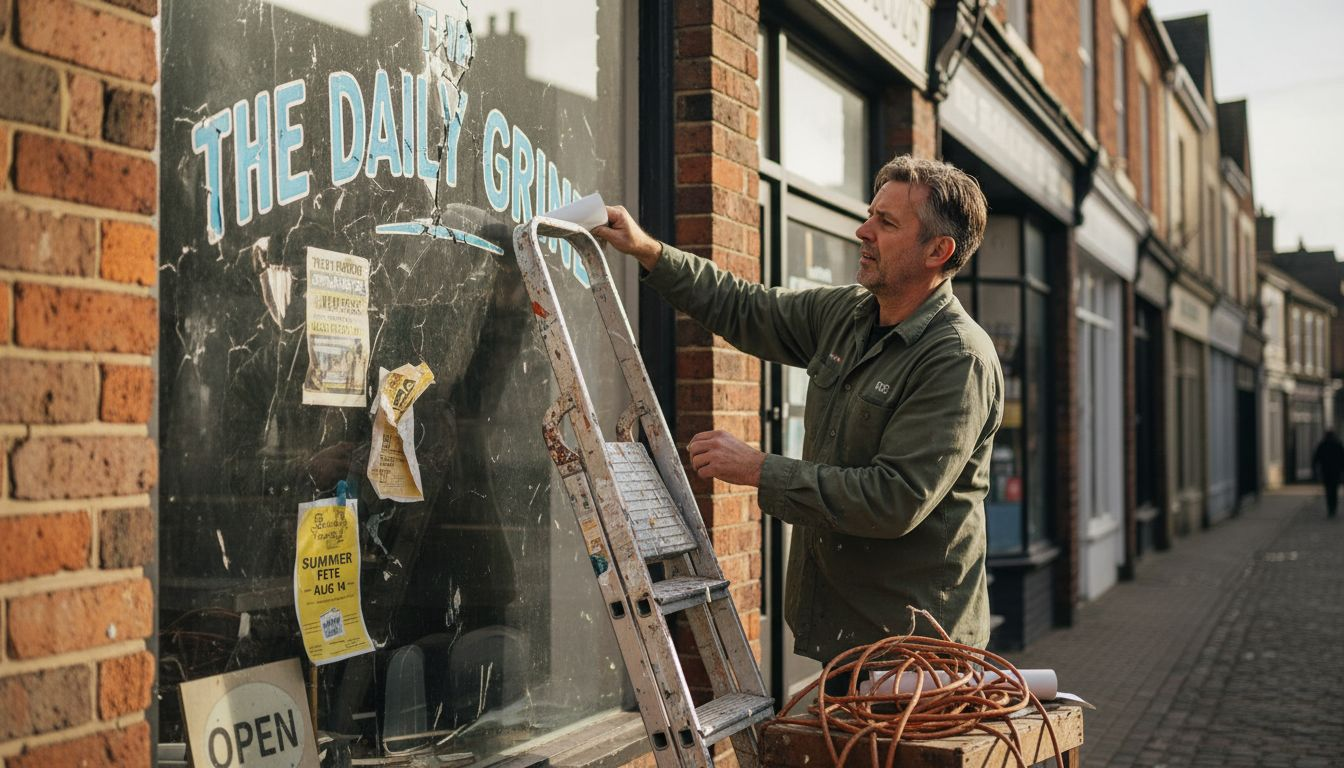
Another critical sign emerges when your logo fails to communicate your current business positioning. As companies evolve, their visual identity should reflect their growth, specialisation, and current market approach. A logo that no longer accurately represents your brand’s mission, values, or service offerings becomes a liability rather than an asset. This misalignment can confuse potential clients and diminish your professional credibility.
Pro Tip: Design Audit: Periodically gather feedback from customers and design professionals about your current logo’s visual appeal and effectiveness, using their insights to guide potential updates.
Review these common signals to quickly assess if your logo needs an update:
| Indicator | Potential Impact | Examples |
|---|---|---|
| Dated Typography | Perceived as old-fashioned | Narrow or decorative fonts |
| Complex Design Elements | Reduced readability | Overly intricate graphics |
| Colour Palette from Past Era | Fades market relevance | Neon, muted, or clashing colours |
| Poor Brand Alignment | Confuses customers | Mission not reflected visually |
Key Benefits of a Logo Refresh
A strategic logo refresh offers small businesses in Leeds a powerful mechanism for communicating growth and contemporary relevance. Brand perception transforms when visual identity evolves thoughtfully, signalling to customers that a company remains dynamic and attentive to market changes. Professional logo redesign strategies for UK businesses demonstrate how subtle visual updates can significantly enhance market positioning.
Perhaps the most compelling benefit is improved customer engagement. A refreshed logo communicates that your business is forward-thinking, investing in its image and understanding emerging market expectations. This visual communication goes beyond aesthetics, representing a commitment to quality, innovation, and professional development. By aligning your visual identity with current design trends, you demonstrate responsiveness and maintain competitive edge.
Additionally, a thoughtful logo refresh can reinvigorate internal team morale and external market perception simultaneously. It provides an opportunity to realign your brand’s visual narrative with its current mission, values, and strategic direction. For small businesses particularly, this process allows for nuanced repositioning without undertaking a complete and potentially costly rebranding effort. The refresh becomes a signal of controlled, purposeful evolution.
Pro Tip: Strategic Design Review: Before implementing a logo refresh, conduct a comprehensive audit comparing your current visual identity against competitors, ensuring your updated design stands out while remaining authentic to your brand’s core identity.
Risks of Outdated Branding for SMEs
Small and medium enterprises face significant challenges when their visual branding becomes disconnected from contemporary market expectations. Research on brand development challenges demonstrates how outdated branding can systematically erode a company’s competitive positioning, making it increasingly difficult to attract both customers and talented professionals.
The digital landscape amplifies these risks dramatically. Modern consumers make split-second judgments based on visual presentation, and an obsolete logo or branding can instantaneously communicate staleness or irrelevance. Brand perception becomes a critical vulnerability, where potential clients might interpret an outdated visual identity as an indicator of technological inefficiency or a lack of innovation. This perception risk is particularly acute for service-based businesses where professional image directly correlates with perceived capability.
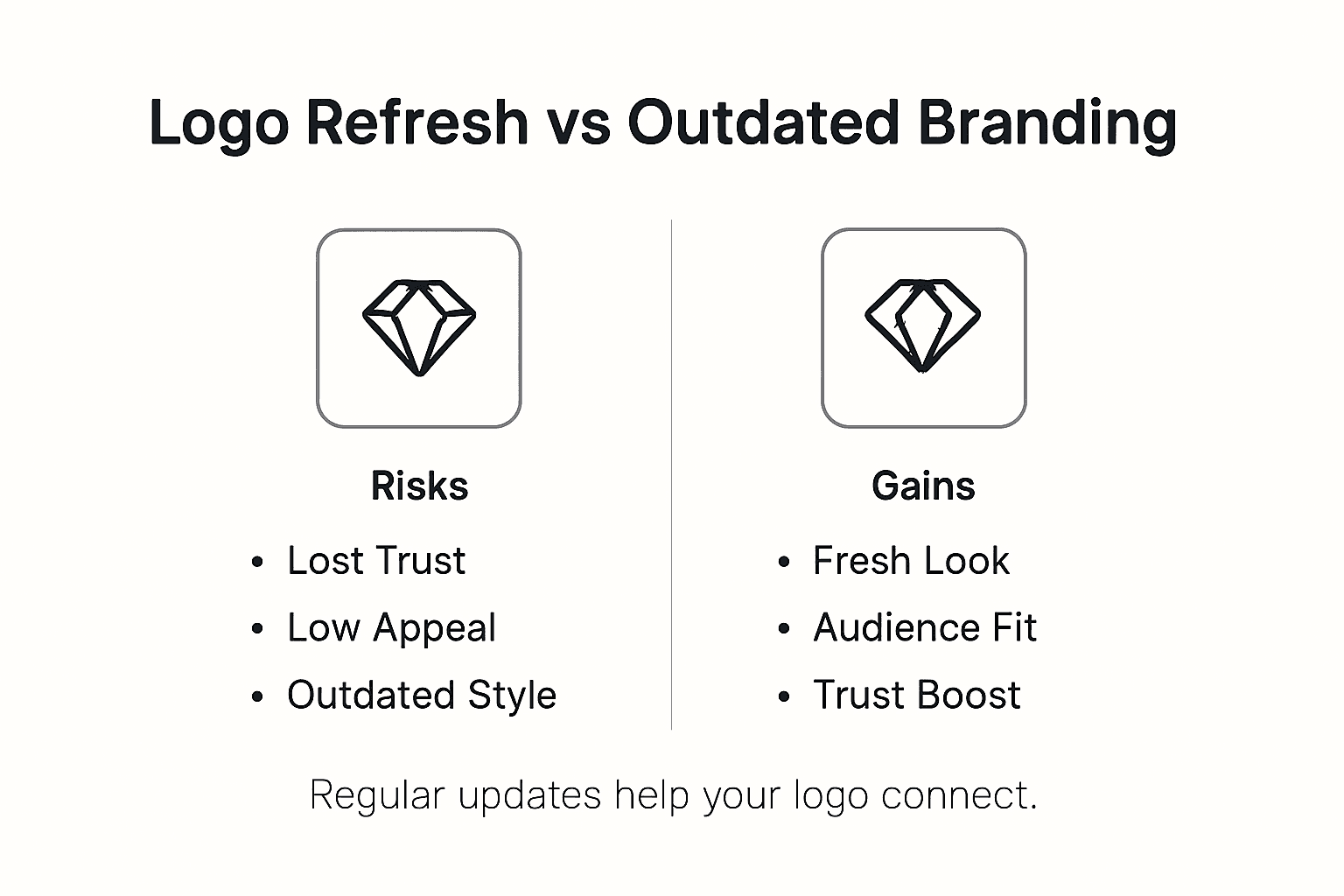
Moreover, outdated branding creates subtle psychological barriers that can significantly impede business growth. Potential clients and partners unconsciously evaluate a company’s credibility through its visual communication. An logo that appears frozen in a past decade suggests organisational inertia, potentially signalling that a business might be similarly resistant to adaptation in its core services or product offerings. This perception can lead to missed opportunities, reduced customer trust, and a gradual erosion of market relevance.
Pro Tip: Regular Visual Audit: Schedule an annual brand review examining your visual identity against current market trends, ensuring your branding remains contemporary and authentically represents your business’s current capabilities and aspirations.
Best Practices for a Successful Refresh
A strategic logo refresh requires meticulous planning and a nuanced understanding of brand evolution. Logo redesign strategies for UK businesses emphasise the importance of maintaining core brand recognition while introducing contemporary visual elements that resonate with modern audiences. The most successful refreshes strike a delicate balance between familiarity and innovation.
Critical to this process is comprehensive stakeholder engagement. Design research should extend beyond aesthetic considerations, incorporating insights from team members, existing customers, and potential market segments. This collaborative approach ensures the refreshed logo authentically represents the organisation’s current positioning and future aspirations. Small businesses must pay particular attention to collecting feedback that reveals how their visual identity is perceived, identifying subtle nuances that might not be immediately apparent.
Technical execution demands precision and strategic thinking. Businesses should develop multiple design iterations, testing each against key brand attributes such as readability, scalability, and emotional resonance. Black and white versions, digital and print adaptations, and performance across various digital platforms must be carefully evaluated. Consistency becomes paramount – the refreshed logo should work seamlessly across websites, social media, printed materials, and physical signage, maintaining its core visual integrity in every context.
Pro Tip: Stakeholder Validation: Before finalising your logo refresh, conduct a blind review where potential customers and team members are asked to identify your brand’s core values and personality through the new design, ensuring the visual identity truly communicates your intended message.
Refresh Your Logo to Connect with Today’s Audience
Is your logo struggling to reflect your business’s growth and the modern market? The challenge of outdated branding can quietly erode customer trust and reduce engagement. By embracing a thoughtful logo refresh, you can maintain the emotional connection with your existing clients while signalling adaptability and innovation to new audiences. Our team understands the importance of a strategically refreshed logo and can help you evolve your visual identity to meet today’s market expectations.
Take the next step to revitalise your brand presence by exploring our expert design solutions at Kukoo Creative. Benefit from over a decade of experience partnering with businesses just like yours to create impactful designs that build recognition and genuinely connect you with the people who matter most. Don’t let outdated visuals hold your business back. Visit our website now to see how our professional logo redesign strategies can help you refresh your logo with purpose and precision.
Frequently Asked Questions
What does a logo refresh entail?
A logo refresh involves making strategic modifications to a brand’s visual identity, such as simplifying design elements, updating typography, and modernising colour palettes, while maintaining the core brand recognition.
How can I tell if my logo needs a refresh?
Signs that your logo may need a refresh include looking outdated, using design styles from over a decade ago, failing to reflect your current business positioning, or misaligning with your brand’s mission and values.
What are the benefits of a logo refresh for my business?
A logo refresh can improve customer engagement, signal that your business is forward-thinking, and reinvigorate internal morale while maintaining a connection with existing customers, all without undergoing a complete rebrand.
What best practices should I follow when refreshing my logo?
Key best practices include engaging stakeholders for feedback, developing multiple design iterations, ensuring the logo is consistent across various platforms, and validating the new design to confirm it accurately represents your brand’s values.