
Facing the early stages of launching a business in Leeds often means wrestling with one decision that feels deceptively simple—what will you call your brand? For many founders, the journey from a fresh idea to company formation is packed with questions about how a name shapes identity and resonates in the marketplace. By unpacking the truth behind business naming and confronting its most persistent myths, you can create a brand name that is both memorable and fully legally compliant.
Table of Contents
- Business Naming Defined And Key Misconceptions
- Types Of Business Names And Their Impact
- The Step-By-Step Business Naming Process
- Uk Legal Rules For Choosing A Name
- Common Pitfalls And Mistakes To Avoid
Key Takeaways
| Point | Details |
|---|---|
| Understanding Legal Compliance | Ensure that your business name adheres to UK naming regulations to avoid future legal complications. |
| Trademark Protection | Register your trademark separately to secure exclusive rights and protect your brand identity. |
| Strategic Name Selection | Choose a memorable and culturally sensitive name that accurately represents your business to improve market presence. |
| Conduct Thorough Research | Perform extensive checks across company registers, trademarks, and digital platforms before finalising your business name. |
Business Naming Defined and Key Misconceptions
Business naming represents the strategic process of selecting a distinctive, legally compliant company identifier that communicates your brand’s essence and purpose. Far more than a simple label, it’s a critical first step in establishing your business’s legal and market presence.
In the United Kingdom, naming regulations are strictly enforced by Companies House to prevent potential conflicts and protect consumer interests. These guidelines ensure that business names meet specific legal standards, including:
- Uniqueness from existing registered companies
- Absence of offensive language
- Compliance with trademark regulations
- Appropriate representation of business activities
Common misconceptions often derail entrepreneurs during this crucial naming stage. Many believe that simply registering a company name guarantees complete legal protection or trademark rights. However, name registration does not automatically prevent others from using similar branding or trading names.
Trademark protection requires a separate, deliberate process through the Intellectual Property Office. Careful name selection involves understanding nuanced legal distinctions between registration, trademark rights, and potential brand conflicts.
A thoughtfully chosen business name is your first strategic communication with potential customers and market stakeholders.
Key considerations when selecting a business name include linguistic clarity, memorability, and potential cultural interpretations. A name should be easy to pronounce, spell, and remember while avoiding unintended meanings across different contexts.
Pro tip: Conduct comprehensive searches across company registers, trademark databases, and domain availability before finalising your business name to prevent future legal complications.
Types of Business Names and Their Impact
Business naming encompasses various types of names, each serving a distinct purpose and carrying unique legal and branding implications. Businesses must understand these nuanced distinctions to make strategic naming decisions that protect their brand and comply with regulatory requirements.
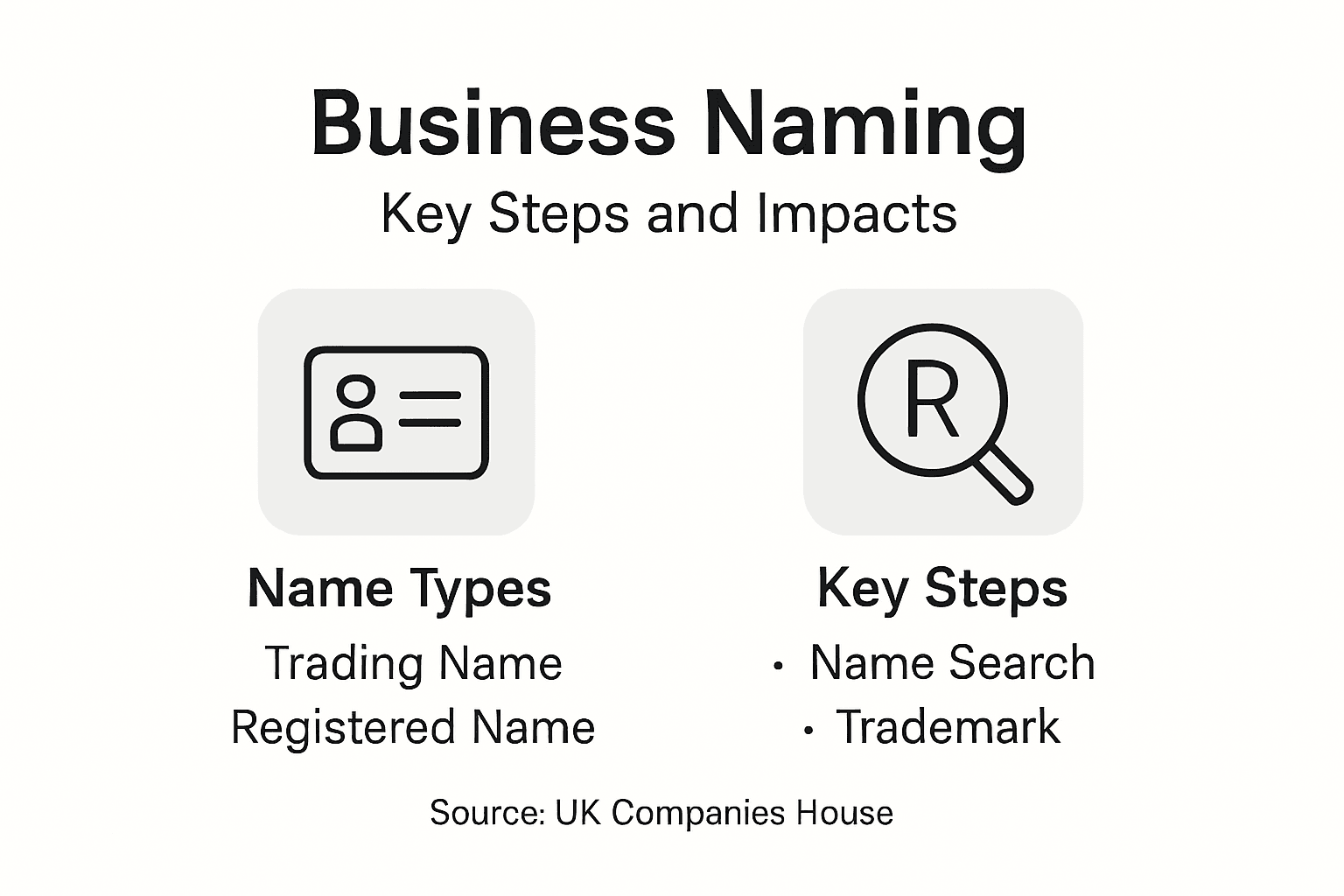
The primary types of business names include:
- Legal Company Names: Formal names registered with Companies House, typically ending with ‘Limited’ or ‘Ltd’ for incorporated businesses
- Trading Names: Brands under which businesses actually operate and market themselves
- Registered Names: Official names used for legal documentation
- Commercial Names: Names used for marketing and public-facing communication
Each name type carries specific implications for brand identity and legal protection. Trading names, for instance, allow businesses flexibility in marketing while maintaining their official registered name. This approach enables companies to create memorable, distinctive brand identities without altering their legal corporate structure.

The following table compares key types of business names and their strategic effects:
| Name Type | Primary Purpose | Legal Protection | Branding Impact |
|---|---|---|---|
| Legal Company Name | Fulfils legal registration | Basic legal registration | Formal, official identity |
| Trading Name | Market-facing brand image | Limited, requires review | Flexible and distinctive brand |
| Registered Name | Used in documentation | Full legal recognition | Used in official contracts |
| Commercial Name | Public communications marketing | Sometimes, via trademark | Broad appeal and memorability |
Choosing the right business name is a strategic decision that impacts your brand’s perception, legal standing, and market recognition.
Business name selection involves critical considerations beyond mere legal compliance. Entrepreneurs must evaluate potential names for:
- Memorability and ease of pronunciation
- Potential cultural or linguistic misinterpretations
- Availability across digital platforms
- Trademark and domain name availability
- Potential future business expansion
The impact of a well-chosen business name extends far beyond legal requirements. It serves as the first point of communication with potential customers, communicating your brand’s personality, values, and professional approach.
Pro tip: Conduct comprehensive trademark searches and secure matching domain names simultaneously to prevent future branding complications and protect your chosen business name.
The Step-by-Step Business Naming Process
Establishing a business name requires careful strategic planning and adherence to specific legal guidelines. The process involves multiple critical stages that ensure your chosen name represents your brand effectively while maintaining full legal compliance.
The comprehensive business naming process includes the following essential steps:
- Conduct Initial Name Research
- Check name availability through Companies House register
- Verify no existing trademarks conflict with your proposed name
- Ensure name represents your business ethos
- Legal Name Verification
- Confirm name meets Companies House requirements
- Ensure name does not contain offensive language
- Verify appropriate company suffix (Limited/Ltd)
- Digital Presence Validation
- Check domain name availability
- Search social media handle compatibility
- Confirm consistent branding potential
Name compliance involves multiple layers of evaluation beyond simple registration. Business name registration requires precise documentation and careful consideration of legal implications.
A meticulously chosen business name serves as your brand’s first point of communication with potential customers.
Entrepreneurs must strategically approach naming by considering:
- Cultural interpretations
- Pronunciation ease
- Future scalability
- Brand personality alignment
- Memorability
Beyond aesthetic considerations, the naming process involves critical legal and strategic decisions that will impact your business’s long-term identity and market perception.
Pro tip: Consult a trademark attorney or intellectual property specialist to conduct a comprehensive name search and ensure complete legal clearance before final registration.
UK Legal Rules for Choosing a Name
UK business naming regulations establish strict guidelines to ensure transparency, prevent consumer confusion, and maintain professional standards across different business types. These legal frameworks provide comprehensive rules that entrepreneurs must carefully navigate when selecting their company name.
The primary legal restrictions for business naming in the United Kingdom include:
- Unique name requirement
- Prohibited offensive terminology
- Restricted word limitations
- Appropriate company type designation
- Compliance with Companies House regulations
Naming restrictions are particularly nuanced for different business structures. Limited companies must include ‘Limited’ or ‘Ltd’ as a mandatory suffix, signalling their legal incorporation status and protecting potential investors and customers.
Legal compliance in business naming is not just a bureaucratic requirement, but a fundamental aspect of establishing business credibility.
Specific legal constraints entrepreneurs must consider include:
- Names cannot imply government connections
- Sensitive words require special permission
- Similar names to existing companies are prohibited
- Names must accurately represent business activities
- Avoid misleading or potentially fraudulent representations
Business name registration involves complex legal considerations that extend beyond simple creative selection. The process demands meticulous attention to regulatory details and potential legal implications.
Ultimately, understanding these legal frameworks helps businesses create names that are not just creative, but legally sound and professionally credible.
Pro tip: Consult the Companies House direct guidance and consider professional legal advice to ensure your chosen business name meets all regulatory requirements.
Common Pitfalls and Mistakes to Avoid
Business naming mistakes can have significant legal and reputational consequences that extend far beyond simple administrative errors. Entrepreneurs must navigate a complex landscape of regulatory requirements and potential pitfalls when selecting their company name.
The most critical naming mistakes businesses frequently encounter include:
- Choosing names too similar to existing companies
- Using offensive or inappropriate language
- Selecting names with unintended negative connotations
- Failing to check trademark availability
- Neglecting digital presence considerations
Name selection requires meticulous research and strategic thinking. Limited companies, in particular, must be vigilant about legal compliance, as incorrect naming can lead to automatic rejection or mandatory subsequent changes.
This summary table outlines typical business naming pitfalls and strategies to avoid them:
| Common Pitfall | Consequence | Effective Avoidance Strategy |
|---|---|---|
| Overly similar existing name | Legal disputes, forced changes | Thorough registry and trademark checks |
| Unintentional negative connotations | Reputation damage | Test name with diverse audiences |
| Ignoring digital presence | Missed marketing opportunities | Secure matching domains and handles |
| Misleading or prohibited elements | Regulatory penalties | Follow Companies House guidance |
| Trademark conflicts | Brand confusion or lawsuits | Consult IP professional early |
A single overlooked detail in business naming can create cascading legal and marketing challenges.
Specific red flags that entrepreneurs should watch for include:
- Names implying false government connections
- Restricted words without proper authorization
- Potential trademark infringement risks
- Culturally insensitive terminology
- Misleading business representations
Company name registration involves complex legal nuances that many business owners underestimate. Understanding these intricate requirements is crucial for avoiding potential regulatory complications.
Successful naming strategies demand comprehensive research, cultural sensitivity, and a forward-thinking approach that anticipates potential future business developments.
Pro tip: Conduct a comprehensive name search across Companies House, trademark databases, and domain registries before finalising your business name to mitigate potential legal risks.
Elevate Your Brand with a Strong Business Name and Impactful Design
Choosing the perfect business name requires careful attention to legal details and brand identity as the article reveals. You understand the challenge of finding a unique and memorable name that complies with UK naming rules while also connecting emotionally with your audience. Now imagine pairing that strong business name with compelling visual elements that capture the essence of your brand and make you stand out in a crowded market.

At Kukoo Creative, we have spent over a decade helping entrepreneurs like you bridge this exact gap. We craft impactful logos, websites, and brand designs that reflect your carefully chosen business name and resonate deeply with the people who matter most to your success. Don’t wait until legal or marketing pitfalls hold you back. Take control of your brand’s future today by visiting our main page and discover how our tailored creative solutions align perfectly with your naming strategy. Let us help you create a brand identity that truly commands attention and builds lasting connections.
Frequently Asked Questions
What is business naming?
Business naming is the strategic process of selecting a unique and legally compliant company identifier that reflects your brand’s essence and purpose. It is essential for establishing your business’s identity and market presence.
Why is business naming important?
Business naming is crucial as it serves as the first point of communication with potential customers, conveying your brand personality, values, and professional approach. A well-chosen name can significantly impact your brand’s perception and market recognition.
What are the legal requirements for naming a business?
Legal requirements for naming a business include ensuring the name is unique, does not contain offensive language, complies with trademark regulations, and accurately represents your business activities. Additionally, limited companies must include ‘Limited’ or ‘Ltd’ as a suffix.
What common mistakes should be avoided when selecting a business name?
Common mistakes include choosing names too similar to existing companies, using offensive language or negative connotations, neglecting trademark availability, and failing to consider digital presence. Comprehensive research and strategic planning are essential to avoid such pitfalls.