
Standing out in the Leeds business scene can feel challenging when so many organisations compete for attention. Clarity about your brand vision and values provides a clear direction for your business, shaping not only how people perceive you, but how they connect with your story. By setting up strong guidelines and purposeful visual standards, you equip your team with the confidence and tools to deliver a professional, memorable brand at every touchpoint.
Table of Contents
- Step 1: Define Your Brand Vision And Values
- Step 2: Gather And Organise Visual Brand Assets
- Step 3: Establish Clear Usage Rules For Logos And Colours
- Step 4: Standardise Typography And Image Styles
- Step 5: Outline Messaging And Tone Of Voice
- Step 6: Review And Refine Your Brand Guidelines
Quick Summary
| Key Point | Explanation |
|---|---|
| 1. Define brand vision and values | Establish a clear brand identity by articulating unique beliefs that guide your organisation’s culture and communication approach. |
| 2. Organise visual brand assets | Collect and document visual elements like logos and colours in a central location to ensure consistent usage across all platforms. |
| 3. Establish logo and colour rules | Create specific guidelines for logo application and colour codes to maintain a professional brand identity in all communications. |
| 4. Standardise typography and imagery | Set clear guidelines for fonts and image styles to create a cohesive visual language that conveys your brand personality effectively. |
| 5. Review brand guidelines regularly | Periodically assess and update brand guidelines to ensure they remain relevant and effectively implemented, fostering alignment with business goals. |
Step 1: Define your brand vision and values
Establishing your brand vision and values is about creating a clear roadmap for your Leeds business identity. This foundational step helps you articulate what makes your organisation unique and meaningful.
To begin crafting your brand values, start by reflecting deeply on your core beliefs and principles. What fundamental ideas drive your business forward? What promises do you want to make to your customers and team? Brand values help build perception and trust by communicating your moral compass and shared beliefs. Consider how these values will guide your communication, behaviour, and strategic decisions.
Think about creating 3-5 concise statements that truly represent your organisation’s purpose. These should be authentic, memorable, and actionable. Your brand values are not just words on a page they are a living commitment that will shape your entire business culture. Mission and vision statements provide strategic focus by explaining why your business exists and what you aim to achieve.
Remember that your values should feel genuine to your team and resonate with your target customers. They are not marketing slogans, but a genuine reflection of your organisational DNA.
Top Tip: Write your values using language that feels natural and specific to your business, avoiding generic corporate phrases that could apply to any company.
Step 2: Gather and organise visual brand assets
Organising your visual brand assets is a critical step in creating a consistent and professional brand identity for your Leeds business. This process involves systematically collecting and documenting all the visual elements that represent your brand.
Start by consolidating all visual assets in one accessible location. This includes your logo files (in various formats and colour variations), colour palettes with precise hex codes, approved typography selections, and imagery guidelines. Create a digital folder or cloud storage system where these assets can be easily shared with your team and external partners.
Ensure you have comprehensive documentation for each visual element. Brand guidelines provide structured standards for using these visual elements across different platforms. This means specifying exact logo usage rules, detailing colour codes, explaining typography rules, and defining imagery styles. Your goal is to make it simple for anyone working with your brand to maintain a cohesive visual identity.
Consider creating a simple reference document or digital handbook that outlines how each asset should be used. Include examples of correct and incorrect applications to provide clear guidance.
Here is a summary of key elements to include in your visual brand asset documentation:
| Asset Type | Essential Details | Purpose of Documentation |
|---|---|---|
| Logo | File formats, colour variants, usage rules | Ensures correct and consistent usage |
| Colour Palette | HEX, RGB, CMYK, Pantone codes | Maintains brand colour integrity |
| Typography | Font names, sizes, weights, hierarchy | Supports unified textual identity |
| Imagery Guidelines | Style, filters, composition, mood | Aligns visual tone across media |
Top Tip: Create a shareable digital brand asset folder with clear folder structures and descriptive file names to make asset retrieval quick and straightforward.
Step 3: Establish clear usage rules for logos and colours
Defining precise guidelines for your logo and colour usage is crucial for maintaining a professional and consistent brand identity across all business communications. These rules will protect your visual brand and ensure recognition among your Leeds business community.

Clear usage rules prevent brand misuse by establishing specific parameters for logo application. Document exact specifications including minimum logo size, clear space requirements, acceptable background colours, and placement guidelines. Create visual examples showing correct and incorrect usage to help designers and team members understand the nuanced rules of your brand presentation.
For colour management, specify precise colour codes across different platforms. Brand guidelines articulate strict colour instructions by detailing primary and secondary colour palettes with their exact Pantone, CMYK, RGB, and hex values. This ensures your brand colours remain consistent whether printed on marketing materials, displayed on websites, or used in digital advertisements.
Include comprehensive documentation that explains when and how each logo variation or colour palette should be used. This might involve specifying different logo versions for light and dark backgrounds, or defining colour hierarchy for various design scenarios.
Top Tip: Create a one page visual reference card with all logo and colour rules that can be easily shared with designers, printers, and marketing partners.
Step 4: Standardise typography and image styles
Creating a consistent visual language for your Leeds business involves establishing clear guidelines for typography and imagery. These standards will help communicate your brand identity across all marketing materials and digital platforms.
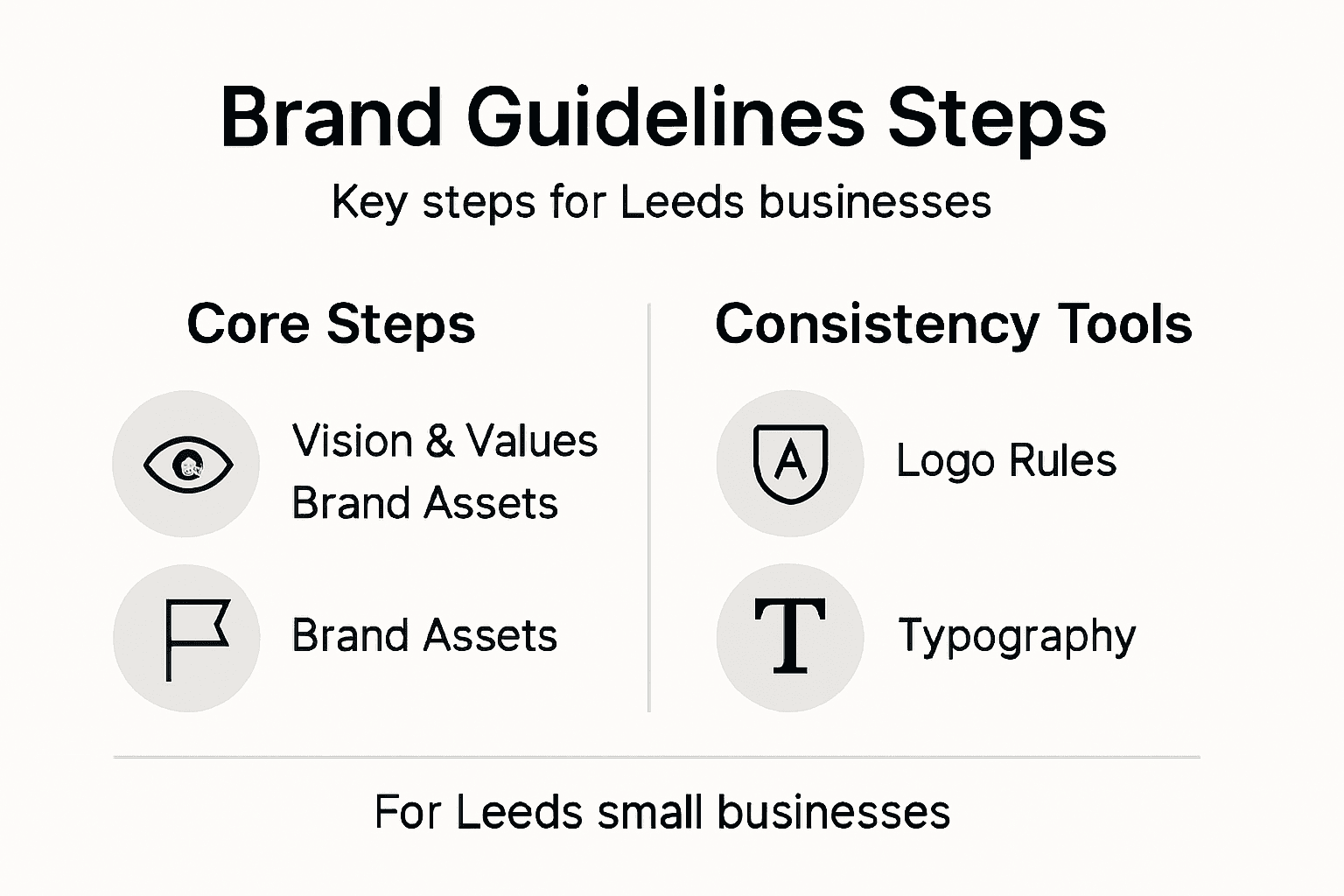
Standardising typography ensures brand cohesion by defining precise typeface selections for different content types. Select primary and secondary typefaces for headlines, body text, and captions. Specify exact font sizes, weights, line heights, and letter spacing for each text category. Create a clear hierarchy that helps readers navigate your content while maintaining a professional and consistent appearance.
Brand guidelines support visual harmony by establishing comprehensive image style rules. Define your preferred photography treatments including colour palettes, filters, composition guidelines, and image mood. Decide whether your visual style will be minimalist, vibrant, documentary style, or illustrative. Create a mood board that demonstrates acceptable image variations and provides clear examples of images that represent your brand personality.
Document these typography and imagery standards in a comprehensive reference guide. Include visual examples showing correct and incorrect usage to help designers and team members understand and implement your brand vision consistently.
Top Tip: Develop a digital template library with preset typography and image styles to make it easier for your team to create on brand materials.
Step 5: Outline messaging and tone of voice
Defining your brand’s messaging and tone of voice is crucial for creating a consistent and authentic communication strategy that resonates with your target audience in the Leeds business community.
Messaging communicates brand personality authentically by establishing clear guidelines for how your brand speaks. Develop a comprehensive language framework that outlines your communication style including preferred vocabulary, sentence structure, emotional tone, and key messaging principles. Consider the emotional experience you want to create for your audience whether that is professional and authoritative, friendly and approachable, or innovative and dynamic.
Tone of voice reflects organisational culture by aligning communication strategies with your core values. Create a detailed guide that provides practical examples of acceptable language use across different communication channels such as website content, social media, email communications, and marketing materials. Include specific dos and donts that illustrate how your brand language should adapt while maintaining a consistent underlying personality.
Ensure your messaging guidelines are flexible enough to allow individual team members to express themselves while maintaining a recognisable brand voice. Include examples of good and poor communication to help everyone understand the nuanced approach you are seeking.
Top Tip: Create an internal communication playbook with real world examples that demonstrate your brand tone in action across different scenarios and platforms.
Step 6: Review and refine your brand guidelines
Brand guidelines are living documents that require regular attention and strategic updates to remain relevant and effective for your Leeds business. Periodic review ensures your brand remains dynamic and aligned with your evolving business objectives.
Regularly reviewing brand guidelines helps maintain strategic relevance by assessing implementation effectiveness, gathering stakeholder feedback, and updating elements to reflect changing market conditions. Schedule formal reviews at least annually or whenever significant business transformations occur. During these reviews, examine how consistently your guidelines are being applied across different communication channels and identify potential areas for improvement.
Companies often struggle with value implementation by lacking clarity on practical application. Engage your team in the review process by collecting feedback from various departments. Understand how different team members interpret and use the guidelines. Look for recurring challenges, misunderstandings, or areas where the guidelines feel restrictive or unclear. This collaborative approach ensures your brand guidelines remain both comprehensive and flexible.
Consider creating a simple feedback mechanism where team members can suggest updates or highlight challenges they encounter when following the guidelines. This ongoing dialogue will help you continuously refine your brand strategy.
The table below compares the impact of updating versus neglecting your brand guidelines:
| Approach | Benefits | Risks of Neglect |
|---|---|---|
| Regular Updates | Maintains relevance, engages staff | Outdated brand, inconsistent use |
| Team Feedback | Improves clarity, increases buy-in | Misunderstandings, reduced morale |
| Annual Review | Identifies gaps, supports growth | Stagnation, lost opportunities |
Top Tip: Create a digital suggestion form or quarterly review meeting dedicated to gathering insights about your brand guidelines from across your organisation.
Strengthen Your Leeds Brand with Expert Design Support
Building and maintaining clear brand guidelines for your Leeds business can feel overwhelming, especially when it comes to organising visual assets or defining a consistent tone of voice. This article reveals how crucial steps like establishing brand values and standardising typography directly impact your company’s professional image and connection with your audience. If creating a cohesive, authentic brand identity feels like a challenge, you are not alone.
Let us help you transform these complex concepts into powerful brand assets through expert design solutions. Whether you need a memorable logo, precise colour palettes, or a polished website that matches your unique voice, our decade of partnering with business owners means you get results that truly resonate.
Discover how our tailored approach can bring your brand guidelines to life and keep your messaging consistent across every touchpoint. Visit Kukoo Creative today and begin crafting a brand identity that Leeds businesses trust and remember. It is time to build strong recognition and connect with the people who matter most. See how we create impact through design at Kukoo Creative. Start making your brand stand out now by exploring all our design services at Kukoo Creative.
Frequently Asked Questions
How do I define my brand vision and values for my Leeds business?
To define your brand vision and values, start by reflecting on your core beliefs and principles. Articulate 3-5 concise statements that capture what makes your organisation unique and meaningful, ensuring they resonate with your team and customers.
What visual brand assets should I organise for my Leeds business?
Organise essential visual brand assets such as your logo files, colour palette, typography selections, and imagery guidelines. Create a digital folder that consolidates all these elements for easy access and consistent usage by your team and partners.
What are the key usage rules I should establish for my logo and brand colours?
Establish clear specifications for logo usage, including size, clear space, and acceptable backgrounds. Document precise colour codes for both print and digital applications to maintain brand consistency across all platforms.
How can I standardise typography and image styles for my marketing materials?
To standardise typography, select specific typefaces and define sizes, weights, and spacing for different content types. For image styles, outline preferred treatments like filters and composition guidelines in a reference guide to ensure a cohesive visual language.
Why is it important to outline my brand’s messaging and tone of voice?
Outlining your brand’s messaging and tone of voice is crucial for authentic communication that resonates with your audience. Develop a language framework detailing preferred vocabulary and emotional tone, and include examples to guide team members in maintaining a consistent brand personality.
How often should I review and refine my brand guidelines?
Review your brand guidelines at least annually or whenever significant business changes occur. Schedule these reviews to assess implementation effectiveness and gather feedback from your team, ensuring your brand remains dynamic and relevant.