A strong logo can make the difference between blending in and standing out for any british business. Research shows that consumers are over 70 percent more likely to remember a brand with a distinct, effective logo. In today’s competitive market, your company’s visual identity often creates the first impression. This guide walks through the practical steps to evaluate, refresh, and successfully implement a logo that genuinely connects with your audience and supports long-term brand recognition.
Table of Contents
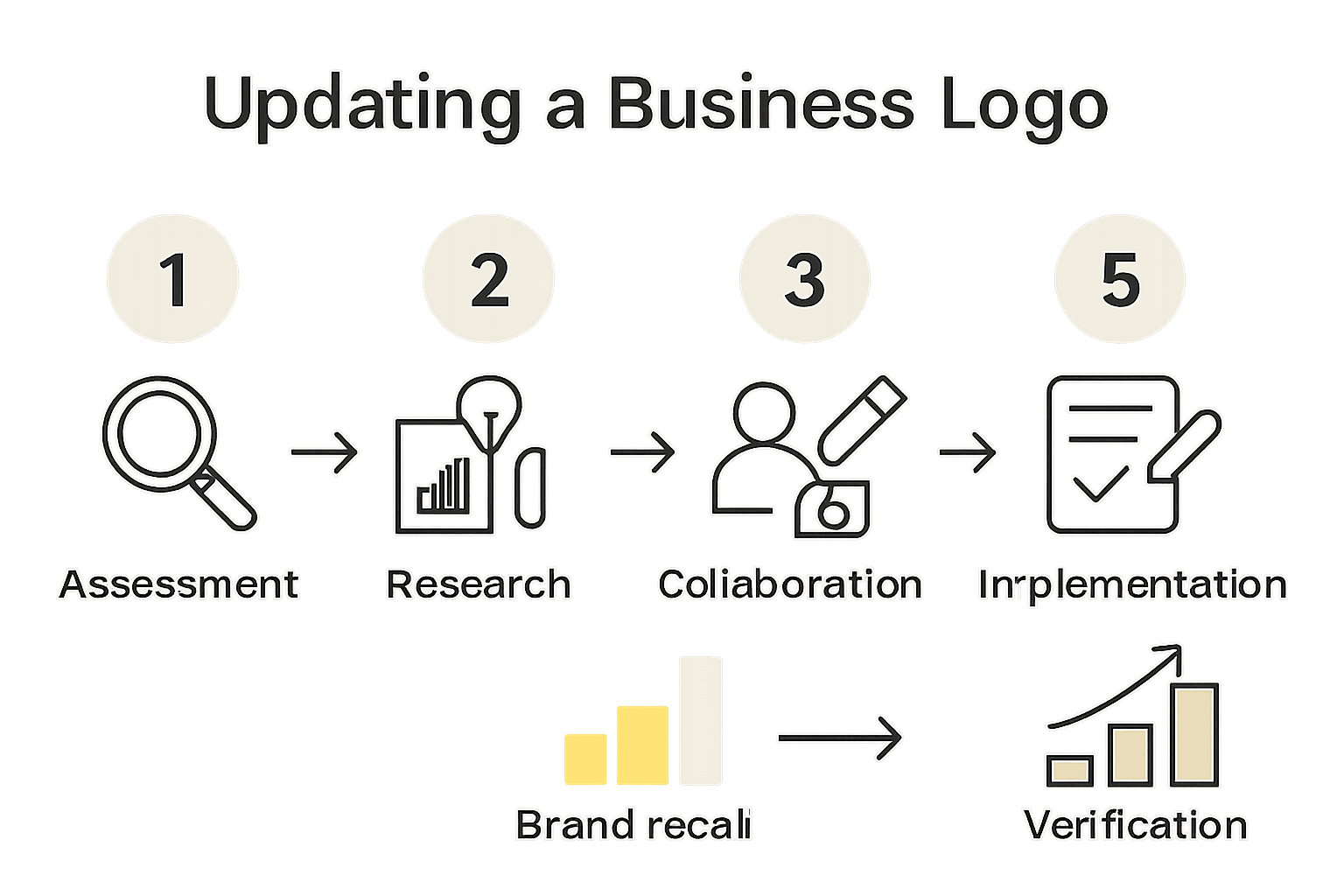
- Step 1: Assess Current Logo And Identify Need For Change
- Step 2: Research Market Trends And Gather Inspiration
- Step 3: Collaborate With A Professional Designer
- Step 4: Implement New Logo Across All Channels
- Step 5: Verify Brand Consistency And Customer Response
Quick Summary
| Key Message | Explanation |
|---|---|
| 1. Evaluate your current logo thoroughly | Conduct a visual audit assessing clarity, colour, scalability, and representation of your brand’s identity across various platforms. |
| 2. Research current branding trends | Explore design platforms and identify industry trends, focusing on colour and typography that resonate with your target audience for inspiration. |
| 3. Collaborate closely with a designer | Prepare a detailed design brief and maintain open communication to ensure the designer captures your brand’s essence during the redesign process. |
| 4. Implement the new logo consistently | Use a comprehensive checklist to update all digital and physical branding materials, ensuring uniformity across all platforms. |
| 5. Monitor customer responses and brand consistency | Collect feedback through surveys and track engagement metrics to evaluate the effectiveness of your new logo on customer perception. |
Step 1: Assess current logo and identify need for change
Evaluating your business logo requires a strategic and critical approach. According to the arxiv Brand Visibility in Packaging study, understanding your logo’s effectiveness is crucial in capturing consumer attention and maintaining brand recognition.
Begin by conducting a comprehensive visual audit of your current logo. Consider factors such as visual clarity, colour scheme, scalability, and how well it represents your brand’s core identity. Look critically at your logo across different platforms digital and print media to assess its versatility. Pay attention to how it appears on websites, business cards, signage, and social media profiles. Ask yourself key questions: Does the logo still reflect your current business values? Is it distinguishable from competitors? Does it communicate your brand’s personality effectively?
A helpful strategy is to gather objective feedback from colleagues, customers, and design professionals. Role of Logo Design: Complete Guide for UK Businesses can provide additional insights into this assessment process. Collect multiple perspectives to understand whether your current logo resonates with your target audience or if it might be time for a strategic refresh.
Step 2: Research market trends and gather inspiration
Transforming your business logo requires understanding the current visual landscape. According to the 4Imprint Shaping Success article, UK branding is experiencing a significant shift towards evolved minimalism and strategic shape psychology, offering rich inspiration for your logo redesign.
Begin your research by exploring design platforms like Behance, Dribbble, and Pinterest. Focus on businesses within your industry and adjacent sectors to understand emerging visual trends. Pay special attention to colour palettes, typography, and graphic elements that communicate modernity and professionalism. Create a mood board that captures design approaches resonating with your brand’s personality and target audience. Look beyond direct competitors and seek inspiration from global design trends that might offer unique perspectives.
Consider attending design conferences, webinars, or workshops that showcase cutting-edge branding strategies. When is it Time To Rebrand: 6 Signs That It’s Time To Take The Plunge can provide additional context for your research. Remember that effective inspiration gathering is about understanding broader design movements while staying true to your unique brand identity.
Step 3: Collaborate with a professional designer
Transitioning your business logo from concept to reality requires strategic collaboration with a professional designer. According to Naveck’s article on future logo design, professional designers are increasingly integrating advanced technologies to create personalised and data-driven logos that capture your brand’s unique essence.
Start by preparing a comprehensive design brief that clearly articulates your brand’s vision, target audience, and aesthetic preferences. Why hire a professional logo designer? can help you understand the nuanced value professional designers bring to your project. During initial consultations, share your mood board, discuss your brand’s core values, and be open to expert recommendations. Professional designers bring technical expertise and creative insights that can transform your initial concepts into powerful visual identities.

Remember that effective collaboration is a two-way dialogue. As Custom Logo Cases suggests, work closely with your designer to explore innovative design trends like creative use of positive and negative space. Provide constructive feedback, remain flexible, and trust the professional’s expertise while ensuring the final design authentically represents your brand’s personality.
Step 4: Implement new logo across all channels
Rolling out your new logo requires a systematic and strategic approach across digital and physical platforms. According to Verified Market Reports, businesses must implement their new logos consistently to maintain critical brand coherence in an increasingly digital marketplace.
Begin by creating a comprehensive implementation checklist that covers all potential touchpoints. This should include digital assets like your website, social media profiles, email templates, and digital marketing materials. Simultaneously, update physical branding elements such as business cards, signage, product packaging, letterheads, and any printed marketing collateral. Logo Design Brief can provide additional guidance on ensuring a thorough brand transition. Pay special attention to file formats and colour specifications to guarantee visual consistency across different mediums.
As insights from Wise Guy Reports suggest, leveraging modern technology can streamline your logo implementation process. Consider using brand management tools that help track and standardise logo usage across your organisation. Communicate the change internally to ensure all team members understand the new branding guidelines and can represent your visual identity consistently and professionally.
Step 5: Verify brand consistency and customer response
Assessing the impact of your new logo requires a systematic approach to measuring customer perception and brand consistency. According to the arxiv Brand Visibility in Packaging study, businesses can leverage specific frameworks to evaluate how effectively their new logo captures audience attention and communicates brand identity.
Implement a comprehensive feedback mechanism through multiple channels. Conduct online surveys, analyse social media sentiment, and collect direct customer feedback to understand how your new logo is perceived. Complete Guide to Custom Branding for Business Owners can provide additional strategies for gathering meaningful insights. Consider using tools like Google Forms or specialised market research platforms to collect structured feedback about visual appeal, recognition, and emotional response to your updated branding.
As highlighted by 4Imprint’s Shaping Success article, monitoring customer behaviour is crucial in understanding the true impact of your visual identity. Track key metrics such as engagement rates, website traffic, and customer interactions to gauge whether your new logo is effectively communicating your brand’s core message. Remember that brand consistency is an ongoing process requiring continuous evaluation and potential refinement.
Elevate Your Brand with Expert Logo Transformation
Updating your business logo for maximum impact is about more than just visual change. It demands careful assessment of your current design, deep understanding of market trends, and collaboration with skilled professionals who can translate your brand personality into a powerful visual identity. Many businesses struggle with maintaining brand consistency across all channels while ensuring the new logo truly resonates with their audience and communicates core values.
At Kukoo Creative, we have partnered with business owners just like you for over a decade to overcome these challenges. Our team specialises in creating logos and complete brand identities that enhance recognition and emotional connection. Whether you are ready to take the plunge with a logo refresh or need guidance on how to implement your new design flawlessly, we provide tailored solutions grounded in the latest branding insights and strategic thinking.
Discover how our expertise can help you harness the power of professional collaboration and trend-inspired design to captivate your audience. Ready to turn your brand vision into an impactful reality?
Transform your logo with confidence by visiting our homepage and explore why so many UK businesses trust us to shape their visual identity effectively. Learn more about why hire a professional logo designer to see the difference expert design can make. Start your journey with a clear logo design brief today and ensure your brand stands out now and into the future.
Frequently Asked Questions
How can I assess if my current logo needs an update?
Evaluating your current logo involves considering its visual clarity, colour scheme, and overall representation of your brand’s identity. Conduct a visual audit and gather feedback from colleagues and customers to identify any areas for improvement.
What should I consider while researching market trends for a new logo?
When researching market trends, focus on emerging visual styles and design elements relevant to your industry. Explore design platforms to gather inspiration and create a mood board reflecting modern aesthetics that align with your brand’s personality.
How do I prepare a design brief for a professional logo designer?
To create an effective design brief, clearly articulate your brand’s vision, target audience, and specific aesthetic preferences. Include examples of logos that resonate with you, ensuring the designer understands your expectations and goals.
What are the key steps to implement a new logo across all my business channels?
Implementing a new logo involves updating all digital and physical assets, including your website, social media profiles, and printed materials. Create a checklist to methodically update each touchpoint, ensuring consistency across different platforms.
How can I measure customer response to my new logo?
You can measure customer response by collecting feedback through online surveys and analysing social media sentiment. Set up feedback mechanisms and assess engagement metrics such as website traffic and customer interactions to gauge perception effectively.
How often should I review my brand’s visual identity after updating my logo?
Regularly reviewing your brand’s visual identity is essential to maintain relevance. Aim to assess your logo’s effectiveness every 6–12 months to ensure it continues to resonate with your target audience and aligns with market trends.