Every creative business in Leeds knows the struggle to stand out while staying true to its values. Defining your brand’s voice can feel overwhelming, yet connecting with your audience on a deeper level is key to lasting success. Adopting brand archetypes offers a flexible way to shape identity, helping your business become more relatable and memorable. This guide unpacks how small businesses can use psychological frameworks to craft genuine stories that resonate in the Leeds creative scene.
Table of Contents
- Brand Archetypes Defined and Debunked
- The Twelve Archetypes and Their Traits
- How Archetypes Shape Brand Identity
- Emotional Engagement and Customer Loyalty
- Common Pitfalls When Using Archetypes
Key Takeaways
| Point | Details |
|---|---|
| Understanding Brand Archetypes | Brand archetypes offer flexible storytelling tools that help businesses connect emotionally with consumers, rather than static labels. |
| Authenticity Over Conformity | Successful brands prioritise authenticity by selecting archetypes that genuinely reflect their core values instead of forcing a fit. |
| Multi-Archetype Strategies | Brands are increasingly using multiple archetypes to create dynamic identities that resonate with diverse audiences. |
| Emotional Engagement as Key Strategy | Emotional connections are vital for customer loyalty, achieved by aligning brand narratives with consumer self-perceptions and aspirations. |
Brand Archetypes Defined and Debunked
Brand archetypes represent more than just marketing jargon; they’re psychological frameworks that help businesses communicate their core identity. Psychological theories from Imperial College reveal these frameworks aren’t static labels but dynamic storytelling tools that connect brands with consumers on a deeper emotional level.
At their core, brand archetypes are narrative personas derived from Carl Jung’s psychological research, representing fundamental human character patterns. They transform abstract business values into relatable personalities that consumers can intuitively understand. These archetypes include recognisable characters like:
- The Hero: Brave, determined, overcoming challenges
- The Caregiver: Nurturing, compassionate, supportive
- The Creator: Innovative, imaginative, transformative
- The Rebel: Disruptive, independent, challenging norms
Modern marketing has evolved beyond rigid archetype classifications. Contemporary brands are now adopting more nuanced, multi-layered approaches that allow for complexity and adaptability. Research from Imperial College indicates that brands increasingly layer multiple archetypes, creating more dynamic and human-like brand personalities that resonate with diverse consumer groups.
Brand archetypes are not restrictive boxes, but flexible narrative frameworks that help businesses tell their unique story.
Successful brands understand that authenticity matters more than perfectly fitting a single archetype. They use these psychological frameworks as guides, not strict rules, allowing their genuine character to shine through.
Pro tip: Select brand archetypes that genuinely reflect your business’s core values and personality, rather than trying to artificially conform to a predetermined narrative.
The Twelve Archetypes and Their Traits
Communicating brand identity goes beyond simple marketing strategies. Universal brand archetypes from design research reveal twelve distinct personality types that capture the essence of human psychological patterns. These archetypes are powerful tools for businesses seeking to create meaningful connections with their audience.
The twelve archetypes each represent a unique set of core motivations and characteristics:
- The Hero: Courageous, determined, inspiring transformation
- The Magician: Visionary, innovative, creating magical solutions
- The Lover: Passionate, intimate, creating emotional connections
- The Explorer: Adventurous, independent, seeking new horizons
- The Outlaw: Rebellious, revolutionary, challenging the status quo
- The Creator: Imaginative, original, driving innovation
- The Caregiver: Nurturing, compassionate, prioritising others’ needs
- The Innocent: Optimistic, pure, believing in possibilities
- The Jester: Playful, humorous, bringing joy and light-heartedness
- The Sage: Wise, analytical, seeking understanding
- The Ruler: Authoritative, organised, maintaining control
- The Everyman: Relatable, down-to-earth, representing community
Research from brand psychology experts demonstrates that these archetypes are not rigid categories but flexible frameworks. Each archetype embodies specific core motivations that help brands craft authentic, resonant narratives.
Understanding your brand’s archetypal personality allows you to communicate more effectively and build deeper emotional connections with your audience.
Brands can leverage these archetypes by identifying which personality most closely aligns with their core values, mission, and target audience. The key is authenticity and genuine representation.

Here’s how each archetype can influence typical brand strategies:
| Archetype | Common Industry Fit | Strategic Advantage |
|---|---|---|
| Hero | Sportswear, Charities | Inspires action and courage |
| Magician | Technology, Wellness | Sparks innovation and transformation |
| Lover | Beauty, Hospitality | Builds emotional loyalty |
| Explorer | Travel, Automotive | Appeals to adventure seekers |
| Outlaw | Fashion, Tech Startups | Attracts rule-breakers and trendsetters |
| Creator | Design, Tech | Encourages originality and creative solutions |
| Caregiver | Healthcare, Education | Fosters trust and support |
| Innocent | Childcare, Organic Food | Highlights purity and optimism |
| Jester | Entertainment, Food & Drink | Promotes fun and approachability |
| Sage | Education, Consulting | Builds authority and trust through insight |
| Ruler | Finance, Luxury Brands | Signals stability and control |
| Everyman | Retail, Consumer Goods | Connects through relatability |
Pro tip: Don’t just choose an archetype – deeply understand its core motivations and integrate those insights authentically into your brand storytelling.
How Archetypes Shape Brand Identity
Brand identity research from Imperial College reveals that archetypes are far more than simple marketing constructs – they’re powerful psychological frameworks that transform how businesses communicate their core essence. These narrative tools allow brands to move beyond traditional demographic targeting, creating deeper, more intuitive connections with their audience.
Brand archetypes shape identity through several critical mechanisms:
- Emotional Resonance: Connecting with fundamental human psychological patterns
- Narrative Consistency: Providing a coherent storytelling framework
- Differentiation: Establishing a unique personality in a crowded marketplace
- Values Communication: Expressing core beliefs beyond surface-level messaging
Contemporary brand psychology research demonstrates that successful brands no longer rely on a single archetypal persona. Instead, they dynamically blend multiple archetypes across different customer touchpoints, creating a more nuanced and adaptable brand identity.
Comparison of single-archetype vs. multi-archetype brand strategies:
| Approach | Strengths | Weaknesses |
|---|---|---|
| Single Archetype | Clear, memorable message | Can appear limiting or clichéd |
| Multi-Archetype | Adaptable, nuanced identity | Risks losing focus, complexity |
Archetypes are not rigid templates, but flexible storytelling tools that allow brands to communicate their unique personality.
Small businesses can particularly benefit from this approach by crafting a brand identity that feels authentic, memorable, and emotionally compelling. The key lies in understanding the subtle psychological triggers that make certain narratives resonate more deeply with specific audience segments.
Pro tip: Conduct a thorough brand audit to identify which archetypal traits most genuinely reflect your business’s core values and customer aspirations.
Emotional Engagement and Customer Loyalty
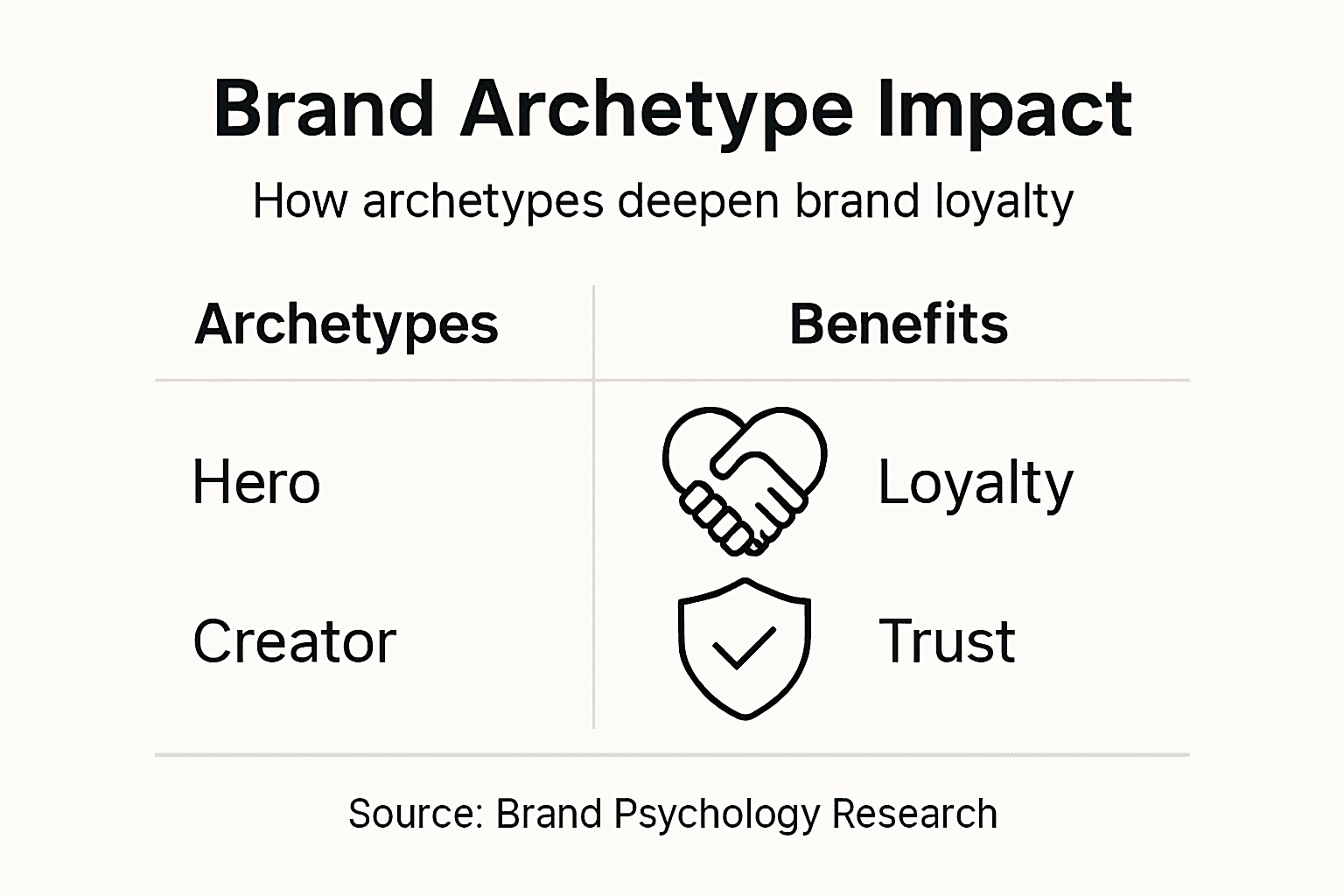
Brand archetype research on customer engagement reveals a profound psychological mechanism behind customer loyalty. By tapping into universal human narratives, brands can create emotional connections that transcend traditional transactional relationships, transforming casual customers into passionate brand advocates.
Emotional engagement through brand archetypes operates through several key psychological principles:
- Psychological Mirroring: Customers see reflections of themselves in brand personalities
- Narrative Resonance: Brand stories that feel personally meaningful
- Emotional Consistency: Predictable, trustworthy brand interactions
- Identity Alignment: Brands that reinforce customers’ self-perception
Research into emotional branding strategies demonstrates that successful brands create deep psychological connections by consistently embodying archetypes that speak directly to customer aspirations and emotional needs.
Emotional engagement isn’t about manipulation – it’s about authentic connection that respects the customer’s psychological landscape.
Small businesses can leverage these insights by carefully selecting and authentically expressing archetypes that genuinely reflect their core values and customer expectations. The most powerful brand relationships emerge when the archetypal narrative feels true, not manufactured.
Pro tip: Conduct deep customer research to understand the emotional narratives that truly resonate with your specific audience segment.
Common Pitfalls When Using Archetypes
Brand archetype implementation strategies reveal critical challenges that small businesses must navigate when adopting archetypal frameworks. While these psychological models offer powerful storytelling tools, they can become restrictive if not applied with nuance and strategic flexibility.
The most common pitfalls in archetypal branding include:
- Rigid Categorisation: Forcing the brand into a single, inflexible archetype
- Inauthentic Representation: Adopting an archetype that doesn’t genuinely reflect the brand’s core values
- Stereotypical Messaging: Relying on clichéd narrative patterns
- Lack of Evolution: Failing to adapt the brand’s archetypal narrative as the business grows
- Oversimplification: Reducing brand complexity to a one-dimensional personality
Small businesses often make the mistake of treating archetypes as strict templates rather than dynamic storytelling frameworks. The most effective approach recognises that brands are living, evolving entities that can embody multiple archetypal traits simultaneously.
Archetypes should illuminate your brand’s unique story, not constrain it into a predetermined narrative box.
Successful archetypal branding requires continuous reflection and adaptation. Brands must remain agile, allowing their core narrative to grow and shift while maintaining a consistent underlying essence.
Pro tip: Regularly review and reassess your brand’s archetypal identity, ensuring it remains authentic and responsive to your evolving business landscape.
Unlock Your Brand’s True Potential with Authentic Archetypal Design
Understanding and leveraging brand archetypes is essential for small businesses aiming to build genuine emotional connections and memorable brand identities. If you struggle with authentic representation or fear that your brand message lacks consistency and emotional resonance, know that you are not alone. Our expert team at KUKOO Creative specialises in crafting distinctive logos and websites that capture your brand’s unique narrative and core values, turning complex psychological frameworks like the Hero, Caregiver or Explorer into impactful visual stories.
Ready to transform your brand identity with designs that authentically reflect your business personality and inspire customer loyalty? Start your journey today with KUKOO Creative and explore how we bring brand archetypes to life visually. Discover the difference that meaningful, empathetic design can make by visiting our website now and connect with the people who matter most to your business.
Frequently Asked Questions
What are brand archetypes and why are they important for small businesses?
Brand archetypes are psychological frameworks derived from Carl Jung’s theories that represent fundamental human character patterns. They help small businesses communicate their core identity and connect emotionally with consumers, making their branding more relatable and effective.
How can small businesses identify the right archetype for their brand?
Small businesses can identify the right archetype by evaluating their core values, mission, and target audience. It’s essential to select archetypes that genuinely reflect the business’s essence rather than conforming to predetermined narratives.
Can a small business utilise multiple brand archetypes?
Yes, small businesses can successfully use multiple brand archetypes to create a more dynamic and adaptable brand identity. This approach allows brands to resonate with diverse audience segments without appearing clichéd or limiting.
What are some common pitfalls to avoid when using brand archetypes?
Common pitfalls include rigid categorisation into a single archetype, inauthentic representation, stereotypical messaging, failing to evolve the brand narrative, and oversimplification of brand personality. It’s crucial to treat brand archetypes as flexible storytelling frameworks rather than strict templates.