Nearly 90 percent of British consumers now expect brands to show real environmental and social commitment. Eco-conscious business owners in Leeds face growing pressure to align with these values, as transparent and sustainable branding increasingly drives customer loyalty and market success. This guide explains how purposeful strategies can help modern businesses build authentic connections, attract ethically-minded buyers, and rise above competitors in the British market.
Table of Contents
- Defining Sustainable Branding For Modern Business
- Types Of Sustainable Branding Practices
- Key Elements Of Eco-Friendly Brand Design
- Legal Obligations And Reporting In The UK
- Risks Of Greenwashing And Brand Damage
- Best Practices For Building Lasting Impact
Key Takeaways
| Point | Details |
|---|---|
| Sustainable Branding Essentials | Integrate environmental, social, and economic values into brand identity to resonate with conscious consumers. |
| Key Practices | Focus on value alignment, stakeholder engagement, and holistic integration to build authentic connections. |
| Legal Compliance | Be aware of UK regulations on sustainability reporting to ensure transparency and avoid greenwashing risks. |
| Commitment to Innovation | Foster a culture of ongoing innovation and collaboration in sustainability practices for lasting impact. |
Defining sustainable branding for modern business
Sustainable branding represents a strategic approach where businesses integrate environmental, social, and economic considerations into their core brand identity. Transformative brand management goes beyond traditional marketing, focusing on creating genuine value that resonates with increasingly conscious consumers.
At its core, sustainable branding involves aligning business practices with broader societal expectations. This means developing a brand narrative that demonstrates commitment to ethical practices, environmental stewardship, and social responsibility. Companies embracing this approach recognise that modern consumers seek authentic connections with brands that demonstrate genuine care for people and the planet. Sustainable brand integration requires a holistic approach that considers multiple stakeholder perspectives.
Successful sustainable branding involves three key capabilities: creating brand relevance through values alignment, developing sensitivity to diverse stakeholder worldviews, and fostering collaborative relationships. Leeds businesses can differentiate themselves by demonstrating transparent commitment to sustainability, showcasing how their operations contribute positively to environmental and social ecosystems.
Pro tip: Start by conducting a comprehensive sustainability audit of your current business practices to identify genuine opportunities for meaningful brand transformation.
Types of sustainable branding practices
Sustainable branding practices are diverse and multifaceted, offering Leeds businesses strategic approaches to demonstrate their commitment to environmental and social responsibility. Sustainable branding capabilities can be categorised into three primary frameworks that help organisations develop meaningful brand narratives.
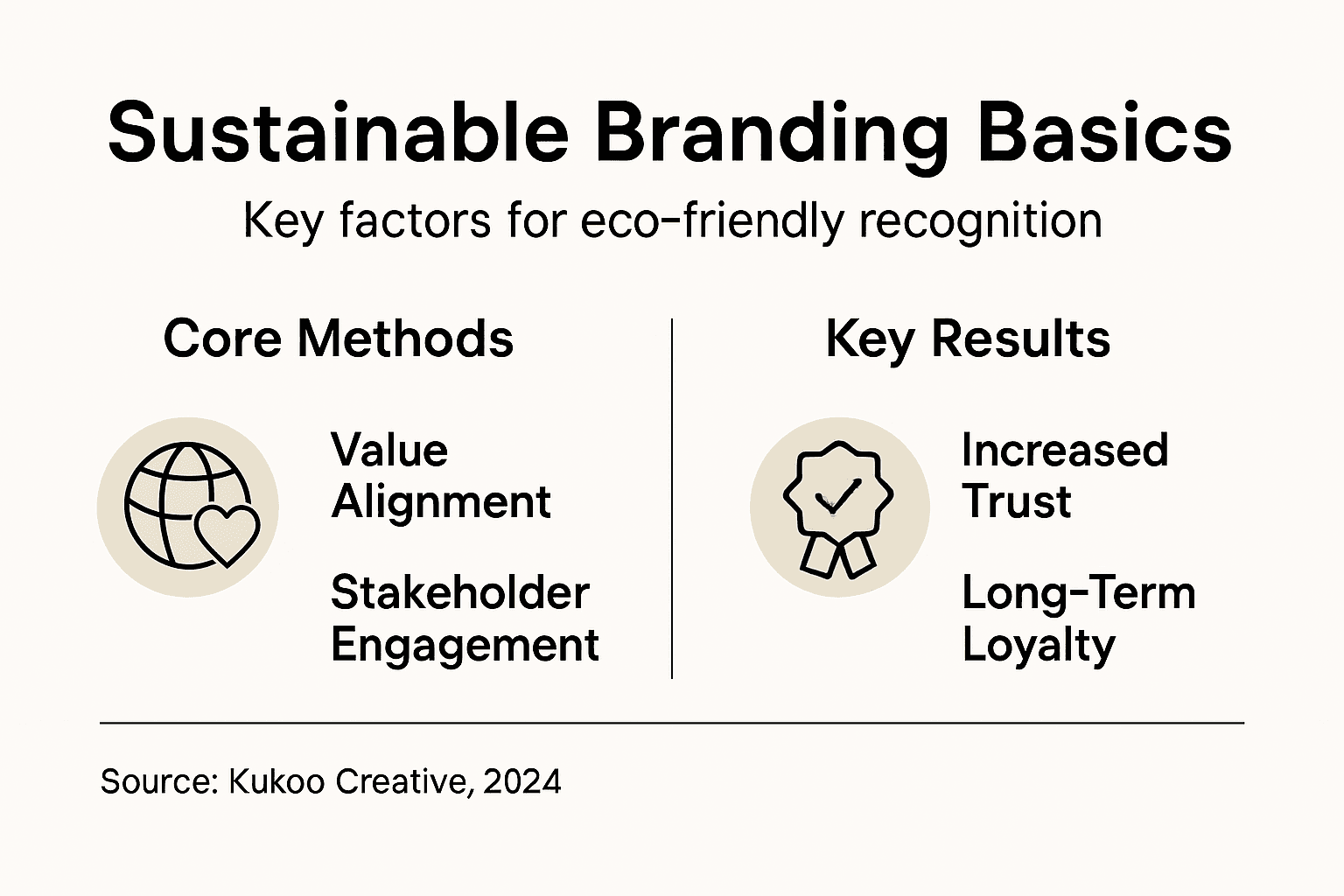
The first approach focuses on value alignment, where businesses integrate sustainability directly into their core brand identity. This involves crafting a brand story that authentically demonstrates environmental consciousness, ethical practices, and social commitment. Companies might achieve this through strategic corporate social responsibility (CSR) initiatives, transparent environmental policies, or by developing products and services that directly address sustainability challenges.
A second critical practice involves stakeholder engagement, which requires businesses to develop deep sensitivity to diverse perspectives and collaborative approaches. This means going beyond traditional marketing to create genuine connections with customers, employees, and community stakeholders. By understanding and responding to varied worldviews, organisations can develop more nuanced and impactful sustainable branding strategies that resonate with different audience segments.
The third sustainable branding practice emphasises holistic integration across all business functions. This comprehensive approach considers the 6Ps marketing framework applied sustainably: product design, packaging, pricing, promotion, planetary impact, and people engagement. Leeds businesses can differentiate themselves by demonstrating how sustainability is woven throughout their entire operational ecosystem.
Pro tip: Conduct a comprehensive sustainability audit to identify your organisation’s unique opportunities for integrating meaningful sustainable practices across all brand touchpoints.
Here is a summary of sustainable branding frameworks and their unique business advantages:
| Framework | Key Focus | Example Business Outcome |
|---|---|---|
| Value Alignment | Embedding sustainability in brand | Attracts ethically minded consumers |
| Stakeholder Engagement | Building inclusive partnerships | Enhances trust among diverse audiences |
| Holistic Integration | Sustainability in all operations | Creates consistent sustainable identity |
Key elements of eco-friendly brand design
Eco-friendly brand design transcends mere visual aesthetics, representing a profound communication strategy that signals a business’s commitment to environmental and social responsibility. Eco-label visual design principles demonstrate that strategic visual elements can significantly influence consumers’ sustainability perceptions.

The first critical element involves visual storytelling, which requires creating design components that authentically communicate environmental values. This means developing visual identities that go beyond superficial green imagery, instead crafting narratives that demonstrate genuine ecological commitment. Logos, colour palettes, and graphic elements should reflect a holistic approach to sustainability, using design as a powerful medium to convey the brand’s environmental ethos.
Transparency emerges as another fundamental aspect of eco-friendly brand design. Eco-branding communication strategies emphasise the importance of authentically representing a brand’s sustainability journey. This involves creating design elements that provide clear, honest information about environmental practices, showcasing both achievements and ongoing commitments. Such an approach helps build trust and credibility with environmentally conscious consumers who seek meaningful engagement beyond marketing rhetoric.
The final key element centres on systemic design thinking, which integrates sustainability considerations across all brand touchpoints. This holistic approach means considering environmental impact in packaging, marketing materials, digital platforms, and physical spaces. Leeds businesses can differentiate themselves by demonstrating how sustainability is woven into every aspect of their visual and communicative identity.
Pro tip: Conduct a comprehensive sustainability design audit to ensure your visual branding consistently and authentically reflects your environmental commitments.
To better understand eco-friendly brand design, compare the impact of its core elements:
| Design Element | How It Works | Consumer Impact |
|---|---|---|
| Visual Storytelling | Embeds values into logos and colours | Strengthens trust in brand purpose |
| Transparency | Clearly communicates sustainability efforts | Builds credibility and loyalty |
| Systemic Design Thinking | Integrates eco-focus across all touchpoints | Demonstrates authenticity throughout |
Legal obligations and reporting in the UK
Sustainable branding in the United Kingdom involves navigating a complex landscape of evolving legal requirements designed to promote corporate transparency and environmental accountability. Sustainability Disclosure Requirements represent a critical framework that businesses must understand and implement to demonstrate their commitment to responsible practices.
The key regulatory landscape encompasses multiple dimensions of sustainability reporting. Starting from May 2024, businesses will be required to provide comprehensive disclosures about their environmental impact, transition plans, and sustainability strategies. These regulations specifically target corporates, asset managers, and investment products, with the primary goal of combating greenwashing and ensuring genuine commitment to sustainable practices. The UK government aims to standardise sustainability reporting, creating a more transparent environment for investors and consumers alike.
Anti-greenwashing regulations introduced by the Financial Conduct Authority (FCA) mandate that all sustainability claims must be clear, substantive, and verifiable. This means businesses cannot make vague or unsubstantiated environmental assertions. Companies must provide concrete evidence supporting their sustainability claims, with specific rules governing how environmental credentials can be communicated in marketing materials, product descriptions, and financial disclosures.
For Leeds businesses, compliance involves developing robust internal reporting mechanisms, maintaining detailed documentation of sustainability initiatives, and preparing for potential audits. This requires a proactive approach to tracking and measuring environmental performance, understanding the specific reporting standards, and ensuring all sustainability communications meet the stringent new regulatory requirements.
Pro tip: Consult with a sustainability compliance expert to develop a comprehensive reporting strategy that meets current UK regulatory standards.
Risks of greenwashing and brand damage
Greenwashing represents a critical threat to brand reputation, transforming well-intentioned sustainability efforts into potential public relations nightmares for businesses. Inadvertent greenwashing risks emerge from misrepresented environmental communications, organisational information gaps, and misaligned corporate incentives.
The consequences of greenwashing extend far beyond simple marketing missteps. Reputational damage can be profound and long-lasting, with consumers becoming increasingly sophisticated in detecting insincere environmental claims. Advertising Standards Authority rulings demonstrate how vague or unsubstantiated environmental assertions can lead to significant legal and commercial repercussions. Brands risk not just regulatory penalties, but a fundamental erosion of consumer trust that can take years to rebuild.
Internal organisational factors often contribute to greenwashing risks. These include information asymmetries, where different departments lack comprehensive understanding of sustainability initiatives, and perverse incentive structures that prioritise short-term marketing gains over genuine environmental commitment. Leeds businesses must develop robust internal mechanisms to ensure that sustainability claims are comprehensively validated, consistently communicated, and genuinely reflective of their environmental practices.
To mitigate these risks, companies must adopt a holistic approach to sustainability communication. This involves developing transparent reporting mechanisms, investing in comprehensive sustainability training, and creating organisational cultures that prioritise authentic environmental stewardship over superficial marketing narratives.
Pro tip: Implement a rigorous internal review process to validate all sustainability claims before public communication, ensuring complete transparency and substantive evidence.
Best practices for building lasting impact
Building lasting sustainable brand impact requires a holistic, strategic approach that goes beyond superficial environmental claims. For Leeds businesses, this means developing a comprehensive sustainability strategy that integrates genuine commitment across all organisational functions, demonstrating authenticity and creating meaningful change.
The first critical practice involves comprehensive stakeholder engagement. This means actively involving employees, customers, local communities, and supply chain partners in sustainability initiatives. Businesses should create transparent communication channels that invite feedback, share progress, and demonstrate a genuine commitment to continuous improvement. By treating sustainability as a collaborative journey rather than a marketing exercise, companies can build trust and create more impactful, inclusive environmental strategies.
Another key practice centres on measurable and transparent reporting. Leeds businesses must develop robust systems for tracking, measuring, and communicating their sustainability performance. This involves setting clear, science-based targets, regularly publishing detailed sustainability reports, and being open about both achievements and challenges. Transparency builds credibility, allowing stakeholders to understand the genuine efforts and progress being made towards environmental goals.
Finally, successful sustainable branding requires ongoing innovation and adaptation. This means continuously exploring new technologies, processes, and approaches that reduce environmental impact while creating business value. Companies should foster a culture of sustainability that encourages creative problem-solving, supports employee-led initiatives, and remains agile in responding to emerging environmental challenges and opportunities.
Pro tip: Develop a cross-functional sustainability committee that meets regularly to drive innovation, track progress, and ensure sustainability remains a strategic priority across the entire organisation.
Elevate Your Leeds Business with Authentic Sustainable Branding
In today’s market, Leeds businesses face the real challenge of building trust through genuine sustainable branding. The article highlights the importance of aligning your brand values with environmental and social responsibility while avoiding greenwashing risks. If you are aiming to create impactful, eco-friendly brand designs that resonate with conscious customers and comply with UK sustainability reporting standards, you need expert creative partners who understand these complexities.
At Kukoo Creative, we have partnered with business owners for over a decade to craft authentic logos and websites that reflect your commitment to sustainability and help your brand stand out to the right audience. Our tailored design solutions focus on visual storytelling, transparency and holistic brand integration – the very elements that drive lasting impact in sustainable branding.
Discover how authentic sustainable design can transform your Leeds business today. Visit our website and explore how we can help you connect more meaningfully with your customers through bespoke brand creation. Make the move now to build brand recognition that truly reflects your values and meets the demands of discerning consumers.
Frequently Asked Questions
What is sustainable branding and why is it important for businesses?
Sustainable branding is a strategic approach that integrates environmental, social, and economic considerations into a brand’s identity. It is important because modern consumers increasingly seek authentic connections with brands that demonstrate genuine commitment to sustainability.
How can businesses effectively engage stakeholders in their sustainable branding efforts?
Effective stakeholder engagement requires sensitivity to diverse perspectives and collaborative initiatives. Businesses can achieve this by involving employees, customers, and local communities in sustainability efforts and fostering open communication to build trust.
What are the key elements of eco-friendly brand design?
Key elements of eco-friendly brand design include visual storytelling, transparency in communication, and systemic design thinking. These elements work together to authentically convey a brand’s commitment to environmental responsibility across all brand touchpoints.
What risks do businesses face with greenwashing in their sustainability claims?
Businesses face significant risks of reputational damage due to greenwashing, which occurs when they misrepresent their environmental practices. This undermines consumer trust and can lead to legal repercussions if claims are found to be vague or unsubstantiated.